TOP

KUBS News

Total 1427

Turning Financial Data into Research - Special Lecture on Exploring Bloomberg Data for Academic Rese

"Turning Financial Data into Research" Special Lecture on Exploring Bloomberg Data for Academic Research     The Bloomberg Terminal contains one of the world's most comprehensive collections of financial market data. However, transforming that information into meaningful research variables requires multiple steps, from exploring available data and verifying variable definitions to extracting data and constructing research datasets. To help students navigate this process, Korea University Business School (KUBS) held a special lecture titled "Financial Data Exploration and Research Applications Using Bloomberg" on Friday, May 15, at the LG-POSCO Building. The session was led by Dr. Ha-yeon Park of the Korea University Business Administration Education and Research Group for BK21 FOUR and was attended by KUBS graduate students. The Bloomberg Terminal is a widely used financial data platform that provides access to real-time market information, company data, and financial analytics. During the lecture, students learned how to search for and extract financial data using both the Bloomberg Terminal and its Excel Add-in, while also exploring how Bloomberg data can be effectively applied to academic research. Dr. Park introduced the basic structure of the Bloomberg Terminal and demonstrated practical methods for exploring financial data. She guided students through the process of identifying research variables and verifying their definitions, emphasizing that carefully confirming variable names, definitions, and available options before downloading data is essential for ensuring research accuracy. She then explained how to extract data using the Excel Add-in and organize Bloomberg data into structured datasets suitable for empirical research. In the latter part of the lecture, Dr. Park demonstrated how Bloomberg data can support academic research by drawing on several case studies, including examples from her own work. She explained how ETF-related data can be identified, extracted, and organized according to different research objectives. She also advised students not to rely exclusively on Bloomberg, noting, "Rather than using Bloomberg as a single data source, I recommend using it for the types of data in which it has particular strengths." She emphasized the importance of cross-checking Bloomberg data with other databases whenever appropriate. The lecture provided students with a practical overview of how financial data can be translated into research—from developing research questions and selecting appropriate variables to constructing reliable datasets. By following the entire workflow, participants gained a clearer understanding of how Bloomberg data can be explored, evaluated, and incorporated into academic research. The lecture also reflects Korea University Business School's recent expansion of its Bloomberg Terminal infrastructure. As part of a financial data hub established through a KRW 1 billion donation from Eugene Investment & Securities, KUBS increased the number of Bloomberg Terminals from one to twelve—the largest Bloomberg Terminal installation among universities in Korea. Nine terminals have been installed in the Sudang CLC Lounge, while the remaining three are available through remote-access accounts.     The Bloomberg Terminal is one of the most widely used financial data platforms in investment banking, asset management, equity research, and other finance-related fields. Hands-on experience with the platform provides students with valuable practical skills that can help them transition into careers in the financial industry. Students who complete the Bloomberg Market Concepts (BMC) certification may also find it beneficial when preparing for the CFA examination or applying for internships in finance. With the expanded infrastructure significantly improving access throughout the semester, more students now have the opportunity to work directly with real-time market data in their coursework, research projects, and academic studies. KUBS Student Press Reporting by Chaewoo Lee Photography by Jinyoung Park

2026.07.22 Views 325

Walking the Campus, Envisioning the Future: 2025 KUBS Regular Campus Tour and Youth Day

Walking the Campus, Envisioning the Future: 2025 KUBS Regular Campus Tour and Youth Day      On Saturday, May 17, Korea University Business School (KUBS) hosted the “2025 KUBS Regular Campus Tour and Youth Day” on its campus. The event welcomed approximately 100 high school students from across the country, offering them a glimpse into real college life and in-depth insights into business studies. The program was organized and led by KUBE, the official student ambassadors of KUBS, who shared their personal university experiences and perspectives.  The program consisted of △an opening ceremony, △About KUBS (an introduction to the business school and its majors), △a group photo session, △a student transition period and break, △a campus tour, △a mentoring session with enrolled students, and △a closing ceremony.      During the opening ceremony, Associate Dean Hyun Seung Na warmly welcomed the students, saying, “I sincerely thank you for taking the time and effort to be here today. I hope this experience helps you understand why business studies are essential to society and inspires greater motivation.” He especially acknowledged participants who traveled long distances from cities such as Changwon and Busan, adding, “As a small token of appreciation, we will gift Korea University tiger plushies to those who came from the farthest regions.”  The remark was met with enthusiastic applause and cheers from the audience.      The event was emceed by KUBE President Ujin Shin and Vice President Minji Kang. During the About KUBS session, ambassadors Junseok Hong and Chaewoo Lee introduced the business school, followed by Sihoon Moon and Dajin Kim, who presented an engaging overview of the school’s nine academic concentrations.  They highlighted KUBS’s reputation as the top producer of certified public accountants (CPAs) in Korea and its global learning environment, supported by 90 full-time professors and over 61.2% of classes conducted in English. To make the content more relatable, the ambassadors used the example of ramen — covering its production, distribution, and marketing — to explain business specializations in a fun and accessible way. A final quiz session added to the excitement, with small prizes awarded to students who answered correctly.      Following the group photo, students were divided into teams and gathered in lecture rooms at Hyundai Motor Hall. Each group, guided by KUBE ambassadors, embarked on a campus tour that included key business facilities — LG-POSCO Hall, Hyundai Motor Hall, and the Main Building — as well as notable locations on the Humanities and Social Sciences Campus such as the Centennial Memorial Samsung Hall, SK Future Hall, and the underground facilities beneath Central Plaza. Students took commemorative group photos at each stop, creating lasting memories.      The mentoring session that followed provided an open space for questions on admissions, academics, and university life. When asked about study strategies, ambassador Chaewoo Lee shared, “Understanding the test maker’s intent is key to performing well on school exams. I used vacation periods to prepare for the Korean SAT and focused on school grades during the semester to maintain balance.”  The ambassadors also introduced diverse career paths including CPA preparation, the Public Officer Qualification Exam, and launching a startup, offering practical insights and motivation to participants as they explore their future academic and career goals.      One student shared, “I was unsure about my future, but today sparked my interest in business. Now I’m dreaming of entering Korea University and becoming a member of KUBE.”      The KUBS Regular Campus Tour and Youth Day has evolved into more than just a campus visit — it offers meaningful, hands-on experiences that help students envision their academic journey and future careers. Held twice annually in May and November, the next Youth Mentoring Day, providing deeper insights into business education, is scheduled for July. Applications will open in June via the official KUBE website. 

2025.05.26 Views 3438

CEMS (KUBS Member School) Corporate Partner Survey Results Released 

CEMS (KUBS Member School) Corporate Partner Survey Results Released  "Professionalism and business acumen alone will not be enough for leadership success after 2030"      The Global Alliance in Management Education, CEMS, of which Korea University Business School (KUBS) is a member, has released research findings conducted in collaboration with 20 multinational corporate partners, revealing a fundamental shift in the core competencies required for successful leadership beyond 2030.  The study was based on interviews with HR and leadership professionals from the 20 CEMS partner companies. While technical expertise and business acumen remain important, there was broad consensus that future leaders must be more human-centric, culturally agile, and entrepreneurial.  CEMS corporate partners have identified five core competencies that will be essential for next-generation leaders in the post-2030 era:  1. Fusion of Analytical Skills and Creativity  Future leaders must go beyond simply interpreting data—they must be able to synthesize complex information, derive strategic decisions, and combine analytical rigor with creative thinking that cannot be replicated by automation or AI.  2. Entrepreneurial Mindset  An entrepreneurial mindset involves the ability to challenge conventional business models, embrace change, and drive purpose-driven innovation. This adaptive and proactive approach is increasingly seen as critical for leadership in a rapidly evolving environment.  3. Cultural Intelligence (CQ)  The ability to effectively communicate and collaborate with teams from diverse cultural backgrounds is emerging as a key determinant of global leadership success. Cultural agility is essential in navigating multicultural teams and global business contexts.  4. Combination of Subject-Matter Expertise and Strategic Business Insight  Future leaders must go beyond general management knowledge. A deep understanding of specific industries—combined with the ability to integrate that expertise into strategic perspectives—will be a key differentiator in driving business success.  5. Digital Agility  While future leaders are not expected to be digital specialists, they must possess a keen awareness of major digital trends and data analytics. Equally important is the ability to bridge communication between technical and business teams to guide effective decision-making.  These competencies underscore the growing importance of human-centered qualities in future leadership. Essential attributes for next-generation leaders now include resilience, adaptability, humility, emotional intelligence, value-driven decision-making, and a strong commitment to physical and mental well-being—as well as to sustainability  Jonathan von Gutzeit, Head of Talent Experience at Lufthansa Group—one of the companies that participated in the research—remarked that “the next generation of leaders must be more than just capable.” He identified ambition, responsibility, and empathy as essential qualities, and added that future leaders should be able to “pioneer new markets through strategic thinking, innovation, and customer-centricity, while cultivating inclusive and empowering organizational cultures.”  Nicolas Barbier of BNP Paribas Portugal also underscored the importance of flexibility, global awareness, and a collaborative mindset. He noted that “those who can think flexibly in rapidly changing environments, adapt well to global organizations encompassing diverse nationalities and cultures, and co-create within teams are the ones who will grow into effective leaders.”      CEMS is a global alliance in international management education, active across six continents and comprising 33 leading business schools, more than 70 multinational companies, and 8 NGOs. Together, they jointly operate the CEMS Master in International Management (MIM) program, which produces over 1,300 graduates each year. Notably, the CEMS MIM was ranked 10th out of 206 programs worldwide in the 2025 QS Master’s in Management Rankings, reaffirming its position among the world’s top programs.  Korea University Business School, the only CEMS member school in South Korea, operates the CEMS Global MIM program and is dedicated to cultivating the next generation of global leaders through a practice-oriented international curriculum that includes overseas study, internships, and corporate projects.  The five core competencies identified by CEMS—△the fusion of analytical skills and creativity, △an entrepreneurial mindset, △cultural intelligence, △the combination of expertise and strategic business insight, and △digital agility—are closely aligned with the educational philosophy of Korea University Business School (KUBS).  Looking ahead, KUBS will further strengthen its integrated leadership education, encompassing interdisciplinary themes such as AI, ESG, multicultural management, and human-centered design. Through robust support across education, research, and industry-academia collaboration, the school is committed to fostering authentic and sustainable global leaders capable of creating meaningful value on the international stage.   

2025.05.26 Views 3190

“A Business Major Embraces Art” — The Startup Journey of Open Gallery CEO Park Eui-gyu 

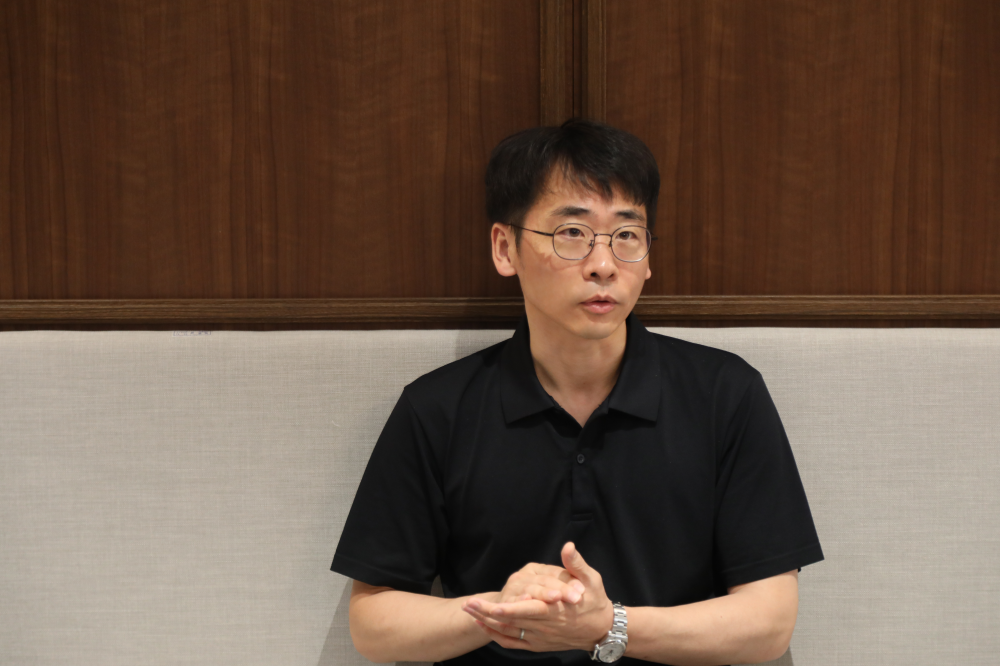
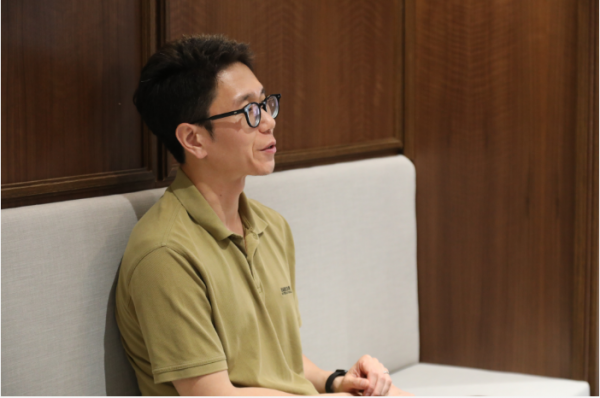
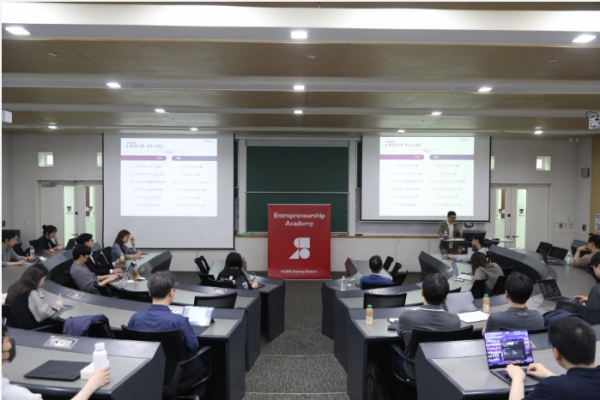
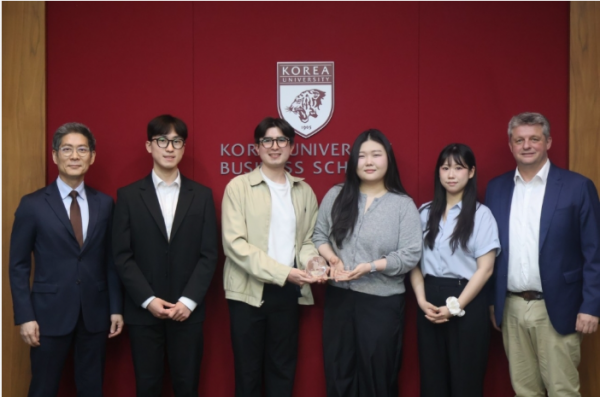
“A Business Major Embraces Art” — The Startup Journey of Open Gallery CEO Park Eui-gyu      A special lecture, part of the Entrepreneurship Academy, was held on Tuesday, April 29 in Room B307 (Kolon Lecture Hall) of the Hyundai Motor Hall. The event was hosted by the Startup Research Institute at Korea University Business School. The lecture, titled "Starting a Business in Arts & Culture: Pioneering a Non-Existent Market," was delivered by Park Eui-gyu, CEO of the art rental platform Open Gallery. He offered a candid and insightful account of the challenges and realities of launching a business in the cultural and arts sector, as well as his entrepreneurial journey in building a startup from the ground up.  A graduate of Korea University Business School, CEO Park founded Open Gallery with the vision of making art more accessible in everyday life. He shared candid insights into the process of turning an initial idea into a functioning service, the trials and errors encountered in the market, the strategies he used for growth, and how he continues to pursue his mission of “democratizing art.”      The lecture began with an introduction to Open Gallery. The company offers a service that allows users to rent and install artworks by popular Korean artists at affordable prices. It also provides personalized recommendations from professional curators, along with a QR code service that gives users detailed information about each piece. “By bringing art into everyday spaces, we act as a bridge between the public and artists,” Park said. “Our mission is to help talented artists gain the exposure they deserve.” Currently, more than 2,500 artists have registered approximately 67,000 artworks on the platform.      Park also shared how he drew on his background in strategy consulting to identify inefficiencies in the arts sector and develop an innovative model to solve them.  “There were virtually no international cases to benchmark,” he recalled. “So I conducted interviews with over a hundred people to understand consumer needs in detail, one by one.” His method of uncovering the intersection between art and business offered valuable insights to the audience.  He also shared practical advice for students preparing to launch their own ventures. “Starting a business is a highly unconventional path,” he said. “Once you make the decision, you must treat it as your top priority for the next ten years.”  Park emphasized the unique appeal of entrepreneurship, calling it “the most effective way to solve real-world problems.”  He also spoke about the mindset and leadership qualities essential for entrepreneurship.  “You need the resilience to endure failure and the ability to turn setbacks into assets,” he said, emphasizing the importance of self-reflection and feedback. “Leadership is about earning people's trust,” he continued. “You have to find balance in your business by harmonizing with people from diverse backgrounds.”       The lecture concluded with a Q&A session, during which Park offered heartfelt encouragement to aspiring student entrepreneurs. “Entrepreneurship is ultimately an expression of individuality,” he remarked. “Above all, it’s important to meet people from various walks of life and broaden your engagement with the world.” By addressing the real concerns of student entrepreneurs, he offered both a realistic view of the startup ecosystem and warm encouragement—adding depth and energy to the event’s conclusion.  This lecture was part of the Entrepreneurship Academy series organized by the Startup Station. The program invites seasoned entrepreneurs and industry experts to deliver practical insights and support for aspiring and early-stage founders. Korea University Business School will continue to support student entrepreneurs by offering a range of lecture series and practice-oriented programs designed to foster their growth and encourage new challenges. 

2025.05.16 Views 4074

Korea University Business School Opens Applications for Fall 2025 G-MBA and CEMS Global MIM Programs

Korea University Business School Opens Applications for Fall 2025 G-MBA and CEMS Global MIM Programs      Korea University Business School is now accepting applications for the Fall 2025 intake of its Global MBA (G-MBA) and CEMS Global MIM (G-MIM) programs. As in previous years, the programs continue to attract outstanding applicants aspiring to become global business leaders, reaffirming their strong reputation and popularity.  Currently, both G-MBA and G-MIM programs are in the third round of admissions. The G-MBA interviews will take place on Saturday, May 10, and the G-MIM interviews are scheduled for Friday, May 9. Final admissions results for both programs will be announced on Friday, May 23 at 3:00 PM.      The G-MBA is a one-year, full-time MBA program focused on practical business training, designed to nurture future global CEOs. It offers students the opportunity to grow into management professionals who can excel across diverse industries and cultural environments. The entire program is conducted in English, and students can choose either an exchange track with one of 29 partner universities or a dual-degree track with ESCP Business School in France or EBS Business School in Germany.  Open to working professionals and aspiring managers from all academic backgrounds—including those without a business degree—the G-MBA provides a practice-oriented curriculum that cultivates integrated and strategic thinking. Upon successful completion of the program, graduates are awarded a Master of Business Administration (MBA) degree, a highly valued credential recognized by global companies.      The G-MIM is a one-year, intensive full-time program designed for recent graduates with undergraduate degrees in business or economics who aspire to become global business professionals.  The program offers a distinctive curriculum in which students spend one semester at Korea University and another at a partner school within the prestigious CEMS Global Alliance in Management Education, gaining firsthand experience in diverse countries and cultural environments.  Korea University became the first and only CEMS member school in Korea in 2015 and has since maintained a world-class partnership in global business education. Upon successful completion of the program, students earn both a Master in Management (MiM) degree and the internationally recognized CEMS MIM Certificate.  Looking ahead, Korea University Business School will continue to nurture the next generation of global business leaders through world-class education and a robust international network. 

2025.05.13 Views 3517

Stories Over Textbooks, Laughter Over Presentations: Global MIM Hosts End-of-Term Dinner

Stories Over Textbooks, Laughter Over Presentations: Global MIM Hosts End-of-Term Dinner     On Friday, April 25, Korea University Business School’s Global MIM (G-MIM) program held a celebratory rooftop dinner on the 6th floor of Hyundai Motor Hall to mark the completion of Module 4 of the 2025 academic year. The event was attended by 22 G-MIM exchange students, Academic Director Tony C. Garrett, Professor Martin Hemmert, and G-MIM program manager.    The dinner was organized to celebrate the successful end of the academic term and to promote stronger connections among students. Held on the rooftop on a warm spring evening, the event provided a relaxed and cheerful setting where students and faculty casually mingled and enjoyed open conversations. Students shared their personal experiences and reflections on their transition into the program, building a sense of connection and mutual understanding. Engaging with peers from diverse cultural backgrounds also deepened their appreciation of the program and enriched their intercultural experience.     Participating students shared their thoughts, saying that “it was nice to have a chance to comfortably talk and share our experiences,” and that “it was impressive to see how the program cares not only about academics but also about building connections among its members.” G-MIM plans to continue supporting students’ adjustment and growth through a variety of non-academic activities in the future.      Meanwhile, G-MIM is a one-year intensive full-time program designed for undergraduate students with a background in business or economics. It offers a global curriculum, with students spending one semester at Korea University and another at one of the prestigious CEMS partner schools around the world. Upon successful completion of the program, students earn a Master in Management (MiM) degree as well as the internationally recognized CEMS MIM Certificate. 

2025.05.09 Views 2827

"A Day of Unity and Passion for the E-MBA Family" — KUBS E-MBA Hold Joint Sports Day

"A Day of Unity and Passion for the E-MBA Family" — Korea University Business School E-MBA Cohorts 22 and 23 Hold Joint Sports Day     On Saturday, April 26, students from the 22nd and 23rd cohorts of Korea University Business School's Executive MBA (E-MBA) program successfully held a joint Sports Day at Nokji Stadium on the Korea University Campus.    Renowned as one of Korea’s top Executive MBA programs, Korea University's E-MBA is known for its rigorous academic curriculum and strong alumni network. The event was designed to foster camaraderie among students and create meaningful memories with their families.    More than 100 students and their family members participated in the event, filling the day with passionate cheers and enthusiastic energy as they took part in a variety of games. The event fostered a spirit of unity and created a truly vibrant atmosphere.    Highlighted activities included a curtain-style tug-of-war, a cooperative ball bouncing game, an O.X. quiz, and a leg wrestling match between the 22nd and 23rd cohorts. Special programs were also arranged for children, making the event a warm and inclusive celebration for all generations.    Jeon Eun-ae, head of athletics for the 22nd cohort, remarked, "It was a meaningful opportunity to step away from our busy academic and professional routines, share laughter, cheer each other on, and develop a deeper understanding of one another. I hope this event strengthens the bond between the 22nd and 23rd cohorts moving forward."    The event successfully reaffirmed the strong spirit of unity and collaboration among Korea University Business School E-MBA students.   

2025.05.09 Views 3441

  • 첫페이지로
  • 31
  • 32
  • 33
  • 34
  • 35
  • 마지막페이지로