TOP

KUBS News

Total 1416

Department of Business Administration, Graduate School, Korea University Recruiting New Students

Department of Business Administration, Graduate School, Korea University Recruiting New Students for Fall 2026… Applications Open Until April 9   A new opportunity is opening for those seeking to advance both their research direction and career development. The Department of Business Administration at the Graduate School of Korea University has begun accepting applications for domestic students for the Fall 2026 intake, with the application deadline set for 5:00 PM on Thursday, April 9.   As the business environment continues to evolve rapidly, the criteria for selecting a graduate program are also shifting. Beyond the name of the major, the strength of the research environment and academic network has become an increasingly important factor.    ▲ A group of full-time faculty members at Korea University Business School pose for a commemorative photo.    Korea University Business School boasts one of the largest research infrastructures in the country, supported by 95 full-time faculty members. This is considered a key strength, as it enables applicants to choose academic advisors who closely align with their research interests and topics. The faculty’s diverse expertise, spanning a wide range of subfields and research areas, provides a strong foundation for graduate students to conduct rigorous and advanced research.    As a research-oriented graduate school, Korea University Business School is also strengthening its interdisciplinary research environment to reflect rapidly evolving industries and societal needs. With a focus on the so-called “4Tech” fields—AI, semiconductors, robotics, and energy—the school is expanding the scope of business research beyond traditional boundaries and fostering the exploration of emerging challenges. Through this approach, students are able to analyze business phenomena from a more multidimensional perspective and develop their research questions into independent scholarly work.    Its research infrastructure is another key strength. Graduate students are provided with dedicated research spaces, including offices, seminar rooms, and lockers, along with access to data analysis software such as SAS, SPSS, STATA, and MATLAB. In addition, Korea University Library houses approximately 3.31 million volumes and 86,000 non-book materials, offering a comprehensive foundation for academic research.    In particular, students have access to major databases such as Bloomberg, Compustat, CRSP, WRDS, and LSEG Workspace. Recently, thanks to a donation from Eugene Investment & Securities, the number of Bloomberg terminals has been expanded to 12, further enhancing the research environment in finance and related fields.    Korea University Business School also offers a range of scholarship programs to support students in focusing on their research. These include full tuition coverage through research and teaching assistantships, as well as research scholarships under the BK21 program and merit-based scholarships. Approximately KRW 2.3 billion in scholarships are awarded annually, along with programs that encourage research activities, such as support for participation in international academic conferences.    For the Fall intake, the department will admit students to master’s, doctoral, and integrated master’s–doctoral programs in the following fields: Management, Global Business, Strategy, Finance, Information Systems (IS), and LSOM. The Marketing field will recruit only for doctoral and integrated programs, while Accounting and Business Analytics are excluded from this round of admissions.    The Fall admissions cycle is particularly meaningful as it provides another opportunity for applicants who have reassessed their academic or career paths following the Spring admissions cycle. For those who have further refined their research interests or career goals, this can serve as a strategic opportunity to select a research environment that best fits their needs.    Daeil Nam, Associate Dean for Research at Korea University Business School, stated, “As business studies become increasingly interconnected with industry, the importance of research environments and networks continues to grow,” adding, “We support our students in expanding their research and connecting it to real-world applications.”      ▶ Apply for Fall 2026 Domestic Graduate Admissions at Korea University ◀ 

2026.04.13 Views 42

[Interview with Sang Yong Kim, Dean of KUBS] "In the post-COVID-19 era, our task is to transform

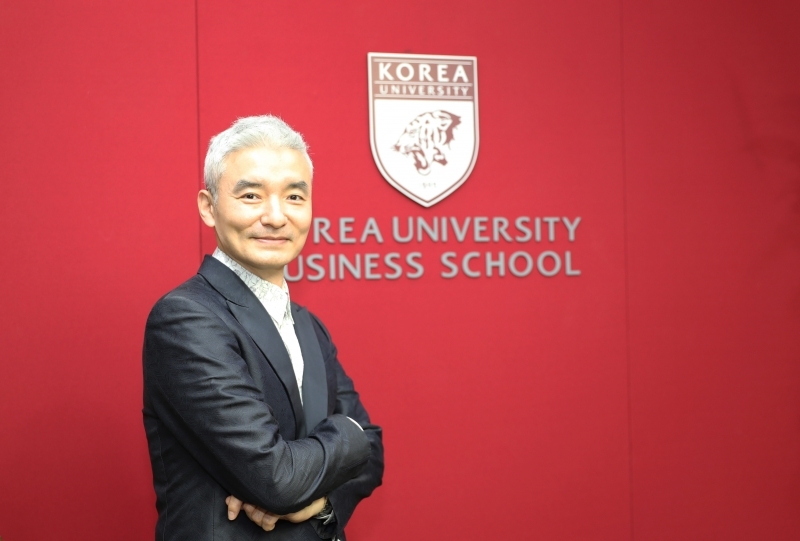
[Interview] Professor Sang Yong Kim, the new Dean of Korea University Business School   "In the post-COVID-19 era, our task is to transform into exciting and dynamic KUBS."   Professor Sang Yong Kim (Marketing major) was appointed as the new Dean of Korea University Business School. Professor Sang Yong Kim was selected as a Dean candidate at the recommendation of President Jin Taek Chung according to the dean's appointment and dismissal procedure and was elected as Dean through vote on the appointment of Dean at the faculty meeting held in October. Professor Sang Yong Kim will lead KUBS for about two years from November of 2022 to August of 2024. We met with Dean Sang Yong Kim, who will lead new changes of Korea University Business School, to hear his thoughts on his inauguration and future plans.       1. Congratulations on your inauguration as Dean of KUBS. How do you feel? It is a great honor but considering the changes and expectations that KUBS faces in the post-COVID-19 era, a great sense of responsibility comes first. Due to the long-term COVID-19 pandemic, many people began to prefer personal activities, and the importance of social activities has decreased relatively. The disconnection of relationships and personalization have become a daily routine, but now I am carefully hoping for the end of COVID-19. At this turning point where the daily life that we had lost is being reconnected and restored, I became the Dean of KUBS, which is a mixture of great responsibility and infinite honor. I think it is the task of the Dean to restore broken relationships and daily life at the time of transition to a new era. I will do my best to make KUBS exciting, lively, and dynamic again.   2. What kind of vision and philosophy do you have as the head of KUBS for the next two years? There is a motto that I always emphasize. “Liberal, but Disciplined”, that is, free, but stick to the principle. It means to be flexible while keeping the principles. I would also like the team spirit of the KUBS members to be active and exciting, while following the principles.   In the meantime, when we talked about Korea University Business School, we focused only on 'Business School'. Now, I would like to keep in mind that it is a business school of Korea University, and I would like to envision a future of moving forward together as a leader of KU while harmonizing well with the entire members of Korea University. To this end, we will actively lead research and education by trying to merge with various studies. We would like to establish Business School as a leader in bringing various areas of study together and develop it into a school that can explore truth based on a free spirit and a just sense of mission. I think this is the way to practice the eternal values 'Libertas', 'Justitia', and 'Veritas' that make Korea University KU.       3. What do you think of the current position and evaluation of KUBS at home and abroad? The position of KUBS as the 'No. 1 in Korea' is not an absolute position. In fact, currently KUBS is now seen as a 'huge dinosaur.’ While the world was changing fast and trying to fuse different areas together, we may be like a slow-moving dinosaur. Now is the time to actively combine various academic fields and research to create synergy. For example, one of the biggest issues in the world is the "K-Industry," which leads the Korean Wave. Despite the endless number of businesses related to this phenomenon, it is difficult to find anyone who is conducting specific research at KUBS. Combining business and other areas such as social science, humanities, engineering, and natural science is desperately needed in the market, but I think our response to this is neither quick nor sufficient. When we're moving slowly like a giant dinosaur, there must be other schools that are coping quickly. In order to achieve our goal of 'No. 1 in Asia and No. 30 in the world by 2030’, we will have to make efforts to keep pace with the rapid change in the market environment and widen the gap with followers and challengers. So, in the long run, I think the best thing to do is to produce a world-class researchers at our KUBS, and the faculty actively conducting world-class research with those researchers, and thus creating World-class Knowledge ourselves. The Ph.D Graduates from our KUBS should become scholars in the world's leading universities and also lead the academic world. To realize this ideal, we would need full support from our alumni.     4. In the development of KUBS, there were great efforts and support from our alumni. Is there anything special you want to say to our alumni? Compared to the KUBS when I was assigned to Korea University 22 years ago, the current KUBS has grown remarkably thanks to the efforts and support of our alumni. However, it is true that until recently, the development of KUBS has been centered on the 'hardware'. The facilities are already the best in the world just by having three great buildings: the Business Main Building, the LG-POSCO Building, and the Hyundai Motor Hall. Support for 'software' is critical now. It is important to secure the quality of research and educational content. Investment in important areas should be actively made in the future so that faculty can conduct research more stably and KUBS can become the center of global research. To add to the "K-Industry" in the previous example, many overseas scholars actually ask a lot of questions to Korea University when they want to study the "Korean Wave." If KUBS pays a little attention to this trend, I think we can be a leader in research on the Korean Wave industry. In fact, there will be many alumni who are active in the industry. I would like to create a structure in which our alumni and KU communicate with each other by building a network centered on KUBS, inviting them to special lectures, and providing internship opportunities to students.    5. Lastly, is there anything you want to say to the members of KUBS? First of all, I don't want our students to be buried in business administration only. I hope they build a wide academic foundation so that they can do integrated thinking and challenge various fields to develop new hobbies or talents. Companies prefer people who can act as leaders in society based their talents. I hope they expand their knowledge through various activities. Also, if you are a member of a KUBS I would like you to think about "how to make it possible" rather than "no." Please actively think about how to do well at a given task and what will lead to better results. I don't want you to be afraid to change the parts that can make a difference and try new things. If it doesn't work well after trying to make a change, I will be responsible as the head of KUBS. As the beginning of the change, I also adjusted the term of the management team, which was uncomfortable because it did not fit the academic schedule, and I also adjusted the position. Rather than following the existing practices, I want to fix the inconveniences or irrationalities. Like my motto of “Liberal, but Disciplined,” I will move on to KUBS that evolves quickly with flexibility.      Professor Sang Yong Kim's bio        Professor Sang Yong Kim graduated from Seoul National University's Department of Western History and received a M.S. in Industrial Administration from Carnegie Mellon University in the U.S. and a Ph.D. in Business Administration from Duke University. He has been a professor at Hallym University and KAIST and has been working at Korea University since 2001. He served as the president of the Service Marketing Association in 2015, the president of the Korea Marketing Association for two years from 2017, and the president of the Korea Consumer Association in 2019. At Korea University, he served as vice president of the Institute of Corporate Management, vice president of the Graduate School of KUBS, head professor of AMP, head of Corporate Relations Office, and head of the Publishing Culture Center. In 2017, he won the Academic Contribution Award at the JoongAng Ilbo Customer Emotional Brand Awards and the Best Paper Award at the American Marketing Association Conference, and in 2019, he was awarded the Best Educator Award at the 5th Academy of Asian Business International Conference. His books include the recently published 『Marketing Principle ABC - Artificial Intelligence, Big Data, Customer Value』, 『Management Keyword 101』, 『Marketing Keyword 101』, 『Management Learning in a Day: Marketing Introduction』, and 『Marketing Research for Business Analytics』.

2022.11.24 Views 4481

2022 KUBS Challenge Case Competition Held

2022 KUBS Challenge Case Competition Held     The final presentation ‘2022 KUBS Challenge Case Competition (hereinbelow KUBS Challenge)’, hosted by KUBS (Dean= Sangyong Kim) was held in Room 303 of Hyundai Motor Hall on November 11th (Fri). KUBS Challenge is a contest in which a team of 4 KUBS undergraduate students analyze and give presentations about given business management examples within 24 hours. A total of 9 teams of 36 students participated in this contest.     In this KUBS Challenge, participants were tasked to analyze NIKE's business management examples, find NIKE's metaverse market strategy and technology essential for that. In the first round, the weekend before the final round, 9 teams submitted video and presentation slides with results of analysis within 24 hours. Among them following 4 teams went to the final round with excellent results: △ExtraMile △Kukey △Young Tigers △Lee&Square.   The final round held on 11th consisted of 10 minutes presentation on analysis by each team and a Q&A session for 7 minutes after that. KUBS △ Professor Tony Garrett △ Professor Junghyun Kim △ Professor Kyuhong Han attended as judges. Before the opening of the competition, Professor Tony Garrett said “We chose metaverse as this theme to focus on technology” and “We hope you give a clear explanation about metaverse”.   After all presentations were finished and through additional discussion time, the bronze award went to Lee&Square, the sliver award to Young Tigers, and the gold award went to Kukey. The winning team Kukey was qualified to participate in ‘CaseIT 2023’ held by Simon Fraser University on February 2023. And Young Tigers was qualified to participate in ‘UW Global Business Case Competition’ held by the Univeristy of Washington on April 2023. Bronze award Lee&Square was qualified to participate in ‘33rd Annual Scotiabank International Case Competition’ held by Western University on March 2023. All training opportunities prior to the contest along with all flight and accommodation expenses will be provided to awarded teams.  

2022.11.21 Views 3741

“Enterprise itself will soon be referred to as social enterprise” ∙∙∙ Lecture from Donggubat Soonho

“Enterprise itself will soon be referred to as social enterprise” ∙∙∙ Lecture from Donggubat Soonho Noh   The special lecture of ‘2022-2 Entrepreneurship Academy Lecture Series’, hosted by KUBS Startup Station (Director=Hojung Shin), was held at The Stage, the second floor of Business School Main Hall on November 8th. This lecture was given by Soonho Noh, the CEO of the social venture ‘Donggubat Factory’ (hereinbelow Donggubat) and a total of 59 students attended. ‘Donggubat’ led by CEO Noh, is conducting business focused on solid cosmetics & daily necessities and seeks to find solutions for people with developmental disorders.        Prior to the main lecture, CEO Noh started with a question . He pointed out the problem on the employment of disabled people in real life, saying “We are focusing only on employment rate when we talk about the independence of grown-ups with developmental disorders in Korea”. He said, “The process to find an answer to the question above is our goal and value” and “Donggubat seeks for business that allows people with developmental disorders to work for a long time”. There are currently 27 employees with developmental disorders working in ‘Donggubat’. ‘Donggubat’ was started from a project in a social innovation club that he was in when undergraduate. The project aimed to allow people with developmental disorders and non-disabled people, to do farming together in the city. The name ‘Donggubat’ which means ‘a small garden on the entrance of a village”, also came from that. ‘Donggubat’ was first started in Gangdong-gu and officially launched business managing 22 gardens in Seoul in 2015. After that, ‘Donggubat’ went through ‘Pivoting’ along with re-organizing team members and some business items. CEO Noh explained “We chose natural soaps as our new business item. considering the low entry barrier as well as the convenience for people with developmental disorders to handle.      Sustainable business based on trust and essence was able to make achievements. Today, ‘Donggubat’ continues to be the best in the field of solid cosmetics, keeping pace with the eco-friendly trend. CEO Noh emphasized the capabilities and value of a company, saying “We have considered a lot to prevent failure, rather than aiming for success.” In conclusion, he said, “As e-mail has become a representative of mail nowadays, the term ‘enterprise’ itself should be referred to as social enterprise in the future.” He expressed his view on the social enterprise model saying “This trend would become reality since start-ups and commercial enterprises are also now dealing with social issues.

2022.11.21 Views 2746

”Seeking for Enterprise, Education, and Research Network on the Digital Transformation Age” 2022 3rd

”Seeking for Enterprise, Education, and Research Network on the Digital Transformation Age” 2022 3rd KUBS DT Day held   The 2022 3rd KUBS DT Day hosted by Korea University Business School (Dean = Johngseok Bae) and organized by the Center for Digital Transformation & Business (hereinbelow CDTB), was held on October 14th (Fri). KUBS DT Day is an event to educate talented people for Digital Transformation Age and seek cooperation between industries and DT-related organizations. The event included the final presentation of the Data Analytics for Business (hereinafter DAB) Contest, an overall review with an awards ceremony, a Colloquium, an MSBA Capstone project presentation, an appreciation plaque award, and an overall review with a conclusion.     In his opening remarks, KUBS Dean Johngseok Bae emphasized the importance of the event by saying “KUBS DT day is the most meaningful event among events that CDTB held to seek network between Enterprise, Education, and Research on the Digital Transformation Age, and said, “We appreciate all the work and efforts of KUBS DT Day participants that marked the 3rd event.”   After the opening remarks, the DAB Contest's final presentation took place in the morning. DAB contest seeks to find creative business models using public or corporate data. In the presentation, 5 teams in the final, among 11 teams who had finished the contest presented their models.   The final presentation was followed by 15 minutes on each team: △ How’s there (Recommendation on unpopular tourist destination reflecting post-COVID tour trend) △ Movement (Optimization on Seoul subway wheelchair system and location selection for ’High-speed battery charger for electric wheelchair’) △With Mood, with Mod (Calculation on traffic demand in need and routes, for development on urban response mobility model development) △ Ponyo (Reports for the diabetic through image data machine learning ) △EATCHY (Allergy community based on allergic customers review). Each team had feedback from academic advisors and Q&A sessions after their presentations.   After the final evaluation, the day was followed by the award ceremony. Before the award ceremony, CDTB Director Professor Byungchoo Kim shared his overall review by saying “The effort to solve the social problem with a flexible mindset stood out on this 3rd contest, not just superficially applying classroom contents.” The Participation Award went to ‘Ponyo’ (Dodam Kim and four others) and ‘EATCHY’ (Ahyun Jo and two others). ‘How’s there’ (Hanbyul Jang and three others) and ‘With Mood, with Mod’ (Doung Gong and four others) won the Excellence Award. Lastly, ‘Movement’ (Yujung Ahn and three others) won the Grand Prize, and the morning session ended with Professor Byungchoo Kim and Professor Baeho Kim awarding the winning teams and taking commemorative photos.     The afternoon session began with the Colloquium. This Colloquium was presented by LG CNS Vice President Shingyun Hyun on the theme of ‘Leadership for Digital Age’. He started the lecture by defining the Digital Age, “Digital Age is when digital is everywhere within social infrastructure” and saying “You should consider which leader you want to be and want to work with in this Age”.   Vice President Hyun named a total of 5 leaderships essential for the Digital Age: △Thought Leadership △People Leadership △Action Leadership △Number Leadership △Humanity Leadership and explained each of them with examples and references. He said “Setting a mentor with the leadership you want would be a good navigator to your leadership improvement.” and concluded the lecture by saying “I hope this one-hour-long lecture would be helpful.”   After the Colloquium, the session was followed by MS in Business Analytics (hereinbelow MSBA) Capstone project presentation. Capstone project is the most important course in MSBA, developing a business model with partner organizations instead of a graduation thesis. The presentation on DT Day is not a final but an interim presentation aiming to improve the project with advice from consultants. Each academic advisor for the project and consultants from partner organizations like LG CNS, LG H&H, HS Ad & LG Display, Hanmi Pharmaceutical, and Korea Credit Information Service attended for feedback.   Total 9 teams participated in this Capstone project on the theme of △ Optimization of DPS inventory allocation through linkage analysis △ Target marketing strategy through LG CNS’s marketing data analysis- focusing on customer characteristics and behavioral data △ Tech trend sensing using text mining: examples on secondary cell  △ Customer expectation-satisfaction analysis for Veilment’s successful marketing: focusing on Kano model estimation based on customer review. △ Ad-performance prediction model design and marketing strategy to improve OLED awareness for gamers △Side-effect detection model through SNS crawling △ Drug reclassification policy: Effectiveness validation and permanent classification model  △ Understanding individual owners of saving banks and developing delinquency prediction model △ Analysis on the overdue borrower for restoration financial assistance. Each team searched for business problems and proposed solutions and models using real data. Also, each team explained their further analysis plan until the final presentation. After the presentation by each partner organization, advice from consultants was followed.   After the presentation, Business Analytics academic director Professor Baeho Kim said in the review “Students must have a valuable experience taking the knowledge out of their heads and learn through their heart and body while preparing Capstone project” and cheered students by saying “We hope you take the opportunity until final presentation without regrets.” After that, an appreciation plaque was presented to KU Department of Statistics Professor Yousung Park who was in charge of MSBA ‘ArtificaI Intelligence 1,2’ courses for 3 years. The plaque was presented by Dean Bae himself. The 3rd KUBS DT day was concluded with closing remarks from KUBS Associate Dean Junho Hwang and taking commemorative photos.    

2022.10.31 Views 3859

“I dream of a world without the dishes” Bbodek Nojun Park gave a lecture on Entrepreneurship Academy

“I dream of a world without the dishes” Bbodek Nojun Park gave a lecture on Entrepreneurship Academy Lecture Series   The second lecture of ‘2022 Fall Semester Entrepreneurship Academy Lecture Series’, hosted by KUBS Startup Station (Director=Hojung Shin), was held at The Stage, the second floor of Business School Main Hall on October 11th (Tue). Lecture Series is a monthly special lecture event to enhance interest and understanding of business start-ups for pre-entrepreneurs. This lecture was given by Nojun Park, the CEO of dishwashing rental service ‘Bbodek’ and total of 65 students attended.   CEO Park’s lecture started with the introduction of ‘Bbodek’. ‘Bbodek’ was founded on August 2017 with the catchphrase “World without the dishes.” It was founded from KU Startup Station and KU π-village startup company, then expanded by targeting contracted foodservices and cafeterias. ‘Bbodek’ is now managed in 3 branches: △ ‘Bbodek Biz’ for restaurants △ ‘Bbodek Kids’ for kindergarten dish rental service △ ‘Bbodek Eco’ for reusable dishes. He said, “When I was living apart, thinking about the dishes brought me an idea of ‘Bbodek’” and “We were able to be more competitive through production efficiency-automation”.   CEO Park also talked about the company’s vision in his lecture. He said, “We were able to pioneer a new market through awareness on hygiene& labor cost structure, and ESG trend.” and explained values that “Bbodek” has been emphasized as ‘First Mover’. Furthermore, he also talked about his ambitions, categorizing Bbodek’s business steps by time period as ‘Series A~C’ in phases. He said, “We are aiming to show our sustainability as we move on to Series C’, due to many ventures’ investment and stabilization.”   After the lecture was over, participants had Q&A sessions for about 30 minutes. They were freely asking questions about business strategy for “Bbodek”, stories on industrial sites and tips for start-ups. Along with detailed answers to many questions, CEO Park also frankly shared his thoughts by saying “The reason why I decided to go for a start-up is that I was convinced myself. I think there are benefits when a company solves a social problem”. The special lecture event successfully ended with advice and encouragement.

2022.10.24 Views 3210

  • 첫페이지로
  • 71
  • 72
  • 73
  • 74
  • 75
  • 마지막페이지로