TOP

KUBS News

Total 1417

‘KUBS 120 MARCH’ Campaign Nears 40% of Goal … Total Pledges Reach Approx. KRW 4.6 Billion

‘KUBS 120 MARCH’ Campaign Nears 40% of Goal … Total Pledges Reach Approx. KRW 4.6 Billion Three major large-scale pledges secured within four months of launch … Campaign continues through November 30     Korea University Business School’s KRW 12 billion fundraising campaign, “KUBS 120 MARCH,” has secured approximately KRW 4.6 billion in pledged donations within just four months of its launch, nearing 40% of its goal.   Since the campaign’s launch in January, when pledged donations stood at around KRW 2 billion, the total has more than doubled in just three months. From December 1, 2025, to November 30, 2026, total pledges reached KRW 4,652,317,231, with 324 participants, including corporations, alumni, faculty, staff, and students.       | Three major pledges secured … Alumni and corporations join forces    One of the most notable achievements is the securing of three major pledges. An anonymous donor pledged support for the research fund, Eugene Investment & Securities Co., Ltd. for the development fund, and Samyang Tongsang for scholarships. Alumni account for approximately 62% of total pledges, while corporations represent about 35%, jointly driving the campaign forward.   Group donations have also continued. Following the participation of the Class of ’81 alumni association, the Business School Class of ’79 Scholarship Committee (28 members), the KUBS Class of ’98 Alumni Night (126 participants), as well as faculty and staff, have also joined the campaign.      | Expanding participation across classes, generations, and professions    The donor base is highly diverse. Participation spans from alumni who entered in the 1970s to current students from the Class of ’26, as well as members of EMBA, DBA, and AMP programs, undergraduate alumni, and even alumni from the College of Medicine. From individual research labs and faculty bands to student councils, all corners of the Business School are actively engaging with the campaign, further broadening its base of participation.   This campaign is particularly meaningful in that it places value not only on the total amount raised but also on participation itself. From small contributions starting at KRW 10,000 to major gifts reaching KRW 1 billion, every act of giving becomes part of the shared legacy of KUBS’s 120-year history.    | Investing in the future campus… Advancing the 3C Trading Zone and 4Tech strategy    The funds raised are being used to realize the Business School’s future vision. Alongside the advancement of the “4Tech Strategy,” centered on AI, semiconductors, energy, and robotics, spatial innovation projects are also taking shape.   The Business School is already operating AI-focused tracks and 4Tech micro-degree programs, and continues to expand its educational and research capabilities with its largest-ever full-time faculty body of 95 members.   On the basement level of Hyundai Motor Hall, the “3C Trading Zone (tentative name)” is currently under development, with a trading demo day scheduled for early May. The space will also include an Art & Culture Room. Artist Uhm Jung-soon’s installation piece, K, the Noseless Elephant, has already been installed in the building.   Construction has also begun on an LED display in the lobby of LG-POSCO Hall, which will serve as a large-scale digital donor wall. An opening ceremony is scheduled following the conclusion of the campaign in May.   Dean Eonsoo Kim stated, “We have come this far thanks to the collective support of each and every member,” adding, “We hope more people will join us on this journey as we prepare for the next 120 years of the Business School.”   The “KUBS 120 MARCH” campaign will continue through November 30, 2026. Donations can be made via the official sponsorship page (box.donus.org/box/koreauniversity/KUBS120march).   As of December 1, 2025 – November 30, 2026 | Total pledged amount: KRW 4,652,317,231

2026.04.17 Views 2171

2023 MSBA 4th Capstone Project Final Presentation Successfully Concluded

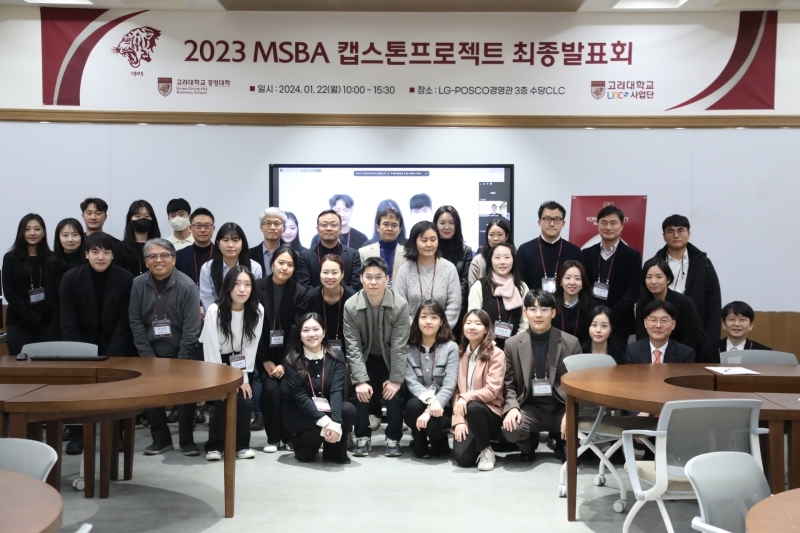
2023 MSBA 4th Capstone Project Final Presentation Successfully Concluded    On January 22nd (Monday), the final presentation of the 2023 MSBA Capstone Project, hosted by the Center for Digital Transformation & Business (hereinafter referred to as CDTB, Director=Park Kyung Sam) of Korea University's Business School (Dean=Kim Sang Yong), took place at the LG-POSCO Building's Soodang CLC on the third floor. The participating students were from the general graduate school's Department of Business Administration, majoring in Business Analytics. Formed into 9 teams, the students utilized data provided by collaborating corporations to analyze existing businesses and conceive new business models for their presentations. This event saw the attendance of presenters, collaborating company representatives, and faculty, who evaluated the projects that had been ongoing for a year and confirmed the eligibility for the university's master's degree. The 4th capstone project's collaborating corporations included a total of 7 entities: △LG CNS, △Kyobo Life Insurance, △PwC, △E-Land, △Korea Credit Information Services, △Hyundai Motor Company, and △LG Household & Health Care.      Team 1 (Heeseok Kim, Eunbyul Shin) presented on the topic of 'Customized Chatbot Construction Utilizing LLM and RAG for Companies'. As domestic companies have begun to adopt and utilize generative AI, Team 1 aimed to construct a customized LLM chatbot that could effectively search and learn internal information related to the company's consulting business. Through pilot testing, they received significant feedback indicating the willingness to use this technology as an auxiliary means. A representative from LG CNS positively evaluated the project, noting that despite concerns about operational security, the company could make good use of the outcomes. Professor Lee Gunwoong, the team's advisor, also provided a passing grade, mentioning, "Although it's not ready to be a main tool in companies, it has achieved significant results in extracting meaningful data."    Team 2 (Seunghyun Lee) conducted research on 'Bond Interest Rate Prediction'. Team 2 attempted to construct a model predicting bond interest rates using various real economy indicators, focusing on 10-year maturity bonds. During the process, they encountered difficulties with model prediction accuracy and variable setting. A representative from Kyobo Life Insurance highly praised the effort, as it aligned with the spirit of industry-academic cooperation and mentioned that the company could fully utilize the project's outcomes, as they had been conducting many similar research on the same topic as well. Professor Kim Jeunghyun, the team's advisor, noted the student's enthusiasm and awarded a passing grade for providing meaningful data to Kyobo Life Insurance after much effort.      Team 3 (Heejae Kim, Sunju Hwang) was in charge of research on 'Deriving Target Client Groups through Corporate Pension Client Segmentation'. With the corporate pension market growing rapidly, the importance of corporate clients has significantly increased, setting the stage for their research topic. They aimed to support Kyobo Life Insurance's decision-making by classifying prospective corporate clients into 5 groups based on their likelihood of enrollment. A Kyobo Life Insurance representative valued the practical application of real sales data in the results, stating that insights obtained could guide future sales activities. Professor Kim Jaehwan, the team's advisor, remarked on the research's origins from considerations on how to improve the sales success rate of salespersons, which is only 10%, and expressed a desire to pass the team, despite some shortcomings, with further improvements.    Team 4 (Boram Cho, Boyeon Ham) researched whether increasing human intervention in marketing practices, such as advertising and UI creation using GPT, improves the quality of the output. This research started from the assumption that GPT still plays a supportive role in marketing. However, the project findings indicated that human intervention could sometimes negatively affect the results. Therefore, Team 4 suggested utilizing GPT not just as a supportive role but as an 'Augmented tool'. They explained that even non-experts in the design field could quickly and cost-effectively produce initial drafts using GPT. A PwC representative praised the topic's recent relevance in the industry and the lack of preceding materials on using it for business, commending the excellent results presented. Professor Kim Baeho also lauded the project, attributing its success to the students' professional backgrounds.      Team 5 (Yebin Ko, Doyun Kim) presented on 'Formation of SPAO's Distribution System and Sales Volume Prediction Model Using Machine Learning'. The research aimed to improve the accuracy of product distribution across SPAO stores to increase sales and minimize stock transfers between stores. An E-Land representative mentioned planning to refer to the insights regarding considering various variables beyond sales performance and managing products based on predicted sales volumes. Professor Lee Hyunseok noted the company's interest in utilizing the research results and believed that the hard work of both students warranted the acquisition of their master's degrees.    Team 6 (Jumin Hong, Yoonjeong Lee) presented research on 'Analysis of Multiple Debt Risks Among Vulnerable Borrowers'. The study's goal was to analyze the characteristics of multiple debtors among vulnerable borrowers and develop a credit evaluation model unique to these vulnerable multiple debtors. After the presentation, a Korea Credit Information Services representative acknowledged initial challenges in data classification but saw potential in utilizing the research findings to classify vulnerable borrowers effectively. Professor Lee Heebum hoped for a successful conclusion to the project, indicating that there was still work to be done following the capstone presentation.      Team 7 (Woonghee Bae, Hyunbeom Kim) conducted research on 'Predicting SME Defaults and Developing Support Strategies Through Analysis of Technology Finance Information'. With technology finance serving as a crucial resource for SMEs to overcome the 'valley of death', the increasing delinquency rate in technology financing and banks' growing preference for secured loans over technology finance prompted this research topic. A Korea Credit Information Services representative praised the research as practically applicable. Professor Hwang Jun Ho highlighted the importance of financial variables in default prediction, suggesting that the research could be meaningful for practical use if financial variables were added.    Team 8 (Hojoon Yoo) presented on 'The Impact of Blue Members Activities on Vehicle Purchase Decisions: A Difference-in-Differences Approach and RFM Cluster-Based Relationship Management Strategy'. The research aimed to analyze whether Hyundai Motor Company's customer membership 'Blue Members' promotions influenced membership activities and, subsequently, vehicle repurchase decisions. Team 8 classified customers into three categories: loyal active customers, new active customers, and potential dormant customers. The analysis revealed that a single point usage by a Blue Members member increased the probability of vehicle repurchase by 0.5%. The team diagnosed that promotions related to fuel and movies should be conducted to convert potential dormant customers back into active customers. A Hyundai Motor Company representative appreciated the insights for developing a system to convert new customers into loyal ones, noting the effectiveness of the point system had been a concern. Professor Lee Hyun Seok praised the significant results achieved by the individual effort.    Team 9 (Yujin Kim, Seungeun Cha) presented a marketing strategy proposal for 'The History of Whoo' brand's successful entry into the Japanese cosmetics market. Specifically, they analyzed consumer reviews posted on a famous Japanese beauty comprehensive platform. With LG Household & Health Care looking to reduce its dependency on the Chinese market by entering Japan, Team 9 utilized data from the '@cosme' platform, which boasts over 16 million users in Japan. They conducted keyword and review analyses, suggesting focusing on promotional materials and recommendations by department store clerks as a marketing strategy. An LG Household & Health Care representative mentioned the meaningful use of the result data and planned deeper discussions on the topic. Professor Yoo Shijin praised the research's timing ahead of the market entry and the well-executed language processing in data analysis, suggesting that comparing with Korea and China in the Japanese market would be important in future research.      All 9 teams passed the project at the final presentation. After all presentations concluded, CDTB Director Professor Park Kyung Sam remarked, "This project was possible thanks to the continuous data and feedback from industry-academic collaboration institutions," expressing gratitude to all attendees for their participation amidst their busy schedules. 

2024.03.13 Views 4018

Predicting Demand and Persuading with AI,” DTB Colloquium Successfully Finished 

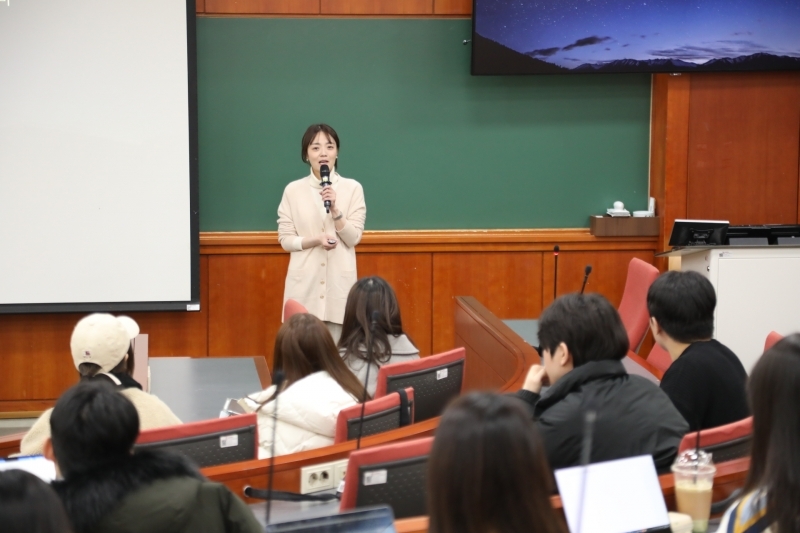
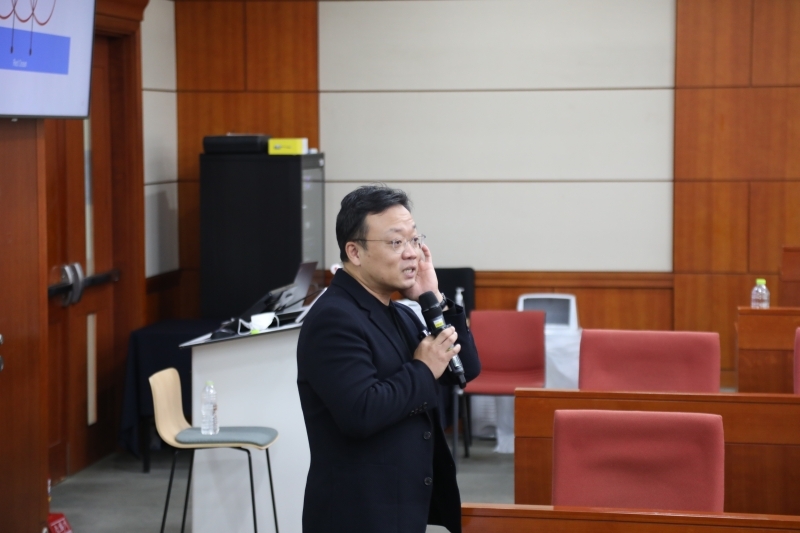
Predicting Demand and Persuading with AI,” DTB Colloquium Successfully Finished    The KUBS (Dean=Sang Yong Kim) Center for Digital Transformation & Business (Center Head=Kyung Sam Park, known as CDTB) organized the DTB Colloquium on January 10 (Friday) at LG-POSCO Hall Room 432. The event featured a lecture by Dr. Hyangmi Kim, an AI researcher at LG. Prior to the commencement of the lecture, Professor Park expressed gratitude to the students who attended despite their busy schedules and extended a warm welcome. He remarked, “Given the early exposure to the significant role and impact of AI, many students are curious about the application of AI in business and the trends in generative AI. I believe today’s lecture, based on practical experience, will be greatly beneficial to their studies.”    Dr. Kim obtained her Ph.D. from the KUBS Graduate School and completed her doctoral studies in Medical Engineering at Hanyang University. Over the past 15 years, she has contributed to various research areas including B2B marketing, education, and medical statistics through roles such as university lecturer, KT Economic Management Research Institute, secretary’s office, and Big Data Business Support Team. From 2019 to 2020, she served as the team leader of the AI Academy at LG Science Park, leading the cultivation of domestic AI talent and AI research. From 2020 to the present, she has been working as an AI researcher at LG, spearheading various projects aimed at advancing AI technologies and their business applications.      The colloquium had a theme of “How AI Can Help Your Business?” The first session, from 2:00 to 3:00 PM, focused on “Utilization of AI Models in Business,” while the second session, from 3:00 to 4:00 PM, delved into “Trends and Opportunities in Generative AI.” During the lecture, Dr. Kim explained △ the application areas of AI technology and companies’ investment in AI △ the development of AI technology △ the potential of generative AI, and efforts to overcome the limitations of AI technology.    Dr. Kim began the lecture by introducing the utilization of AI technology in various industries within the domestic business sector and the trends in corporate AI investments. In the medical field, AI plays a crucial role in patient treatment by being applied to medical image analysis, diagnostic support, and cancer prediction. Particularly, the use of AI in medical image analysis enables rapid and accurate diagnosis. In the manufacturing industry, AI is utilized for defect detection, quality improvement in production processes, and demand forecasting, enhancing production efficiency and reducing costs. Moreover, in the financial sector, AI is employed for investment portfolio management, risk analysis, and detection of financial fraud, providing more efficient financial services. With AI-based demand prediction, financial institutions can make more accurate decisions. AI is also utilized in life sciences and pharmaceutical development for molecule discovery, chemical synthesis, and anti-cancer vaccine development, enabling faster and more efficient research and development. Dr. Kim emphasized, “Korean companies are innovating in various fields through AI technology,” and projected that “the positive effects of AI will continue to enhance collaboration with humans across a wider range of fields.”       The discussion then moved on to the development of AI technology and the potential of generative AI. Generative AI utilizes unstructured deep learning models to generate content based on user input, representing a type of artificial intelligence technology that actively generates results according to the user’s specific requirements. This type of AI is gaining attention for predicting future technology trends and performing creative tasks. Dr. Kim explained, “Generative AI possesses characteristics that mimic the structure of the human brain, enabling large-scale computations and self-learning, indicating significantly superior thinking and learning abilities compared to conventional AI.” She added, “Due to these characteristics, generative AI provides experiences and creativity much closer to human levels.”      Over the past decade, major tech companies in the United States have significantly increased their investment in generative AI. This investment has led to a rapid increase in the pace of technological development, and major Korean companies also possess superlative AI capabilities. Dr. Kim stated, “This will be an important driving force for Korea to be recognized as a future technology leader.”    Towards the end of the lecture, there was a discussion on the importance of recognizing the limitations of AI technology and efforts to overcome them. Dr. Kim mentioned the limitations of generative AI, such as its inability to think in contextual terms and copyright issues. She emphasized, “As generative AI emerges, the importance of data reliability and expertise is greatly increasing.” She continued, “Generative AI is rapidly evolving into a field that provides tailored models for each industry. As a researcher in business administration, there is still ongoing consideration of whether it is possible to bring differentiated research points regarding this.” Finally, Dr. Kim concluded, “In order for AI and humans to coexist healthily, it is important for practitioners handling AI to enhance their expertise and increase the reliability of data. We have now entered a phase where AI is seamlessly integrated into education and business, convincing us naturally, rather than studying AI technology separately.”   

2024.03.13 Views 2893

Meaningful Memories for Future KUBS Students…The 16th Youth Mentoring Day Successfully Ended

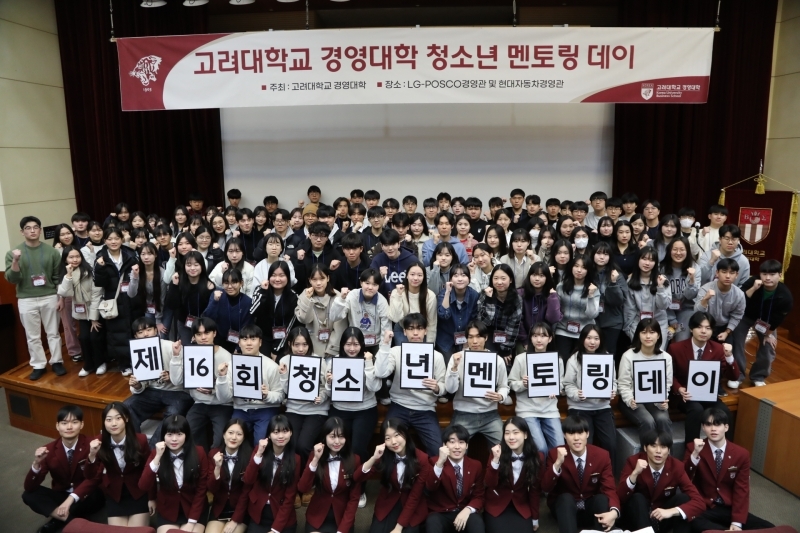
The 16th Youth Mentoring Day of Korea University Business School (Dean=Sangyong Kim) was held on January 27th at LG-POSCO Hall and Hyundai Motor Hall. This event was planned by KUBE (Korea University Business School Student Ambassadors) and enrolled student mentors for high school students nationwide.  The event proceeded as follows: △ Introduction of KUBS, △Introduction of 7 majors and 3 tracks (Professor Jungbien Moon), △ Campus Tour, △ Business Practical Exercise, and △ Conversation with KUBS seniors. KUBE introduced the Korea University Business School building, scholarship system, career support programs, etc. After the introductions, high school students who answered correct answers on quizzes about Korea University Business School received souvenirs.  Professor Jungbien Moon delivered a lecture on 'East Asia and Global Management in the 21st Century.' Professor Moon stated, "Korea's national power is currently surpassing a historical peak," and emphasized the need to enhance the resilience of Korean companies and the entire economy. He particularly mentioned the necessity of diversifying the global supply chain to the Indo-Pacific region in response to the US-China conflict. After lunch, students explored the campus with KUBE. The campus tour mainly covered the KUBS Main Building, LG-POSCO Hall, and Hyundai Motor Hall.  In the following 'Business Practical Exercise’ session, students have experienced formulating business strategies. They worked as daily consultants for a dessert company with mentors to develop strategies for overseas expansion, especially analyzing the Indo-Pacific region emphasized in Professor Moon's lecture. After the exercise, questions about university life including IPSELENTI and the Ko-Yeon Games were discussed during the group mentoring session.  Inseong Song (18 years old, Okcheon High School), who participated in the event, stated, "Attending lectures at Korea University and being on campus motivated me academically," and added, "It was beneficial to have meaningful conversations with current KUBS students." Wonseo Jung (19 years old, Sagok High School) expressed, "It was my first time in Seoul, so everything was new, and it was especially great to explore inside the KUBS building," and added, "I'm very happy to receive the Korea University mascot doll 'Hoi' after answering the quiz."  Korea University Business School's Youth Mentoring Day is held every summer and winter vacation. Applications can be made through the Korea University Business School Student Ambassadors KUBE homepage (biz.korea.ac.kr/kube). 

2024.02.07 Views 3707

“Entrepreneurship is a continuous process of questioning"... Entrepreneurship Academy Special Le

“Entrepreneurship is a continuous process of questioning"... Entrepreneurship Academy Special Lecture by Salady CEO Ahn Sangwon   On December 5th, the Entrepreneurship Academy for the second semester took place at the Business School (Dean=Kim Sang Yong) Startup Research Institute (Director=Moon Jung Bin). As the fourth speaker of the Entrepreneurship Academy Lecture series, CEO of Salady, Ahn Sang Won spoke on the topic of ‘F&B Entrepreneurship and Sustainability,’ providing insights and advice on the process of starting a F&B franchise business. Salady is a dining brand that started the market of salad, focuses on healthy fast food, and has expanded to operate over 300 locations nationwide since its opening in October 2013.        Ahn Sang Won, the CEO of Salady, who is an alumnus of Korea University, nurtured his dream of becoming a CEO from a young age and actively engaged in entrepreneurship activities while participating in the joint entrepreneurship society 'Insiders' of Korea University and Yonsei University. Through a program organized by Insiders called 'Entrepreneur of Misunderstanding,' he initiated a business using disposable utensil hygiene products, laying the foundation for his firm passion for entrepreneurship. Reflecting on that time, Ahn mentioned, "Although I didn't achieve success back then, it was a moment that gave me great enjoyment and energy for entrepreneurship,” and “it greatly contributed to founding and leading Salady.”    Later, Ahn dove into entrepreneurship with Lee Geon-ho, co-CEO of Salady, whom he met through his society activities. Ahn explained, "We connected well in terms of our values regarding entrepreneurship," and “we began ideation on various entrepreneurial concepts without limiting ourselves to a specific field.” The experience of visiting a salad restaurant during Lee Geon-ho's trip to the United States became the foundation for crystallizing their business idea. Ahn remarked, "Hearing about the active presence of salad specialty shops in the United States sparked a vision in my mind," describing the inspiration behind starting a salad restaurant.      Despite lacking specialized culinary knowledge, the two CEOs ventured into the restaurant business, attending cooking academies and working part-time at McDonald's to personally learn the ins and outs of the food service industry. In October 2013, they opened the first Salady branch near Seolleung Station. Ahn explained, "We aimed to create a brand that felt like the imported shops from the United States. We adopted the ambiance and feel of American brands from the exterior design to the domain.” Facing initial low sales, Ahn immersed himself in customer feedback, actively seeking improvements by visiting customers and making adjustments.     Ahn said, "Sales quickly increased as we modified menu composition and ordering methods based on customer feedback.” He also said, “I realized that considering customer demands delicately is important for survival in the restaurant business.” Building on the success of the first branch, Salady has grown into a franchise brand operating over 300 stores.    Ahn introduced the background of Salady’s growth, highlighting how the brand found unexpected breakthroughs during the COVID-19 pandemic. With the surge in health-related demand and the expansion of the delivery market, Salady was able to accelerate its growth. Ahn stated, "Before COVID-19, delivery orders accounted for 20% of sales, but after COVID-19, it grew to around 50%.” He explained, “Franchise business became more active, leading to rapid growth in profits of both the head office and franchise stores.”      Furthermore, Ahn provided realistic advice for those interested in F&B entrepreneurship. He noted that predicting customer reactions is the most challenging aspect of the F&B entrepreneurship process. Ahn shared cases where a menu created by chance became the top-selling item for the brand, while a menu crafted by experts recorded the lowest sales. Additionally, he pointed out that the unclear boundaries of the target market and low added value make success in F&B entrepreneurship not easily achievable. Ahn mentioned, "The F&B industry is a very challenging and competitive business, but at the same time, the difficulty presents numerous opportunities, making it attractive for entrepreneurship."     Ahn emphasized the importance of decision-making and sustainability throughout the entrepreneurship process. He stated, "Sustainability is not limited to simple environmentally friendly elements," and “bold verification and challenges in sustainability are encouraged.” Ahn also underscored the significance of decision-making in entrepreneurship, comparing the process to the game of Baduk, where countless moments require decisions.      Closing his lecture, Ahn sincerely advised aspiring entrepreneurs among the university attendees. He said, "When facing numerous challenges during the entrepreneurship journey, one may start questioning oneself and feel the desire to give up. You need to continuously question yourself about the reasons for pursuing entrepreneurship.” Ahn concluded, "Entrepreneurship is a dream that anyone can try and achieve," expressing his hope that individuals won't be discouraged by those who are ahead or have already achieved their goals. Lastly, he stressed the importance of having confidence while being humble. The lecture concluded with a Q&A session. 

2024.01.18 Views 4122

Data Analysis as Seen by Data Experts… DTB Colloquium

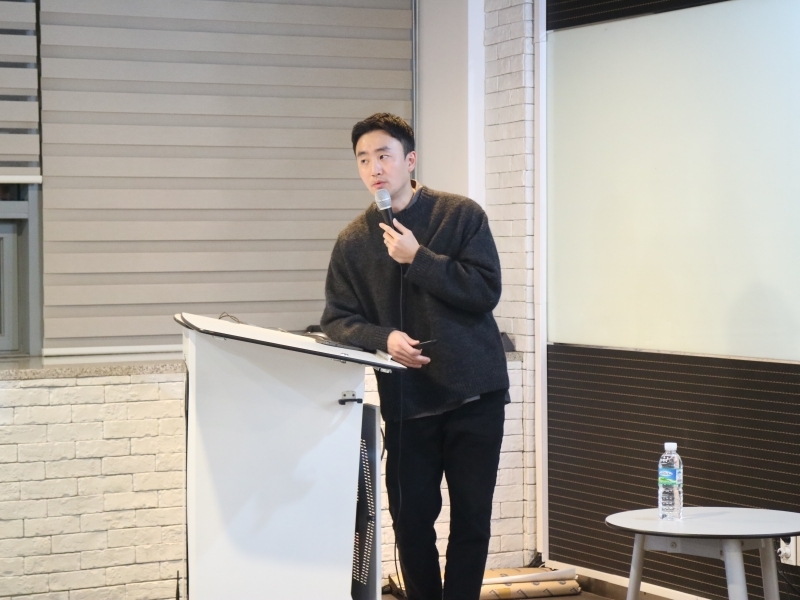
Data Analysis as Seen by Data Experts… DTB Colloquium     The Korea University Business School (Dean=Sang Yong Kim) Center for Digital Transformation & Business (Head=Kyung Sam Park, referred to as CDTB), hosted a colloquium on December 8, 2023, at LG-POSCO Hall Room 432. The keynote speaker for this event was Dong-Kyu Park, a managing director at PwC (PricewaterhouseCoopers), who delivered a lecture on ‘Data Scientists with both Business Understanding and Data Analysis Skills.’    Dong-Kyu Park has worked as a consulting service partner focusing on manufacturing, banking, and capital markets for over 22 years since 2001. He has been involved in a wide range of consulting tasks, including business and IT implementation, possessing specialized knowledge not only in business intelligence but also in IT technology, Corporate Performance Management (CPM), and analysis services. He has also implemented a social data mining system in collaboration with the Korean government agency ETRI in the field of analysis. PwC has been a collaborating institution for the Business Analytics program in the university’s graduate school of business, providing significant assistance in capstone projects.      During the lecture, Park explained △ the role and importance of data analysts △ real cases and importance of data analysis △ and practical applications of data analysis for enhancing competitiveness. He highlighted the essential qualities for data analysts, including △ proficiency in various areas such as data analysis, coding, and architecture, △ a mindset for business and statistics and analysis, △ and the ability to empathize with others. He mentioned, “The utility of the profession of a data analyst itself is becoming increasingly extensive, and the extent to which an individual analyst can contrite to a company varies more based on their capabilities and characteristics rather than the identity of the profession.”    Regarding real cases of data analysis, Park emphasized the importance of ‘human psychology’ in data analysis, stating that “Since people are not always logical, even if statistical figures are presented, they might not consider them if they are not persuasive.” He added, “More important than data analysis itself is the ability to empathize with people and utilize their psychology.” For instance, he cited insurance enrollment, mentioning that “When people enroll in insurance, they tend to decide to purchase based not just on information gathering but on the recognition of the necessity, following the recommendation of an insurance planner.”      Park continued by highlighting the gap between theoretical target marketing and understanding customer psychology, stressing the importance of understanding the context and comprehending human-to-human behavior in data analysis situations.    Finally, as qualities of a data analyst, Park stressed the importance of always possessing common sense and cultivating the habit of questioning to become a good data analyst. He conveyed that for data analysis to drive decisions such as purchases, it is crucial for data analysts to approach with a high level of empathy and a business mindset. He concluded the lecture by stating, “Organization takes precedence over data analysis,” and advised not to forget that understanding people and accurate situational understanding should be prioritized in data analysis.    

2024.01.18 Views 3334

Proud alumni gathered in one place... The 41st KUBS Alumni Night

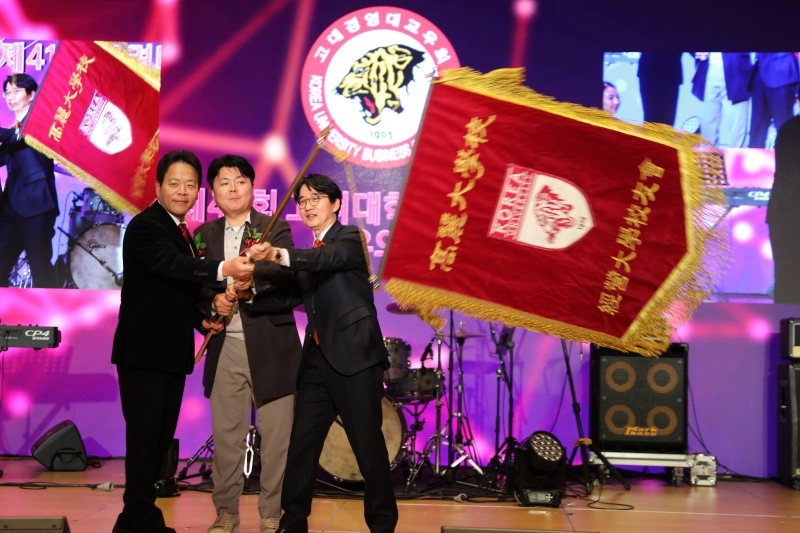
Proud alumni gathered in one place... The 41st KUBS Alumni Night    On December 1st, the 41st KUBS (Dean=Kim Sang Yong) Alumni Night took place at COEX Convention Grand Ballroom. The Alumni Night is an event where graduates and current students of the business school come together, and this year's event was attended by many faculty members from KUBS, including Dean Kim Sang Yong, President Kim Dong-One, Director Shin Hojung of the External Cooperation Office, Vice Dean Lee Janghyuk, and newly appointed professors Lee Jaemin and Lee Kyuhan. The cocktail reception, held before the main event, provided an opportunity for alumni to mingle and share stories. The event officially began with the entrance of various flags such as the Korean national flag, the KUBS flag, and the alumni association flag. Dean Kim Sang Yong and KUBS Alumni Association President Lee Dong-seop energetically waved the KUBS flag, igniting the atmosphere at the COEX Convention Grand Ballroom.      Following the national anthem, Lee Dong-seop, the president of the alumni association, expressed, "The 41st KUBS Alumni Night marks a celebration of the unity and solidarity of KUBS alumni. KUBS alumni have not only excelled in the domestic business and political arenas but have also made significant contributions on the global stage."    Subsequently, KUBS Alumni Association President Seung Myung-ho and President Kim Dong-One delivered speeches. Seung Myung-ho stated, "KUBS Alumni Night, which began in 1982, has become a splendid tradition of fostering beautiful harmony and friendship among alumni. Through consistent scholarship contributions, KUBS has demonstrated its commitment to the development of the business school and love for junior colleagues." He also introduced the remarkable progress of the KUBS, expressing gratitude toward faculty members who devoted themselves to education and research, and to alumni who granted generous donations to their alma mater.       President Kim Dong-One introduced the new aspiration of Korea University with the school approaching its 120th anniversary, stating that “KUBS is a college that has evolved since the inception of Korea University.” He highlighted the construction of the Science campus’ central square through an anonymous donation of 630 billion won, substantial contributions from Alumni President Seung Myung-ho and Chairman Koo Ja-yeol of Korea University's Development Committee, employment of assistant professorships, multicultural talent scholarships, and the establishment of the K-CLUB, a research network for world scholars. He expressed his aspiration for Korea University to evolve into a world-renowned institution contributing to global society beyond being the nation’s university, especially as it approaches its 120th anniversary.      Next, Dean Kim Sang Yong delivered a speech and provided an overview of the current academic status of KUBS. He mentioned that KUBS boasts the largest and most esteemed faculty in Korea with 83 full-time professors. Additionally, KUBS actively engages in research and academic activities through research institutes and centers such as the Corporate Management Research Institute, Corporate Governance Structure Research Center, Startup Research Institute, Center for Digital Transformation & Business (CDTB), and ESG Research Institute.    Dean Kim also highlighted various scholarships available at KUBS, including KUBS Talent Scholarships (KUBS Future Business Leader Scholarship, KUBS Future Talent Scholarship), Ko-kyeong Academic Pursuit Scholarship (Scholarship for Academic Support in KUBS/Individual and Corporate Donations), and KUBS Dream Scholarship (Scholarship for Living Expenses in KUBS/Individual and Corporate Donations). These scholarships aim to support students in their academic pursuits.    Dean Kim Sang Yong discussed KUBS achievements, mentioning that Korea University produced 164 successful candidates for the 2023 Certified Public Accountant (CPA) exam, achieving the highest number of successful candidates for eight consecutive years. Additionally, KUBS secured top rankings in various indicators such as the 2023 QS Academic Area Ranking for Accounting & Finance (1st among private universities in Korea), 2023 UN NEWS & World Report for Economics & Business (1st in Korea), and the 2022 Academic Ranking of World Universities (ARWU) for Business Administration (1st in Korea).      Following Dean Kim's speech, Lee Dong-seop, president of the alumni association, presented a token of appreciation to the president of the ‘95 alumni association. The ‘95 alumni demonstrated a strong alumni network by donating 60 million won in scholarships to KUBS. Scholarship donations have become a tradition during the Alumni Night, reflecting the warm sentiments of senior colleagues.      In addition, alumni awards were presented to Choo Kyung-ho (Business '79), Deputy Prime Minister for Public Service, Jung Eui-sun (Business '89), Chairman of Hyundai Motor Group, and Son Jae-il (Business '84), CEO of Hanwha Aerospace, in the public sector, business sector, and professional management sector, respectively. Choo Kyung-ho, the recipient in the public sector, has dedicated over 40 years to public service and politics, serving as a member of the 20th and 21st National Assembly. Under the administration of Yoon Seok-yeol, he concurrently holds the positions of Deputy Prime Minister for Economic Affairs and Minister of Planning and Finance, overseeing the nation's economic policies.      Jung Eui-sun, the recipient in the business sector, assumed the position of Chairman of Hyundai Motor Group in 2020, following roles as President of Kia Motors and Vice Chairman of Hyundai Motor. Under Chairman Jung's leadership, Hyundai Motor Group is actively pursuing innovation based on a philosophy of human-centered progress for humanity. Chairman Jung was also the first Korean to receive the Honorary Commander of the Most Excellent Order of the British Empire (CBE) after the ascension of King Charles III in the United Kingdom.    Son Jae-il, the recipient in the professional management sector, has been with Hanwha Group since 1990, contributing to the growth of the group's defense business. He also served as the president of the Korea Aerospace Technology Institute, contributing to the successful launch of the 3rd launch of Nuriho satellite and the country's ascent as one of the world's seven leading space powers.    The award ceremony was attended by Deputy Prime Minister Choo Kyung-ho and CEO Son Jae-il, while Chairman Jung Eui-sun was represented by Choi Jun-young, CEO of Kia Motors and also an alumnus from the class of '82.      The night continued with toasts, a banquet, and celebratory performances by the KUBS dance group "BROADEN" and the KUBS rock band "You and Me." The 41st KUBS Alumni Night concluded with a prize draw, performances, singing of the school song and chants.   

2023.12.21 Views 4784

  • 첫페이지로
  • 51
  • 52
  • 53
  • 54
  • 55
  • 마지막페이지로