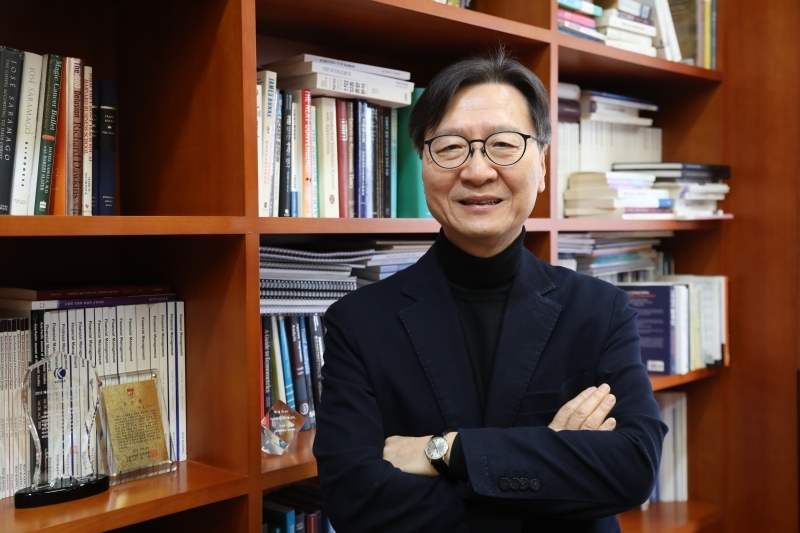
[Interview with a Professor Retiring from KUBS] Professor Sooyoung Kwon - Leaving the Steadfast Sanc
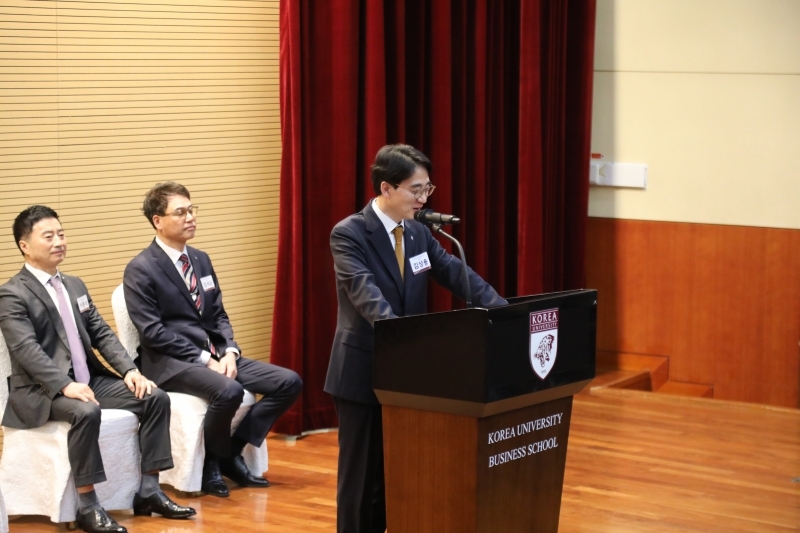
On February 28th, a retirement ceremony for Professors Sooyoung Kwon, Kyungsuh Park, and Jaemin Han was held at the Ahn Young-Il Hall on the 6th floor of the LG-POSCO Building. Professor Sooyoung Kwon nurtured young talents in KUBS for 31 years, Professor Kyungseo Park for 24 years, and Professor Jaemin Han for 33 years. On this occasion, the Korea University Business School Journal asked them to share their thoughts on retirement.
Leaving the Steadfast Sanctuary of Bugaksan Mountain and the Hills of Anam... Wishing Endless Development for KUBS
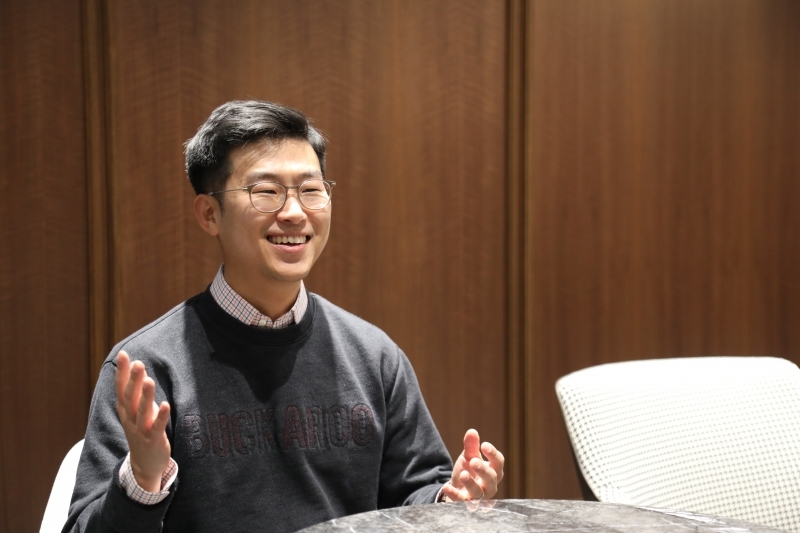
[Interview with a Professor Retiring from KUBS] Professor Sooyoung Kwon
Professor Sooyoung Kwon, having served 31 years as a professor, not only achieved outstanding academic accomplishments in the field of accounting through numerous papers and books but also led the development of Korea University’s Business School by holding several positions such as Dean of the Business School, Dean of the Graduate School of Business Administration, Vice President for Administration and Finance, Associate Dean of the Graduate School of Business Administration, and Academic Advisor of the Accounting Department. Outside the University, he made significant contributions to the development of the business academic world both domestically and internationally by taking on major roles such as President of the Korean Accounting Association, Vice President of the Korean Management Association, and member of the SEC Liaison Committee of the American Accounting Association. He also served as the Associate Editor of the Asia-Pacific Journal of Accounting and Economics, President of the Fair Value Evaluation Study Group, and Chairman of the Accounting Advancement Forum, thereby widely promoting the prestige of the KUBS.
Q: How do you feel about leaving the KUBS after such a long time?
A: It feels like I've completed a marathon. When I started running, there was no time to look around; I could only keep moving forward. Sometimes I overpaced and got tired, but as I kept going, the scenery gradually came into my view. Semester after semester passed, and before I knew it, 3 years, 5 years, 10 years had gone by, and then 20 years, 30 years, and suddenly I was at the finish line.
During this time, I was truly happy to conduct research and teach within the fence of Korea University’s Business School. The prestige of Korea University, coupled with interacting with excellent students and capable colleagues, allowed me to grow even more. While there are things I wish I could have done better during my tenure, I'm also excited about the future. There were many things I wanted to do but couldn’t because I was too busy. Now, I want to take my time and gradually start doing them one by one.
Q: What motivated you to pursue a career in academia?
A: While doing my MBA in Texas, I took an accounting class and was fascinated by how accounting is not just functional or boring but forms the basis of society. Realizing that accounting information can transform organizations and even advance society made me want to study accounting academically. After working in practical roles in a company, pursuing an MBA led me to think that a career in academia would also be a good path.
Q: You've held many positions at the Business School and Korea University. Can you tell us about your achievements while serving as the Associate Dean of the Graduate School of Business Administration?
A: When I was Associate Dean, the Graduate School of Business Administration was more of a specialized graduate school that, despite calling itself a global standard MBA, lacked sufficient curriculum and credit hours. As Associate Dean, I led the transition to a professional graduate school, gaining approval and designing programs such as the Global MBA, Finance MBA, and Asia MBA. In particular, I remember visiting Fudan University and the National University of Singapore about ten times to narrowly secure the agreement for the Asia MBA.
Also, we pushed to name the existing evening program the Korea MBA to distinguish it from other MBA programs, signifying it as the oldest and best in Korea. That period was full of changes. We applied for and were selected for the BK project with excellent results and worked tirelessly to receive fast-track accreditation from EQUIS, a European quality improvement system for business schools, which I still vividly remember.
Q: You led the creation of the country's top MBA program. Is there a story behind the naming of the K-MBA?
A: There was a lot of deliberation over the name. We initially called it the Evening MBA, but then a colleague suggested that emphasizing the evening was unnecessary, which led me to consider calling it the K1 MBA, to signify Korea's number one MBA. However, another colleague pointed out that K1 resembled the name of a fighting sport, which led to further deliberation on a suitable name.
We decided to firmly go with Korea MBA, reflecting Korea University's legacy and prestige as the oldest and best business school, which eventually became known as K-MBA. Looking back, it seems like a very wise decision, especially considering how the 'K-' prefix has come to represent Korean culture and content internationally.
Q: As someone who has contributed to the history of the Graduate School of Business Administration and planned the Korea MBA, how do you feel about the current state of the MBA programs at the KUBS?
A: I'm very proud. We started with the vision of creating the best MBA program. It feels great to have externally established and maintained the recognition of being the best, receiving top scores in evaluations. Looking at MBA programs from KUBS to achieve the highest domestic rankings and positions on global lists, I believe it's the result of the collective efforts of all the faculty members.
Q: You've also achieved a lot as the Dean of the Business School.
A: As the Dean of the Business School, I established the mission to nurture future leaders who contribute to society, with strategies including global partnerships, innovative education, and industry collaboration. Notable achievements in global partnerships include exchange agreements with Peking University Shenzhen, IE Business School in Spain, Washington University in St. Louis, and the University of Michigan. Particularly, the "Washington University Project" celebrated the 60th anniversary of introducing modern business administration to Korea University in 1957 by Washington University in St. Louis through academic exchanges and agreements. Another achievement was the Asia Tri-lateral Seminar agreement with Peking University Shenzhen and Hitotsubashi University Tokyo, with annual seminars each university hosted.
For innovative education, we revamped the curriculum to foster interdisciplinary talents and creativity, introduced flipped classrooms, and launched the KUBS Futurum Lecture Series featuring lectures by world-renowned scholars. We also held seminars to forecast macroeconomic variables and predict corporate management environments, enhancing the social value of business studies. Collaboration with industry expanded through international internships at global companies and entrepreneurship training at the KUBS Startup Station. Additionally, being selected for the LINC+ project, a government-led university-industry cooperation initiative, and utilizing the funds for entrepreneurship support services, global industry collaboration programs, and international internships were significant achievements.
Q: I heard that while you were the Dean of the Business School., you also embarked on a project to trace the origins of KUBS, which dates back to the foundation of Korea University.
A: The predecessor of Korea University was Bosung College. We knew it was located in Susong-dong, Jongno-gu Susung-dong but its exact location was unclear. However, there is a photo from 1920 showing a baseball game in the playground of Bosung College, where a scholar tree standing to one side appears identical to the one currently at Jogyesa Temple. This single photo confirmed that Bosung College once stood where Jogyesa Temple is located today. As a result, the Korea University Business School along with the School of Law, Jogyesa Temple jointly received seeds from this scholar tree. The seeds were then germinated at Korea University's farm, grown into saplings, and planted on campus. Scholar trees are traditionally planted at educational institutions, so planting one from the original site of Bosung College holds great significance in reconnecting with our roots and traditions.
Q: Could you briefly introduce your research area and achievements?
A: My research interests lie in financial reporting, audit quality, and the audit market. Initially, my research primarily focused on the effects of accounting standards and the quality of financial reporting, but it gradually shifted toward auditing. Accounting is a discipline with a high relevance to practice, more so than other areas of business studies. Consequently, I became interested in topics that have practical implications and can offer policy alternatives. A paper published in an audit journal in 2014 provided insights for many countries, including the United States, which was considering mandatory auditor rotation, and was introduced at a public hearing by the U.S. SEC. In 2012, I established the Fair Value Evaluation Study Group composed of valuation experts, contributing to the systematization of fair value evaluation techniques, which became crucial with the introduction of International Financial Reporting Standards in 2011.
Holding various positions during my tenure made continuous research challenging. Despite building a global network through academic exchange, administrative duties often caused interruptions, taking years to resume where I left off. Upon preparing my public service record, I found that I had published 23 papers in international journals, 91 papers in domestic accredited journals, and authored five books in accounting. Additionally, I conducted 26 research projects commissioned by entities like the Korean Institute of Certified Public Accountants, the Financial Supervisory Service, the Accounting Standards Board, and leading listed companies, providing policy implications and practical guidelines to contribute to the social role of accounting.
Q: Do you have any memorable episodes from your long teaching career?
A: A memorable moment was creating a cultural and arts experience course for the Korea University’s 100th anniversary celebration, attended by alumni from 25 countries. The profound impact of Korea University's development and hospitality towards the alumni, led them to spontaneously donate during the event, making it one of the most successful programs. I was proud as the program director. Based on this program, I introduced a "Culture and Management" course at the Graduate School of Business, Administration which became one of the most popular among students. As dean, I also aimed to cultivate humanities sensibilities and insights in the "Global CEO" course, preventing the business curriculum from being overly focused on numbers and theory.
Q: You have nurtured numerous students at Korea University’s Business School. Do you have any memorable episodes with them?
A: One of the privileges of being a professor at the KUBS was the opportunity to teach outstanding students and watch them grow. Some relationships became especially close when I officiated their weddings, wrote letters of recommendation for Graduate School, or supervised their theses. One student stands out, who since freshman year would ask me to buy him lunch whenever we met.
It was unusual for an undergraduate to approach a professor so comfortably. Nevertheless, this led to a long-standing relationship, and I wrote him a letter of recommendation for his master's/Ph.D. program in accounting. He later married one of my master's thesis supervisees, and now he is a professor abroad, having co-authored three papers with me. Seeing a student I've known since their freshman year grow into a colleague in the field of accounting is incredibly gratifying.
Q: Would you like to share any messages with all members of Korea University’s Business School?
A: Starting from the Department of Commerce in 1905 and introducing the first domestic course in Business and Economics in 1937, followed by the establishment of the first domestic Department of Business Administration in 1955, we have always maintained a pioneering and leading position. Alumni of KUBS have stood at the forefront of South Korea's development. As we approach the 120th anniversary of the KU foundation, I am confident that the future of the KUBS will continue to be bright, thanks to the many distinguished professors there.
Just as spring follows winter, the old give way to the new, heralding the start of a new environment. Although I am leaving the strong fortress of Bugaksan mountain and the hills of Anam, my spiritual home, I will continue to support Korea University and its Business School as I always have. I wish for the KUBS to enjoy endless development.
2024.04.01
Views 4270