TOP

KUBS News

Total 1416

Department of Business Administration, Graduate School, Korea University Recruiting New Students

Department of Business Administration, Graduate School, Korea University Recruiting New Students for Fall 2026… Applications Open Until April 9   A new opportunity is opening for those seeking to advance both their research direction and career development. The Department of Business Administration at the Graduate School of Korea University has begun accepting applications for domestic students for the Fall 2026 intake, with the application deadline set for 5:00 PM on Thursday, April 9.   As the business environment continues to evolve rapidly, the criteria for selecting a graduate program are also shifting. Beyond the name of the major, the strength of the research environment and academic network has become an increasingly important factor.    ▲ A group of full-time faculty members at Korea University Business School pose for a commemorative photo.    Korea University Business School boasts one of the largest research infrastructures in the country, supported by 95 full-time faculty members. This is considered a key strength, as it enables applicants to choose academic advisors who closely align with their research interests and topics. The faculty’s diverse expertise, spanning a wide range of subfields and research areas, provides a strong foundation for graduate students to conduct rigorous and advanced research.    As a research-oriented graduate school, Korea University Business School is also strengthening its interdisciplinary research environment to reflect rapidly evolving industries and societal needs. With a focus on the so-called “4Tech” fields—AI, semiconductors, robotics, and energy—the school is expanding the scope of business research beyond traditional boundaries and fostering the exploration of emerging challenges. Through this approach, students are able to analyze business phenomena from a more multidimensional perspective and develop their research questions into independent scholarly work.    Its research infrastructure is another key strength. Graduate students are provided with dedicated research spaces, including offices, seminar rooms, and lockers, along with access to data analysis software such as SAS, SPSS, STATA, and MATLAB. In addition, Korea University Library houses approximately 3.31 million volumes and 86,000 non-book materials, offering a comprehensive foundation for academic research.    In particular, students have access to major databases such as Bloomberg, Compustat, CRSP, WRDS, and LSEG Workspace. Recently, thanks to a donation from Eugene Investment & Securities, the number of Bloomberg terminals has been expanded to 12, further enhancing the research environment in finance and related fields.    Korea University Business School also offers a range of scholarship programs to support students in focusing on their research. These include full tuition coverage through research and teaching assistantships, as well as research scholarships under the BK21 program and merit-based scholarships. Approximately KRW 2.3 billion in scholarships are awarded annually, along with programs that encourage research activities, such as support for participation in international academic conferences.    For the Fall intake, the department will admit students to master’s, doctoral, and integrated master’s–doctoral programs in the following fields: Management, Global Business, Strategy, Finance, Information Systems (IS), and LSOM. The Marketing field will recruit only for doctoral and integrated programs, while Accounting and Business Analytics are excluded from this round of admissions.    The Fall admissions cycle is particularly meaningful as it provides another opportunity for applicants who have reassessed their academic or career paths following the Spring admissions cycle. For those who have further refined their research interests or career goals, this can serve as a strategic opportunity to select a research environment that best fits their needs.    Daeil Nam, Associate Dean for Research at Korea University Business School, stated, “As business studies become increasingly interconnected with industry, the importance of research environments and networks continues to grow,” adding, “We support our students in expanding their research and connecting it to real-world applications.”      ▶ Apply for Fall 2026 Domestic Graduate Admissions at Korea University ◀ 

2026.04.13 Views 30

2025 International Symposium of Marketing Successfully Concludes 

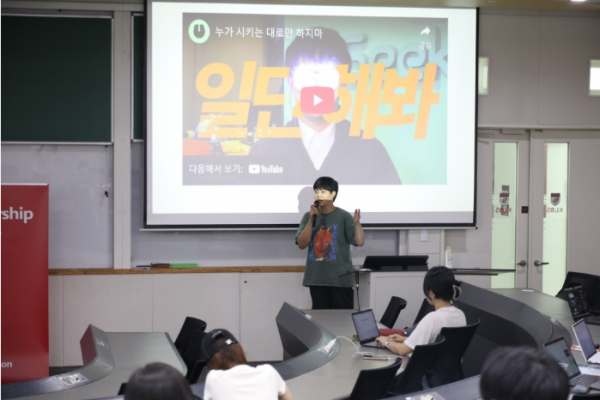
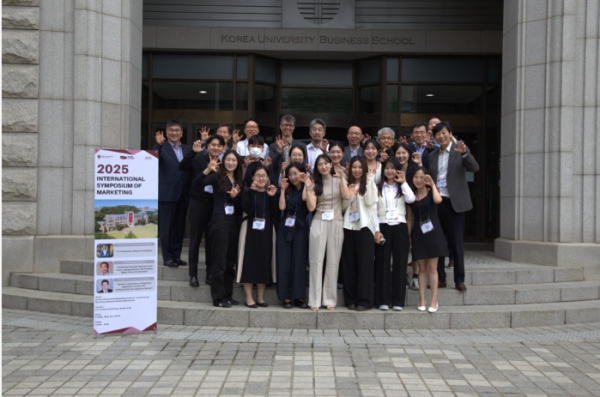
"Exploring the Future of AI and Consumer Behavior Analysis" — 2025 International Symposium of Marketing Successfully Concludes      On Friday, May 23, the Institute for Business Research and Education (IBRE) at Korea University Business School hosted the 2025 International Symposium of Marketing in Room 432 of the LG-POSCO Hall. Held in celebration of the university’s 120th anniversary, the symposium convened leading scholars from around the world to explore the convergence of artificial intelligence (AI) technologies and consumer behavior analysis.  Held under the theme “The Intersection of AI and Consumer Behavior Analysis,” the symposium moved beyond the mere adoption of technology to explore the multifaceted impacts of AI on human emotions, well-being, and market behavior. The event attracted significant interest from both academia and industry, underscoring AI’s potential to redefine the paradigms of marketing.      The first session featured Professor Stefano Puntoni of the Wharton School at the University of Pennsylvania, who presented on the topic “AI Companions Reduce Loneliness.” Professor Puntoni offered an in-depth analysis of how AI-based chatbots and virtual companions affect the emotional connection of modern consumers. His findings revealed that AI interactions can alleviate loneliness to a degree comparable to human interaction and yield greater emotional benefits than activities such as watching YouTube. Notably, the sense of “being listened to” significantly enhanced the AI’s effectiveness in reducing loneliness, underscoring the emerging potential of emotional bonding between consumers and AI as a new frontier in technology.      In the afternoon session, Professor Xin (Shane) Wang of the Pamplin College of Business at Virginia Tech delivered a presentation titled “Predicting Consumer Behaviors with Large Language Model (LLM)-Powered Digital Twins of Customers.” Professor Wang introduced a framework that leverages LLM-based digital twins of customers (DToC) to accurately predict consumer behavior. These digital twins are connected to real-time data and simulate consumers’ thought processes, emotions, and purchasing decisions—allowing marketers to forecast and optimize outcomes without direct consumer engagement. Unlike conventional prompt engineering approaches, this framework incorporates fine-tuning to improve contextual understanding and real-time responsiveness. As a result, it is gaining attention as a next-generation marketing tool that offers both high predictive accuracy and practical applicability.      The final session was led by Professor Masakazu Ishihara of New York University’s Stern School of Business, who presented on “Welfare Implications of Egg Price Regulation and Bird Flu: Evidence from the Japanese Market.” Professor Ishihara conducted a quantitative analysis of the relationship between market regulation and welfare outcomes, focusing on the bird flu outbreak and the Japanese government's egg price subsidy policy. His findings indicated that while the subsidy helped artificially stabilize prices, it also increased the financial burden on consumers. The study further suggested that alternative regulatory approaches without tax burdens could potentially lead to greater welfare gains.      The event concluded with closing remarks from Dean Eonsoo Kim of Korea University Business School. Dean Kim remarked, “This symposium provided a valuable opportunity for in-depth discussion on the future direction of marketing in the age of artificial intelligence. In celebration of our 120th anniversary, it was all the more meaningful as it allowed us to reaffirm the Business School’s vision for future-oriented research and education.” He presented commemorative gifts to the speakers in appreciation of their contributions, and the symposium came to a successful close with a group photo.      The symposium concluded successfully, presenting new directions for understanding consumer behavior while fostering in-depth discussions on how AI technologies can advance human-centric marketing. A representative from the Institute for Business Research and Education (IBRE) remarked, “Interdisciplinary dialogue that re-examines the core of marketing-in the age of AI will remain a key focus. We will continue to create platforms that connect academia and industry.”  Meanwhile, Korea University Business School has actively fostered academic engagement across a range of disciplines. In 2005, to commemorate its centennial, the school hosted a series of international symposiums organized by academic fields. Among them, the marketing discipline has continued to hold annual international symposiums, consistently sharing cutting-edge research and strengthening ties with industry through global academic exchange. This long-standing tradition has served as a key foundation for KUBS’s emergence as a research-driven institution. As a result, in the recently released 2025 QS World University Rankings by Subject, Korea University Business School ranked 28th globally and 1st in Korea in the field of marketing. This year’s symposium continues that legacy—providing a forward-looking platform to explore the future of marketing in the AI era, while meaningfully bridging academia and industry. 

2025.06.16 Views 3257

UEH Chooses to Learn from 50 Years of AMP Expertise at KUBS

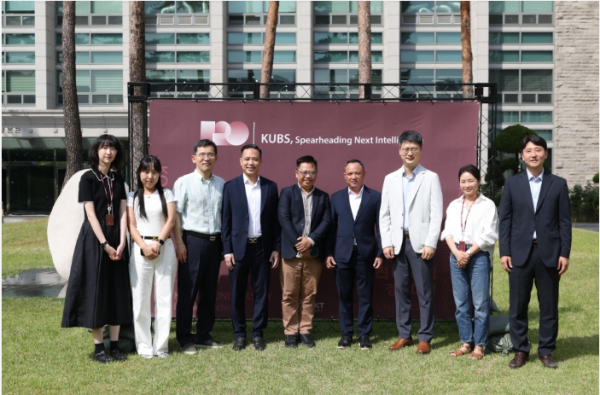
University of Economics Ho Chi Minh City (UEH) Chooses to Learn from 50 Years of AMP Expertise at Korea University Business School      On Tuesday, June 10, representatives from the University of Economics Ho Chi Minh City (UEH) visited Korea University Business School (KUBS) for an in-depth benchmarking meeting focused on KUBS’s overall operations and its flagship Advanced Management Program (AMP). The UEH delegation included President Nguyen Hoang Le; Le Quoc Thai, Head of Training Strategy; Duoong Minh Hai, Chief Accountant; and Christopher Han, Director of Innovation Strategy. Their visit aimed to deepen their understanding of the AMP offered by the KUBS Executive Education Center (EEC) and to exchange insights on program management and operational practices.    From KUBS, the delegation was welcomed by Associate Dean of the MBA Program Gangseog Ryu, Professor Kihoon Kim, Program Manager Sunyoung Park, and staff members Soyeon Eom and Suyeon Kang. The KUBS team provided an overview of the school’s educational philosophy and history, presented the structure and operational strategies of the Advanced Management Program (AMP), and engaged in a Q&A session with the visitors.  Founded in 1976, the University of Economics Ho Chi Minh City (UEH) is one of Vietnam’s premier universities. Designated as a National Key University by the Vietnamese Ministry of Education, UEH is also ranked among the world’s top 1,000 business schools. This visit formed part of UEH’s strategic efforts to develop high-level executive education programs aimed at supporting Vietnam’s continued growth and socio-economic development.  During the meeting, KUBS highlighted the strengths of its Advanced Management Program (AMP), including over 50 years of accumulated operational expertise, a systematic and practice-oriented curriculum, and one of the largest alumni networks in Korea. The two institutions engaged in a positive discussion on potential collaboration in the development and operation of future educational programs and reaffirmed their mutual commitment to ongoing exchange and cooperation. 

2025.06.16 Views 2531

“120 Years of Legacy, Connecting to the Future” – KUBS Celebrates Its 120th Anniversary

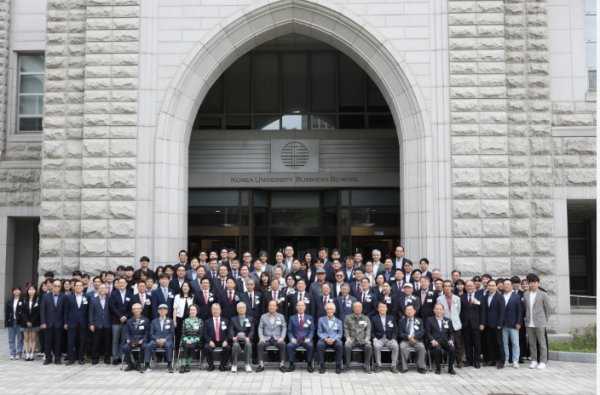
“120 Years of Legacy, Connecting to the Future” – Korea University Business School Celebrates Its 120th Anniversary      On Friday, May 23, Korea University Business School (KUBS) held a commemorative ceremony at SUPEX Hall in the LG-POSCO Hall to celebrate the 120th anniversary of its founding. This meaningful occasion marked both the 120th anniversary of Korea University and the establishment of the Department of Commerce at Bosung College—the predecessor of KUBS—offering an opportunity to reaffirm the school’s pioneering role as the cradle of business education in Korea.      The ceremony began with student ambassadors Shin Woo-jin (President of KUBE) and Kang Min-ji (Vice President of KUBE) serving as hosts. Following the national anthem and official proceedings, a series of congratulatory remarks were delivered. KU President Dong-One Kim stated, “The 120-year journey of KUBS is not only the history of the growth of business education in Korea, but also a story of challenge and innovation that has contributed to the development of the nation’s economy and society. In this era of great transformation symbolized by AI, I hope KUBS will continue to lead as a hub of future intellect and innovation.”  Alumni Association President Myung Ho Seung encouraged the students, saying, “KUBS has preserved its traditions while keeping pace with the changing times. I hope every student will rise to the global stage with fiery ambition and unwavering conviction.” Dongseop Lee, President of the KUBS Alumni Association, reflected on the school’s legacy, stating, “The 120-year history of business education has been built on the passion of our professors, the efforts of our students, and the dedication of our alumni.” He went on to highlight the late Sang-il Lee (Class of ’57) as a devoted benefactor, noting his consistent donations and support. “I am deeply grateful to KUBS for laying the foundation that enabled me to grow as an entrepreneur,” he said. He concluded by emphasizing, “Even in a globalized world, KUBS will continue to cultivate outstanding talent and contribute to the advancement of our alma mater, grounded in its traditions and strong alumni bonds.”  Alumnus Haksoo Lee (Class of ’65) delivered a congratulatory address, offering warm encouragement to the students: “I hope the four years you spend at Korea University Business School will be a great fortune and blessing for the Class of 2025.” He continued, “Today, I was once again reminded of how truly fortunate I was to have entered Korea University 60 years ago.” He went on to say, “When the university celebrates its 180th anniversary in 2085, I hope today’s freshmen will have become distinguished alumni who proudly pass down the traditions of Korea University and its Business School to future generations.”He also expressed his deep affection and gratitude for his alma mater, stating, “Korea University has always been my greatest source of strength and support.” “In return for the many blessings I have received, I have continuously sought to contribute to the university’s growth and development,” he added.      The event continued with a presentation reflecting on the 120-year legacy of KUBS. Professor Hojung Shin, Chair of the 120th Anniversary Commemorative Committee, gave a briefing on key milestones that have shaped Korea University Business School as a pioneer of business education in Korea, including: △the founding of Bosung College, △the establishment of the Department of Business Administration, △its elevation to an independent college, and △its transformation into a global business school.  Dean Eonsoo Kim presented an academic and strategic development report, expressing his appreciation by saying, “What began as the humble Department of Plutology has grown into Korea’s leading business school, thanks to the passion and dedication of so many.” He then introduced the school’s forward-looking vision of Next Intelligence, which aims to integrate Human Intelligence and Artificial Intelligence, and announced plans to establish the “3C 4Tech Trading Zone” within the school as a central space to bring this vision to life.      He emphasized, “A creative convergence space that breaks down the boundaries between technology, business, and art is a vital environment for nurturing the talent of the future,” and added, “This Trading Zone will serve as an open platform where students, companies, startups, and artists can freely interact, experiment, and grow together.”  The 3C 4Tech Trading Zone will feature the following:  △ 3C Café, offering refreshments and beverages; △ Transparent Whiteboards that encourage the free flow of ideas; △ Open Theater, presenting cultural content on Friday afternoons; △ Art Sculpture, a fusion of sculptural art and technology; and △ Art-Multimedia Practice Rooms.  Students from the Business School, College of Engineering, and School of Art and Design will form interdisciplinary teams to identify and carry out projects. These teams will collaborate with startups and companies, ultimately leading to the production of real-world products. The space will be operated as an Experiential Learning Place, where learning is driven by hands-on engagement. Dean Kim declared that through this initiative, Korea University Business School aims to become a central hub for cultivating creative talent grounded in 4Tech, reaffirming his strong commitment to leading innovation in future-oriented education.      The highlight of the ceremony was the Intergenerational Message Exchange. Alumnus Jaebong Suh (Class of ’65) delivered a heartfelt message to the freshmen of the Class of 2025, which was followed by a hopeful response from Hyunho Lee (Class of ’25), addressed to the incoming students of 2085. This symbolic moment of connection across generations left a lasting impression.  In his message, Alumnus Suh shared his life journey, including his experience of studying abroad in the United States with his family after graduation and the many challenges he overcame along the way. “I proudly say that I have lived a happy life thanks to the support of many people,” he said, encouraging the younger generation to embrace a spirit of challenge. He continued, “Although today’s youth face a difficult reality, you are students of Korea University Business School—carry the pride and responsibility that come with that name. When opportunities come your way, I hope you won’t hesitate, but step forward with courage.”    In his message to the Class of 2085, student Hyunho Lee began by saying,  “I feel truly grateful to be here, taking part in the 120th anniversary celebration of Korea University Business School.” He continued, “As I go through my student life, I often realize how fortunate I am to be studying in such an exceptional environment. The thoughtful care and warm atmosphere of the Business School support our growth,” and expressed his hope that this sense of gratitude will carry on into 2085 and beyond. His message to future generations has been sealed in a time capsule—along with a special edition of the Korea University newspaper from 1965 and articles featuring students from the Class of ’65—and is now on display at the KUBS Story exhibition in Hyundai Motor Hall, scheduled to be opened in 2085.      After the official ceremony concluded, all attendees stood together to sing the school anthem, sharing the emotion of the 120th anniversary. A group photo was then taken in front of SUPEX Hall, followed by a celebratory luncheon. The second part of the event began with a toast from alumnus Kwang Na (Class of ’65), who lifted the mood by proclaiming,  “Let us raise our glasses and shout: ‘Korea University Business School, shine forever, and ever, and ever!’”      For the past 120 years, Korea University Business School has laid the foundation for business education in Korea. For the next 120 years, it will continue its bold journey of innovation and global leadership. 

2025.06.16 Views 2843

KU Bayes Colloquium 2025: Bridging Theory and Practice in an Academic Exchange Forum 

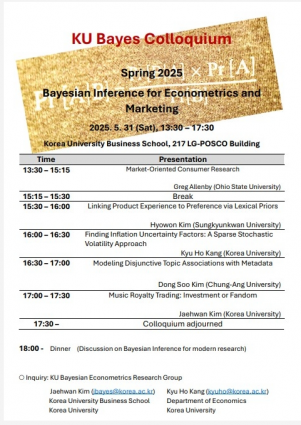
KU Bayes Colloquium 2025: Bridging Theory and Practice in an Academic Exchange Forum      Korea University Business School (KUBS) will host the KU Bayes Colloquium: Bayesian Inference for Econometrics and Marketing on Saturday, May 31, in Room 217 of the LG-POSCO Hall.  This colloquium provides a forum for sharing the latest research on Bayesian inference in the fields of econometrics and marketing, fostering academic exchange that bridges theory and practice. Since the spring semester of 2017, the KU Bayesian Econometrics Research Group—led by Professor Kyu Ho Kang of the Department of Economics and Professor Jae Hwan Kim of KUBS—has organized this event annually in collaboration with interested researchers at Korea University.  This year’s colloquium will feature a total of five research presentations.  The first presentation, titled “Market-Oriented Consumer Research,” will be delivered by Professor Greg Allenby of Ohio State University as part of an international collaborative project. This study explores consumer-centric quantitative modeling in the field of marketing.  The second session, titled “Linking Product Experience to Preference via Lexical Priors,” will be jointly presented by Professor Hyowon Kim (Sungkyunkwan University) and Professor YiChun Miriam Liu (Iowa State University). This study employs Bayesian methods to examine the relationship between product experience and consumer preference through the lens of lexical priors.  The third presentation, titled “Finding Inflation Uncertainty Factors: A Sparse Stochastic Volatility Approach,” will be delivered by Professor Kyu Ho Kang (Korea University) and Professor Hui-Jhong Choi (University of Rochester). This study investigates a quantitative method for estimating macroeconomic uncertainty through a sparse stochastic volatility framework.  The fourth presentation, titled “Modeling Disjunctive Topic Associations with Metadata,” will be delivered by Professor Dongsoo Kim (Chung-Ang University) and Professor Dongyub Kim (Gachon University). This study presents a novel approach to modeling topic associations based on metadata.  The final presentation, titled “Music Royalty Trading: Investment or Fandom,” will be jointly delivered by Professors Byungwan Ko, James L. Park, and Jaehwan Kim (all from Korea University Business School). This study analyzes transaction data to investigate the nature of music royalty trading platforms, exploring whether they primarily function as vehicles for financial investment or as fandom-driven marketplaces.  Following the colloquium, an open discussion session will be held under the theme “Bayesian Inference for Contemporary Research.”  This event is expected to serve as a meaningful platform for exploring interdisciplinary collaboration centered on Bayesian analytical methods, while also promoting active academic exchange among researchers from Korea and abroad. 

2025.06.16 Views 2379

KUBS Hosts Global Residency Asia for Xiamen University OneMBA Program 

“Experiencing the Korean Business Scene”… KUBS Hosts Global Residency Asia for Xiamen University OneMBA Program      Korea University Business School (KUBS) recently hosted a short-term educational program titled the “2025 Global Residency Asia for OneMBA,” inviting students from the OneMBA program, including those from Xiamen University in China. The program was designed to provide global MBA students with practical insights into Korean business and management practices, while also promoting academic exchange between the two institutions.      Held over four days from Tuesday, May 20 to Friday, May 23, the program took place at the Hyundai Motor Hall at Korea University and across various locations in Seoul and Gyeonggi Province. A total of 62 participants took part, including 55 OneMBA students, 6 faculty and staff members, and 1 accompanying spouse from Xiamen University.      The program served as a meaningful example of a collaborative model for global business education and further strengthened the partnership between Korea University and Xiamen University. Through lectures such as “Digital Transformation” by Professor Byung Cho Kim and “Data-Driven Decision – Default Prediction” by Professor Jeunghyun Kim, participants gained deep insights into Korea’s strategies for digital innovation. In addition, students participated in group discussions and presentations, actively exchanging ideas and perspectives. These sessions offered more than just classroom learning—they provided valuable opportunities to develop real-world collaboration and problem-solving skills.      As part of the experiential learning component, participants visited two major Korean companies: NAVER Webtoon and Amorepacific headquarters. At NAVER’s cutting-edge smart office, “1784,” students attended an English-language corporate introduction session and were given the opportunity to freely explore the facility. At Amorepacific, they joined a one-hour guided tour conducted in English, gaining firsthand insights into the business strategies and organizational culture of one of Korea’s leading consumer goods companies.      Students who completed the full program—which included six hours of lectures, three hours of presentations, and two company visits—will receive a certificate of completion signed by the Dean of Korea University Business School. This program provided participants with a valuable opportunity to gain practical understanding of Korean corporate culture and innovation strategies.      A special connection played a key role in bringing the OneMBA students to Korea University: Professor Xina Yuan, the accompanying faculty member from Xiamen University, is an alumna of KUBS. She was the first Chinese international student to earn both a master’s and Ph.D. in Marketing at Korea University under the mentorship of Professor Sang Yong Kim. Now a marketing professor at prestigious Xiamen University, Professor Yuan continues to enhance the global reputation of her alma mater.      One of the key features of the OneMBA program is that students can deepen their global perspectives and multicultural collaboration skills by directly experiencing the business environments and cultures of four continents—Asia, Europe, the Americas, and Africa—through local immersion modules.  After completing core courses at their home institutions, students participate in joint coursework through remote collaboration and residency modules, working alongside faculty and fellow participants from global partner schools.  For the recent OneMBA Global Residency Asia program, students from the △ School of Management at Xiamen University in China, △ FGV EAESP (Fundação Getulio Vargas) in São Paulo, Brazil, and △ Toulouse Business School in France joined students at Korea University Business School to study and engage in academic exchange together.   

2025.06.09 Views 2622

  • 첫페이지로
  • 26
  • 27
  • 28
  • 29
  • 30
  • 마지막페이지로