TOP

KUBS News

Total 1417

‘KUBS 120 MARCH’ Campaign Nears 40% of Goal … Total Pledges Reach Approx. KRW 4.6 Billion

‘KUBS 120 MARCH’ Campaign Nears 40% of Goal … Total Pledges Reach Approx. KRW 4.6 Billion Three major large-scale pledges secured within four months of launch … Campaign continues through May 31     Korea University Business School’s KRW 12 billion fundraising campaign, “KUBS 120 MARCH,” has secured approximately KRW 4.6 billion in pledged donations within just four months of its launch, nearing 40% of its goal.   Since the campaign’s launch in January, when pledged donations stood at around KRW 2 billion, the total has more than doubled in just three months. From December 1, 2025, to March 29, 2026, total pledges reached KRW 4,652,317,231, with 324 participants, including corporations, alumni, faculty, staff, and students.       | Three major pledges secured … Alumni and corporations join forces    One of the most notable achievements is the securing of three major pledges. An anonymous donor pledged support for the research fund, Eugene Investment & Securities Co., Ltd. for the development fund, and Samyang Tongsang for scholarships. Alumni account for approximately 62% of total pledges, while corporations represent about 35%, jointly driving the campaign forward.   Group donations have also continued. Following the participation of the Class of ’81 alumni association, the Business School Class of ’79 Scholarship Committee (28 members), the KUBS Class of ’98 Alumni Night (126 participants), as well as faculty and staff, have also joined the campaign.      | Expanding participation across classes, generations, and professions    The donor base is highly diverse. Participation spans from alumni who entered in the 1970s to current students from the Class of ’26, as well as members of EMBA, DBA, and AMP programs, undergraduate alumni, and even alumni from the College of Medicine. From individual research labs and faculty bands to student councils, all corners of the Business School are actively engaging with the campaign, further broadening its base of participation.   This campaign is particularly meaningful in that it places value not only on the total amount raised but also on participation itself. From small contributions starting at KRW 10,000 to major gifts reaching KRW 1 billion, every act of giving becomes part of the shared legacy of KUBS’s 120-year history.    | Investing in the future campus… Advancing the 3C Trading Zone and 4Tech strategy    The funds raised are being used to realize the Business School’s future vision. Alongside the advancement of the “4Tech Strategy,” centered on AI, semiconductors, energy, and robotics, spatial innovation projects are also taking shape.   The Business School is already operating AI-focused tracks and 4Tech micro-degree programs, and continues to expand its educational and research capabilities with its largest-ever full-time faculty body of 95 members.   On the basement level of Hyundai Motor Hall, the “3C Trading Zone (tentative name)” is currently under development, with a trading demo day scheduled for early May. The space will also include an Art & Culture Room. Artist Uhm Jung-soon’s installation piece, K, the Noseless Elephant, has already been installed in the building.   Construction has also begun on an LED display in the lobby of LG-POSCO Hall, which will serve as a large-scale digital donor wall. An opening ceremony is scheduled following the conclusion of the campaign in May.   Dean Eonsoo Kim stated, “We have come this far thanks to the collective support of each and every member,” adding, “We hope more people will join us on this journey as we prepare for the next 120 years of the Business School.”   The “KUBS 120 MARCH” campaign will continue through May 31, 2026. Donations can be made via the official sponsorship page (box.donus.org/box/koreauniversity/KUBS120march).   As of December 1, 2025 – March 29, 2026 | Total pledged amount: KRW 4,652,317,231

2026.04.17 Views 397

[Interview] Professor Taewon Park’s CEMS Skill Seminar – Learning “Real Business” Through Field Expe

[Interview] Professor Taewon Park’s CEMS Skill Seminar – Learning “Real Business” Through Field Experience     Field-based education that allows students to directly observe and engage with corporate transformation and innovation is drawing increasing attention. Korea University Business School’s (KUBS) CEMS Skill Seminar reflects this trend by offering students a unique opportunity to experience real-world business environments firsthand. The seminar was planned and led by Professor Taewon Park—Vice Chairman of Hancom Inc. and Board Member of Chung-Ang University—who used the transformation of Doosan Group as a central case study to emphasize the importance of practical, experience-driven business education that goes beyond theory. KUBS Business Weekly sat down with him to learn more about what “real business” means in today’s educational landscape and what he hopes to cultivate in future global business leaders.   Q1. What inspired you to design and lead the CEMS Skill Seminar? Each year, I teach a course on “Transformation” to students in the G-MIM program, focusing on how businesses evolve across generations. In particular, I use the case of Doosan Group, where I have built my career, to illustrate how corporate strategies shift and adapt over time. Doosan, founded in 1896, is one of the oldest companies in South Korea.   The company began as Park Seung-jik Store, a dry goods shop, in its first generation. In the second generation, it expanded horizontally and vertically, focusing on OB Beer and other B2C consumer goods businesses. In the third generation, Doosan underwent major restructuring, selling off its consumer businesses including OB Beer, and pivoting toward B2B industries such as heavy industries and construction equipment. In its current, fourth generation, the company is undergoing another transformation, shifting its focus to next-generation energy (such as SMRs), smart machinery, and advanced technology industries.   This Skill Seminar was designed to help students understand how businesses, like Doosan, adapt their strategies in response to technological and societal change in order to survive and grow. At the same time, the course aims to enhance students’ practical understanding of business by introducing key terminology used in real-world corporate settings.   Q2. What kind of learning or insights did you hope students would gain through the field visits and company tours? Whether or not they come from a business background, most students are exposed to management primarily through theory-based courses. However, real-world business is far more complex and dynamic. In my lectures, I emphasize the “Real Business World,” sharing how companies actually operate. This program allowed students to see how theory is applied in practice through two on-site learning experiences. The first was a visit to Doosan’s headquarters in Bundang, where students observed the office environment and employees’ working styles, and toured the corporate history museum, which outlines how the company’s business evolved through each generation. The second was a two-day field trip to Changwon, where students visited five factories—including smart factories—and experienced Doosan’s cutting-edge manufacturing processes firsthand. They also had the opportunity to see high-level technologies such as small modular reactors (SMRs) and gas turbines up close, both of which are manufactured by only a few countries worldwide. Through these visits, students were able to gain a vivid understanding of global industrial competitiveness.   Q3. Were there any memorable moments or student reactions during the seminar? What left the deepest impression on me was how satisfied students were with aspects of the program beyond the classroom. During the on-site learning experience, students stayed comfortably in five-star hotel accommodations, each with a private room. We also provided a ten-course dinner paired with wine. After dinner, students naturally gathered and continued to socialize through second and third rounds of informal meetups. This gave them the chance to share stories they didn’t get to exchange during class, and to build a stronger sense of connection and belonging. Rather than just a corporate site visit, the seminar became a meaningful experience of shared learning and interaction. I believe experiences like this leave a lasting impression. Perhaps thanks to programs like this, Korea University ranked first among the 33 CEMS member schools worldwide last year. I believe the Skill Seminar played a meaningful role in achieving that recognition.   Q4. What are your hopes for the KUBS CEMS program and the Skill Seminar moving forward? I find it highly encouraging that Korea University’s international standing has been rising in recent years. As an adjunct professor who also works in the field, I believe the role of faculty with real-world industry experience is becoming increasingly important. Education grounded in practical experience helps students cultivate realistic judgment and a global business mindset. I hope that the CEMS Skill Seminar will continue to serve as a dynamic educational platform that bridges theory and practice, Korea and the world—enabling students to grow into globally competitive and practice-ready business leaders.  

2025.08.06 Views 2362

AICG Distinguished Speaker Series, A Question about Short-Termism: What Is the Real Problem? 

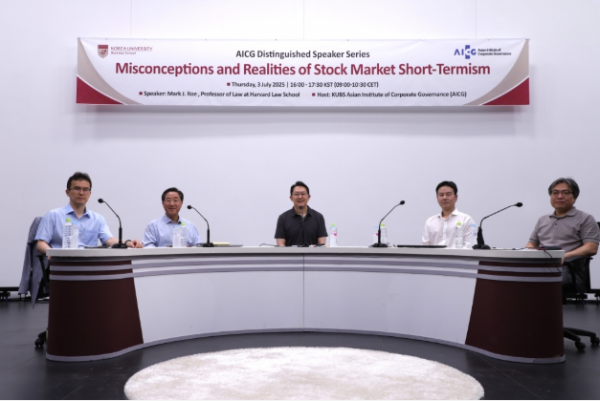
AICG Distinguished Speaker Series, A Question about Short-Termism: What Is the Real Problem?      Korea University’s Asian Institute of Corporate Governance (AICG) hosted an online seminar on Thursday, July 3, as part of its ‘Distinguished Speaker Series,’, featuring Professor Mark J. Roe, a world-renowned scholar in corporate law from Harvard Law School. The seminar was held under the theme, “Misconceptions and Realities of Stock Market Short-Termism.”  The event proceeded as follows: △ From 4:00 p.m. to 4:05 p.m., Professor Joon Ho Hwang of Korea University Business School served as the moderator, delivering a welcome address and introducing the speaker. △ From 4:05 p.m. to 4:40 p.m., Professor Mark J. Roe delivered the keynote presentation. △ From 4:40 p.m. to 5:40 p.m., a panel discussion was held, moderated by Professor Hwang, featuring Professors Woochan Kim and Ji-Woong Chung of Korea University Business School, Namuh Rhee, Chairman of the Korea Corporate Governance Forum, and Hyung-kyoon Kim, Executive Director of TCHA Partners Asset Management.  In his welcoming remarks, Professor Joon Ho Hwang stated, “I hope today’s seminar will move beyond the conventional understanding of stock market short-termism and serve as a platform for reflecting on a more balanced perspective and long-term vision.” He continued, “Today’s speaker, Professor Mark J. Roe, is a globally renowned authority in the fields of corporate law and governance. I believe his insights will offer meaningful implications for the Korean corporate landscape as well.”      Professor Mark J. Roe delivered his lecture based on his recently published book, 『Missing the Target: Why Stock Market Short-Termism Is Not the Problem』(Oxford, 2022). He argued that short-termism is an often exaggerated phenomenon, and that the notion of the stock market as the primary cause of reduced long-term corporate investment is overly simplistic. Instead, he explained that structural factors—such as the rapid pace of technological change, policy uncertainty, and intensified global competition —play a more significant influence in shaping corporate investment decisions.  In particular, Professor Roe remarked, “If stock prices were solely by short-term earnings, then during the pandemic—when corporate profits sharply declined—stock prices should have fallen. However, in reality, the share prices of many companies increased.” He presented empirical evidence to support the view that the stock market does, in fact, incorporate long-term outlooks. He further warned that the short-termism narrative could be exploited by certain stakeholders to defect responsibility and justify misguided  policy decisions, stressing that focusing solely on short-termism cannot provide a meaningful solution.      During the panel discussion, there was a shared view that although concerns about short-term performance pressure are prevalent in the Korean business community, the fundamental problem lies in controlling shareholders’ pursuit of private benefits and their avoidance of responsibility. It was also noted that activist funds, rather than simply seeking short-term profits, can contribute positively by enhancing the efficiency of capital allocation and reallocating underutilized or inefficient assets. Participants further emphasized the need to reform executive compensation systems, shifting the focus from short-term financial outcomes to long-term performance-based incentives.     Concluding his lecture, Professor Roe emphasized, “To achieve sustainable growth, both companies and society must move beyond the simplistic narrative that places sole blame on short-termism and instead respond to fundamental structural changes.”  The seminar served as a valuable opportunity to re-examine traditional interpretations of short-termism, urging corporations, investors, and policymakers to adopt a more balanced perspective and long-term vision.     

2025.08.06 Views 2013

Interview with Professor Gunwoong Lee – Recipient of the SK Paper Award 

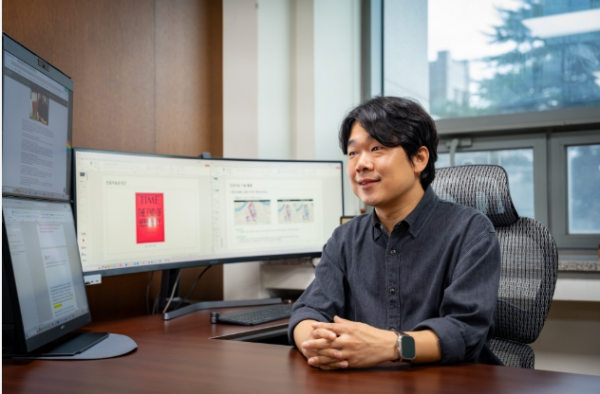
Interview with Professor Gunwoong Lee – Recipient of the SK Paper Award      In 2025, Professor Gunwoong Lee of Korea University Business School was co-authored a paper titled "Consumer Evaluation of Digital Product Innovations: Disentangling Effects of Novelty, Familiarity, Complementarity" (with Nilla Zhang and Wai Fong Boh), which was  accepted for publication in MIS Quarterly. The paper was also honored with the SK Paper Award. This study empirically analyzes how consumers respond to hardware innovations in digital products, focusing on the balance between novelty and familiarity, as well as complementarity with software. It provides strategic insights into the timing and approach of innovation introduction. The paper has been recognized for its contribution to the field of Information Systems, particularly in extending the practical design implications of technological innovation and highlighting its potential societal impact.  Q1. First of all, congratulations on receiving the SK Award. Could you share your thoughts on this honor?  A1. I’m truly honored to receive such a meaningful award. This research is based on a topic I first envisioned nearly ten years ago when I began my academic career, so it is deeply rewarding to see it come to fruition after such a long journey. Above all, I believe this achievement was made possible thanks to the outstanding research environment and support provided by Korea University Business School.    Q2. Could you briefly introduce the research for which you received the award?  A2. This study explores how consumers evaluate innovations in digital products. When a new electronic device is released, people often respond with a mix of anticipation and skepticism. We explored how companies can present their innovations in ways that are more likely to be positively received by consumers. More specifically, the research analyzes how hardware innovations are perceived by consumers in the context of digital products.  Q3. What motivated you to start this research?  A3. I believe that academic research should reflect changes in real life. I’ve always been curious about questions like, “Why are people surprised by new technologies?” and “What kind of expectations do Apple’s annual product launches create?” These interests led me to analyze product innovations and consumer responses across 62 smartphone models produced by 10 major global manufacturers. Based on this dataset, I explored how companies can introduce innovations in ways that better align with consumer perceptions and preferences.  Q4. What kind of impact do you think your research might have on society or industry?  A4. I believe this research offers practical strategic insights, particularly for the IT industry — notably smartphone and digital device manufacturers. When innovations are not well-received in the market, the consequences can be significant not only for individual firms but also for the broader industry. This study provides concrete guidance on when, how, and with what combinations of features and software innovations should be introduced in order to receive positive consumer evaluations, making it practically meaningful for business decision-makers.   Q5. Could you share your future research plans or any specific topics you're particularly interested in?  A5. Recently, I’ve become increasingly interested in how information technology affects local communities and digitally marginalized groups. For example, technologies such as virtual queuing systems are becoming more common in easing daily inconveniences. I hope to examine how such technologies can go beyond providing simple convenience to play a role in revitalizing local economies, bridging the digital divide, and enhancing accessibility for socially underrepresented groups. Ultimately, I aim to explore how technological advancement can be designed and implemented in ways that extend their benefits to society at large—not just to a privileged few.  Q6. Do you have any messages you’d like to share with students?  A6. The world we live in is changing rapidly, especially with the pace of advancement in artificial intelligence (AI), which is unlike anything we’ve seen in the past few decades. That’s why understanding AI — what I call AI literacy — is incredibly important. It’s not just about following the technology, but about understanding how it works, what benefits it can bring, and how it can be purposefully applied. I encourage students not to fear change but to stay curious and take initiative in learning.    Summary of Professor Gunwoong Lee’s Paper  "Consumer Evaluation of Digital Product Innovations: Disentangling Effects of Novelty, Familiarity, Complementarity"  This study analyzes how digital product manufacturers can strategically manage the balance between familiarity and novelty when introducing hardware innovations. Focusing on devices such as smartphones, the paper empirically examines the impact of hardware component innovations on consumer evaluation. In particular, it investigates how the timing of innovation and the presence of complementary software support.  Key findings suggest that hardware features familiar to consumers are more positively received when introduced early in the product lifecycle and accompanied by intuitive software interfaces. In contrast, introducing unfamiliar and novel features too early can be counterproductive; in such cases, the presence of supporting software may actually reinforce negative consumer perceptions. Based on these differences, firms need to carefully design the timing and software integration strategy for hardware innovations, taking into account consumer receptivity. 

2025.08.06 Views 2439

Interview with Professor Kyuhan Lee – Recipient of the SK Paper Award 

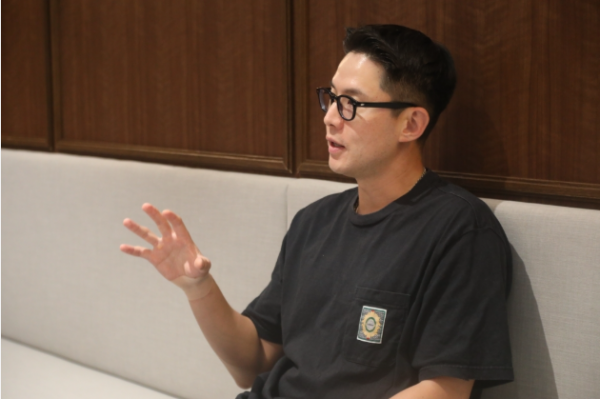
Interview with Professor Kyuhan Lee – Recipient of the SK Paper Award      In 2025, Professor Kyuhan Lee of Korea University Business School co-authored a paper titled "Leveraging Large Language Models for Hate Speech Detection: Multi-Agent, Information-Theoretic Prompt Learning for Enhancing Contextual Understanding" (with Sudha Ram), which has been accepted for publication in the Journal of Management Information Systems (forthcoming). The paper was honored with the prestigious SK Paper Award. This study proposes a novel AI-based approach to hate speech detection by transforming multiple large language models as autonomous agents that generate various prompts and select the optimal one based on an entropy-based method. The paper has been highly recognized in the academic community for expanding the potential of leveraging technology to realize social value in the field of information systems.    Q1. First of all, congratulations on receiving the SK Award. Could you share your thoughts on receiving this honor?  A1. Thank you very much. Not many universities have systems that directly reward research achievements like this, so I truly appreciate Korea University’s strong support and encouragement for academic research. This award serves as a great motivation for me, and I take it as a meaningful reminder to continue working hard and striving to produce impactful research.  Q2. Could you briefly introduce the research for which you received the award?  A2. My research focuses on designing and developing technological systems within the broader field of business studies. While much of the research in business emphasizes the interaction between humans and technology, my approach centers on building the technology itself. This paper proposes an AI-based system to address the growing problem of hate speech on online platforms. Given the massive volume of content generated in real time on social media, it is practically impossible for human moderators to review everything manually. This makes automated content moderation system essential. In this study, we positioned large language models not just as classifiers but as “autonomous agents” capable of engaging in deliberation. By allowing multiple AIs to discuss and reach collective judgment, we explored a new approach that offers the potential to detect hate speech more accurately and precisely than traditional methods.  Q3. What inspired you to start this research?  A3. This research does not directly lead to commercial profit in the traditional sense. I have always considered the question, “What kind of positive impact can this research have on society?” to be a key guiding principle in my work. Hate speech is not just a matter of discomfort—it is also linked to the broader issue of social contagion. If technology can help prevent its spread, I believe that alone makes the research meaningful. That belief was the primary motivation behind initiating this study.  Q4. What do you think is the potential impact of this research on society or industry?  A4. From a business perspective, companies may hesitate to implement social features on their platforms if they risk becoming spaces filled with hate speech—something that advertisers tend to avoid. In this context, automated content moderation systems become critical for protecting brand image and sustaining advertising revenue. On a societal level, since hate speech tends to spread like a contagion, technologies capable of effectively detecting and blocking it can make a meaningful contribution to the health and integrity of online communities. I hope this research can support efforts to use technology to reduce social conflict and promote a healthier, more constructive communication culture.  Q5. What are your future research plans or areas of interest?  A5. Moving forward, I want to go beyond just building systems and start analyzing AI technologies themselves. For example, can AI truly be considered a “thinking” entity? Can the outputs generated by AI be called “creative”? I aim to explore such philosophical questions from a technical perspective. Although technology continues to advance rapidly, how we understand and internalize it remains an area that requires deeper reflection and discussion. By combining technical analysis with philosophical inquiry, I hope to contribute to more meaningful and thought-provoking discourse on the role of AI in society.  Q6. Finally, do you have any message for students?  A6. I believe that diverse experiences are essential for developing strong problem-solving skills. Of course, studying your major and engaging in research are important, but activities that may seem unrelated at first can often lead to unexpected insights. For example, if you’re preparing for law school, it’s not just about mastering legal knowledge — a broad understanding of society is equally important. Even if something doesn’t interest you right away, I encourage you to step out of your comfort zone and explore new areas. These experiences will ultimately serve as a valuable foundation for shaping your own perspective.  Summary of Professor Kyuhan Lee’s Paper  Leveraging Large Language Models for Hate Speech Detection: Multi-Agent, Information-Theoretic Prompt Learning for Enhancing Contextual Understanding  This study proposes a novel AI-based system for detecting hate speech by configuring large language models (LLMs) as autonomous agents that interact with one another to reach a decision. The researchers developed a method for automatically generating a variety of prompts and applied an information-theoretic, entropy-based criterion to select the optimal prompt, thereby enhancing contextual understanding and improving detection accuracy. This multi-agent approach addresses the limitations of traditional hate speech detection methods and demonstrates the potential for more sophisticated and efficient content moderation in online environments where vast volumes of content are generated in real time. Notably, the study presents a promising strategy for technologically controlling the social diffusion of hate speech and contributing to the development of healthier digital communities. As such, it has been recognized as a significant case of extending the potential for realizing social value through information systems. 

2025.08.06 Views 2472

Capturing 120 Years of History on Canvas: “KUBS 120 Years and Beyond” 

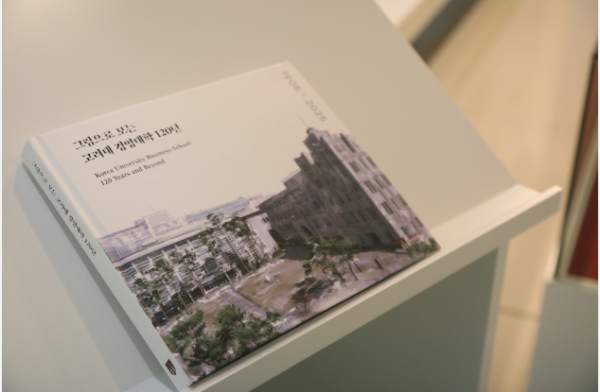
Capturing 120 Years of History on Canvas: “KUBS 120 Years and Beyond”      To commemorate its 120th anniversary, Korea University Business School (KUBS) has published a special pictorial book titled “Korea University Business School: 120 Years and Beyond.” This pictorial book uniquely reinterprets the history of the school through watercolor illustrations depicting major events over the past 120 years.    KUBS traces its roots back to the Department of Commerce at Bosung College in 1905 and remains the only college at Korea University to have shared the university’s entire 120-year history. As Korea’s first institution of business education, KUBS has played a pioneering role in the development of business studies in the country. T This newly published pictorial commemorates that legacy by presenting a balanced historical overview across four distinct periods: △Bosung College (1905–1945), △College of Political Science & Business / College of Commerce (1946–1976), △College of Business Administration (1977–2004), and △KUBS (2005–present).    A total of 120 key events and moments have been reinterpreted through watercolor illustrations, aiming to express the School’s identity and symbolism in an emotionally resonant way through visual art. The primary works were created by Honarary Professor Youngsun Jin, a fresco artist and former professor in the School of Art and Design. Additionally, some pieces were digitally rendered using AI by the KUBS 120th Anniversary Pictorial Student Committee.      The project was grounded in the extensive historical records of A Hundred Years of the Business School, written by Professor Emeritus Soosik Shin in 2005. The KUBS 120th Anniversary Project Committee—led by Chairperson Hojung Shin and former Chairperson Jae Uk Chun, and including Professors Sangyong Kim, Johngseok Bae, Seongsu Yoon, Joonghyuk Kim, Kyung Sam Park, Wooseok Choi, Jong-Ho Lee, and Yoojung Ahn—oversa the planning and editorial supervision of the publication, thereby enhancing its overall quality and completeness.    “Korea University Business School: 120 Years and Beyond” is expected not only to reflect on the past but also to serve as a foundation for imagination and insight as KUBS looks ahead to the next 120 years. The pictorial book is currently on display for public viewing at the KUBS History Hall on the first floor of the Hyundai Motor Hall.     

2025.08.06 Views 2029

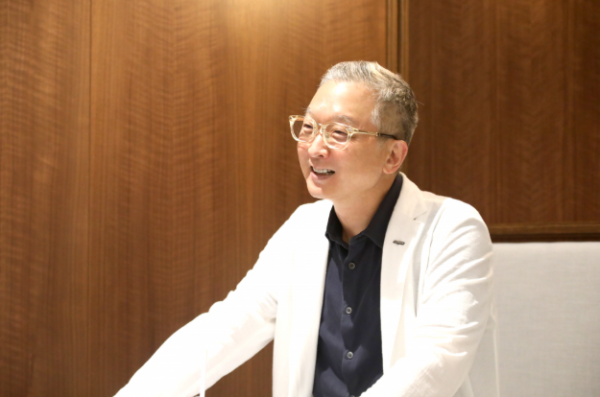
[Interview] A Bridge Between the Past and Future — Interview with Chair Hojung Shin

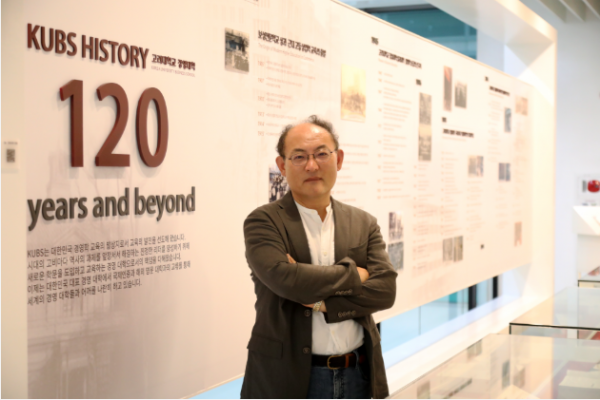
[Interview] A Bridge Between the Past and Future — Chair Hojung Shin Reflects on the Meaning of KUBS’s 120th Anniversary      In 2025, Korea University Business School (KUBS) celebrates its 120th anniversary. At a time when the very concept of “business” was unfamiliar in Korea, KUBS planted the seeds of business education and has since grown into a cornerstone of the field in the country. To mark this milestone, a range of commemorative projects have been launched, including a photo book “120 Years of KUBS in Pictures”, a historical volume “The Path of Business Administration”, and the traditional Hosang Daedongje festival. Beyond mere celebration, this is a moment for the school to reflect on its identity and future vision. At the center of these efforts is Hojung Shin, Chair of the KUBS 120th Anniversary Commemoration Committee. He emphasizes that “rather than grand words or embellishment, we aimed to capture the history and spirit of the community as they are.” We sat down with him to hear more about the thoughtful initiatives that aim to connect the school’s past, present, and future.    Q1. You're leading the 120th anniversary initiatives. How do you feel about this role, and what exactly is your role in the project?  A1. The 120th anniversary project has been made possible through the dedication and collaboration of many individuals. I see myself as someone simply wrapping up what others have already thoughtfully planned. While I was previously serving as the Vice President for Development and External Affairs, I gave my best to the university, and my successor, Professor Jae Uk Chun —who originally chaired the 120th anniversary committee—suggested I take over to finalize the project. So my focus has been on organizing and completing the framework already established by many contributors.    Q2. Following the photo book “120 Years of KUBS in Pictures”, a historical book is set to be released in August. Could you tell us more about it?  A2. This historical book is meaningful not simply because it presents facts, but because it situates them within philosophical and socio-cultural contexts. Interestingly, the term “business administration” (gyeong-yeong-hak) began to be formally used in Korea through Korea University. The original title of the book was “The Path of K-Business Administration”, but we revised it to simply “The Path of Business Administration” to reflect a more neutral, calm tone and honor the pioneering role we’ve played. The book’s design is intentionally understated, so that the narrative of KUBS’s journey unfolds naturally. I believe this is a project with scholarly and cultural significance—not only for KUBS members, but for those observing the broader history of business education in Korea.    Q3. Could you introduce the upcoming Hosang Daedongje festival scheduled for September?  A3. Hosangje is a long-standing traditional festival at KUBS. In earlier days, it began with a formal ceremony in front of the main building, attended by faculty and students alike. While today’s version is more relaxed and festive, the underlying spirit of unity and community remains unchanged. I have fond memories of the festival from my undergraduate days—especially the “Makgeolli Marathon,” where students would run around campus, stopping at various stations to enjoy a cup of makgeolli (traditional rice wine). I’m curious to see how today’s students reinterpret and enjoy Hosangje in their own way.  This year, during the anniversary week, we’ll also host the “Mapping the Future” idea competition on September 26, the day after Hosang Daedongje. This event invites students to envision future business trends and societal changes through the lens of business studies—a timely and meaningful challenge, especially as the discipline reexamines its boundaries and identity. Topics such as population decline, regional extinction, technological disruption, and questions of national identity in Korean society will all be up for discussion.    Q4. Looking back on 120 years of history, what is your vision for the future of KUBS?  A4. The Dean has outlined a clear vision: “Spearheading Next Intelligence.” We are now in an era where business education must go beyond technical know-how to include data literacy, responsiveness to social change, and a thoughtful balance between technology and ethics. Business administration, at its core, is a study of people—it encompasses organizations, leadership, strategy, and social responsibility. From this perspective, KUBS must lead the exploration of future directions, expand its intellectual boundaries, and guide conversations around the identity and value of business education.    Q5. Finally, is there a message you’d like to share with members of KUBS and future generations of students?  A5. I’d like to share a heartfelt message with our younger students. While our society is becoming increasingly individualistic, we must remember that human beings are inherently social. Education, work, and family all take place within a society—and within these social structures, rituals play a vital role. Just like weddings, graduations, or entrance ceremonies, this 120th anniversary is not simply an event, but a moment to reaffirm the values of our community. I hope the younger generation doesn’t overlook the meaning of these rituals. They are not about empty formality, but about anchoring ourselves in a shared identity and sense of belonging. Realizing that KUBS has been a source of joy and meaning in your life—and choosing to acknowledge and take part in that—is what the 120th anniversary is truly about. It’s something we should do not out of obligation, but out of a natural sense of connection. I hope no one forgets that we are all part of this community.   

2025.08.06 Views 2139

  • 첫페이지로
  • 21
  • 22
  • 23
  • 24
  • 25
  • 마지막페이지로