TOP

KUBS News

Total 1433

[SK Awards Interview] Professor Minjae Koo: In an Era of Uncertainty, Diverse Cultural Backgrounds

[SK Awards Interview] Professor Minjae Koo: In an Era of Uncertainty, Diverse Cultural Backgrounds Improve Forecast Accuracy Uncertainty does not affect everyone equally. As U.S. firms faced growing import competition from China, most analysts saw their forecast accuracy decline. Yet some were less affected than others. Professor Minjae Koo focused on precisely that difference. His research suggests that the cultural context behind the numbers — and analysts’ own cultural backgrounds — can shape how information is processed in capital markets. Professor Koo, who joined Korea University Business School (KUBS) in 2025, received his second SK Award for the study, “Forecasting Under Uncertainty: Import Penetration and Analysts’ Cultural Advantage.” The study empirically examines how international competition affects the role of information intermediaries. In an era when geopolitical tensions have become a daily reality, the research shows that diversity can be more than a value — it can also provide a tangible competitive advantage. The following is an interview with Professor Koo about the research and the award. Q1. Congratulations on being recognized with the SK Awards. Could you share your thoughts on the award? First, I would like to express my sincere gratitude for this meaningful award. It is a great honor to have my research recognized at Korea University. I would also like to take this opportunity to extend my deep appreciation to my co-authors, who worked with me on this research, and to everyone who supported our work. Q2. Could you briefly introduce the research for which you received the award? This study analyzes how Chinese import penetration affects the earnings forecast accuracy of financial analysts covering U.S. firms. In particular, we examined whether Chinese analysts have an informational advantage in such an environment. Our empirical analysis shows that the more U.S. firms were affected by Chinese import penetration, the more analysts’ forecast accuracy declined overall. However, the decline in forecast accuracy was substantially smaller among Chinese analysts. This suggests that cultural background and contextual knowledge can improve analysts’ ability to process information in complex international competitive environments. Q3. What motivated you to begin this research? The international competitive landscape has shifted rapidly due to recent developments such as the U.S.–China trade tensions and the restructuring of global supply chains. I became interested in whether these macro-level changes might affect not only firm performance and corporate strategy but also how information is produced in capital markets. The study began with the question, “How do international economic shocks change the role of information intermediaries?” The research ultimately showed that cultural background can play an important role in complex international environments. Q4. What impact do you expect this research to have on society or industry? This study demonstrates the value that cultural diversity and expertise can bring to financial markets as globalization deepens and geopolitical risks increase. For companies and financial institutions, the findings highlight the importance of professionals with diverse cultural backgrounds and international perspectives, alongside strong technical capabilities. From a policy perspective, the study also highlights the role of human capital in reducing information asymmetry amid rising international tensions. Q5. Since joining KUBS in 2025, you have already received the SK Awards twice. Is there a secret behind these consecutive achievements? I wouldn’t say there is any particular secret. I believe these achievements were made possible by strong teamwork with my co-authors and constructive feedback from reviewers and editors. Through this study, I was reminded once again that research is not a solitary journey, but a collaborative process that becomes increasingly refined through diverse perspectives and constructive critique.   Q6. Many students today are interested in pursuing careers in accounting. What message would you like to share with them? Accounting is no longer just a discipline that records numbers. In class, I often refer to Nietzsche’s famous statement: “There are no facts, only interpretations.” I understand this to mean that even identical numbers can be viewed and interpreted differently through various lenses. In today’s increasingly dynamic and fast-changing world, I believe such interpretation can become even more complex. Therefore, I would encourage students interested in accounting careers — whether in financial accounting, auditing, or management accounting — to broaden their horizons. They should explore not only fields directly connected to accounting, such as international politics and ESG, but also subjects that may seem less related at first glance, including literature and philosophy. Doing so can help them develop stronger intuition and critical thinking skills. I believe a humanities-based perspective can be very helpful when making broader, more strategic decisions.   About the Paper :   In 2026, “Forecasting Under Uncertainty: Import Penetration and Analysts’ Cultural Advantage,” co-authored by Professor Minjae Koo of Korea University Business School, was accepted for publication in the Journal of International Business Studies. The paper also earned Professor Koo an SK Award. The study examines how analysts’ earnings forecast accuracy shifts as U.S. firms face mounting import competition from China and identifies cultural background as an important factor in information processing under complex international competition. The milestone is especially meaningful as it marks Professor Koo’s second SK Awards since joining KUBS in 2025.   “Forecasting Under Uncertainty: Import Penetration and Analysts’ Cultural Advantage” This study empirically analyzes how import competition from China affects the earnings forecast accuracy of analysts covering U.S. firms. The analysis finds that analysts’ forecasts grew less accurate as U.S. firms faced higher exposure to Chinese import competition. However, Chinese analysts were relatively less affected by this negative impact and delivering more accurate forecasts than their non-Chinese peers.   This informational advantage was even more pronounced when analysts had strong industry expertise or extensive experience covering Chinese firms, and it became stronger during periods of intensifying U.S.–China tensions. Furthermore, the study finds that investors recognized these differences and responded more strongly to forecasts issued by Chinese analysts. By demonstrating that cultural background and expertise can serve as important informational assets in international competitive environments, the study offers new insights into the role of information intermediaries in global capital markets.   ▶ View the full paper: “Forecasting Under Uncertainty: Import Penetration and Analysts’ Cultural Advantage”   KUBS Student Reporter Reporting and Photography by Yeontae Kim

2026.08.14 Views 909

Korea University ranked 1st of Domestic Universities in the Business Administration Field of Shangha

Korea University ranked 1st among domestic universities by ranking 101-150th in the Business Administration field of the Academic Ranking of World Universities (hereinbelow ARWU), published by ShanghaiRanking Consultancy.   Following Korea University was Yonsei University, which ranked in between 151-200th. KAIST, Seoul National University, and Sungkyunkwan University ranked in between 201-300th . World No.1 rank is Pennsylvania University from the United Sates, and Harvard University, Pennsylvania State University (University Park), Erasmus University Rotterdam, Tilburg University from Netherlands each came in the 2nd -5th rank.       See overall rankings of Business Administration Field   ARWU publishes the rankings of 500 universities out of 1,200 universities across the world, and is known for providing the most objective research achievement evaluations as the evaluation criteria consist of 100% quantitative indicators. It started as to compare Chinese universities in 2003, and its scope was gradually increased to the world university ranking. The ranking of each field in ARWU is determined by 5 criteria △Number of thesis for the past 5 years (150) △Number of thesis published in Top Journals for the past 5 years (100) △Achievements of the department by world university standards(50) △Cooperation with other countries(10) △Awards and etc..   Korea University possessed the 1st among domestic universities by also ranking in between 100-150th in the Management field. Seoul National University followed this by ranking in 151-200th, along with KAIST, Sungkyunkwan University, and Yonsei University which all ranked in the 201-300th.    See overall rankings of Management Field

2020.05.07 Views 5669

Alumna Jeon Yoon-ja (Commercial Science, 51st) , generously donated 2 hundred million … the endless

Alumna Jeon Yoon-ja (Commercial Science, 51st), generously donates 2 hundred million … the endless elder’s love of KUBS ‘Big Sis’   (Photo credit = KU Communication Team)   The first female student of KUBS, alumna Jeon Yoon-ja (Commercial Science, 51st) donated a scholarship of 2 hundred million won for the development of KUBS (Dean = Kim Jaewook) in August 2019. This donation is the ‘KUBS Jeon Yoon-ja Scholarship’ and will be used to help the academic pursuit of KUBS students.   Korea University held the donation ceremony on the 8th, 10 a.m. at the main building. This ceremony was also held together with the donation ceremony of alumna Jeong Shinsoon (Medical Science, 53rd)’s donation of one hundred million won as the ‘Medical Development Fund’. President Chung Jin Taek, Lee Kihyung (Associate Dean of College of Medicine), Kim Jaewook (Dean of KUBS), Song Hyuk-ki (Head of Development & External Affairs Office), Kim Joong Hyuk (Associate Dean of KUBS), Han Changsoo (Head of Medical Center Fund Business Headquarters), etc. also participated in the ceremony and expressed their gratitude for the warm heart of the two alumni. This is not the first time of her special support for the juniors. Alumna Jeon Yoon-ja has been donating more than 1.2 billion won to KUBS as ‘Construction Fund for the New Business Hall’, KUBS ‘Jeon Yoon-ja Scholarship’, and etc. for dozens of years. Watching such donations, alumna Jeong Shinsoon also started to participate in the small fixed-term donation ‘KU PRIDE CLUB’ for juniors and ultimately was able to participate in such a big donation of development funds by retracing her senior alumni. Alumna Jeon Yoon-ja feels extremely grateful about numerous female juniors who study business administration and perform actively in many parts of society as a female leader, unlike in the past. She said “I feel very proud to see my school develop where it has helped me achieve a lot of things.”, and spoke “I hope our fellow KUBS juniors love the school even more and become talents who can brighten both Korea University and the society by learning as much as possible and growing into themselves”.   (Photo credit = KU Communication Team)   President Chung Jin Taek said “The great heart of seniors who love the school as ever and support juniors’ dreams has been a great example to a lot of juniors”, and added his appreciation “We sincerely appreciate your precious mind and will make sure to deliver your devotion to the juniors”. Meanwhile, alumni Jeon Yoon-ja became the first female student of KUBS by entering the Commercial Science Department (51st) when it was unfamiliar for female students to enter college during the 1950s. She has been working in the financial industry over 50years, by starting off her career at the Bank of Korea after graduating in 1955. She also took role as the chief director of (former) Female Credit Association and adviser of KU Busan Alumni Association, together with alumna Jeong Shinsoon. The two alumni is giving full material and emotional support for juniors so that they can demonstrate their capabilities without constraints, since they have overcome so many difficulties as a female member of society earlier on.

2020.04.20 Views 5087

Interview with KUBS 53rd Student Council “LiNK”

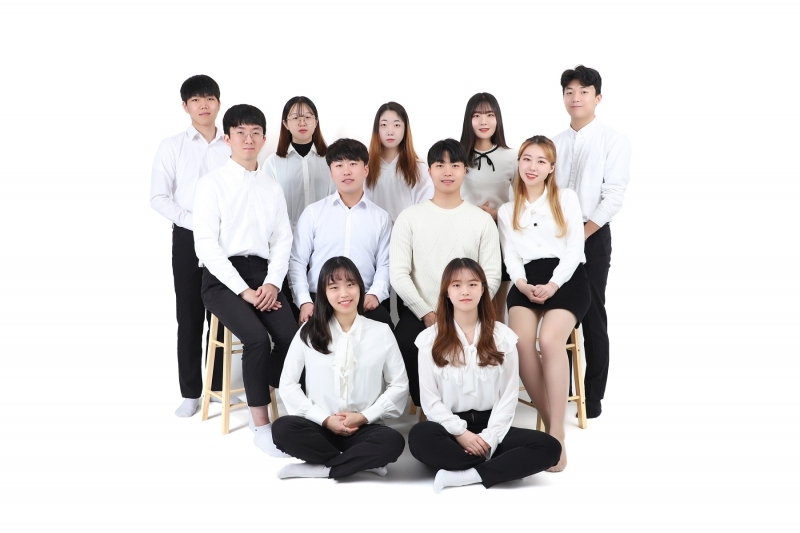
Who’s in the photo: From the left side of the second row (clock-wise), President Jiwoo Lee (Business 16), Vice President Doo-young Kim (Business 17), Senior Executive Minkyoung Kim (Business 19)   LiNk: “Log-in to KUBS”   • Please introduce the KUBS 53rd Student Council, LiNK. Nice to meet you, my name is Doo-young Kim (KUBS 17), vice president of LiNK. I feel honored to have this great interview to introduce our new student council group. The organization of LiNK is comprised of 11 executives, including president, vice president and the senior delegates in each department. Our slogan “Log-in to KUBS” represents our goals to construct a platform that helps the students to advocate their demands and to actively communicate with the campus community, regardless of who is trying to reach us and where the needs are. We are striving to renovate the image of KUBS Student Council by expressing how our projects and policies correspond to the students’ daily lives in KUBS. Therefore, if you have any difficulties in your campus life, please visit us; we are always opened to get connected with you.   • What are the values and objectives that LiNK has been mainly pursuing? Hello, I’m Jiwoo Lee, president of LiNK. The core value of LiNK is “communication”. We presume that the image of KUBS Student Council might had been degraded because of the closed-culture displayed in previous councils, where most of the students thought the student council has nothing to do with them, while they reckoned the community is only for the members in the council, designed and operated by the community itself. In this sense, LiNK will put the live communication functions at the priority by opening ourselves to the students and listen careful to what their voice. The second value of LiNK will be the “volunteering”. In every meeting we had, we have reinforced the position of ourselves as the “service providers” who organize the best quality services to the students. Our faiths in those two values, communication and a volunteer mentality, would be the essential components of our identity.    • Could you describe some ongoing activities of LiNK and upcoming projects? We initiated plenty of projects to have students feel what has changed and how it benefits to their daily experiences. For instance, we added various kinds of facilities such as calculators, laptop chargers in our publicly shared items. Next, we inspected classroom equipment for Hyundai Motor Hall; furnished the staplers in printing devices in KUBS buildings. At the time we all get back to campus and begin the general semester, LiNK will take immediate procedures to start off the projects to discover the priority needs of the students.   • What kind of insights as a sophomore would you share to the KUBS freshmen? I’m very glad to answer this question. I’m Minkyoung Kim, a senior executive of LiNK. What I learned during the first year at KUBS is the importance of having diverse experiences, and challenging as much as I can. When I was in high school, I couldn’t bring myself to most of the challenges which are on the different tracks from the exam studies, even though I really wanted to. Therefore, from the beginning of my campus life, I tried a lot of things to realize my initiatives, and now I’m at this position since the best turned out to be the experience in the KUBS Student Council. Just like I grew up throughout the experience in student council, someone else would develop themselves in project groups, extracurricular activities, friendships in and out of the campus, or even the professional studies. So again, you all should go through whatever you want and any experiences that attract you, in order to discover your identities, goals, and future visions from that journey. I promise that the LiNK and I will do our best to support your successful campus life! Thank you very much.    

2020.04.13 Views 4896

Korea University E-MBA, 27th in FT Ranking, and the No. 1 in Korea for the ninth consecutive year

Korea University E-MBA, 27th in FT Ranking, and the No. 1 in Korea for the ninth consecutive year   The Financial Times of the U.K. announces the world's top 100 E-MBA rankings for 2019... △Columbia University (36th), △Cornell University (46th).     Korea University Business School (hereinbelow KUBS, Dean=Jae Wook Kim) Executive MBA Program (E-MBA) ranked 27th in the world in the list of the top 100 E-MBA rankings in the world, selected by the Financial Times of the U.K. According to an announcement by the FT on November 18, 2019, the KUBS E-MBA ranked No. 27 in the world this year after ranking No. 38 last year, ranking no. 1 for ninth consecutive year in Korea. In the latest three-year average, KUBS E-MBA ranked 28th (20th in 2017, 38th in 2018 and 27th in 2019) on average, proving that its work-oriented curriculum that strengthens expertise in each industry is at its highest level.   This is higher than the world's prestigious business school such as △Columbia Business School, 36th, △UCLA: Anderson, 42nd, and △Cornell University: Johnson, 46th. This year, △HEC Paris, 1st and △E-MBA program jointly run by Kellogg/HKUST Business School, 2nd were listed in the top two. Yonsei University ranked 34th among Korean universities after Korea University.   The FT rankings which is based on evaluation criteria such as annual salary increases and promotions, the ratio of professors' doctoral degrees and the index of internationalization, announce the rankings up to the top 100 universities in the world. In this year's evaluation, Korea University E-MBA received high marks in criteria such as "Salary increased," "Aims achievement," and "Faculty with Doctorates".   The reason why Korea University E-MBA rank is so special is because it has recorded the top rank only with its own program. While E-MBA courses at top ranked universities in Asia are often run by joint degree programs, Korea University E-MBA proves its competitive edge only by its own program.   →Relevant articles [Veritas Alpha] EMBA Korea University 'Korea No. 1' in FT World Ranking .. 11 steps up to '27th'

2020.03.11 Views 8082

Five-day Graduate School Boot Camp held

The Boot Camp at Korea University Business School was held at Hyundai Motor Hall RM303 from Feb. 10 to Feb. 14 (Fri). The Boot Camp was held for five days, three hours a day, with special courses on programming in the morning and courses on math and statistics in the afternoon. Those who did not bring their own laptop attended the course at RM401 computer room of Hyundai Motor Hall, and online video lectures were also conducted at the same time for the convenience of students. The special lecture on programming held in the morning focused on understanding programming techniques for engineering use, such as python, R programming and big data analysis, and learning how to use them in practice. Instructor Park Joon-gyu, who was in charge of this programming special lecture, first explained the data structure and repetition which are the basis of python programming. "The data structure basically provides four things at Python," said Park. "List and Dictionary are important among them. There are for-sentence and while-sentence, and for-sentence is highly utilized," he said. "When you first encounter Python, you should learn the list and the for-sentence." The five-day special course on programming was given on Python overview and programming techniques on the first day, Web crawling and data analysis on the second and third day, and data analysis practices and R basics on the fourth and fifth day,. Special lectures on mathematics and statistics were given in the afternoon. The specific course aimed to intuitively understand the mathematical-statistical basis and introduce a simple analytical model that can be applied to the BA curriculum and Capstone projects. Special lectures on mathematics and statistics were conducted by lecturer Lee Woong-ki. Lee began the lecture by outlining the course contents for five days. "What we will learn in the first day is about the level of a freshman in the undergraduate school, so I'm going to go through it step by step by step," he said. "But from day 2, the difficulty gradually rises, so I'll go with an intuitive explanation rather than a specific description." He went on, “The math and statistics special lecture will cover the mathematical basis of polynomial calculus, Taylor series, and marginal utility, as well as vectors, matrices and statistics on the first day. On the second and third day, we will learn about the partial differential, partial integral, retrograde sequence, matrix differential and large number of laws, and on the last four to five days, we will learn about the regression model, causal analysis model, and stock price analysis model.”

2020.02.28 Views 4761

  • 첫페이지로
  • 106
  • 107
  • 108
  • 109
  • 110
  • 마지막페이지로