TOP

KUBS News

Total 1427

Turning Financial Data into Research - Special Lecture on Exploring Bloomberg Data for Academic Rese

"Turning Financial Data into Research" Special Lecture on Exploring Bloomberg Data for Academic Research     The Bloomberg Terminal contains one of the world's most comprehensive collections of financial market data. However, transforming that information into meaningful research variables requires multiple steps, from exploring available data and verifying variable definitions to extracting data and constructing research datasets. To help students navigate this process, Korea University Business School (KUBS) held a special lecture titled "Financial Data Exploration and Research Applications Using Bloomberg" on Friday, May 15, at the LG-POSCO Building. The session was led by Dr. Ha-yeon Park of the Korea University Business Administration Education and Research Group for BK21 FOUR and was attended by KUBS graduate students. The Bloomberg Terminal is a widely used financial data platform that provides access to real-time market information, company data, and financial analytics. During the lecture, students learned how to search for and extract financial data using both the Bloomberg Terminal and its Excel Add-in, while also exploring how Bloomberg data can be effectively applied to academic research. Dr. Park introduced the basic structure of the Bloomberg Terminal and demonstrated practical methods for exploring financial data. She guided students through the process of identifying research variables and verifying their definitions, emphasizing that carefully confirming variable names, definitions, and available options before downloading data is essential for ensuring research accuracy. She then explained how to extract data using the Excel Add-in and organize Bloomberg data into structured datasets suitable for empirical research. In the latter part of the lecture, Dr. Park demonstrated how Bloomberg data can support academic research by drawing on several case studies, including examples from her own work. She explained how ETF-related data can be identified, extracted, and organized according to different research objectives. She also advised students not to rely exclusively on Bloomberg, noting, "Rather than using Bloomberg as a single data source, I recommend using it for the types of data in which it has particular strengths." She emphasized the importance of cross-checking Bloomberg data with other databases whenever appropriate. The lecture provided students with a practical overview of how financial data can be translated into research—from developing research questions and selecting appropriate variables to constructing reliable datasets. By following the entire workflow, participants gained a clearer understanding of how Bloomberg data can be explored, evaluated, and incorporated into academic research. The lecture also reflects Korea University Business School's recent expansion of its Bloomberg Terminal infrastructure. As part of a financial data hub established through a KRW 1 billion donation from Eugene Investment & Securities, KUBS increased the number of Bloomberg Terminals from one to twelve—the largest Bloomberg Terminal installation among universities in Korea. Nine terminals have been installed in the Sudang CLC Lounge, while the remaining three are available through remote-access accounts.     The Bloomberg Terminal is one of the most widely used financial data platforms in investment banking, asset management, equity research, and other finance-related fields. Hands-on experience with the platform provides students with valuable practical skills that can help them transition into careers in the financial industry. Students who complete the Bloomberg Market Concepts (BMC) certification may also find it beneficial when preparing for the CFA examination or applying for internships in finance. With the expanded infrastructure significantly improving access throughout the semester, more students now have the opportunity to work directly with real-time market data in their coursework, research projects, and academic studies. KUBS Student Press Reporting by Chaewoo Lee Photography by Jinyoung Park

2026.07.22 Views 388

[Inaugural Interview with Dean Eonsoo Kim] "Cultivate the Ability to Integrate Tech into Busines

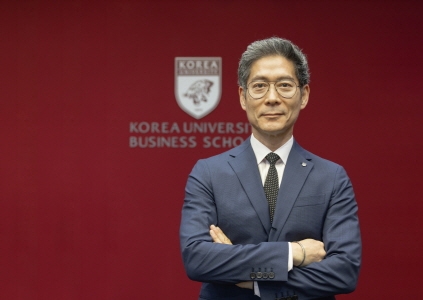
[Inaugural Interview with Dean Eonsoo Kim] "Cultivate the Ability to Integrate Tech into Business Studies in the Age of AI and High Technology"     Professor Eonsoo Kim, specializing in Strategy, has been appointed the new Dean of Korea University Business School (KUBS). He was nominated for the position by President Dong-One Kim and elected through a voting process among KUBS faculty members. Dean Kim will lead KUBS from September 2024 to August 2026, serving a two-year term. In the article below, he shares his thoughts on his inauguration and outlines his plans for the school's management and development.      - From Valedictorian of KUBS to Professor, and Now Dean at Alma Mater    Q. Congratulations on your inauguration as Dean of KUBS. Could you share a few words about your feelings?  A. When I began my deanship, I received both congratulations and condolences. This reflects the increasingly challenging nature of the university education environment. While I am honored to take on this role, I also feel the weight of responsibility. I've heard that other associate deans experienced sleepless nights after their appointments as well, and I believe many of us share similar feelings.    Q. You graduated as valedictorian of KUBS. How would you describe yourself as a student during your college years?  A. I would describe myself as a diligent student. The 1980s were a politically unstable time due to the military dictatorship, with frequent protests. However, KUBS professors generally held classes as scheduled whenever possible. During this period of rapid economic growth, I wasn't particularly worried about finding a job, so my studies felt less stressful compared to today. Things seemed more relaxed. Many of my friends would often skip classes after lunch and go across the street to play billiards instead.    Although I spent a lot of time drinking and socializing with friends, I made it a point to refrain from alcohol starting a week before exams. During that time, I focused solely on studying and never missed a class, which made all the difference. If you visit the ‘KUBS Story’ exhibit (located in the History Museum of KUBS on the 1st floor of Hyundai Motor Hall), you'll find my notebooks from Personnel Management and Financial Management courses—those are my lecture notes (laughs). My friends used to copy them during exam season, jokingly saying, “Just looking at these notes guarantees a B.” If I had to share the secret to being valedictorian, I'd say: “I drank a lot and socialized well, but I never missed a class.” I still tell students today, “Never skip classes.”      - Dean Eonsoo Kim’s Vision and Philosophy for KUBS    Q. You have taken on the heavy responsibility of being Dean. As the leader of KUBS for the next two years, what vision and philosophy do you have?  A. For several years before becoming Dean, I often told junior faculty members, "Significant changes will come in the next 5 to 10 years." These changes, I believe, are driven by factors such as declining birth rates, increased competition both within and outside universities, and the rise of artificial intelligence (AI). These shifts will greatly influence the value of university education and degrees, as well as the role and identity of professors. Until now, much of the focus has been on a school's brand, but I foresee many changes ahead. The ‘SKY (Abbreviation for the top three universities in Korea; Seoul National University ― Korea University ― Yonsei University)’ brand has long been emphasized, but I believe this will no longer be the case in the future.    Of course, we have played the branding game up until now. In most Korean universities, professors are highly accomplished scholars who have earned their doctorates from prestigious overseas institutions. This is why we often say that university faculty in Korea are excellent. Historically, what has defined a ‘good university’ is its legacy, tradition, and brand. This strong reputation has attracted talented students and produced distinguished alumni.    From a strategic perspective, if you do the same things as your competitors but just do them better, it is difficult to disrupt the existing hierarchy. Top-ranked institutions have more resources to invest, leading to a cycle where similar efforts yield similar results. So, the question becomes, "What should we do?" The answer lies in doing something different and excelling at it. This is captured in the phrase, ‘Doing Better by Being Different.’ Even if we were to become the top school in the SKY competition, people might still not refer to us as ‘KSY.’ Our goal is to remove the ‘K’ from SKY and forge our own unique path. We want to build an identity where people say, ‘Korea University is different’ and ‘Korea University students stand out.’    Specifically, I hope to make ‘3C, 4Tech’ the signature of Korea University Business School. I want to keep it simple: ‘3C and 4Tech,’ with no spaces or plurals. The goal is to cultivate talent capable of understanding and integrating these four tech areas based on the three C’s. This will enable them to tackle complex problems, communicate effectively with engineers and experts, and lead them. You might think there’s nothing new about this approach.    The first C is Curiosity. In our country, due to the exam-oriented education system, students have lost much of their curiosity and have been trained to quickly find answers. However, answers have become too easy to obtain. Companies are not looking for people who can simply find answers; they want individuals who can ask the right questions. There’s a saying: “To know how smart a person is, look at the answers they provide; to know how wise a person is, look at the questions they ask.” For a long time, I’ve structured my classes so that one-third of the semester is dedicated to question-and-answer sessions. I encourage students to formulate questions based on what they’ve learned and engage in dialogue around those questions.    Questions can generally be categorized into three types. The first is ‘What.’ For example, “What is strategy?” This question is straightforward; you can look up the answer in a dictionary. The next level of inquiry is ‘How.’ For instance, “How do we formulate a good strategy?” This requires not only answering the ‘What’ but also exploring it more deeply. The highest level is ‘Why.’ “Why is strategy important?” Answering this question requires an understanding of both the What and How. In other words, ‘Why’ questions lead to a fundamental understanding. By asking ‘Why,’ students can explore different perspectives and avoid being one-sided. I want to help students rekindle their curiosity and start asking ‘Why.’    The second C is Collaboration. No one can achieve great things alone. The ability to collaborate, harmonize, and lead diverse individuals from different backgrounds will become increasingly important. This is also a traditional strength of Korea University, which we need to further develop. For example, within the university, KUBS needs to collaborate with other faculties. To effectively integrate AI into business education, we cannot do this in isolation. For technical aspects, we must work with the College of Engineering; for policy considerations, we should collaborate with the College of Political Science and Economics; and for legal and regulatory matters, we need to engage with the School of Law. There are also individuals studying AI in the College of Liberal Arts. We must first seek resources within the university, and if that’s not feasible, we need the capability to collaborate with external companies and freelancers. Additionally, in the future, humans and AI-equipped machines will work side by side, making collaboration skills in that context essential.    The third C is Contribution. The mission of KUBS is ‘Business for Society - Inspiring Next Leaders.’ This has always been a cornerstone of our institution. We aim to clarify this further: we want to cultivate individuals who can actively contribute to society through relevant education and research.    Now, regarding the 4Techs. The first tech is AI. While some may worry that AI will fade away like the metaverse trend, it has already become a significant reality. We need to integrate AI into our business studies to reflect this reality.    The second tech is ‘AI-oriented Semiconductors.’ Rather than targeting the entire semiconductor industry, we should focus on semiconductors that drive AI. It’s well-known that NVIDIA’s GPUs, initially designed for graphics, have seen tremendous growth due to their application in AI. However, many products were originally developed for non-AI purposes, and now we are seeing semiconductors specifically designed for AI being developed.    The third tech is ‘AI-embedded Robotics.’ Robots are no longer just designed for simple, repetitive tasks. Through deep learning, they are becoming capable of adapting to new situations rather than just repeating known tasks.    Finally, the fourth tech is ‘Energy.’ With the advancement of AI, data centers are being established worldwide. This development leads to significant energy consumption, and without addressing energy issues, it will be difficult to effectively utilize AI. It’s crucial to generate the necessary electricity and develop technologies that can transmit it efficiently without requiring new infrastructure. That’s why I want to emphasize Energy as the final Tech.    I aim to integrate these elements into our curriculum, develop educational programs, and create research projects. Capstone classes in our Global MBA and Business Analytics programs are already actively working with real data from companies to tackle pressing issues, and this is an initiative we plan to expand. For several years, I have assigned semiconductor projects for team assignments in my undergraduate classes. This semester, in my evening MBA class, we will cover case studies related to semiconductors and AI. Students will be divided into teams, assigned to specific AI-related companies, and engage in strategy battles to explore why their companies can succeed in the market and how they can achieve that success. KUBS graduates don’t need to know as much detail as engineers, but they should be capable of effectively communicating with and leading them.      - Aiming for a Campus that Embraces Intelligence, Wildness, and Emotion    Q. KUBS is the first college in the world to exhibit the work of artist Lee Ufan on its campus.  A. Lee Ufan's work, Relatum - The Location, is displayed on the lawn in front of the KUBS main building. This installation was created during former Dean Johngseok Bae's tenure in 2022. We believe that while Korea University already excels in fostering intellectual growth and encouraging wildness, adding emotional depth to the environment will enhance the overall experience.    Our goal is to encourage greater engagement with KUBS from a wider audience, rather than limiting interactions to just faculty, staff, and students. For example, we plan to open our campus to artists for seminars and forums. This initiative aims to facilitate collaboration with industry professionals and foster discussions that inspire innovative ideas in partnership with our students.      - A College Confronting the Challenges of Declining Birth Rates and Aging Population    Q. Korea is currently facing a serious demographic cliff. What solutions do you propose?  A. After serving as Vice President for University Strategy at the headquarters, I took on the role of Dean. The president has already outlined strategies and analyses concerning the challenges of low birth rates and an aging population, and we plan to follow a similar path, with some adjustments specific to KUBS.    I see three key strategies to address these demographic challenges. The first is a focus on ‘Global’ engagement. We must actively attract international students. Many countries are grappling with similar issues of low birth rates and aging populations, leading them to invest heavily in recruiting foreign students. This creates competition with top universities worldwide. Given the limited pool of international students, their choices will largely depend on the global reputation of institutions, making university rankings increasingly important.    Although I’m not particularly fond of the term “ranking,” it reflects the current reality. People often perceive institutions through a mental hierarchy. Since Korea University is known for its elite education, the quality of our students is critical. To attract top students globally, we must enhance our rankings, as alumni and other stakeholders often respond more readily to clear, numerical rankings than to nuanced explanations.    The second strategy is lifelong learning. Although the traditional school-age population is declining, there is growing demand for continuous learning. With rapidly evolving technology and business environments, the knowledge acquired during university can become outdated within a decade. Moreover, individuals need to continually build and develop their careers, making lifelong education essential. KUBS has already established tailored corporate programs through the Executive Education Center (EEC), but we must expand our lifelong learning offerings to make them more accessible to the general public. This initiative not only addresses the educational needs of the wider community but also plays a crucial role in the financial sustainability of the university.    The third strategy is leveraging technology. As we saw during the COVID-19 pandemic, advances in communication technology have created a hyper-connected world. For example, a student in Korea enrolled in a course using a renowned American professor's textbook can attend that professor's online lectures while taking exams locally. The world is becoming increasingly interconnected, breaking down cultural, technological, and linguistic barriers.    A notable example is Flitto, a company founded by our alumnus Jeong Soo Lee, which provides AI-based simultaneous interpretation services. Users can access real-time translation in multiple languages simply by scanning a QR code, without even needing to download an app. We tested this technology at a recent school event, and the feedback was overwhelmingly positive. We must leverage such technological innovations to expand KUBS's reach, transcending time and space to connect with a broader audience. To achieve this, both the KUBS brand and the personal brands of our professors will play a crucial role.      - A Message for Everyone Contributing to KUBS    Q. What message would you like to convey to alumni for the development of KUBS?  A. Korea University and KUBS cannot be fully understood without recognizing the vital role our alumni play. First, I want to stress to current students the importance of their alumni network. Upon graduation, they will join a distinguished group that is integral to the identity and success of Korea University. Many alumni have made significant contributions to the growth of KUBS, whether through donations, scholarships, or their active involvement.    For example, the names of donors displayed in the business buildings and the numerous scholarships offered are a testament to this ongoing support. I hope our current students realize how crucial our alumni are and the pivotal roles they play. It’s important for them to understand that as they receive support now, they should, in turn, give back to future generations once they become alumni.    We are part of a remarkable institution, and I encourage everyone to actively engage in alumni activities and consider contributing to the alumni association to continue this tradition of support.    With the continued support of our alumni, I am confident that KUBS will achieve global recognition. My goal is for the phrase, “I graduated from Korea University Business School,” to be met with instant acknowledgment, with no need for further explanation. I want to ensure that KUBS is recognized as truly being on another level.    Q. What message do you have for all the members of KUBS?  A. We are facing challenging times, and it is likely that these challenges will intensify. However, with 120 years of development behind us, I firmly believe that if we unite our efforts and move in the same direction, we can position KUBS among the top 30 institutions in the world within just a few years. During my two-year tenure, I will work tirelessly to build the momentum needed to achieve this goal. Your trust, support, and guidance would be greatly appreciated. 

2024.10.02 Views 7362

[2024 Fall Semester New Faculty Interview] Professor Min Jung Kim – The Business School as a `Labora

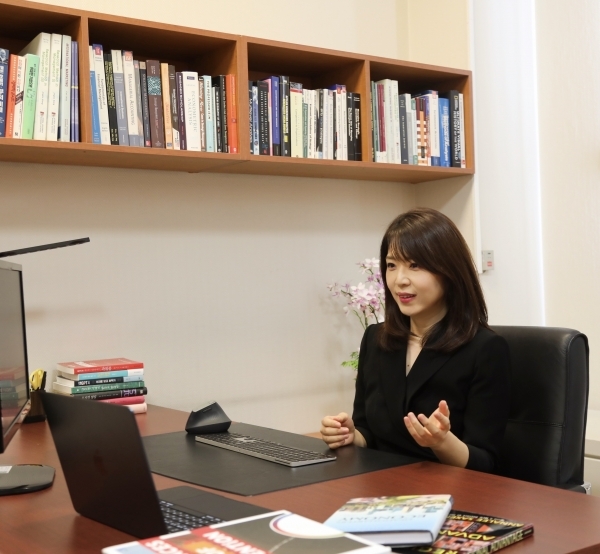
[2024 Fall Semester New Faculty Interview] Professor Min Jung Kim – The Business School as a 'Laboratory for the Future'... A Place Where Students Can Experiment with Ideas and Solutions Freely [2024 Fall Semester New Faculty Interview] Professor Min Jung Kim  Korea University Business School (Dean: Eonsoo Kim) has appointed five new faculty members as of September 2024: Professors Baek Jung Kim (Marketing), Min Jung Kim (Strategy), Jongsoo Kim (Strategy), Hae Kang Lee (Finance), and Viacheslav Savitskiy (Global Business). In this context, the KU Business Journal interviewed the new faculty members to share their aspirations with readers.  Q: Can you introduce your journey so far?  A: Before joining Korea University Business School in the fall of 2024, I was a professor of strategy at the University of Illinois Urbana-Champaign (UIUC) in the United States. My research primarily focuses on management strategy and global strategy, particularly on how external environments affect corporate technological innovation, strategy, and performance.    Q: What motivated you to choose the path of an academic after graduating?  A: I was deeply fascinated by the influence that management scholars can have. They explore the complex interactions among various elements within companies and society, elucidating the underlying mechanisms that shape our understanding of the world. Witnessing how academic achievements contribute to a deeper comprehension of these dynamics inspired me to engage in this process and make meaningful contributions.    Q: What led you to join Korea University Business School?  A: I chose Korea University Business School because I have a deep affection for it and want to grow alongside the institution where I learned so much. Korea University has provided me with invaluable opportunities for academic development, and I believe my education here has significantly shaped who I am today. I aspire to further my growth as a researcher and educator within the exceptional academic environment cultivated by the talented students and faculty at Korea University Business School, sharing what I have learned and advancing together.    Q: What aspects of Korea University Business School do you find most appealing?  A: I find the charm of Korea University Business School in its vibrant passion There is a constant pursuit of self-improvement, with students and faculty actively engaging in open dialogue and enthusiastically exploring new ideas.    Q: What teaching methods do you employ as a faculty member?  A: Understanding that it’s challenging for all students to fully grasp the course material right away, I focus on identifying and addressing the areas they find difficult by continuously asking questions and listening to their perspectives. I emphasize that while expressing their ideas can be difficult, the process is more important than getting the answers right or wrong. Incorrect answers often reveal thought processes and offer valuable learning opportunities, so I encourage students to share their opinions with confidence.    Q: Can you introduce the courses you teach?  A: I teach Management Strategy and International Management, with a focus on helping students develop the ability to flexibly apply theories to real-world situations, rather than simply conveying theoretical knowledge. Today's business environment is marked by uncertainties and unpredictable changes.  For instance, challenges such as COVID-19, geopolitical conflicts, global supply chain instability, climate change, and rapid technological advancements present new issues that cannot be solved with existing strategies. In such an environment, students need not only the ability to understand and apply theories accurately but also the capacity to adapt strategies flexibly in response to changes. In my classes, I guide students in creatively utilizing various management tools and teach them how to continually evaluate and adjust strategies in a changing environment. Additionally, I aim to connect management theories with philosophical and humanistic inquiries, offering students opportunities to reflect on the social and human implications of corporate strategies.    Q: What research achievements do you aspire to as a faculty member of Korea University Business School?  A: I aim to continue and further develop my research on how external environments, particularly adverse conditions and changes within industrial clusters, impact corporate strategy, performance, and technological innovation. For instance, studying situations like product recalls ordered by regulatory agencies, policy uncertainty, trade wars, or the sudden contraction and growth of industrial clusters is crucial for understanding strategic decisions in industries where innovation is key.  Through this research, I hope to provide insights into how companies can respond to rapidly changing environments and reconstruct their strategies for sustainable growth. This research could offer practical benefits for Korean companies facing complex challenges on the global stage, helping them make more informed strategic decisions.    Q: You described Korea University Business School as a “laboratory for the future.” What inspired you to use this expression?  A: This is a place where students have opportunities not only to learn academically, but also to experiment and explore strategies that can be applied in the real world. I believe Korea University Business School provides a space where students can freely test their ideas and solutions in a rapidly changing business environment.  Additionally, Korea University has built a strong foundation for philosophical thinking and critical perspectives grounded in the humanities. This intellectual base naturally integrates with business studies, enabling students to approach complex problems from multiple angles. As a result, they develop the ability to devise flexible and innovative strategies informed by humanities insights, even in the face of changing circumstances.    Q: How would you like to be remembered by your students as a professor?  A: I hope my students discover the joy of learning through my classes, deepening their critical thinking and broadening their perspectives based on their enhanced analytical skills. While I strive to create a comfortable and enjoyable classroom atmosphere, I also aim to help them build a solid foundation for applying management thinking academically and in real life. Ultimately, I want to be remembered as a guide who helps them make meaningful choices not only in business and society but also in their lives. 

2024.09.26 Views 5432

[2024 Fall Semester New Faculty Interview] Professor Baek Jung Kim – The Business School as a Launch

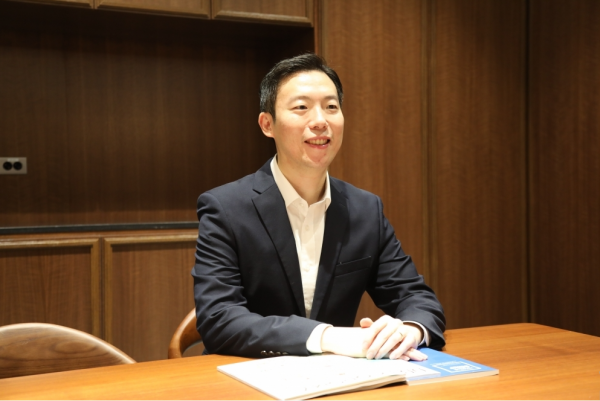
[2024 Fall Semester New Faculty Interview] Professor Baek Jung Kim – The Business School as a Launchpad for Learning and Growth with Infinite Possibilities... I Want to Be a Supportive and Warm Professor Alongside My Students [2024 Fall Semester New Faculty Interview] Professor Baek Jung Kim Korea University Business School (Dean: Eonsoo Kim) has appointed five new faculty members as of September 2024: Professor Baek Jung Kim (Marketing), Min Jung Kim (Strategy), Jongsoo Kim (Strategy), Hae Kang Lee (Finance), and Viacheslav Savitskiy (Global Business). In this context, KU Business Journal conducted an interview with the new faculty members to share their aspirations with readers.  Q: Can you introduce your journey so far?  A: I’m Baek Jung Kim, and I’ve recently joined Korea University Business School as a full-time faculty member in the fall semester of 2024. My research focuses on quantitative marketing, where I analyze the underlying behavioral drivers—such as peer effects, consumer learning, engagement, and habit formation—that arise when consumers interact with online platforms. Prior to joining Korea University, I spent five years as an assistant professor of marketing at the University of British Columbia in Vancouver, Canada.    Q: What motivated you to choose the path of an academic after graduating?  A: From an early age, I was exposed to the academic world through my father, who was a mathematics professor, giving me many opportunities to naturally consider a life in academia. Additionally, after various internship experiences during my undergraduate years, I realized that I enjoyed and thrived on thinking deeply and systematically about problems and deriving solutions. During this time, I had the opportunity to spend a year in the U.S. as an exchange student, which sparked my desire to pursue research. This experience led me to continue my studies in the U.S. for graduate school, ultimately choosing the path of an academic career.    Q: What led you to join Korea University Business School?  A: The opportunity to engage in diverse research alongside outstanding faculty in a world-class business school is a significant attraction for me. Additionally, I wanted to return to Korea University Business School, where I experienced considerable personal growth and learning as an undergraduate, to contribute to the development of current students. I believe that the exceptional faculty and comprehensive support for research and teaching at the business school provide an excellent opportunity for my growth as a scholar.    Q: What teaching methods do you employ as a faculty member?  A: I want to teach courses that foster critical thinking skills in students, empowering them to think independently. By training them in both quantitative and qualitative methods, I aim to help business students develop the ability to derive excellent solutions to the business questions they will face in their respective professions.    Q: What research achievements do you aspire to as a faculty member of Korea University Business School?  A: I aspire to conduct research that can positively impact a wide range of people, from businesses and consumers to society as a whole.    Q: You described the Business School as a launchpad for learning and growth with infinite possibilities. Why do you think so?  A: I refer to the business school as a launching pad because studying under world-class professors provides an opportunity for students to learn not only about academia but also about life, fostering limitless possibilities for their future. I hope that students at Korea University Business School will engage deeply, learn extensively, and grow through their experiences.    Q: How would you like to be remembered by your students as a professor?  A: I aspire to be a professor who can connect with students. I want to understand their learning and growth desires, as well as the challenges they face. My goal is to be a warm-hearted professor who can empathize with students’ struggles, share in their joys, and provide support along the way.

2024.09.26 Views 4529

[2024 Fall Semester New Faculty Interview] Professor Jongsoo Kim – Returning to My Alma Mater After

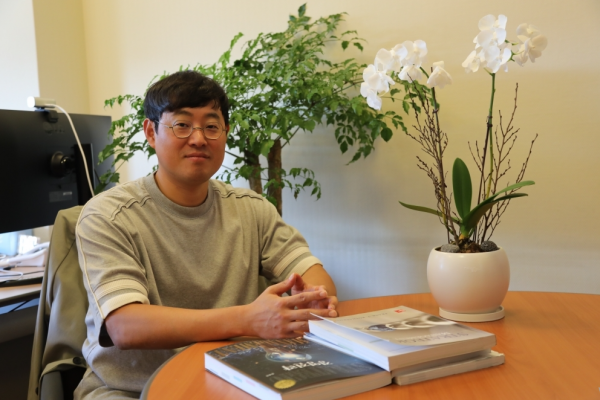
[2024 Fall Semester New Faculty Interview] Professor Jongsoo Kim – Returning to My Alma Mater After 20 Years [2024 Fall Semester New Faculty Interview] Professor Jongsoo Kim Korea University Business School (Dean: Eonsoo Kim) has appointed five new faculty members as of September 2024: Professors Baek Jung Kim (Marketing), Min Jung Kim (Strategy), Jongsoo Kim (Strategy), Hae Kang Lee (Finance), and Viacheslav Savitskiy (Global Business). In this context, the KU Business Journal interviewed the new faculty members to share their aspirations with readers.  Q: Can you introduce your journey so far?  A: I am Jongsoo Kim, appointed to the Strategy area at Korea University Business School as of September 1, 2024. Before returning to my alma mater, I worked as a professor in Hong Kong for six years. As a member of Korea University's Class of 2001, I feel honored to return and teach my juniors.    Q: What motivated you to choose the path of an academic after graduating?  A: Like many, I faced dilemmas in my late twenties as I approached graduation. Some of my friends were securing jobs at large corporations, while others were preparing for civil service exams or studying abroad. I was double majoring in Chinese Language and Literature and Business Administration, with a vague desire to do business in the Chinese market. I wanted to study Chinese economics and business further, which led me to pursue graduate studies under Professor Ick-Soo Kim, an expert in the Chinese market.    Q: What led you to join Korea University Business School?  A: After completing my PhD in the U.S., I started as an assistant professor in Hong Kong. While the working conditions were excellent, I sometimes felt lonely as a foreign professor. When I recognized limitations in my role, I was fortunate to return to my alma mater with the recommendations and support of several teachers.    Q: What aspects of Korea University Business School do you find most appealing?  A: During my time as a graduate student and as a professor abroad, I met many professors. What stands out about Korea University Business School is the deep affection the faculty members have for the school and their exceptional dedication to the students—something unmatched by other universities. This passion, coupled with the high caliber of the students, is what makes Korea University Business School a leading institution.    Q: What teaching methods do you employ as a faculty member?  A: My teaching philosophy emphasizes the importance of fundamentals and simplifying complex concepts. I strive to explain theories and phenomena in ways that even elementary school students can understand.    Q: Can you introduce the courses you are currently teaching?  A: In the Fall 2024 semester, I'm teaching undergraduate Management Strategy, and in the Spring 2025 semester, I'll offer a graduate-level Research Methodology course. I approach Management Strategy from a foundational perspective tailored to undergraduates, while the Research Methodology course is designed to provide practical guidance for students writing theses, not just theoretical insights.    Q: What research achievements do you aspire to as a faculty member of Korea University Business School?  A: My primary research areas are Human Capital and Corporate-Level Strategy within Management Strategy. I’m conducting studies on special human resources, particularly Star Performers. From a corporate strategy perspective, I’m researching factors influencing innovation success and failure in acquired companies, using data from the medical device industry. My goal is to produce research that is not only accessible to business specialists but also helpful to the general public.    Q: If you were to describe Korea University Business School in one word, what would it be?  A: I would say “Circle.” A circle represents being well-rounded, without sharp edges. I believe our students at Korea University are adaptable and harmonious, able to thrive in any situation. While skills are essential, I hope they also cultivate well-rounded personalities.    Q: How would you like to be remembered by your students as a professor?  A: I also aspire to be a “rounded” person for my students. I want to be a professor who is approachable and easy to talk to, someone students feel comfortable coming to. That’s the kind of professor I will strive to be. Thank you. 

2024.09.26 Views 3975

[2024 Fall Semester New Faculty Interview] Professor Hae Kang Lee – KUBS Is A Place Where People Dre

[2024 Fall Semester New Faculty Interview] Professor Hae Kang Lee – KUBS Is A Place Where People Dream of a Better Future Through Hard Work [2024 Fall Semester New Faculty Interview] Professor Hae Kang Lee  Korea University Business School (Dean: Eonsoo Kim) has appointed five new faculty members as of September 2024: Professors Baek Jung Kim (Marketing), Min Jung Kim (Strategy), Jongsoo Kim (Strategy), Hae Kang Lee (Finance), and Viacheslav Savitskiy (Global Business). In this context, the KU Business Journal interviewed the new faculty members to share their aspirations with readers.  Q: Can you introduce your journey so far?  A: I completed my PhD at NYU Stern School of Business and worked as a finance professor at the Darla Moore School of Business at the University of South Carolina before joining Korea University. I feel honored to be part of the globally renowned Korea University Business School.    Q: What motivated you to choose the path of an academic after graduating?  A: After graduation, I wanted to apply the knowledge I gained in school to real-world situations, so I started my career on Wall Street rather than immediately entering academia. After several years of diverse experiences, I realized that I wanted to understand the financial markets more deeply, which led me to pursue a PhD later in life and embark on an academic career.    Q: What aspects of Korea University Business School do you find most appealing?  A: One of its greatest strengths is its continuous evolution. KUBS works not only to maintain its status as a top-tier institution in Korea but also to become a leading global business school. The strong networking among students, alumni, and faculty under the Korea University name is another significant advantage.    Q: What teaching methods do you employ as a faculty member?  A: Reflecting on my own education, I believe learning becomes more engaging when it connects with real-world experiences beyond textbooks. I aim to leverage my diverse work experiences across various countries and fields to bridge academic concepts with the realities of the financial markets in my classes.    Q: Can you introduce the courses you are currently teaching?  A: I am currently teaching Investments. As mentioned earlier, my goal is to help students gain a deeper understanding of current global financial market dynamics, beyond just academic finance. To do this, I incorporate discussions of business news into my classes and engage students through random questioning. While some students may find this method challenging, I believe that constantly thinking and expressing one’s opinions is essential in the global business world, and class provides an excellent opportunity to practice this.    Q: What research achievements do you aspire to as a faculty member of Korea University Business School?  A: Although I feel the pressure to meet the high standards set by my esteemed senior colleagues, I also aspire to produce research that gains recognition in the field of finance. My primary research focuses are insurance and investment theory (asset pricing), but I have diverse interests. Recently, I've noticed a growing trend in conservative finance academia towards integrating machine learning and AI, and I plan to expand my research in that direction.    Q: How would you like to be remembered by your students as a professor?  A: I hope to be remembered as a professor who continuously strives to be helpful to students in my lectures. Reflecting on my own undergraduate experience, many lectures and professors left a lasting impression on me. Some classes, regardless of whether they were taught by renowned professors, can significantly impact a student’s life and even alter their career trajectory. If I can be that kind of memorable professor for even a few students, I will feel fulfilled in my role as a professor. 

2024.09.26 Views 3870

A New Chapter in Business Education… Launch of the Doctor of Business Administration (DBA) Program i

A New Chapter in Business Education… Launch of the Doctor of Business Administration (DBA) Program in Spring 2025 Korea University Business School (Dean: Eonsoo Kim), the first in Korea to introduce commercial education, has proudly upheld over 60 years of history since establishing its Graduate School of Business Administration in 1963. Today, under the leadership of Dean Eonsoo Kim, the Graduate School is recognized as a leader in delivering Korean-style MBA programs with a focus on practical, industry-centered education. Beginning in Spring 2025, the school will take a bold step forward with the launch of its Doctor of Business Administration (DBA) program, aiming to pioneer practical, industry-driven Korean management theories and usher in a new chapter in business education.    The KUBS-DBA program aims to develop management scholars who excel in both practical skills and academic excellence, shaping future leaders in management innovation. The three-year program offers a part-time format with classes held on Fridays and Saturdays. Students will be awarded a doctoral degree upon completing 36 credits and successfully passing the dissertation reviews.    Why choose the KUBS-DBA program? The KUBS-DBA program is optimal for professionals who want to balance work and study while pursuing career development, practical and scientific research, and knowledge creation and sharing. The program integrates professional experience with theoretical knowledge, enabling students to contribute to the development of Korean-style management theories and models. Research outcomes are realized in various forms, such as dissertations, management case studies, management manuals, and monographs, promoting both knowledge creation and sharing.    To achieve these goals, the KUBS-DBA program offers a curriculum supported by the largest faculty in the country, consiting of 88 full-time faculty member. The program focuses on developing core research competencies, reinterpreting and systematizing practical experience through theoretical learning and conducting in-depth studies on the latest research and management trends. Additionally, students receive personalized education and one-on-one guidance tailored to their individual interests and needs.    In addition, the KUBS-DBA program is open to applicants who hold a master’s degree and have at least 10 years of practical experience. The admission quota is limited to 12 students, with applications opening on October 14. For more information, please contact the administration office at 02-3290-1309. 

2024.09.25 Views 6366

  • 첫페이지로
  • 41
  • 42
  • 43
  • 44
  • 45
  • 마지막페이지로