TOP

KUBS News

Total 1417

‘KUBS 120 MARCH’ Campaign Nears 40% of Goal … Total Pledges Reach Approx. KRW 4.6 Billion

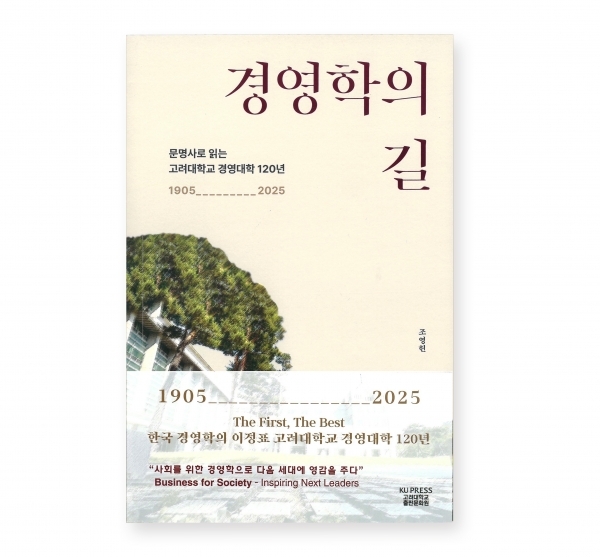
‘KUBS 120 MARCH’ Campaign Nears 40% of Goal … Total Pledges Reach Approx. KRW 4.6 Billion Three major large-scale pledges secured within four months of launch … Campaign continues through May 31     Korea University Business School’s KRW 12 billion fundraising campaign, “KUBS 120 MARCH,” has secured approximately KRW 4.6 billion in pledged donations within just four months of its launch, nearing 40% of its goal.   Since the campaign’s launch in January, when pledged donations stood at around KRW 2 billion, the total has more than doubled in just three months. From December 1, 2025, to March 29, 2026, total pledges reached KRW 4,652,317,231, with 324 participants, including corporations, alumni, faculty, staff, and students.       | Three major pledges secured … Alumni and corporations join forces    One of the most notable achievements is the securing of three major pledges. An anonymous donor pledged support for the research fund, Eugene Investment & Securities Co., Ltd. for the development fund, and Samyang Tongsang for scholarships. Alumni account for approximately 62% of total pledges, while corporations represent about 35%, jointly driving the campaign forward.   Group donations have also continued. Following the participation of the Class of ’81 alumni association, the Business School Class of ’79 Scholarship Committee (28 members), the KUBS Class of ’98 Alumni Night (126 participants), as well as faculty and staff, have also joined the campaign.      | Expanding participation across classes, generations, and professions    The donor base is highly diverse. Participation spans from alumni who entered in the 1970s to current students from the Class of ’26, as well as members of EMBA, DBA, and AMP programs, undergraduate alumni, and even alumni from the College of Medicine. From individual research labs and faculty bands to student councils, all corners of the Business School are actively engaging with the campaign, further broadening its base of participation.   This campaign is particularly meaningful in that it places value not only on the total amount raised but also on participation itself. From small contributions starting at KRW 10,000 to major gifts reaching KRW 1 billion, every act of giving becomes part of the shared legacy of KUBS’s 120-year history.    | Investing in the future campus… Advancing the 3C Trading Zone and 4Tech strategy    The funds raised are being used to realize the Business School’s future vision. Alongside the advancement of the “4Tech Strategy,” centered on AI, semiconductors, energy, and robotics, spatial innovation projects are also taking shape.   The Business School is already operating AI-focused tracks and 4Tech micro-degree programs, and continues to expand its educational and research capabilities with its largest-ever full-time faculty body of 95 members.   On the basement level of Hyundai Motor Hall, the “3C Trading Zone (tentative name)” is currently under development, with a trading demo day scheduled for early May. The space will also include an Art & Culture Room. Artist Uhm Jung-soon’s installation piece, K, the Noseless Elephant, has already been installed in the building.   Construction has also begun on an LED display in the lobby of LG-POSCO Hall, which will serve as a large-scale digital donor wall. An opening ceremony is scheduled following the conclusion of the campaign in May.   Dean Eonsoo Kim stated, “We have come this far thanks to the collective support of each and every member,” adding, “We hope more people will join us on this journey as we prepare for the next 120 years of the Business School.”   The “KUBS 120 MARCH” campaign will continue through May 31, 2026. Donations can be made via the official sponsorship page (box.donus.org/box/koreauniversity/KUBS120march).   As of December 1, 2025 – March 29, 2026 | Total pledged amount: KRW 4,652,317,231

2026.04.17 Views 446

[Interview with Newly Appointed Faculty for Fall 2025] Professor Seunghoo Chung

[Interview with Newly Appointed Faculty for Fall 2025] Professor Seunghoo Chung — A Deep Connection with Korea University, Returning as New Faculty  In September 2025, Korea University Business School appointed five new faculty members, each bringing expertise in diverse areas of research: Professor Dae hoon Noh (LSOM), Professor Juyoung Lee (Business Administration), Professor Seunghoo Chung (Business Administration), Professor Jae Young Cho (Strategy), and Professor Angela Aerry Choi (Information Systems).  To mark the occasion, KUBS News sat down with the newly appointed professors to introduce their research interests and educational philosophies to our readers.    Q1. Please introduce yourself.  My name is Seunghoo Chung, and I joined Korea University Business School in Fall 2025 as a full-time faculty member in Business Administration. My research focuses on organizational behavior, particularly how individuals behave and interact in organizational settings. I teach courses related to this area at Korea University. I earned my BBA from Korea University Business School and received my master’s and Ph.D. from The Ohio State University in the United States. Before joining Korea University, I worked as an assistant professor in the Department of Management at The Hong Kong Polytechnic University for four years.    Q2. What brought you to Korea University Business School, and how do you feel about joining?  As a graduate of Korea University Business School, I have always felt deep affection for my alma mater and wanted to give back to the institution that has given me so much. Upon entering the university, I was selected as a recipient of a special entrance scholarship from the Business School, which allowed me to focus on my studies for four years. In addition, both of my parents are proud Korea University alumni—my father (Business, Class of ’76) and my mother (Education, Class of ’77). During my undergraduate years, I also met my wife, who was one year behind me in the Business School’s Class D, and we are now married. With these personal connections and the lasting support I’ve received from Korea University, my appointment at my alma mater holds deep personal meaning and is truly a cherished opportunity.    Q3. What is your current research focus or area of interest?  My research explores how individuals collaborate and perform within teams, how to design and structure high-performing teams, and what situational factors can hinder team effectiveness. I am particularly interested in understanding how teams negotiate to achieve optimal outcomes—how they develop internal strategies and what approaches are most effective in inter-team negotiations. These questions lie at the core of my research.    Q4. What is your teaching philosophy when guiding and mentoring students?  I believe that teaching goes beyond delivering knowledge—it is also about caring deeply for students and supporting their growth. While research is an essential part of a professor’s role, I also view teaching and mentoring as equally important responsibilities. I strive to be approachable and attentive, both inside and outside the classroom, always making an effort to understand and help students with the challenges they face. As all Korea University students are now my juniors, I approach teaching with even greater affection, listening closely to their voices and doing my utmost to support them whenever needed.    Q5. Besides academic knowledge, what do you believe students must learn during their university years?  Korea University students are always dedicated and hardworking, so I have no doubt about their commitment. Still, I hope they take time to enjoy the unique experiences that university life offers. In particular, I encourage students to reconnect with personal interests they may have set aside during their intense high school years and use this time for self-development. During my own college years, I spent much of my time playing baseball and growing through my experience with the KUBIZ baseball club—memories that remain among my most cherished. I hope students, too, can create meaningful and lasting memories outside of academics that they’ll fondly look back on in the years to come.    Q6. As a new faculty member at the Business School, what are your goals or visions moving forward?  I hope to continue pursuing rigorous research and furthering my academic growth, while also sharing the joy of learning and discovery with my students. During my years at Korea University, I had the privilege of learning from outstanding professors and being inspired by seniors, juniors, and peers alike. It was a truly enriching and formative experience. Now, I hope to give back some of what I have gained by sharing my knowledge and supporting students in their own journeys.   Q7. Lastly, could you offer a word of advice and encouragement to Korea University students as they head out into the world?  I believe many students today are facing uncertainty and concern about the future in our rapidly changing world. In such times, it’s easy to feel pressured to meet others’ expectations and to compare yourself to those around you. However, I encourage you to take pride in being a member of Korea University and to not only focus on your studies but also embrace the unique experiences that come with university life. If you continue to give your best in everything you do, and support and care for the people around you, I truly believe that good things will come your way. 

2025.10.13 Views 1901

[Interview with Newly Appointed Faculty for Fall 2025] Professor Jae Young Cho

[Interview with Newly Appointed Faculty for Fall 2025] Professor Jae Young Cho — Think Deeply, Act Boldly  In September 2025, Korea University Business School appointed five new faculty members, each bringing expertise in diverse areas of research: Professor Dae hoon Noh (LSOM), Professor Juyoung Lee (Business Administration), Professor Seunghoo Chung (Business Administration), Professor Jae Young Cho (Strategy), and Professor Angela Aerry Choi (Information Systems). To mark the occasion, KUBS News sat down with the newly appointed professors to introduce their research interests and educational philosophies to our readers.    Q1. Please introduce yourself.   Hello, I’m Jae Young Cho. I earned my bachelor’s degree in Bio and Brain Engineering from KAIST. While I was fascinated by technology, I found myself more drawn to the people and organizations behind it, which led me to pursue a master’s degree in Business Administration at Korea University. Wanting to study management from a broader perspective, I later decided to study abroad and completed my PhD in Strategy at the University of Colorado Boulder.    Q2. What led you to join Korea University Business School, and how do you feel about it?  Korea University was a major turning point in my life. It was more than just a place to study; it was where I met people from diverse fields and learned to think more broadly. It is truly meaningful and a great joy for me to have joined Korea University Business School. Going forward, I hope to be a researcher and educator who can inspire students to think broadly and explore diverse opportunities.    Q3. What research area or topics are you currently focusing on?  I am currently conducting research on corporate strategy in the context of Artificial Intelligence (AI). As AI represents a fundamentally new form of technology for most firms and individuals, it brings substantial uncertainty and rapid change. As a result, interfirm cooperation — through alliances or mergers and acquisitions — plays a crucial role. From this perspective, I examine firms’ strategic responses to AI.    Q4. What is your philosophy when teaching and mentoring students?  Rather than the traditional, linear model of simply teaching, learning, and evaluating, I emphasize continuous communication between professors and students. In particular, I aim to actively integrate AI into my classes, as I hope to explore and learn, together with my students, the many ways this new technology can be used. I strive to create an environment where we learn from each other and grow together.    Q5. Aside from academic knowledge, what do you think students must learn during their university years?  I believe it is essential to understand the perspectives of people from diverse backgrounds and cultures, and to work together in taking on new challenges. The knowledge you gain from lectures by outstanding professors is, of course, important, but it is equally important to go beyond that — to apply what you’ve learned and explore new experiences. This process, I believe, is one of the most valuable assets students can gain during their university years.    Q6. As a new faculty member at the Business School, what goals or visions do you have for the future?  Above all, my foremost goal is to make meaningful contributions in research and teaching, which are the core responsibilities of a professor. At the same time, as a faculty member of Korea University, I hope to contribute in ways that are directly beneficial to students. Another aspiration of mine is to develop courses informed by my research and, building on that foundation, to write a book.    Q7. Lastly, any advice and encouragement for Korea University students heading into the world?  I believe that what you do now does not necessarily determine the rest of your life. So I hope you think deeply, act boldly, and embrace a variety of experiences. At Korea University, you’ll find not only excellent professors but also many others who are dedicated to supporting students in various ways. When you need help, don’t struggle alone — look around and don’t hesitate to reach out to those around you. 

2025.10.13 Views 1544

[Interview with Newly Appointed Faculty for Fall 2025] Professor Angela Aerry Choi

[Interview with Newly Appointed Faculty for Fall 2025] Professor Angela Aerry Choi — Move Forward Steadily with a Long-Term Perspective, Rather Than Focusing Only on Immediate Results.  In September 2025, Korea University Business School appointed five new faculty members, each bringing expertise in diverse areas of research: Professor Dae hoon Noh (LSOM), Professor Juyoung Lee (Business Administration), Professor Seunghoo Chung (Business Administration), Professor Jae Young Cho (Strategy), and Professor Angela Aerry Choi (Information Systems).  To mark the occasion, KUBS News sat down with the newly appointed professors to introduce their research interests and educational philosophies to our readers.    Q1. Please introduce yourself.  After earning my Ph.D. in Management Engineering from KAIST, I started my academic career as an Assistant Professor at Florida State University. I later continued my research and teaching at Sungkyunkwan University Business School before recently joining Korea University Business School. My research focuses on Information Systems and Business Analytics, exploring data-driven decision-making and consumer behavior in digital environments. Through my research, I strive to achieve both academic excellence and social impact by collaborating with industry partners.    Q2. What led you to join Korea University Business School, and how do you feel about it?  My academic journey through KAIST, Florida State University, and Sungkyunkwan University has allowed me to gain diverse academic and cultural experiences. Korea University is an academic community that harmonizes tradition and innovation, and it is a great honor for me to join such a distinguished institution. I was deeply inspired by KUBS’s vision of fostering global leaders through data and technology, which led me to join the school. I am committed to leveraging my research and teaching experience to contribute to the development of Korea University and the growth of its students.    Q3. What research areas or topics are you currently focusing on?  My research focuses on consumer behavior in the context of digital platforms and artificial intelligence (AI). I use experimental methods to examine how the credibility of AI-generated review summaries and the authenticity of influencer marketing influence consumer decision-making. I also study how users form habits and sustain continued use in digital health and fintech services. Drawing on my research experience at Florida State University and Sungkyunkwan University, I pursue meaningful research that bridges academia and industry on a global scale.    Q4. What is your teaching and mentoring philosophy?  I believe that classes should go beyond delivering knowledge and serve as a space where students learn to define and solve problems independently. Drawing on my experience, I value experiential learning that integrates both theory and real-world data. One of my core teaching philosophies is fostering an environment where students feel comfortable taking risks and learning from failure. Ultimately, my goal is to help students develop the ability to tell compelling stories with data.    Q5. Besides academic knowledge, what do you think students must learn during university life?  Developing collaboration and communication skills is one of the most important goals of university education. Through my Ph.D. program at KAIST and my research and teaching experiences in the U.S. and Korea, I have come to deeply appreciate the value of understanding and working effectively across differences. While academic achievement is crucial, the experience of developing teamwork and leadership skills will be invaluable beyond graduation. That is why I encourage students to not only gain knowledge, but also learn how to grow together with others.    Q6. As a new faculty member at the Business School, what are your goals or visions moving forward?  I hope to contribute to positioning Korea University Business School as a global hub for research and education. In particular, I plan to generate both academic contributions and industry insights through empirical research leveraging data and technology. Above all, my goal is to become a globally recognized scholar by consistently publishing high-impact research in leading academic journals. Building on my previous experiences, I aim to expand my global network and contribute meaningfully to research, education, and industry.    Q7. Finally, do you have any advice or encouragement for Korea University students as they head out into the world?  As a researcher, I believe perseverance is the greatest virtue. To become a globally impactful scholar, it is more important to build a lasting body of meaningful knowledge over time than to seek short-term success. Whether in academia or in life, I hope students will maintain a long-term perspective and continue progressing with patience and consistency, rather than chasing immediate results. Failures and missteps are integral to the growth process, and it is through them that great achievements eventually emerge. 

2025.10.13 Views 1892

[From Learning to Teaching: Interview with Prof. Sohyeon Park, Newly Appointed to Ajou University]

[From Learning to Teaching: Interview with Professor Sohyeon Park, Newly Appointed to Ajou University] — Carrying the Lessons from Her Alma Mater, Shining in a New Role  Sohyeon Park, a Korea University alumna, recently took the next step in her academic journey with her appointment as an Assistant Professor in the Department of Business Administration at Ajou University Business School in March 2025. Drawing on her learning and research experience at her alma mater, Professor Park has been dedicated to nurturing future scholars in this new role. She graciously took the time to share her story with fellow alumni. Her appointment carries special meaning, as it highlights the academic excellence of a Korea University graduate now making her mark in a new academic environment. Here, Professor Park shares her thoughts as she flourishes in her new academic home.    Q1. First of all, congratulations on your appointment as an Assistant Professor at Ajou University Business School. Could you share your thoughts on this new position?  Hello, I’m Sohyeon Park, and I was appointed Assistant Professor in the Department of Business Administration at Ajou University Business School in March 2025. It’s an honor to have this opportunity to greet the students and professors of my alma mater, Korea University. As for how I felt about my appointment, you might relate to this: when I entered Korea University Business School in 2004 after years of preparation, it felt surreal—as if I were floating between a dream and reality. When I received the news of my appointment last year, I experienced a similar feeling, and my first semester went by in somewhat of a daze. Now, after one semester, I’ve quickly adjusted and have been keeping busy preparing for classes and conducting research.    Q2. Could you tell us about your academic journey and the path you have taken so far?  I graduated from Korea University Business School in 2009 and earned a Master’s degree in Advertising from the University of Texas at Austin in 2011. Following that, I worked as an advertising planner and digital marketer at Cheil Worldwide, an affiliate of Samsung, and at Double A Korea, a multinational paper company. Through these professional experiences, I came to recognize the importance of deeper academic inquiry. In 2018, I began my Ph.D. in Marketing at Korea University under the supervision of Professor Song Oh Yoon and earned my doctoral degree in February 2024.    Q3. Having graduated from Korea University and recently appointed as a faculty member, how did your experience at Korea University influence your academic journey?  My experiences at Korea University have profoundly shaped my entire journey. I was among the first cohorts to experience full English lectures, and studying alongside exchange students from various countries inspired me to dream of pursuing education abroad. In my sophomore year, I went to the U.S. for a language program and broadened my horizons through an internship arranged through the program. After returning to Korea, I decided to pursue graduate studies overseas and fully prepared before beginning my master’s program. At that time, I had little knowledge of doctoral studies and didn’t see it as my path, so I completed only my master’s degree before returning to Korea. Nevertheless, these accumulated experiences laid the foundation for my current academic path. Above all, Korea University has always been a strong stepping stone for me, giving me the confidence to take new steps forward with ease.    Q4. What research areas or topics do you plan to focus on going forward?  My research in marketing draws on theories from psychology and behavioral economics to examine consumer decision-making and behavioral change. My work covers topics such as advertising messages and pricing strategies, with interests that extend beyond commercial settings to non-commercial contexts as well. As the boundary between online and offline environments continues to blur, I primarily focus on online consumer purchasing behavior. Broadly speaking, I am interested in the wide range of factors that influence consumer decisions across different contexts, each of which can serve as a potential research topic. While my research scope may appear broad, it reflects the diversity of my academic interests.    Q5. As you step into the classroom, what educational philosophy do you consider most important?  In today’s world, simply delivering theories is no longer enough. Since COVID-19 and the rapid transition to the AI era, we have all realized that knowledge is accessible anywhere. For this reason, I place the greatest importance on helping students find their own motivation to learn and develop a sense of ownership in the classroom. Otherwise, I would be no different from generative AI that merely transmits information—and, in terms of the amount of knowledge, AI would likely surpass me.  To that end, I strive to balance theory and practice to inspire curiosity, encourage questioning, and help students take ownership of their learning. Above all, I prioritize interactive feedback and open communication with my students.    Q6. Finally, as a fellow Korea University alumna, what advice or encouragement would you like to share with your juniors?  Dear juniors at Korea University, it’s hard to believe that 20 years have already passed since I graduated. Twenty years ago, I could never have imagined the person I am today. During my school days, I once dreamed of becoming a TV producer, and at other times, I pictured myself as a successful advertising planner or a creative executive at an agency. Twenty years from now, you too may find yourselves in places you never expected—far from the dreams you hold today.  What I can say for sure is this: by making the best choices you can each day, surrounding yourself with good people, and sharing positive influence with others, your path will naturally unfold before you. Whatever path unfolds, remember that it is the result of your own choices—embrace it and make the most of it.  As for me, I don’t try to picture the next 20 years ahead. Instead, I do my best each day, following opportunities as they come and expanding my horizons. Perhaps when I’m 60, I’ll be doing something I can’t even imagine right now—but I know I’ll be proud of that future and find meaning in it. Even when the road ahead feels uncertain or dark, believe that you can be a small source of light for someone else, and always stand tall with confidence. That, I believe, is where true self-esteem begins.   

2025.10.13 Views 1809

[SK Paper Award Interview] Professor Juhyun Pyun on “A New Interpretation of Global Imbalances” 

[SK Paper Award Interview] Professor Juhyun Pyun on “A New Interpretation of Global Imbalances”  In 2025, Professor Ju Hyun Pyun of Korea University Business School, as a co-corresponding author, co-authored a paper titled “Fear of Appreciation and Current Account Adjustment” with Paul R. Bergin and Kyunghun Kim. The paper has been accepted for publication in the international journal Journal of International Economics and has been honored with the Paper Award at the SK Awards.  To celebrate the achievement, Professor Pyun shared insights into the research journey and the philosophy that guided his work.    Q1. First of all, congratulations on receiving the Paper Award. Could you briefly introduce yourself and your paper?  My paper analyzes, both empirically and theoretically, how the “fear of appreciation” — the tendency of some countries to resist currency appreciation — affects the process of current account adjustment, which represents the balance between a country’s exports and imports.  In the empirical analysis, we find that in countries that suppress currency appreciation through exchange rate policies, current account imbalances adjust faster when in deficit than when in surplus.  Using a multi-country monetary model, we then theoretically show how such policy constraints can explain this asymmetry in adjustment speed.  The paper offers a new approach to testing a long-standing hypothesis first proposed by Nobel Laureate Milton Friedman, while also illustrating how exchange rate and foreign exchange policy environments can have structural implications for global firms’ investment and supply chain strategies.    Q2. What motivated you to begin this research, and what was the core problem you aimed to address?  Global imbalances—particularly the persistent asymmetry in adjustment speeds between current account surplus and deficit countries—have long been a central topic in both academic and policy debates.  While previous discussions often emphasized Milton Friedman’s intuition that exchange rate flexibility facilitates adjustment, in practice, many emerging economies have resisted currency appreciation and accumulated substantial foreign reserves.  My research began with this question: Why does surplus adjustment tend to be slower, while deficit adjustment occurs more rapidly?  This question also holds practical significance for global firms, as a country’s exchange rate policy directly influences export competitiveness, the profitability of overseas investments, and the flow of global capital.    Q3. What is the most important message this paper conveys to academia or the industry?  The central message of the paper is that the asymmetry in current account adjustment speeds is not simply a market-driven outcome, but rather an institutional result of policymakers’ “fear of appreciation” stance.  From an academic perspective, the study points to a new direction for international macro-financial modeling—one that endogenizes policy constraints within theoretical frameworks. From a policy standpoint, it cautions that persistent foreign exchange market interventions may contribute to the prolonged nature of global imbalances.  For global firms, the findings imply that countries with larger current account surpluses tend to face greater uncertainty arising from exchange rate stabilization policies. In this sense, understanding a country’s policy stance—beyond merely forecasting exchange rate movements—becomes a crucial element of risk management in foreign investment, pricing, and supply chain decisions.    Q4. Do you have any personal methods for overcoming slumps that often occur in academic or research life?  When I experience slumps in my research life, they usually don’t stem from the research process itself, but rather from moments when journal reviewers fail to recognize the value of my work—which can be quite discouraging.  I don’t have a particular method for overcoming such moments, but I think the belief that research is my calling allows those slumps to pass rather quickly.    Q5. Are there any new research topics or directions you would like to explore in the future?  Looking ahead, I plan to examine how the recently revived debates over Trump-era tariff policies may be reshaping the mechanisms of global imbalance adjustment.  One of the key objectives of these U.S.-imposed tariffs is to address the country’s current account deficit, and I am particularly interested in how this policy shift is influencing global firms’ foreign investment patterns and localization strategies.  From the corporate perspective, this signals the emergence of a new era in which capital flows and exchange rate stability are being managed in fundamentally different ways.    Q6. Do you have any words of advice for students who wish to pursue a career as a researcher?  In social science research, I believe that what matters most is how we define our fundamental values in understanding the world and the people we study.  The perseverance to continue research, even when the results are not as expected, comes from that very conviction.    A summary of Professor Ju Hyun Pyun’s paper is introduced below.  This paper finds that one-sided nominal exchange rate interventions in the form of a “fear of appreciation” slow the adjustment of current account surpluses, providing new evidence in support of Friedman’s hypothesis that adjustment occurs more rapidly under flexible exchange rates. The analysis shows that countries with more flexible exchange rate regimes exhibit faster convergence than peggers in correcting current account deficits, but not in the case of surpluses. This asymmetry is linked to the one-sided suppression of currency appreciations observed in certain economies.  To capture this mechanism, we develop a multi-country monetary model that incorporates a “fear of appreciation” policy rule governing foreign exchange intervention, solved as an occasionally binding constraint. The model illustrates how government capital flows that sustain exchange rate regimes can influence international financial adjustment, and it successfully explains the pronounced asymmetry in current account adjustment speeds across different exchange rate regimes and current account positions. 

2025.10.13 Views 1696

"Creating Knowledge that Integrates Practice and Academia" 2026 KUBS-DBA Admissions Session

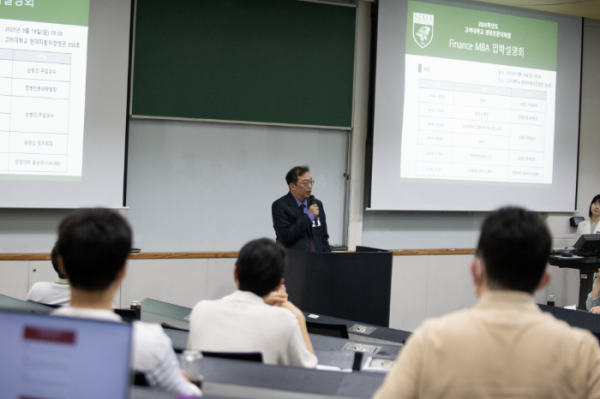
"Creating Knowledge that Integrates Practice and Academia" — 2026 KUBS-DBA Admissions Session Held  On Friday, September 5, Korea University Business School (KUBS) held an admissions information session for the 2026 KUBS Doctor of Business Administration (DBA) program at Ahn Young Il Hall in the LG-POSCO Building. The event was attended by Associate Dean Gangseog Ryu, Academic Director Professor Tae Kyu Kim, Professor Kyo Ryung Koo, current students from the Class of 2025, and prospective applicants who had pre-registered.  The session began with a welcome address by Professor Kim, followed by an overview of the KUBS-DBA program and its structure. The KUBS-DBA is a professional doctoral program in business administration designed to generate new business knowledge through the integration of practical experience and academic theory.  The program is structured to accommodate working professionals, with classes held biweekly on Friday afternoons and all day Saturday. It is a three-year program (six semesters) with an annual cohort size of 12 students.  Applicants must hold a master’s degree and have at least 10 years of practical experience. Graduation requirements include the completion of 36 credits, submission of a doctoral dissertation, and successful defense.  Professor Kim explained, “Because the program requires over ten years of professional experience, it is a process through which experts from diverse fields reflect on how to connect their real-world experience with academic theory.” He continued, “Unlike an MBA, the DBA program is not limited to the consumption of knowledge; it focuses on the creation of new knowledge. Also, unlike a Ph.D., which builds upon existing literature, this program allows students to deeply explore real-world challenges grounded in their own professional experience.” He emphasized that “this will be an academic journey to further develop and elevate your expertise.”  A small group of carefully selected students will pursue the three-year program while balancing their professional responsibilities through KUBS-DBA’s uniquely designed curriculum. They will receive intensive support from the faculty through small-group and one-on-one mentoring, and will develop their work experience into a variety of research outcomes—not only academic papers, but also practical theses, business case studies, and professional publications—thereby producing structured, applicable knowledge for the field. Furthermore, students will have access to an optimal learning environment, including dedicated classrooms, lounges, and research labs.  Finally, Professor Kim remarked, “Korea University Business School consistently delivers outstanding results, with the quality of its research papers ranking within the top 20 to 30 globally each year.” He added, “I encourage you to take on this challenge with high aspirations as future members of the Korea University community.”  During the Q&A session that followed, current students from the Class of 2025 shared their experiences in the program. One student noted, “We studied numerous academic papers and case studies, many of which offered practical insights that could be directly applied in real-world situations.” Another added, “After studying, I felt more confident tackling areas I had previously hesitated with at work. The strong theoretical foundation we built helped me identify the underlying roots and key structures of practical challenges.”  Meanwhile, applications will be accepted from Monday, September 8, 2025, through Wednesday, October 15, 2025, at 3:00 PM (KST). Final candidates will be selected through a document screening and interview process, with the results to be announced on Friday, December 19, 2025.  For more information, please contact the KUBS DBA office by phone (02-3290-1309 / 1366) or email (kubsdba@korea.ac.kr). 

2025.10.13 Views 2024

  • 첫페이지로
  • 16
  • 17
  • 18
  • 19
  • 20
  • 마지막페이지로