TOP

KUBS News

Total 91

EEC Opens New Horizons for Corporate Clients and International Visiting Students in 2025

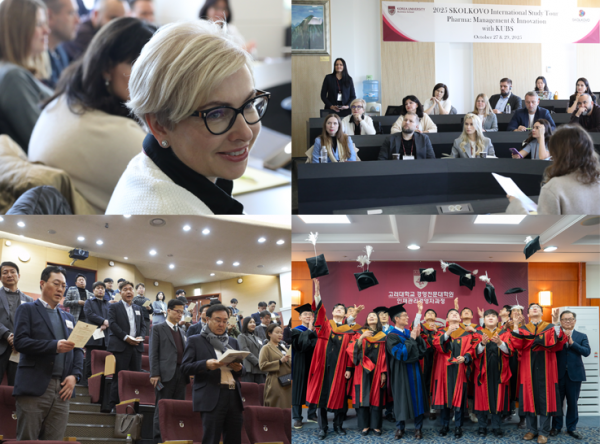
EEC Opens New Horizons for Corporate Clients and International Visiting Students in 2025 -EEC operated 17 education programs over the past year — significantly enhancing corporate credibility and program scalability.     The Executive Education Center (EEC) at Korea University Business School solidified its position in 2025 as Korea’s leading provider of non-degree, customized executive education. This year, EEC significantly expanded its educational portfolio by offering a total of 17 programs, including global programs, corporate-customized programs, and executive courses. By accurately identifying the practical competencies and leadership skills required in a rapidly evolving corporate environment and delivering proactive, capability-enhancing programs, EEC has established itself as a trusted learning partner for companies both in Korea and abroad.    Expansion of International Training Visits… Growing Global Demand for Programs at Korea University  In 2025, visits from overseas universities, global corporations, and international organizations increased significantly, further elevating the EEC’s global standing. Starting with the early-year visit from ESADE Business School in Spain, students and representatives from the OneMBA program—jointly operated by Xiamen University School of Management in China, FGV São Paulo School of Business Administration in Brazil, and Toulouse Business School in France—came to Korea University for academic sessions.  Additionally, BMI Brussels ASBL in Europe, the Moscow School of Management SKOLKOVO in Russia, and the Chinese University of Hong Kong visited Korea University as part of their international training programs. Participants engaged in special lectures and in-depth sessions with KU faculty and visited Korean companies to gain firsthand insight into Korea’s business environment and industrial landscape.  Corporate visits also continued. Agrocentro S.A. from South America visited Korea University for practical training and leadership development. These recurring visits from global institutions underscore the EEC’s emergence as a major educational hub for international training in the Asian region.      A Remarkable Expansion of EEC’s Educational Portfolio in 2025  EEC’s expertise was particularly evident in its corporate-customized education programs. In 2025, seven programs were conducted in partnership with five leading Korean companies and institutions—Samsung Electronics, Samsung Fire & Marine Insurance, SK, Seoul National University Hospital, and Korea Zinc. Each program—including the Samsung Electronics Finance MBA (introductory, intermediate, and advanced), Samsung Fire A.C.E. Program, SK Capital Market Specialist Program, Seoul National University Hospital Business Program, and Korea Zinc Leadership Academy—was designed to reflect the unique strategic needs and organizational challenges of each partner, earning strong satisfaction through results-oriented curricula.  Leveraging its close collaboration with industry, EEC continues to play a key role in developing core talent and enhancing organizational competitiveness. Notably, 2025 marked a significant expansion into new educational domains. With the launch of the Seoul National University Hospital Business Program, EEC began delivering customized management education tailored to the healthcare sector, marking an important milestone in broadening its educational impact across diverse industries.      Consistent Operation of Executive Programs  Regularly offered executive courses also continued successfully. The AMP (Advanced Management Program), MSP (Management Studies Program), and CHRO (Chief HR Officer Program) are each designed to meet different leadership levels and roles, and have become flagship programs that provide strategic insight and practical perspectives to corporate decision-makers and senior executives. In particular, the courses center on critical issues faced by today’s corporate leaders—such as organizational change management, global business strategy, and talent and culture innovation—ensuring strong real-world applicability.  Among these programs, the CHRO course is the only program in Korea dedicated specifically to HR professionals, and it celebrated the graduation of its first cohort this year. Designed to advance the expertise of leaders in HR and organizational management, the program explores core challenges facing HR executives, including advanced talent strategies, organizational culture innovation, and HR governance.      From Simple Retraining to a True Partner in Solving Organizational Challenges  Associate Dean Gangseog Ryu of the Business School noted, “Requests for customized EEC programs continue to grow each year, and companies now look to us not simply for retraining but as a partner that works with them to solve organizational challenges.” He added, “Moving forward, we will continue developing high-quality programs that address the diverse issues faced in corporate settings, thereby further strengthening the Business School’s social responsibility and impact.”     

2025.12.08 Views 180

An Era of Fog, an Education That Builds the Compass : MBA Achievements of 2025

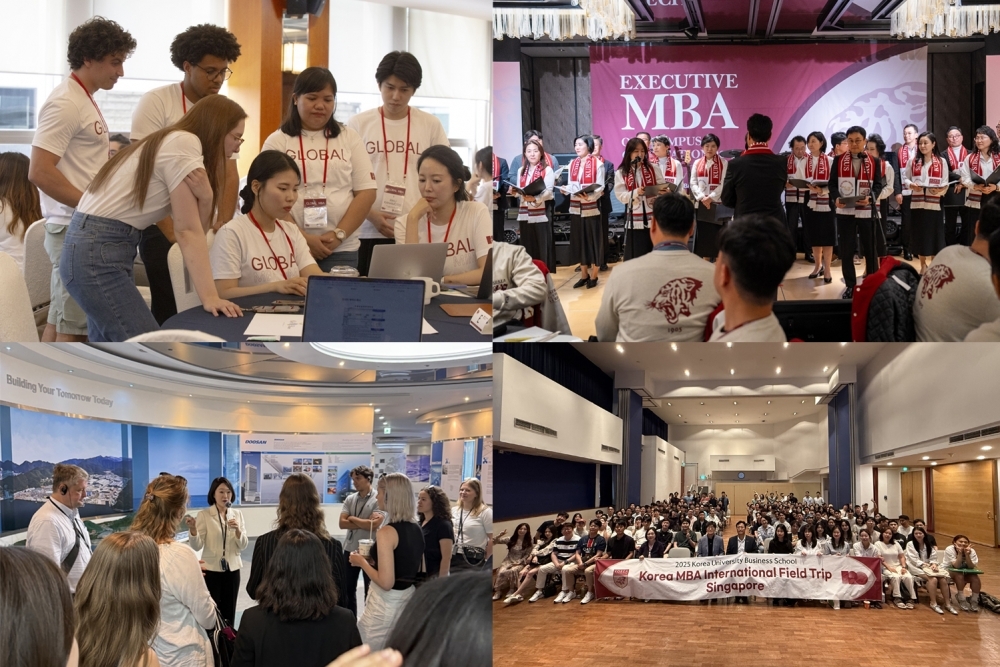
An Era of Fog, an Education That Builds the Compass : MBA Achievements 0f 2025     “The best way to predict the future is to create it.” Widely attributed to Peter Drucker, the father of modern management, this famous quote captures the essence of contemporary education—particularly the fundamental direction that leadership education must pursue. In an era where uncertainty has become the norm, the competencies required of leaders extend far beyond the mere accumulation of knowledge. True leadership lies in creative thinking and the ability to act—qualities that enable one to read the tides of change and build a new order within them.  Over the past year, Korea University has put this philosophy into practice by realizing an education model in which “learning becomes action.” Although each program—Korea MBA, Executive MBA, Finance MBA, KUBS-DBA, Global MBA, and CEMS Global MIM—targets a different audience and serves a distinct purpose, they all move toward a shared mission: to cultivate leaders who design their own futures in a rapidly changing world and drive positive transformation in society.  Here, learning is not simply the acquisition of knowledge; it is the act of creating the future. Students learn in the classroom, test what they have learned in real-world settings, and expand that learning once again in society. This cycle of learning represents the depth of education that Korea University strives for and is the driving force that has positioned the university as a standard-bearer of business education not only in Korea but across Asia.  Under this philosophy, Korea University has demonstrated over the past year—through a wide range of programs—that learning is the force that drives change.      Korea MBA: Building Practical Global Insight  The Korea MBA program offers an education that cultivates practical global insight grounded in management theory. From June 25 to 29, a total of 156 students participated in a global field study in Singapore under the guidance of Academic  Director Professor Kwanghyun Kim. Through visits to government agencies, startups, and global corporations, the students conducted an in-depth examination of Singapore’s developmental model as a city-state where digital transformation and ESG strategies intersect. This experience functioned as a dynamic learning platform—one that allowed students to test and deepen their classroom knowledge within the real global economic system.    Executive MBA: An Educational Laboratory for Practical Leadership  The Executive MBA has continued to deliver field-centered education under a clear mission to cultivate practical managerial leaders, with the ELITE project (Executive Learning & Interactive Team Exercise) at its core. The ELITE presentation event held this past August at Supex Hall in the LG-POSCO Hall marked the culmination of these efforts. Rather than a simple project showcase, the process in which participants identified real corporate challenges and developed actionable solutions functioned as a full-scale “management laboratory.” Participants presented structured strategies—integrating data analysis, interviews, and financial simulations—while addressing realistic topics in rapidly evolving markets such as healthcare, platform businesses, and O2O services. Judges commented, “The ideas are not only innovative but also highly applicable to real-world practice.”  The accompanying International Residency Program (IRP) further strengthened the global distinctiveness of the E-MBA curriculum. The 22nd cohort participated in lectures and institutional visits on ESG and innovation leadership at the Rotterdam School of Management (RSM), Erasmus University, in the Netherlands from July 5 to 12, gaining first-hand insight into Europe’s sustainable management models. The 23rd cohort, from June 21 to 28, explored the role of executives amid global geopolitical dynamics at Georgetown University in the United States, experiencing global leadership that navigates the intersection of policy and business. These programs are not simple study tours; rather, they reflect the core identity of the E-MBA—a process in which leaders think in the field and reflect deeply on the balance between social responsibility and innovation.      Finance MBA: Financial Education That Reads the ‘Flow’ Beyond the Numbers  The Finance MBA program spent the first year of its two-year curriculum engaged in a wide range of meaningful activities. From June 26 to 29, students traveled to Shanghai, China, to gain a comprehensive view of the present and future of the financial industry. Through visits to local investment firms, fintech companies, and global financial institutions, participants explored how technological advances are reshaping financial markets. Experiencing the dynamism of a global financial hub firsthand was regarded as an opportunity to develop “insight that reads the flow beyond the numbers.”  A key pillar of the curriculum, the Independent Study course, enables students to apply theories and methodologies learned in the core curriculum to real-world issues and derive practical solutions. Students work on team projects, receive close guidance from faculty advisors, and gain experience in scientifically analyzing and solving industry problems. Professor Bumjean Sohn noted, “Students may, in fact, learn even more through Independent Study than in regular classes.” Previous cohorts have tackled a wide range of topics, including “bond investment strategies for busy working professionals” and “the current landscape of generative AI–based financial services.”      Global MBA & CEMS Global MIM: The Intersection of Global Leadership  The Global MBA and CEMS Global MIM students participated together in Homecoming Day on Wednesday, August 20. Professor Betty Chung reflected on key programs carried out over the past year, including the Business Practicum, Career Acceleration Program, Global CEO Talk, and various company visits. One of the highlights was the Global CEO Talk, a weekly session featuring distinguished leaders from diverse industries for deep, interactive discussions. This year, the Italian Embassy also visited, providing students with a meaningful opportunity for cultural and professional exchange. During the Homecoming session that followed, alumni took the stage to share the connections they had built and the personal and professional growth they experienced throughout the program. They also offered practical insights, including internship cases facilitated through the Career Office.      KUBS-DBA: A ‘Practice-Oriented Research Platform’ Connecting Academia and Industry  The KUBS-DBA program, newly established this year, is an advanced research-centered program designed to bridge academia and industry by translating management theory into the language of practice. The inaugural cohort spent the first year of the three-year curriculum focusing on career development, practice-based scientific research, and activities aimed at knowledge creation and dissemination.  In particular, the seminar series—centered on emerging management themes such as ESG, AI, and data-driven decision-making—was recognized as a program that clearly demonstrated KUBS’s perspective on “how academia drives industry.” The KUBS-DBA is positioning itself not merely as a doctoral program but as a “managerial intelligence platform” that transforms accumulated knowledge into social value, presenting a new model for cultivating next-generation practical scholars who connect the corporate, academic, and policy spheres.  Korea University is realizing an innovative model of education that integrates theory and practice, domestic and global perspectives, and academia and industry. Every MBA program has evolved into more than simply a place to “learn management”; they have become “journeys in learning the mindset and responsibility of a leader.”  In 2025, Korea University’s MBA continues to ask: “What should a leader learn, and how will they change the world?” And, by proving the answer through action, it continues to create a new future each day. 

2025.12.08 Views 239

Korea University EEC Concludes Successful Healthcare Innovation Study Tour with Russia’s SKOLKOVO 

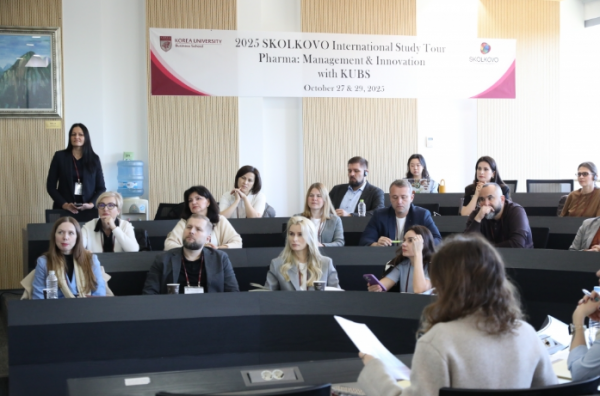
Korea University EEC Concludes Successful Healthcare Innovation Study Tour with Russia’s SKOLKOVO    The SKOLKOVO Pharma Management & Innovation Study Tour, hosted by the Executive Education Center (EEC) of Korea University Business School, took place over two days, on Monday, October 27, and Wednesday, October 29. The program was organized for participants from the Moscow School of Management SKOLKOVO — one of Korea University’s partner institutions — to provide insights into Korea’s healthcare industry and its innovations in the pharmaceutical and medical sectors. The delegation comprised 30 executives from SKOLKOVO and the Russian healthcare sector, two faculty members, two interpreters, and two coordinators, totaling 36 participants.      The first session took place on October 27 in Room 209 of Hyundai Motor Hall at Korea University. Associate Dean Gangseog Ryu of Korea University Business School extended a warm welcome to the participants in Russian, which was met with smiles and applause from the audience. All greetings and lectures were conducted in English and interpreted into Russian through both simultaneous and consecutive translation. Most participants wore headsets and listened attentively throughout the program.    Professor Ji-Woong Chung, who served as the academic director of the program, delivered welcoming remarks and introduced the detailed two-day schedule. He expressed his hope that “the time spent with Korea University would be not only academically enriching but also personally meaningful.” The first day comprised lectures and a hospital tour focusing on practical insights, while the second day featured sessions highlighting innovative cases in pharmaceutical and healthcare management.      In the first session, Woojin Lee, an attorney at Kim & Chang specializing in pharmaceutical and medical device law, delivered a lecture on the structure and policy characteristics of Korea’s healthcare system. He noted, “Although the quality of Korea’s healthcare exceeds the OECD average, there are still challenges in mental health management and strengthening essential healthcare coverage.” He went on to outline the roles of key institutions such as the Ministry of Health and Welfare, the National Health Insurance Service, and the Health Insurance Review and Assessment Service, while delving into major issues including the structure of medical expenses, hospital rating systems, the supply of medical personnel, and discussions on introducing telemedicine. Participants listened attentively, taking detailed notes in the provided materials.   The second session featured Hee Hwang, CEO of Kakao Healthcare, who delivered a lecture on “Digital Healthcare Innovation.” Following the session, participants visited Yonsei University Severance Hospital, where Professor Jae-Young Shin presented a special lecture on “Healthcare Innovation and Digital Transformation.” They also toured the Heavy Ion Therapy Center and Digital Data Center, where they observed Korea’s advanced, technology-driven medical infrastructure firsthand and learned about related research and operational systems from hospital staff. Despite language barriers, participants actively asked questions and showed keen interest in Korea’s healthcare innovations.      On October 29, two additional lectures took place at the same venue. Professor In Joon Noh delivered a lecture titled “Managing Quality and Innovation in Pharmaceutical Firms: Research and Practice,” in which he discussed quality management systems, R&D innovation, and strategies for sustainable growth within the global pharmaceutical industry. He was followed by Professor Jaemin Lee, who delivered a lecture on “A Business Model-based Approach to Innovating Healthcare Businesses: Lessons from Success and Failure.”    Professor Lee discussed strategies for fostering innovation in healthcare businesses and introduced cases of AI applications, emphasizing that “a good business model begins not with technology, but with a strong value proposition.” Participants actively engaged in exploring key topics such as barriers to healthcare innovation, examples of AI utilization, and the essential components of effective business models. With the support of simultaneous interpretation, a lively Q&A session followed, during which the professors enriched the discussion through case-based explanations and interactive dialogue.      Following the conclusion of all lectures, participants expressed their gratitude, saying, “Although it was a short program, it offered valuable and in-depth insights into Korea’s healthcare industry,” and thanked the lecturers for their passion and professionalism. They added, “Even though the topics were complex, the instructors made the sessions both accessible and highly informative.”    The day concluded with a closing ceremony, during which participants received certificates of completion and commemorative gifts in a festive atmosphere. Associate Dean Gangseog Ryu personally congratulated each participant, remarking, “Although the program was brief, I hope your experience at Korea University will serve as a foundation for your future career and academic growth.” The ceremony brought the two-day program to a meaningful close, as participants reaffirmed their commitment to contributing as active members of the KUBS global network.      The program went beyond a simple academic exchange, opening a new chapter of collaboration between Korea and Russia in management education and the healthcare industry. Participants from the Moscow School of Management SKOLKOVO shared that they were deeply impressed by Korea University’s educational infrastructure and by experiencing Korea’s innovative medical ecosystem firsthand. Building on the success of this program, the EEC aims to further strengthen its global partnerships and continue expanding its role as a platform for substantive academic and industry collaboration with leading business schools and corporate leaders worldwide.    Meanwhile, Korea University’s Executive Education Center (EEC) continues to organize Study Tour programs that enable executives from overseas universities, corporations, and institutions to learn about Korea’s latest management strategies and innovation practices through on-site experiences. This year, participants from ESADE, OneMBA, Agrocentro S.A., and the BMI Executive Institute successfully completed their programs, and in November, the Chinese University of Hong Kong (CUHK) is scheduled to visit Korea University for the next session.   

2025.11.12 Views 465

Learning from Korea’s Digital Innovation: KUBS EEC and BMI Brussels in Global Educational Exchange

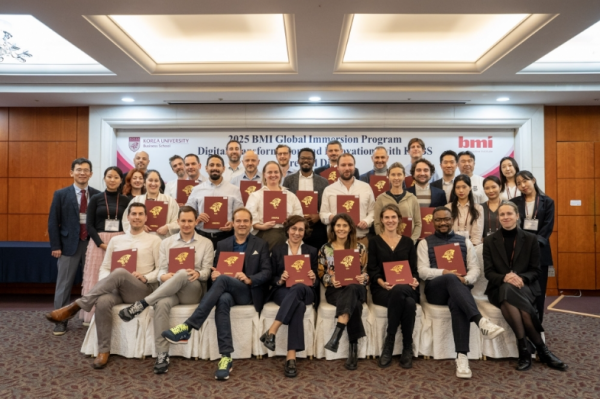
Learning from Korea’s Digital Innovation: Korea University EEC and BMI Brussels in Global Educational Exchange      Korea University Business School’s Executive Education Center (EEC) successfully concluded the “BMI Brussels ASBL International Study Tour” program, held over four days from Monday, October 20 to Thursday, October 23, in collaboration with the BMI Executive Institute (BMI), a leading European institution for executive education.  Founded in 1999 in Vilnius, Lithuania, BMI was established as a European management education consortium with initial funding support from the European Union (EU). The institute was created with the goal of cultivating senior business leaders in Europe, offering courses taught by an international faculty and educational content developed in partnership with HEC Paris, UCLouvain, and other prominent European business schools. Since then, BMI has expanded its partnership network to the United States, Germany, Poland, Finland, Italy, France, Morocco, Canada, and Singapore. In 2020, it opened its second campus in Brussels, Belgium, and since 2021, it has operated the UCLouvain–BMI International Executive MBA program in cooperation with the Louvain School of Management.        Approximately 30 Executive MBA (EMBA) students from BMI participated in the program, held under the theme “Digital Transformation and Innovation: The South Korean Perspective.”  Over the four-day program at Korea University, participants attended a series of lectures, including:   ▲“A Process-Centered Approach to Innovation” by Professor Chang Jin Wook  ▲“Innovation and Strategy in the Era of Digital Transformation” by Professor Kim Min Jung   ▲“Digital Transformation: Theory and Practice” by Professor Kim Byung Cho   ▲“Algorithm Literacy: Applications of Artificial Intelligence (AI)” by Professor Lee Gunwoong   ▲“Overview and Opportunities in Seoul’s Venture Investment Ecosystem” by CEO Park Young-hoon   ▲“Entrepreneurship: Opportunity Discovery and Business Model Development” by Professor Lee Jaemin   ▲“The Power of Community through the Video Game Industry” by CEO Park YoungMok . The lectures in this program offered an in-depth exploration—through both theory and real-world case studies—of how companies and organizations can design and implement innovation amid the sweeping changes driven by digital transformation.  Each session went beyond technology-centered discussions, providing a multifaceted view of how digital innovation influences business strategy, organizational culture, leadership, and the creation of social value. Participants also examined how strategic thinking evolves as digital technologies reshape traditional industries, and they explored the growing importance of data literacy, particularly in understanding how artificial intelligence (AI) and algorithms affect efficiency and fairness in decision-making.        The students actively took notes and engaged in every lecture, freely asking questions whenever something was unclear. The lively exchange of questions and answers created an enthusiastic learning atmosphere, while the professors occasionally added humor to keep the sessions engaging and interactive. Through these dynamic interactions, the classes were conducted with great energy and focus. Despite the rapidly dropping temperatures, the participants’ passion for learning remained undiminished.  Professor Jin Wook Chang shared his impressions, saying, “It was impressive to see participants reflect on the academic concepts and corporate cases introduced during the sessions, relating them to their own experiences and using them to foster meaningful learning and exchange with one another.” He added, “They showed deep interest in the achievements of Korean companies leading in strategies utilizing online data and media, asking insightful questions and offering thoughtful suggestions. I believe this visit provided not only an opportunity for academic and cultural exchange but also meaningful insights that participants can apply in their professional fields.”        During the campus tour on October 22, students showed great enthusiasm and engagement. At the Startup Institute, they learned that the institute’s logo was inspired by a train and that its entrepreneurship competitions and related events are called “Choo Choo Day”—a story that both amused and impressed them. When introduced to the Business School’s traditional April Fool’s Day event, “Eating Jajangmyeon on the Central Plaza Lawn,” one student laughed and said, “I saw that in the movie Parasite,” creating a cheerful and friendly atmosphere. As the group toured campus landmarks such as the Central Plaza fountain and the Centennial Memorial Hall, expressions of “It’s so beautiful!” echoed throughout. One student commented, “Just walking here during exam season would be refreshing,” while another began dancing spontaneously when BTS’s Dynamite was heard playing nearby. The tour offered a vivid glimpse into the students’ curiosity and affection for Korea University’s campus and Business School—and their firsthand encounter with the spirit of the Korean Wave.  The group also visited leading Korean companies such as Hyundai Motor Group ZER01NE, Samyang Foods, and Amorepacific to see firsthand how digital transformation is being implemented across different industries. Students shared that “through an educational experience combining theory and practice, we were able to gain a deeper understanding of Korea’s digital innovation capabilities.”  Through the program, participants gained broad insights into   ▲ the fundamental concepts of digital transformation and innovation processes,  ▲the impact of digital transformation on business strategy, marketing, and innovation, and  ▲the roles of startup ecosystems and emerging technologies within global digital transformation trends.        After the completion of the program, a certificate presentation ceremony and farewell dinner were held, where students looked back on their four-day journey.  Before the ceremony, Vice Dean Ryu Gangseog delivered his closing remarks, humorously noting, “Today feels like both your first and last day,” to ease the bittersweet feelings of parting. He went on to say, “Time has truly flown by,” as he warmly congratulated the students on completing the program and expressed his sincere appreciation to everyone who contributed to its success. Concluding his remarks, he said, “You are now part of the Korea University family,” wishing the participants a meaningful and fulfilling remainder of their stay in Korea  The certificate presentation ceremony followed, where students received their certificates along with commemorative gifts. The warm and cheerful atmosphere continued throughout the event, as Vice Dean Ryu Kang-seok personally congratulated each student and offered words of encouragement. The ceremony marked both the conclusion of their shared journey and a meaningful new beginning as members of the Korea University family.        During the closing session, students shared their final reflections. One student spoke about his memorable experiences with Korean food, such as kimchi, and his impressions of Korea’s culture and development. He jokingly remarked, “It’s Belgian fries, not French fries,” drawing laughter from the audience, and added, “Although small in size, Korea is a country with so much to learn from. It was a truly inspiring experience to explore the roots of Korea’s digital future and innovation at Korea University.”  The students also expressed their satisfaction with the lectures and corporate visits, extending heartfelt appreciation to the staff for their thoughtful organization of the program. The student humorously added, “We weren’t exactly easy students, but you led us so well until the end,” before raising a toast and saying “감사합니다 (Thank you)” in Korean. When he said, “I’d like to bring my daughter to Korea University someday,” Vice Dean Ryu replied with a smile, “Then I’ll guarantee her admission,” prompting laughter and applause from the room.  Another student shared, “The smooth execution of this program was made possible by the EEC staff, who meticulously supported us from the very first email to the very end.” He added, “Visiting leading Korean companies such as Hyundai Motor Group ZER01NE, Samyang Foods, and Amorepacific, and experiencing their management practices firsthand, was the most impressive part of the program.” The students expressed their heartfelt gratitude for the warm hospitality extended to them throughout the program, saying, “If given the opportunity, we would love to visit Korea and Korea University again.” They concluded their remarks with a hopeful message: “Next time, we hope Korea University visits Belgium so that we can share another wonderful experience together.”      Concluding with a farewell dinner, BMI successfully wrapped up its Study Tour program on a high note. A representative from Korea University’s Executive Education Center (EEC) remarked, “Through this program, we will continue to drive educational innovation so that participants can grow into future-oriented business leaders equipped with both strategic insight and innovative leadership in an era of technology-driven change.”  Meanwhile, the EEC at Korea University continues to host Study Tour programs designed for executives from global universities, corporations, and institutions to experience Korea’s latest management strategies and innovation practices firsthand. This year, ESADE, OneMBA, and Agrocentro S.A. successfully completed their programs. SKOLKOVO is scheduled to visit Korea University on October 27 and 29, followed by the Chinese University of Hong Kong (CUHK) in November. 

2025.11.11 Views 721

KUBS Executive MBA Ranks 61st Globally – The Only Korean Program in FT Top 100 EMBA Rankings

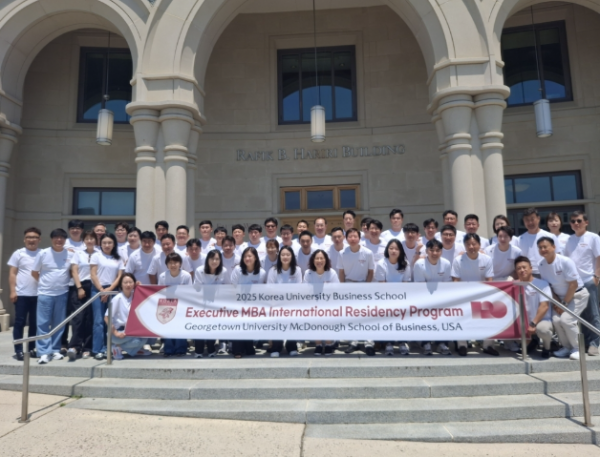
Korea University Business School's Executive MBA Ranks 61st Globally – The Only Korean Program in FT’s Top 100 EMBA Rankings    Korea University Business School (Dean Eonsoo Kim)’s Executive MBA (E-MBA) program has been ranked 61st in the Financial Times (FT) “2025 Top 100 Executive MBA Programmes,” making it the only Korean university program to be listed among the world’s top 100.    The ranking represents a one-place rise from last year’s 62nd position and stands as a remarkable achievement not only within Korea but also across the broader Asian region. Korea University has once again reaffirmed its leading status as the sole domestic institution included in the rankings. Since first entering the FT list in 2011, Korea University’s E-MBA has consistently maintained a strong mid-to-upper-tier position, previously reaching as high as 12th place.    This year’s top global spot was claimed by the “Olin–Fudan EMBA,” a joint program between Washington University in St. Louis and Fudan University in Shanghai. The “Ceibs Global EMBA” of the China Europe International Business School ranked second, followed by the “ESCP Europe EMBA” offered by ESCP Business School, which operates campuses across France, Germany, the United Kingdom, Italy, Spain, and Poland.    The Financial Times (FT) rankings evaluate business schools worldwide based on a comprehensive set of criteria, including graduates’ career progress, academic and networking strengths, internationalization and diversity, sustainability and ESG performance, and overall satisfaction.    A total of 19 indicators are assessed, with key metrics including: ▲Salary today (15%) ▲Salary increase (16%) ▲Career progress (6%) ▲Alumni network rank (4%) ▲Faculty with doctorates (5%) ▲FT research rank (10%) ▲Female faculty (5%) ▲ESG and net-zero teaching rank (3%) ▲Carbon footprint rank (4%) ▲Overall satisfaction. (Only major indicators among the 19 are listed here.)    Korea University received particularly strong evaluations in Salary increase, Alumni network rank, and Overall satisfaction, contributing to its outstanding performance in this year’s rankings.  Korea University Business School’s E-MBA is the only independent Korean program that has consistently ranked among the world’s top 100. Established in 2003, the program is designed for senior managers and executives with more than ten years of professional experience. It aims to nurture creative global leaders who can drive sustainable growth and innovation in today’s rapidly changing business environment.    To maximize learning efficiency, the curriculum adopts a modular format in which students concentrate on one subject every two weeks, designed to accommodate their work schedules and professional demands. In addition to the faculty, students—who are accomplished professionals from diverse industries—engage in peer learning, sharing knowledge and experience to generate meaningful synergies. Over the two-year program, participants progress through the same academic journey together, naturally building lasting relationships that evolve into a powerful professional network.    The E-MBA curriculum integrates theory and practice through courses such as Special CEO Topics, the ELITE (Executive Learning & Interactive Team Exercise) Project, and the International Residency Program (IRP).  Among these, the ELITE Project stands out as a hands-on, practice-oriented course in which students apply their classroom learning to real-world corporate challenges under the close guidance of the faculty. Participants take an active role in the problem-solving process, sharing analyses and ideas within their teams to strengthen their practical capabilities. Many of the innovative ideas generated through these projects have been successfully commercialized, establishing the ELITE Project as a flagship experiential learning course that seamlessly connects theory with practice.    The mandatory International Residency Program (IRP) provides students with opportunities to attend lectures at leading global universities, visit prominent local companies and institutions, and take part in a range of cultural and artistic activities — all designed to enhance their global perspective and international business capabilities.  In the first semester of the 2025 academic year, the IRP was held at Georgetown University’s McDonough School of Business in the United States and at the Rotterdam School of Management (RSM), Erasmus University, in the Netherlands.  During their stay at Georgetown University, students explored the Port of Baltimore, Capitol Hill, Manhattan, Hudson Yards, and the One World Trade Center Observatory, and took a cruise to the Statue of Liberty — gaining a broad understanding of American history and business culture.    At the Rotterdam School of Management (RSM) in the Netherlands, participants visited innovative organizations and sustainable urban development sites such as Floating Farms, TNO (the Netherlands Organization for Applied Scientific Research), Signify (formerly Philips Lighting), High Tech Campus, and Blue City, where they gained firsthand insights into leading European practices in ESG-driven management.  Through its high-caliber curriculum, Korea University’s E-MBA has strengthened both academic excellence and practice-oriented education, further solidifying its position as a globally respected graduate business program. This year’s ranking is recognized as the outcome of years of educational innovation and dedicated efforts by Korea University Business School to enhance global competitiveness. Its consistent inclusion in the world’s top 100 as an independent program reflects the depth and sustainability of its academic foundation. Looking ahead, Korea University’s E-MBA remains committed to developing leaders who combine global perspective with ethical insight, continuing to establish itself as a leading force in global business education. 

2025.10.28 Views 1324

2026 Korea University K-MBA Admission Briefing: Nurturing Next-Generation Leaders through Tradition

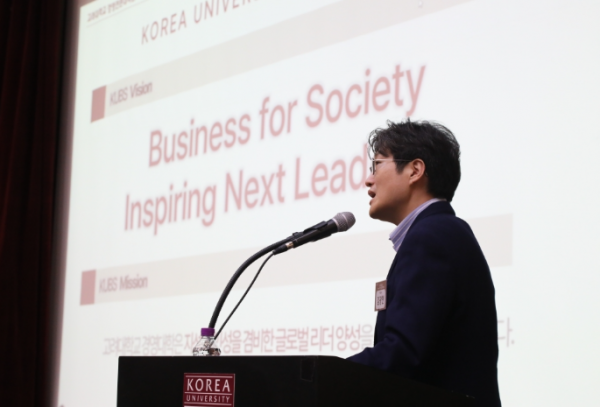
2026 Korea University K-MBA Admission Briefing: Nurturing Next-Generation Leaders through Tradition and Distinctive Excellence  On Friday, September 19, Korea University Business School held the 2026 Korea MBA (hereinafter K-MBA) Admission Briefing at the SUPEX Hall in the LG-POSCO Building. In his welcome address, Dean Eonsoo Kim remarked, “If you decide to join Korea University’s MBA program, we promise to be a steadfast partner on your journey. I hope today’s briefing session provides you with new vision and inspiration.”    Professor Kwanghyun Kim then presented the vision of the K-MBA: “Business for Society, Inspiring Next Leaders.” He emphasized that the goal of the K-MBA program is not merely the pursuit of profit, but to explore business practices that contribute to society while nurturing the next generation of leaders in the process. He also highlighted the program’s key differentiating features, which include: ▲ The First and The Best MBA ▲ Cultivation of Competence and Insight▲ A Diverse Range of Programs ▲ An Exceptional Professional Network ▲ World-Class Faculty and Learning Environment  Representing the student body, K-MBA Student Council President Mansung Park shared his reasons for choosing the K-MBA, confidently stating, “When it comes to an MBA, Korea University is the clear choice.” He introduced not only the academic rigor of the program but also the valuable learning opportunities gained through peer interaction. He also outlined the structure of the student council, which operates through four divisions, and described the vibrant networking environment fostered by career groups, club rooms, and various small-group activities.    In the latter part of the session, a one-hour Q&A took place, during which participants actively raised questions on a wide range of topics—including networking, maximum course credits, class sizes, and independent research opportunities—covering all aspects of admissions, coursework, and campus life.    The well-attended session offered participants in-depth insights into the K-MBA’s vision, distinctive program features, dynamic networking environment, and the diverse opportunities it provides for developing as future leaders. It marked a meaningful start for those embarking on a new challenge.  Meanwhile, the K-MBA holds the distinction of being the first MBA program ever established in Korea. As the earliest MBA program introduced by Korea University, it embodies both tradition and leadership in the field. In addition to essential courses required for managers, the K-MBA offers a wide selection of elective courses that encompass various subfields of business administration, allowing students to freely choose classes that align with their interests and career goals. Furthermore, the K-MBA prides itself on its strong alumni network and sense of unity. This tradition begins with the orientation—where new and senior students come together to learn about Korea University’s history and cheering culture—and reaches its peak during the annual Korea-Yonsei Games. The alumni network currently numbers around 10,000, with graduates active across diverse industries serving as a reliable support system for their juniors.    Applications for the K-MBA program are currently open from Monday, September 8, 2025, to Wednesday, October 15, 2025, at 3:00 p.m. Final candidates will be selected through a document review and interviews, with the final results announced on Friday, December 12, 2025. For further inquiries, please contact the Admissions Office by phone (+82-2-3290-1360) or email (mba_admissions@korea.ac.kr). 

2025.10.21 Views 1146

First Steps as a Researcher — 2025 Fall Semester Graduate Orientation Held

First Steps as a Researcher — 2025 Fall Semester Graduate Orientation, Department of Business Administration  Korea University’s Graduate School of Business Administration held its 2025 Fall Semester Graduate Student Orientation on Monday, July 28, at Room 432, LG-POSCO Hall. The orientation was designed to provide new graduate students with essential academic information and guidance on the research environment, supporting them in planning their future academic journey.  The event began with opening remarks by Professor Dae Il Nam, Chair of the Department of Business Administration. Professor Nam introduced himself as a researcher specializing in business strategy and startups, and said, “Our department offers one of the best research environments in the country, and I hope you take pride in conducting your research here.” He went on to say, “Since you have made the significant decision to pursue graduate studies, I hope you will find a research topic that truly excites you.”  The orientation program then officially began. The session included an overview of the department’s organizational structure, introductions of the heads of each major, as well as guidance on the curriculum, course registration, and domestic academic exchange programs.  In addition, the session provided detailed guidance on essential aspects of graduate student life, including graduation requirements such as the comprehensive examination, foreign language proficiency test, and thesis submission qualifications; academic procedures such as the application and change of academic advisors; scholarship and research funding opportunities; participation in the BK21 program; and the use of academic databases.  The session concluded with basic announcements, including Korea University Business School and Graduate School websites, the university portal and research portal, research lab and locker assignments, and student ID issuance.  After the general orientation, students were divided into their respective majors for separate orientations. Through this program, new students received detailed information on their major curriculum, key research areas, and plans for their future studies and careers.    One new student remarked, “Graduate school life used to feel vague, but today’s orientation made it much clearer,” adding, “While I feel a bit nervous as I am just starting out, I am also excited to embark on a new journey of learning and research.”  This orientation served as the first official event to guide new students on their journey as researchers in business administration and to share essential information for their graduate studies.  Participants celebrated the start of their graduate journey by sharing their expectations for future research and academic endeavors. 

2025.08.21 Views 1927

  • 1
  • 2
  • 3
  • 4
  • 5
  • 마지막페이지로