TOP

KUBS News

Total 329

Stories of Five Award Recipients at the 119th Commencement Ceremony

At the 119th Commencement Ceremony of Korea University Business School, the President’s Award was presented to Jisoo Jeong (Korea MBA) and Juhyun Park (Undergraduate), while the Dean’s Award was awarded to Soontaek Jeon (Korea MBA), Kyungcheon Choi (Executive MBA), and Subin Chae (Finance MBA). We present the stories of these outstanding individuals who achieved the highest distinction in their respective programs.     | Undergraduate President’s Award Recipient  Valedictory Address by Juhyun Park (Business Administration, Class of 2023)    Hello, my name is Juhyun Park from the Business Administration Class of 2023, and I am honored to deliver this valedictory address.  First, on behalf of all graduating students, I would like to express my sincere gratitude to the Dean, professors, parents, seniors and juniors, and distinguished guests who have joined us today to celebrate this occasion.    When I first entered the university, I vividly remember the campus just after a graduation ceremony held by our seniors. Perhaps because that memory closely resembles today, it feels especially meaningful to now stand here as one of the graduates on this beautifully prepared campus. Beginning my university life at the threshold of spring and graduating with the arrival of another spring breeze feels like a poetic symmetry of beginnings and farewells.    From the passionate joint cheering event at Hwajeong Gymnasium, to eating jajangmyeon at the Central Plaza on April Fools’ Day, and to the unforgettable moments of the Daedong Festival and Ipselenti, the crimson spirit of Korea University has gradually and deeply taken root in our hearts.    I would like to share a line from our cheering song, “Ode to Youth”:  “Ah, beautiful love—become romance. Shoulder to shoulder, our united youth shines.”    One of the reasons I truly love Korea University is that we see one another not as competitors to overcome, but as companions who move forward together. Now, I believe it is time to carry this spirit of unity into the wider world.    As time passes, the physical hardships we endured may fade, but the emotions and warmth of those moments remain. Wherever life takes you, I hope you will continue forward while remembering the carefree joy of your undergraduate days.    To be honest, the word “graduation” once felt daunting to me. However, the word “farewell” carries not only a sense of parting, but also a wish for well-being and peace. Just as every moment we spent here has shaped who we are today, I hope our memories of Korea University will remain with us as warm and cherished ones.    Finally, I would like to sincerely thank my professors, seniors and juniors, dear classmates, and my family who have always supported me. And to all my fellow graduates—congratulations. I wish you all the very best.    Thank you.      | Korea MBA President’s Award Recipient  Graduation Reflection by Jisoo Jeong    Hello, I am Jisoo Jeong, and I am deeply honored to receive the President’s Award upon completing the Korea MBA program.    Although I did not begin this journey with the goal of receiving this award, I am truly grateful to be able to conclude these two years in such a meaningful way. Balancing work and study was by no means easy. There were moments of physical exhaustion and times when the demands felt overwhelming. Yet, I made a conscious effort not to lose sight of the passion and aspirations I had when I first applied. Looking back, I believe that the consistency of those efforts has led to this meaningful outcome. Above all, I would like to applaud all my fellow classmates who have persevered and given their best in their respective roles.    When I reflect on my time here, what stands out most is the people. Even amid busy professional lives, we engaged in passionate discussions and shared our thoughts and experiences. These moments will remain with me for a long time. Spending many years in one field can naturally limit one’s perspective, but the peers I met in the Korea MBA broadened and deepened my view of the world. Conversations with individuals from diverse backgrounds and experiences were always opportunities for learning, both inside and outside the classroom. Along the way, I also met many inspiring individuals who made me think, “I hope to become someone like that.” More than any extraordinary moment, it is the simple conversations and shared laughter before and after class that I will cherish most.    The most valuable takeaway from this program was not merely an expansion of knowledge. More than anything, it was the opportunity to better understand myself. During my undergraduate years, I did not fully understand what I enjoyed or what my strengths were. However, through the Korea MBA program, I came to see more clearly what kinds of work interest me and in what situations I feel both joy and a sense of accomplishment. Through team projects and various activities, I was able to better recognize the roles I can play and the strengths I can contribute. At the same time, interactions with peers who hold different perspectives helped me develop a more flexible and broader view of the world.    To those who will follow, I would like to encourage you not to give up too easily on the experiences that can only be found in school. Balancing work and study will inevitably bring challenging moments, but in those times, I hope you will revisit the motivation that first led you to apply. Two years may seem long, but they pass more quickly than you expect. I hope you will allow yourselves to be a little more ambitious—to learn, to connect, and to fully embrace student life. I believe that this time will come to hold far greater meaning than you might anticipate.    The past two years have been a time in which I was able to grow by learning new things and gaining diverse experiences. Now, as I return to my daily life, I hope to carry forward the strengths I discovered here and apply them meaningfully in my professional work, continuing to grow further. Above all, I feel deeply grateful to have built meaningful relationships—connections through which we can share memories, stay in touch, and reconnect at any time, even if we may not meet as often as we do now. Continuing to cherish and sustain these relationships is another goal I hope to carry with me after graduation.      | Korea MBA Dean’s Award Recipient  Graduation Reflection by Soontaek Jeon    I remember the day we first met.  It was a damp winter day—hazy, cold, and filled with a sense of unfamiliarity.  I also remember the last day.  Despite the bitter cold of that winter, it was a warm and clear day, and we exchanged our final greetings and congratulations.    Two years passed more quickly than I expected. Some of us came here in pursuit of a new degree, others to seek business opportunities, and still others simply to learn. Along the way, we met many people and gained countless experiences. For many of us, this was a time to build new relationships—and through them, to discover new opportunities, insights, and growth.    The most meaningful realization I had during these two years was this:  the world is far wider than I had imagined, and there are many more things I can do, learn, and aspire to. I came to understand that I do not need to remain confined within my own familiar environment or be defined solely by my industry or existing relationships.    Many who pursue an MBA have already achieved a certain level of success in their respective fields. Yet even then, it is easy to become enclosed within one’s own world and surroundings, losing sight of how vast the world truly is—and how many possibilities remain unexplored. Through conversations and relationships with peers from diverse fields and backgrounds, I was reminded of just how expansive and full of opportunity the world is. Even if I return to my daily life, this experience has allowed me to continue seeing beyond the boundaries of my original world. For that alone, I feel truly grateful.    To those who will follow, I would like to share one piece of advice:  meet as many people as you can, with an open mind. Listen, and engage in meaningful conversations.  A space where professionals gather without a specific agenda—simply to share thoughts, exchange ideas, and inspire one another—is incredibly rare. You have been given that opportunity. I hope you fully embrace it and make the most of your time here. And above all, I hope you leave with your own meaningful realizations.      | Executive MBA Dean’s Award Recipient  Graduation Reflection by Kyungcheon Choi    Hello, I am Kyungcheon Choi, and I am honored to receive the Dean’s Award upon completing the Executive MBA program at Korea University.    “The entrepreneurial spirit of a startup met the intellectual rigor of Anam—bringing management to its full realization.”    Two years ago, as I walked up the hill of Anam, I made a commitment to reinterpret the management theories I learned in the classroom and apply them directly to the realities of the startup world. The academic insights of my professors, combined with the practical expertise of fellow students across diverse industries, became a critical foundation for building a management system optimized for startups. My efforts to translate daily learning into tangible outcomes ultimately led to graduating at the top of my class with straight A+ grades. I believe this recognition goes beyond a personal achievement—it reflects how the teachings of Korea University’s Executive MBA can be effectively applied in real-world business settings.    One of the most memorable experiences during my time in the program was the global management program at Yale University. Through lectures by world-renowned scholars, I was able to broaden my perspective on global business and envision greater possibilities as a business leader. What made this experience especially meaningful was sharing it with my family. Conversations and moments of connection with my spouse and children allowed my learning to extend beyond knowledge into deeper insight about life. That time remains one of the strongest foundations of my personal growth.    The most valuable asset I gained from this program was the network and relationships that extended beyond the classroom. Serving as Vice President of the student council, I helped create opportunities for meaningful exchange, and through business clubs and CEO gatherings, we shared our experiences and challenges. The collective intelligence formed by leaders from diverse industries was itself a powerful asset that significantly broadened my perspective. In particular, forming a band and performing on stage was a memorable experience that allowed me to truly experience the essence of management—empathy and harmony.    To those who will follow, I encourage you to embrace bold challenges. The Executive MBA at Korea University offers limitless potential, but turning that potential into real outcomes ultimately depends on your willingness to take initiative. Do not remain within the comfort of familiarity—challenge yourself to go beyond your limits. Also, remember that success in business is not achieved alone, but together. Within the strong network of peers and alumni lies the potential for even greater possibilities.    Currently, I continue to take on new challenges as the CFO of a physical AI humanoid startup. Drawing on the strategic thinking and financial insight I developed during this program, I successfully led our first institutional investment. Looking ahead, I aim to grow the company into a globally competitive enterprise and ultimately achieve an IPO. In addition, I plan to write a Startup MBA Guidebook to provide a practical roadmap based on real-world experience and learning. I will continue to demonstrate the power that emerges when the intellectual rigor gained in Anam is combined with hands-on experience.      | Finance MBA Dean’s Award Recipient  Graduation Reflection by Subin Chae   Hello, I am Subin Chae, and I am honored to receive the Dean’s Award upon completing the Finance MBA program at Korea University.    I am truly grateful to receive this meaningful recognition in the rigorous academic environment of the Korea University Finance MBA program. Over the past two years, balancing work and study often pushed me to my limits, yet the process itself made me stronger. More than any exceptional talent, I believe it was the accumulation of consistent effort and dedication in every moment that led to this humbling achievement.    One of the most memorable experiences during my studies was conducting an independent research project and preparing for its final presentation. From selecting a topic and gathering data to analyzing it and deriving meaningful insights, every stage required continuous discussion and a significant investment of time. Although it was not an easy process, the dedication of my teammates and the thoughtful guidance of our professor helped us stay on track. While receiving positive feedback at the final presentation was rewarding, what mattered even more was that the process itself became a valuable experience that deepened my academic understanding.    What supported me most throughout the program was my effort to continuously connect practical work experience with the theories learned in class. I sought to interpret challenges I encountered at work through academic frameworks, and in particular, concepts from corporate governance courses helped me understand commercial law reforms and market responses with much greater depth. This theoretical foundation not only strengthened my professional performance but also enabled me to explain tasks more clearly and effectively when mentoring junior colleagues.    To future students, I encourage you to gain the most valuable asset of all during your MBA journey—the people. An MBA is not merely a place to acquire knowledge, but also an opportunity to broaden your perspective through interactions with individuals you would not typically encounter in your professional life. Looking back, the moments of active engagement with others remain more vivid than the time spent focusing solely on studying. While learning can continue individually, the relationships and networks you build here are rare and irreplaceable opportunities.    The greatest asset I gained from the Finance MBA program was an expanded perspective. Through meeting peers from diverse backgrounds, I developed a deeper understanding of different roles and viewpoints—even within the financial industry. The theories I learned in class also enabled me to approach real-world practice with greater breadth and depth. Moving forward, I aspire to grow into a leader who can offer practical solutions grounded in this broadened perspective. I will continue to move forward steadily, striving to one day return as a proud senior and a reliable mentor to future generations.

2026.04.02 Views 410

Roar to the World with the Spirit of the Red Tiger” … 119th Commencement Ceremony of KUBS

Roar to the World with the Spirit of the Red Tiger” …119th Commencement Ceremony of Korea University Business School    Korea University Business School held their 119th Commencement Ceremony on February 25 at Inchon Memorial Hall. Degree recipients, along with their families, faculty, and guests from within and beyond the university, attended the ceremony to celebrate the graduates’ new journey. Even amid the solemn atmosphere, the ceremony was filled with anticipation for the future and a sense of joy.      The commencement ceremony began with an academic report delivered by Vice Dean for Academic Affairs and Chair of the Department of Business Administration, Hyun Seung Na. This was followed by a commencement address by Dean of the Business School, Eonsoo Kim, who shared words of encouragement and advice with the graduates. Dean Kim highlighted several recent achievements of the Business School and emphasized pride in their alma mater. The Business School ranked first in Korea in the Business and Economics category in the 2026 World University Rankings by THE, while also further demonstrating its global competitiveness by ranking 28th globally in Marketing and 42nd in Business and Management Studies in the QS World University Rankings by Subject.    Dean Kim emphasized the importance of the ability to “learn how to learn” as a key competency needed in a rapidly changing era. He stated, “What matters more than the amount of knowledge is learning how to learn on one’s own,” and advised graduates, saying, “In this rapidly changing world, I hope you will maintain the attitude of ‘Learn how to Learn,’ going beyond simply acquiring knowledge to mastering the ability to learn independently.”      Next, Youngseok Cheon, CEO of Twinny and a Business School alumnus (Class of 2000), delivered the congratulatory speech, sharing a sincere message as a senior business leader. Reflecting on his journey, he said, “What brought me to where I am today was not extraordinary genius, but the attitude of never stopping asking questions.” He added, “I hope you will lead this era of change by making decisions based on your own standards, rather than the standards set by the world.”      He remarked, “Although business is a field that values efficiency, your life does not always have to be efficient,” and encouraged graduates by saying, “I hope you will discover your own ‘algorithm of happiness’—what truly brings you joy.” He concluded with a message of encouragement: “I hope you will roar toward the world with the spirit of the red tiger,” which drew great applause from the graduates and attendees.    ▶ View the full text of the congratulatory addresses by the Business School Dean and Twinny CEO Youngseok Cheon, as well as the valedictorian speech. (Click)   Representing the graduates, valedictorian Juhyun Park (Business Administration, Class of 2023) reflected on her university life by quoting “Ode to Youth,” a Korea University fight song. She said, “We regarded one another not as competitors, but as companions moving forward shoulder to shoulder,” and expressed deep gratitude to her fellow students, professors, and family members.      The ceremony then continued with the presentation of the President’s Award and the Dean’s Award. This year’s President’s Award was presented to Jisoo Jeong (Korea MBA) and Juhyun Park (Business Administration), while the Dean’s Award was presented to Soontaek Jeon (Korea MBA), Kyungcheon Choi (Executive MBA), and Subin Chae (Finance MBA).    Following the award presentation, a celebratory string quartet performance took place. Coldplay’s “Viva La Vida,” performed by the string quartet, filled the commencement hall with a brighter and more vibrant atmosphere. In particular, the return of the celebratory performance, which had not been held for some time, added greater richness to the meaning of the graduation ceremony. The performance, which brought a sense of celebration and joy to the traditional solemnity of the ceremony, was warmly received by graduates and their families.   Diplomas were conferred upon graduates in the following order: the Graduate School (MS/PhD), Korea MBA, Executive MBA, Finance MBA, and the undergraduate program in Business Administration. As graduates received their degrees directly from the dean and faculty, the ceremony became a meaningful moment recognizing their years of effort. Faculty members exchanged handshakes and congratulatory remarks with the graduates, offering encouragement for their new beginnings.    The graduates’ faces reflected both nostalgia for the time that had passed and excitement for the journey ahead. Graduate Minseong Kim (Business Administration, Class of 2018) said, “When I first entered the university, graduation felt so far away, but standing here now is truly overwhelming,” adding, “The friends and professors I met at the Business School will remain a great asset throughout my life.” Another graduate, Jisoo Jeong (Korea MBA Class of 2024, recipient of the President’s Award), shared her thoughts: “Balancing work and study was not easy, but thanks to my classmates who studied alongside me, I was able to make it to the end,” adding, “I believe the network and knowledge I gained here will be a great strength in my future career.”      Toward the end of the ceremony, a special celebration honoring the graduates took place. The graduates celebrated the completion of their studies and the beginning of a new chapter through a “Cap Toss,” throwing their mortarboards high into the air. Amid cheers and laughter filling Inchon Memorial Hall, they congratulated one another and embarked on their new journey as Korea University business leaders.      The singing of the university anthem concluded the commencement ceremony. Led by a staff member of the Business School Administration Office, graduates, faculty, and families joined together in singing, reflecting their pride in their alma mater and their sense of community. This moment, shared by students, faculty, and staff alike, further highlighted the spirit of the Business School community. The ceremony concluded with graduates sharing the lingering emotions of the day and taking commemorative photos together.      On this day, a celebratory atmosphere marking graduation could also be felt across the Business School campus. In particular, large inflatable figures of Korea University’s mascot characters, HOI and KUI, were installed, drawing the attention of graduates and their families. Many graduates took commemorative photos in front of the figures, capturing memories of their final moments of university life.   HOI, known for appearing whenever students need help, and KUI, loved for its cheerful and innocent charm, became another highlight of the campus that day. Long lines of graduates and their families formed to take commemorative photos with the characters, and many shared smiles as they turned the final moments of their university life into special memories.     

2026.03.12 Views 945

“Giving Back to Our Alma Mater… Hoping to Be a Guiding Light for Future Generations” 

“Giving Back to Our Alma Mater… Hoping to Be a Guiding Light for Future Generations”  Interview with Bae Hong-gi, CEO of PKF Seohyun Accounting Corporation,  who is Representative Donor of the Class of 1981 for the KUBS 120 MARCH Campaign    [Photo] From left: Song Jaehyun (alumnus), Bae Hong-gi (alumnus), Dean Kim Eonsoo, Kim Young-min (alumnus), Hong Heung-seok (alumnus)    As Korea University Business School celebrates its historic 120th anniversary, it is embarking on a new chapter toward the future. At the heart of this milestone is the Class of 1981 alumni group, who made a collective donation totaling KRW 1 billion out of their deep affection for their alma mater. We met Bae Hong-gi, CEO of PKF Seohyun Accounting Corporation and representative donor of the Class of 1981, who played a key role in facilitating this collective contribution and embodied the spirit of giving. In our conversation, he shared candid reflections on the future the Class of 1981 envisions for the Business School and the meaning behind their donation.    Q1. Thank you for taking the time for this interview despite your busy schedule. Could you briefly introduce yourself to our readers?  A. I am a member of the Class of 1981 at Korea University Business School. While still a student, I passed the Certified Public Accountant examination and have since spent my entire career in accounting firms. After working at Samjong Accounting Corporation, I am currently serving as the CEO of PKF Seohyun Accounting Corporation. Following my undergraduate studies, I earned a master’s degree in Business Administration from Korea University and completed the doctoral program coursework. I later received my PhD from Dongguk University in February 2018. Maintaining my connection with my alma mater, I have been serving as a Non-Executive Auditor of Korea Central Academy since August 2020, supporting the continued development of the university.    Q2. What led the Class of 1981 to decide to participate together in KUBS 120 MARCH?  A. The turning point came on May 22, 2025, when I was invited by Dean Eonsoo Kim to deliver a special lecture titled “Global CEO Talk” for Business School students. I was deeply impressed by the passion I saw in the students that day. The depth of their questions and their academic enthusiasm moved me greatly. After the lecture, during a conversation with the dean, he suggested that the Class of 1981 take a leading role in supporting the 120th anniversary campaign. Having received so much from my alma mater and serving as an executive member of the university foundation, I felt it was a meaningful opportunity to give back. I readily accepted the proposal.    Q3. We’re also curious how you encouraged your classmates to participate.  A. I was able to reach about 150 classmates. From the outset, we set an ambitious goal—KRW 1 billion. To achieve it, I first invited around 25 classmates to join a group chat and briefly shared the purpose of the campaign. We then arranged a dinner gathering where I explained the initiative in person and worked to rally support. Participation requires financial capacity, but ultimately, I believe it also requires generosity of spirit. What left a particularly deep impression on me was that some classmates pledged their support—regardless of the amount—even while battling serious illness. Another classmate even said, “If we’re doing this, let’s reach one billion,” and contributed additional funds to help us achieve the goal. We hoped that the KRW 1 billion raised by the Class of 1981 would serve as a catalyst for further participation and inspire others to join the campaign.    Q4. What kind of memories does the Business School hold for the Class of 1981?  A. More than 40 years ago, many of us chose the school based on entrance exam results and other practical considerations at the time. However, once we began our professional careers, we experienced firsthand the credibility and trust associated with the name “Korea University Business School.” At the time, newly appointed professors who had completed their studies abroad introduced us to the latest global trends. That experience was a great source of inspiration for me and greatly supported my preparation for the CPA examination. Even after graduation, I remained connected to the school through various alumni and outreach activities, taking on different leadership roles over the years. Each time, Korea University has been a tremendous source of pride for me. Even today, the Business School remains the proud foundation of who I am.    Q5. Where do you hope this donation will be used, and what kind of changes do you expect?   A. I believe the true purpose of giving is to support the school’s strategic priorities. As alumni, we are not always fully aware of the school’s internal circumstances. Therefore, I believe the most meaningful approach is to support Dean Kim’s vision for the school’s development. I understand that he is placing particular emphasis on enhancing the research environment for faculty and strengthening educational support. I firmly believe that outstanding research achievements will ultimately elevate the school’s reputation and translate into high-quality education for future generations of students. In addition, I hope that the example set by Dean Kim—who personally donated KRW 100 million—will inspire and spread throughout the entire university community.    Q6. Is there a message you would like to share with other alumni?  A. I believe the strength of Korea University lies in the unity and active participation of its members. The university’s reputation is sustained when its community remains actively engaged, and for the Business School to continue its stable growth, ongoing support is essential. I have recently heard that participation in certain events and fundraising efforts is not as active as it once was. I hope younger alumni will take a greater interest in the school. That said, what matters most is not the amount, but the willingness to take part. If you feel that graduating from Korea University has positively shaped your life and career, then contributing sincerely—according to your circumstances—is more than enough. I hope the 120th anniversary serves as an opportunity for everyone to participate comfortably and in their own way. When organizing events such as “Business School Night,” the school may also consider innovative approaches that help bridge generational gaps within the alumni community. I sincerely hope that younger alumni will take pride in the strong foundation and network of KUBS and pursue their dreams with confidence. Above all, I hope they never lose their pride in the name Korea University Business School.    Q7. Finally, could you share a message for alumni who are considering joining the campaign?  The reason we are able to live confidently and fulfill our roles in society today is because of the education and opportunities provided by our alma mater. As the university marks the historic milestone of its 120th anniversary, I hope this moment encourages many to reflect on that foundation. What matters is not the amount, but the willingness to participate. I hope each person will join joyfully, according to their circumstances, guided simply by their affection for the university. When those heartfelt contributions come together, the future of Korea University Business School will shine even brighter.    The KRW 1 billion donation from the Class of 1981 is expected to play a pivotal role in the 120th anniversary fundraising campaign, extending beyond the significance of a single contribution. In particular, this act of giving—initiated through the special bond shared among classmates, including Dean Eonsoo Kim—was made possible by the collective commitment of the entire Class of 1981. It is our hope that their example will serve as a catalyst that inspires other classes and alumni to participate, becoming the starting point of a meaningful ripple effect. 

2026.02.25 Views 893

Year-End Nights: A Record of the MBA, E-MBA, AMP, and MSP Gatherings

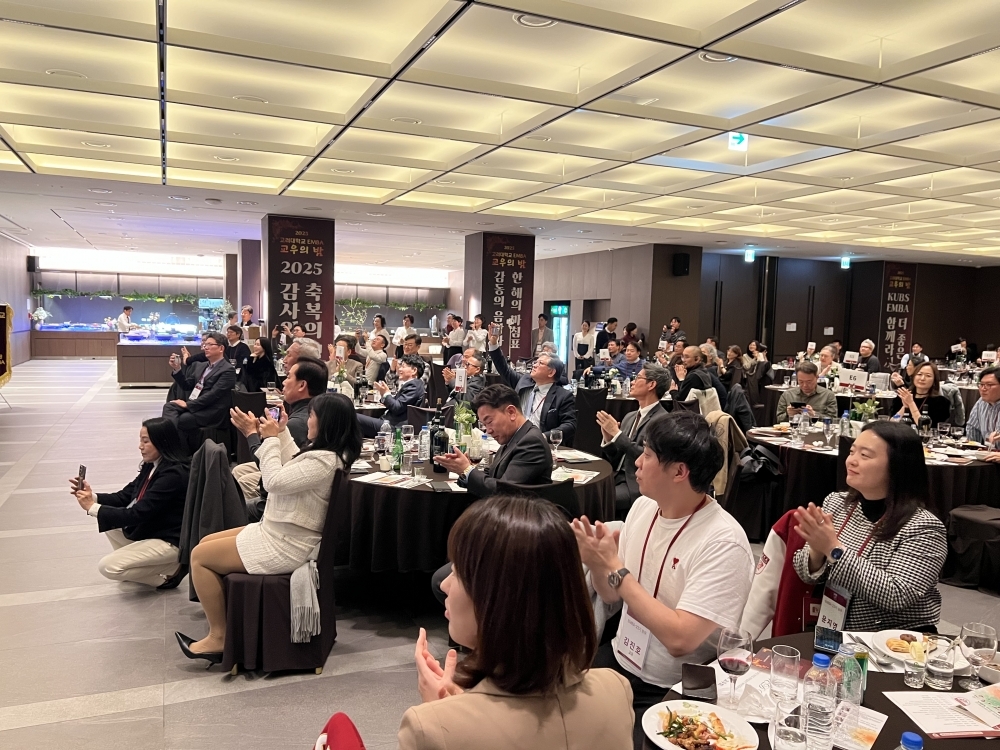
Year-End Nights: A Record of the MBA, E-MBA, AMP, and MSP Gatherings     The year-end season for alumni associations is invariably busy. The closing months at Korea University Business School is difficult to describe as a simple collection of events. The alumni associations of the MBA, Executive MBA (E-MBA), AMP (Advanced Management Program), and MSP programs each brought the year to a close according to their own schedules and formats. What they shared was not merely the name “year-end gathering,” but the density of time each gathering held.   While the overall structure of these events may appear familiar and similar, what each program places at its center and which moments it chooses to preserve differ from one another. These differences are closely tied to how each alumni association records itself and prepares for the coming year. Who is called by name, which contributions are left on record, what messages are conveyed through congratulatory and commemorative remarks, and which scenes are captured in photographs — all of these choices define how each alumni community understands itself.    MBA ‘Night of Alumni’ — Leadership That Extends Learning into Society  At 6:00 p.m. on December 8, 2025, the 2025 Korea University MBA Management Awards Ceremony and Alumni Night was held at the Grand Ballroom of The Plaza Hotel. Hosted by the MBA Alumni Association of the Korea University Business School, the event followed the familiar year-end format of a reception, awards ceremony, dinner, a performance by the cheering squad, and commemorative photography. While adhering to convention, the evening clearly illustrated the values by which the MBA community reflected on the past year and prepared for the next.    At the center of the event was the acceptance speech of Jo Soo-yeon (Class of 1990, K-MBA 70th cohort), recipient of the 2025 Korea University MBA Management Award. As CEO of FM Communications Co., Ltd., Jo introduced her business philosophy of integrating technology, creativity, and sustainability, and expressed gratitude for the learning she gained through the MBA program. She also emphasized her commitment, as an alumna, to contributing to society in ways that enhance the honor and value of the Korea University MBA. Rather than highlighting personal achievement, her remarks placed greater emphasis on extending learning into society.    This tone continued in the remarks of the recipients of the Proud Alumnus Award. Hwang Hyun-sung, Executive Vice President (Class of 1993, K-MBA 73rd cohort), stated, “Whether it is knowledge or wealth, its value grows much greater when it is shared and given,” adding that he would continue to live a life of sharing and service for his alma mater and the alumni association. Lee Kang-hyun, also an Executive Vice President (Class of 2010, K-MBA 90th cohort), noted that the award reflected “the hearts and efforts of many people,” and expressed his intention to practice greater social responsibility. Though expressed differently, both conveyed a shared resolve not to allow achievement to remain merely a personal outcome.    This moment resonated with the mission emphasized when Korea University established the nation’s first MBA program. Leadership that does not end with achievement, but expands into social responsibility and practice, has been passed down through generations, and this year’s MBA Alumni Night once again reaffirmed that tradition. The awardees’ remarks emphasized “one’s posture after success,” shaping the tone of the event by linking the year’s conclusion to future action.    Ultimately, the MBA Alumni Night placed greater weight on the words spoken by those honored than on any elaborate production. Though the awards concluded, the recipients’ remarks remained as promises extending beyond the night itself and toward the coming year. What the MBA alumni repeatedly reaffirmed was not individual success alone, but the manner in which that success is reconnected to society. “Give back what we have learned, and responsibly carry forward the pride of the Korea University MBA” — this message was woven into the December night.    E-MBA ‘Night of Alumni’ — Embracing One Another’s Efforts and Matching Steps Again  The E-MBA year-end gathering was held on December 12, 2025, at Anam Hall of the Korea University Alumni Association. Beginning at 6:00 p.m. with a simple dinner, the event continued with greetings and a toast by the President of the E-MBA Alumni Association. Rather than foregrounding individual achievement, the evening unfolded in an atmosphere focused on recognizing and encouraging one another for the efforts sustained throughout the year. Across the program, the emphasis was placed not on “what more was achieved,” but on “what time was shared together.”    Following a performance by the E-MBA CHORUS, 162 distinguished guests and alumni from each cohort were introduced. This sequence served to highlight how alumni from diverse cohorts collectively form the E-MBA community. Congratulatory remarks and an academic report delivered by Eonsoo Kim, Dean of the Business School, followed, focusing on the current status of program operations and future directions.    The handover of leadership from the 17th to the 18th Alumni Association administration also took place. Kim Deok-cheon, introduced as the 18th President of the Alumni Association, offered words of encouragement for the time that had passed and expressed hope that members would continue to walk forward together in mutual support. Kim Young-mok, the first President of the Alumni Association, was also in attendance and delivered a toast.    The latter part of the evening transitioned into a Night of Alumni Concert. Instrumental and vocal performances were presented, including “Let the Bright Seraphim” from the oratorio Samson, Ave Maria, and Nella Fantasia. The concert provided a calm and reflective close to the year, allowing alumni to look back on one another’s efforts.    The E-MBA year-end gathering thus served as a space to acknowledge the time shared together and to prepare for the year ahead, as participants shared the weight of a demanding year and brought it to a close collectively.    AMP ‘Night of Year-End Support’ — Marking 50 Years and Preparing for the Next 50  The 37th Night of Year-End Support held special significance for the AMP Alumni Association. It marked AMP’s 50th anniversary, coincided with the conclusion of activities for the 99th cohort, and witnessed the 100th cohort stepping forward to carry the community into its next chapter. As the nation’s first Advanced Management Program (AMP), the program has sought to cultivate leaders equipped with advanced management theory, an understanding of global economic trends, and a strong foundation in the humanities.    During the event, participants also shared a commitment to preparing together for the University’s next 120 years. Just as Korea University has responded to societal demands over the past 120 years, it presented a vision of expanding its role over the next century through education, research, and social contribution. The AMP Alumni Association expressed its intention to participate as both partner and supporter in this process, uniting around a shared resolve to pass the record of the past 50 years on to the next generation.    Recipients of the 37th Advanced Management Awards were also introduced. Jang Soon-bong, CEO of KAS Holdings (Class of 2009, 67th cohort), was honored in the Global Construction Management category; Jang Sung-ho, CEO of Baek-Un Industry Co., Ltd. (Class of 2023, 96th cohort), in the Construction Infrastructure Shared-Growth Management category; and Woo Ji-ha, CEO of Applia Agricultural Corporation (Class of 2024, 97th cohort), in the Innovative Management and Distribution category. The introductions highlighted not only their achievements in each field but also the leadership and experience they had accumulated through practice in their respective industries.    Time was also devoted to reviewing the year’s activities. Under the leadership of Park Jang-seon, the 23rd President of the Alumni Association, AMP continued a wide range of events throughout the year, broadening exchanges among alumni. It was shared that the active participation of both the executive team and alumni strengthened the cohesion of the community over the past year.    AMP’s 50-year history cannot be explained simply as the passage of time. Continuity has been sustained through cohort-based participation, dedicated operations, and enduring solidarity among alumni. The title Night of Year-End Support itself reflects this character. Fifty years of networking built upon mutual support were brought together as a shared record, and this year’s event was designed as a space to collectively reflect on that meaning. Through commemoration, awards, and fellowship, the evening concluded with a reaffirmation of the program’s half-century trajectory.    MSP “Night of Business Alumni” — Emphasizing Partnership with the Alma Mater  The 2025 Business Alumni Night, commemorating the 61st anniversary of MSP and marking the close of 2025, was held at 6:00 p.m. on December 18 at Anam Hall of the Korea University Alumni Center, hosted by the MSP Alumni Association. The program followed a structure similar to other year-end events, bringing the season to a well-structured close.    On this evening, the alumni association emphasized close partnership with the University as a core value. Referring to the continuum from the 104th to the 106th cohorts of the Management Research Program, speakers stressed that the development of the University and the growth of the alumni association are inseparable. Alumni were encouraged to take interest in and actively participate in initiatives supporting the University’s advancement. The program’s historical significance—established in 1963 alongside the founding of Korea University’s Graduate School of Business, the nation’s first—further reinforced the message of a tradition carried forward together with the University.    The 2025 Business Award was presented to alumnus Maeng Min-hee (Class of 2021, 98th cohort). Maeng has continued active management initiatives, including overseas patent filings, and was recognized for enhancing the program’s stature through exemplary corporate leadership. The Overall Excellence Award (Grand Prize) for outstanding cohort performance was awarded to the 65th cohort, with President Jeong Ha-seong (Class of 2004, 65th cohort) and Secretary-General Oh Young-wook (Class of 2004, 65th cohort) named as recipients.    In the individual award categories, the Liberitas Award was presented to Lee Jeong-geun (Class of 2008, 72nd cohort), and the Justitia Award to Noh Hee-yeol (Class of 2007, 71st cohort). Lee has placed customer trust at the core of his business philosophy while also serving as Chair of an association supporting the families of fallen service members. Noh has consistently supported alumni association initiatives and has made significant contributions to the development of both the University and the alumni community, including a KRW 150 million scholarship donation to Korea University and mask donations to Korea University Hospital during the COVID-19 period.    The 2025 Night of Business Alumni concluded as both a moment to reflect on the year past and a shared commitment by MSP to carry the coming year forward grounded in mutual growth with the University. The awards and acknowledgments illuminated the profiles of alumni who have contributed to the community across diverse fields. These contributions stand as concrete expressions of MSP’s long-emphasized principle of coexistence with the University, as they are closely connected to support for education, healthcare, and students. In this way, the recognition of alumni achievements quietly filled the year’s end with substance and continuity.         Although the four programs held their year-end events on different schedules and in different formats, the values that emerged were strikingly consistent. Achievements accumulated over the year were not left as individual records alone, but were reconnected to collective responsibility and solidarity. Ultimately, the year-end gatherings functioned as spaces to reaffirm a simple commitment: “We learned together, endured together, and now prepare for what comes next—together.”    This commitment takes concrete form through networks. Year-end alumni events extend beyond simple fellowship, serving instead as moments to revisit the structures of connection—support, participation, inter-cohort succession, and partnership with the alma mater. The act of naming individual contributions and preserving them within collective memory resembles a shared agreement to distribute responsibility so that relationships may endure. In this sense, the year-end night is both a pause at the close of the year and a way of making the next year possible.    In the end, the year-end gatherings of the four programs can be summarized under a single shared value: a community that records achievement together and shares responsibility together. The efforts and contributions accumulated in each individual sphere were brought together under the name of the alumni association, and that accumulation was once again connected to practice directed toward the alma mater and society. Thus, the events concluded not only as a summary of the year, but also as a way of beginning the next. 

2026.01.22 Views 1115

KUBS Opens Admissions for Global Programs (G-MBA & G-MIM)-The Only CEMS Member School in Korea

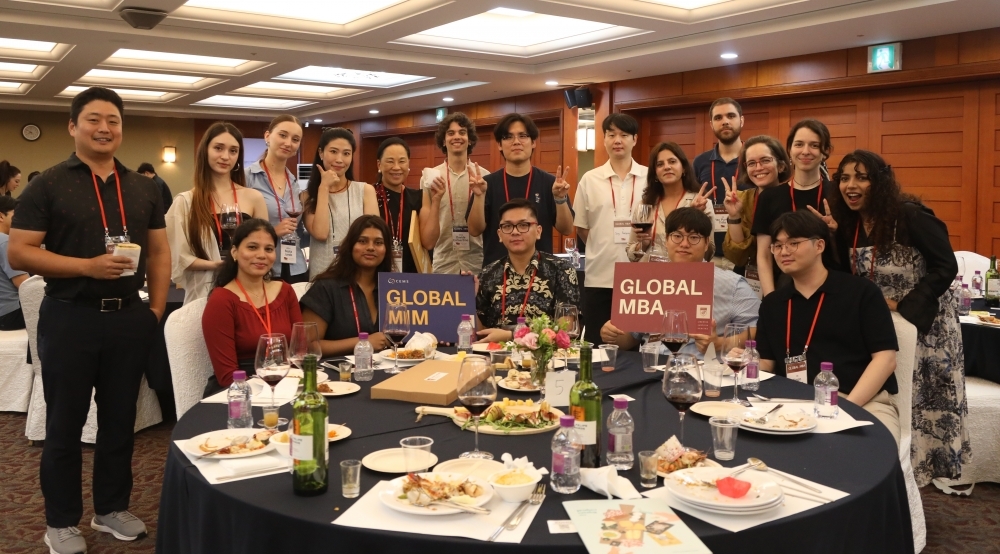
Korea Universtiy Business School Opens Admissions for Global Programs (G-MBA & G-MIM)-The Only CEMS Member School in Korea       Korea University Business School is now accepting applications for the Global MBA (G-MBA) and CEMS Global Master in Management (G-MIM) programs, both scheduled to commence in September 2026.      Cultivating Practice-Oriented Global Talent: Global MBA  The Global MBA (G-MBA) is a practice-oriented MBA program designed to cultivate future global leaders. The program offers a structured curriculum that equips students with essential business competencies required across diverse industries and cultural contexts, while also providing flexible track options aligned with individual career goals and circumstances.   The G-MBA is primarily offered as a one-year, full-time program, with opportunities to extend the period of study depending on the selected track: an exchange student track (18 months) or a dual-degree track (two years). Built on an intensive curriculum, the program also features weekly Global CEO Talks, where distinguished speakers from various fields share real-world insights and leadership experiences.    All courses are conducted entirely in English, enabling students to strengthen their communication skills for international business environments while deepening their understanding of global management and leadership. Applicants from all undergraduate majors are welcome, and the program is open to a wide range of participants—from early-career professionals preparing for global careers to working professionals seeking to advance into leadership roles. Upon successful completion of the program, graduates are awarded the Master of Business Administration (MBA) degree.      The Only CEMS Global MIM Program in Korea: Dual Recognition with the MIM Degree and the CEMS MIM Certificate  The CEMS Global Master in Management (G-MIM) is a one-year, intensive, full-time program offered in collaboration with CEMS, a global alliance of leading business schools. CEMS operates under the principle of “one country, one business school,” and in 2015, Korea University Business School was selected as the sole CEMS member institution in Korea.    The CEMS Graduation Ceremony was held in Rio de Janeiro, Brazil, in 2025, and is scheduled to take place at Korea University in 2026, making the upcoming ceremony particularly meaningful for the School and its community.    The G-MIM program offers a curriculum in which students study for one semester at Korea University and one semester at a leading partner business school overseas. Through learning in diverse national, cultural, and business environments, participants build a strong global network while strengthening their practice-oriented competencies. All courses are conducted entirely in English, and the program also includes an eight-week global corporate internship.    The program is open to undergraduate graduates (or expected graduates) in business, economics, or related fields, with a primary focus on early-career candidates with less than two years of full-time work experience who aspire to become future leaders. Upon completion of the program, students are awarded both the Master in Management (MIM) degree and the CEMS Master in International Management (CEMS MIM) Certificate.      World-Class Educational Infrastructure and International Accreditation: Three-Round Admissions Process  Korea University has continued to strengthen its educational and research capabilities, supported by the largest full-time faculty body in Korea, and offers a world-class educational environment. Another key strength is that Korea University was the first institution in Korea to obtain and maintain AACSB and EQUIS accreditation and re-accreditation across all degree programs.    Admissions for this intake will be conducted in three rounds, with information sessions held in each round to provide applicants with detailed program information. For inquiries regarding admissions and applications, please contact the MBA Administrative Office at +82-2-3290-1309.   

2026.01.22 Views 1391

E-MBA Class of 1 Alumnus Kyungjoo Shin, CEO of Media Gallery Co., Ltd., Donates to “KUBS 120 MARCH”

E-MBA Class of 1 Alumnus Kyungjoo Shin, CEO of Media Gallery Co., Ltd., Donates to “KUBS 120 MARCH” Development Fund      As Korea University Business School continues to build momentum and expand alumni participation through the “KUBS 120 MARCH” campaign, a development fund donation ceremony was held on December 30, 2025, honoring Kyungjoo Shin, an alumnus of the first cohort of the Executive MBA (E-MBA) and CEO of Media Gallery Co., Ltd. During the ceremony, the Business School presented a donation certificate and a plaque of appreciation to express its gratitude for his generous support.    Mr. Shin shared, “What I learned during my graduate studies was immensely helpful in running my business. Although the academic journey was not easy, the experience became a valuable foundation for the work I do today.” He added, “I hope this donation can serve as a spark that encourages fellow alumni to participate in the campaign as part of a much larger wave.”   He also noted, “When I shared the news with my family, they responded by expressing their willingness to support the cause as well, which made me even more grateful.” He continued, “I plan to maintain my interest in the campaign and make additional pledges through May, as the campaign continues.”      Mr. Shin is the CEO of Media Gallery Co., Ltd., where he operates a business specializing in the digitization, restoration, and preservation of analog media. His work involves converting materials that were recorded in the past but have become difficult to view—such as old wedding videos—into digital formats so they can be accessed and appreciated again. A major part of the company’s activities also includes cultural heritage restoration projects, in which records originally captured on projector film are digitized for long-term preservation. In addition, Mr. Shin has carried out projects to restore and preserve historical archives held by corporations.    Mr. Shin noted that the knowledge he gained during his studies proved directly applicable to his professional work, particularly while undertaking projects for public-sector institutions. “I found the lessons extremely helpful in practical, on-the-ground situations,” he said, explaining that his academic experience informed real-world decision-making and problem-solving. He also highlighted the value of the alumni network, adding that it has served as a strong and reliable foundation as he continues to grow his business.      During his remarks at the presentation of the plaque of appreciation, Dean Eonsoo Kim stated, “The support shown through participation in the KUBS 120 MARCH campaign serves as an important driving force as the Business School prepares for its next 120 years.” He added, “Building on this encouragement, we will continue our efforts to cultivate talents who contribute to future society, while advancing innovative research and delivering leading-edge education.”    Meanwhile, just one month after its launch, the “KUBS 120 MARCH” fundraising campaign marked a stable and promising start, securing pledged contributions of KRW 890 million for the Development Fund and approximately KRW 1.11 billion for the Scholarship Fund, for a total of around KRW 2 billion. The campaign will continue through May 2026, and KUBS plans to further broaden participation through ongoing engagement and communication with members of the campus community, alumni, and institutional partners. 

2026.01.22 Views 903

Transforming Educational Environments, Innovating Systems — 2026 KUBS Startup Station New Resident S

Transforming Educational Environments, Innovating Systems — 2026 KUBS Startup Station New Resident Startup Interviews      On Friday, December 5, in Room 432 at Korea University’s LG-POSCO Hall, presentations by startup teams participating in the 2025 Startup Express Winter Season, hosted by the KUBS Startup Station, provided a broad overview of their ideas and strategies. However, these presentations left little room to fully capture the processes behind their projects or the challenges they confronted along the way. In response, this publication met with two teams with different approaches following the competitive PT session to hear their stories in greater depth. One team seeks to change the “environment” of education by reducing repetitive administrative burdens in special education settings, while the other takes an engineering-driven approach to problem-solving through technology. Although their fields differ, both teams share a common starting point—“inconvenience in the field”—and a commitment to developing practical, executable solutions. Below is a Q&A with the representatives of the two teams.      Reducing Administrative Burdens for Special Education Teachers  Interview with ‘Peering,’ a New Resident Startup at the KUBS Startup Station    Q1. What kind of service is ‘Peering’?  A1. Peering is an administrative support platform designed for special education teachers. It was launched to ease the heavy administrative burden faced by teachers, who process more than 200 documents each year and often have to manage paperwork even during class. The platform aims to create an environment in which teachers can focus on education rather than administration by offering standardized forms for special education, digitizing handwritten tasks, and providing AI-based sentence recommendations and analysis.    Q2. What led you to start this idea?  A2. I was first introduced to special education settings while participating in a project that supported the school lives of children with hearing impairments. As I learned about concepts such as inclusive education and Individualized Education Plans (IEPs), I came to realize how critical the “environment” is for children with disabilities to settle into educational settings, and how essential teachers are in shaping that environment. However, the reality faced by special education teachers was far from easy. As these concerns grew, the Incheon special education teacher death incident became a catalyst that prompted us to seriously explore solutions to reduce teachers’ workloads.    Q3. If you had to choose one sentence that best represents Peering, what would it be?  A3. “Lighten the desks of special education teachers, deepen the lives of children with disabilities.” Special education still relies heavily on individual capability and dedication rather than on systems, but we believe that quality education cannot be sustained if it depends on one person alone. Our role is to cut down on unnecessary administrative time so that teachers’ attention and effort—where they truly want to invest them—are not drained by paperwork, but can return to the classroom.    Q4. What features are you currently developing?  A4. The core features fall into three areas. First, we provide supplementary document templates that are frequently used in the field but poorly organized, and use AI to suggest phrasing tailored to each document’s purpose. Second is an automatic timetable generation function. Because special education teachers often cannot directly input schedules into NEIS, they typically collect individual timetables from general education teachers and manually compile them. Peering allows users to upload students’ schedules and automatically generate a complete timetable by simply selecting subject filters. Third, we help teachers easily create observation logs—often abandoned when handwritten—through keyword-based input, and offer a dashboard that analyzes behavioral patterns based on accumulated records.    Q5. As a new resident startup at the KUBS Startup Station, what kind of support do you expect?  A5. Above all, we are most excited about having a proper office space. Until now, we have worked while moving between cafés, so having a space of our own will be a major source of motivation. We also expect meaningful support through the incubation program, particularly advisory services in legal, tax, and financial areas, which are major concerns at the early stages of a startup. Throughout the startup process, we have faced challenges in preparing and implementing complex issues such as intellectual property rights, privacy policies, and MOUs. With the support of the Station’s faculty members and expert network, we hope to grow Peering to the next level.    Q6. What are your goals for the next year, and what kind of change does Peering hope to create?  A6. Over the next year, we plan to focus on securing paid users and expanding partnerships with institutions such as schools and local governments as we move toward full-scale commercialization. While teachers are our primary users, connections with institutions are essential for adoption and broader implementation. In the long term, we hope that Peering will complement existing systems in the field, create tangible changes in the work of special education teachers, and demonstrate that the special education sector can also be a viable and sustainable startup field.          Automating Process Design  Interview with ‘SnapScale,’ a New Resident Startup at the KUBS Startup Station    Q1. Thank you for agreeing to this interview. Could you briefly introduce yourself and SnapScale’s business as a new resident startup at the KUBS Startup Station?  A1. Hello, I am Sangyun Kim, CEO of SnapScale. I am currently a student in the Department of Computer Science at POSTECH, and I am developing an AI-based plant design automation solution that covers the entire design lifecycle, driven by a strong sense of urgency about addressing the climate crisis. SnapScale’s AutoFlow uses AI to automate the design processes of complex systems such as oil refineries and gas plants. Because plant design allows no room for error, it requires a high level of precision and extensive repetition. Our goal is to replace time-consuming yet repetitive tasks with AI, thereby improving efficiency across the industry. In the long term, we aim to reduce unnecessary costs and inefficiencies in large-scale projects.    Q2. What problem does the SnapScale team see as the core issue?  A2. We believe that inefficiencies in plant design do not simply stem from a lack of manpower, but from the accumulation of repetitive tasks and knowledge that are not properly structured within the design process. While the field requires highly specialized judgment, it also involves many repetitive tasks governed by clear rules and patterns. By automating these repetitive parts, we aim to help engineers focus on more critical decision-making and verification.    Q3. We hear that ‘Vertical LLM’ is SnapScale’s core technology. What is the key point of differentiation compared to general-purpose LLMs?  A3. In domain-specific AI, we believe that deeply understanding the context of the field is more important than the technology alone. To achieve this, we conducted in-depth interviews with 75 engineers both in Korea and internationally, identifying patterns embedded in the relationships between inputs, outputs, and processes in design work. While general-purpose LLMs are trained on broad language patterns, SnapScale’s Vertical LLM operates on the structure, context, and specialized knowledge of the plant design domain. This domain-level understanding is our most significant differentiator.    Q4. SnapScale emphasizes that ‘structuring data is more important than collecting it.’ How is this perspective reflected in your product development?  A4. There is a common perception that plant companies use entirely different design methods, but through repeated interviews we found that, in practice, many standardized elements and shared stages exist. Rather than simply collecting large volumes of data, we focused on understanding the dozens of steps involved in design and structuring the relationships and context between them. As a result, we were able to build an integrated knowledge database encompassing design inputs, outputs, and intermediate processes, and to map various AI-driven automation functions onto design tasks based on this foundation. In other words, our belief that structure and context matter more than the sheer volume of data has become a core principle guiding the overall product design.    Q5. Why did you choose the Korea University Business School KUBS Startup Station, and what kind of support do you expect after moving in?  A5. After winning the grand prize in the preliminary startup track of the Chung Ju-yung Startup Competition, where our technology and market potential were recognized, we considered several incubators. Through that process, we concluded that the business expertise and networking opportunities offered by the KUBS Startup Station were essential for a technology-driven team like ours. While we are strong in technical development, we see room to strengthen our capabilities in enterprise B2B sales and business strategy. As a resident startup, we hope to receive practical mentoring in areas such as building a B2B sales pipeline, negotiating with large corporate clients, and developing IR capabilities for fundraising. Above all, as an organization under a business school, the Station offers access to a close-knit network of senior founders, experts, and fellow resident startups who share similar challenges. We expect to quickly gain feedback from industry and market perspectives through networking, and to reflect that feedback directly in our product and business strategies. We also look forward to broadening our perspective through exchanges with startups from diverse fields, and exploring collaboration opportunities, including joint projects with teams interested in the manufacturing and energy sectors.    Q6. Could you briefly describe your current stage and future goals?  A6. Within one year of preparing for our startup, we have grown to the point of conducting a proof of concept (PoC) with a construction company of approximately 300 employees, and we have since established a corporation to pursue full-scale business operations. In the short term, we are focusing on building an integrated knowledge database that enables AI to understand and utilize Korea’s highly sophisticated chemical plant domain knowledge. In the long term, our goal is to lead standardization in the field of process engineering and plant design, and to grow into a globally competitive technology company.        The two teams share a common goal: reducing “repetition in the field.” Peering aims to return teachers’ time from administrative work to the classroom, while SnapScale introduces automation that allows engineers to focus on verification and decision-making rather than repetitive tasks. While their approaches differ, both ultimately seek to enable people to concentrate on work that truly requires human judgment.    As Peering and SnapScale begin their residency in January, the Korea University Business School Startup Station plans to support the advancement of their businesses through the office space support and entrepreneurship education and mentoring systems it has long provided to resident companies. This includes office space support, such as co-working spaces and dedicated resident offices, as well as one-on-one expert mentoring and external advisory and network connections in practical areas where early-stage teams face the greatest challenges—such as legal affairs, tax and accounting, labor, intellectual property (IP), investment, and marketing. In addition, regular seminars and networking events will expand opportunities for engagement with fellow resident startups and stakeholders across the startup ecosystem. Furthermore, as the Station has continued to create opportunities for interaction with investors through events such as its demo day, CHOO CHOO DAY, the two teams are expected to receive ongoing, practical support tailored to their stages of product and service validation and growth, including strengthening IR capabilities and facilitating follow-up partnerships. Ultimately, attention will be drawn not only to how quickly these two teams validate their hypotheses and move on to the next stage, but also to the broader trajectories of the newly joined resident startups that have come together through this Winter Season. 

2026.01.14 Views 1719

  • 1
  • 2
  • 3
  • 4
  • 5
  • 마지막페이지로