TOP

KUBS News

Total 47

THE 2026 Business and Economics Rankings: Korea University Ranks No. 57 Worldwide, No. 1 in Korea

THE 2026 Business and Economics Rankings : Korea University Ranks No. 57 Worldwide, No. 1 in Korea     Korea University Business School has once again demonstrated its global competitiveness in the field of business and economics. In the Business and Economics University Rankings 2026, released on the 21st by the UK-based higher education ranking organization Times Higher Education (THE), Korea University ranked 57th worldwide, placing first among universities in Korea.    The THE Business and Economics Rankings assess universities’ performance in business and economics worldwide based on five key indicators: Teaching, Research Environment, Research Quality (Citations), International Outlook, and Industry Income.    This year, Korea University recorded a total score of 62.7, marking a significant improvement compared to the previous year. In particular, the Teaching category—which reflects faculty reputation and the learning environment—scored 59.0, an increase of 13.3 points from last year’s 45.7. The Research Environment category, which evaluates research reputation and conditions, also rose by 12.4 points year-on-year to 56.2.     As both indicators are derived from surveys of faculty members at peer institutions in Korea and abroad, the results highlight a substantial rise in international and domestic academic recognition of Korea University Business School’s excellence in education and research.    In addition, Korea University demonstrated strong competitiveness in industry–academia collaboration and practical research outcomes by recording a near-perfect score of 99.9 in the Industry Income category. The university also earned 82.2 points in International Outlook, underscoring its performance in international collaborative research and global networking. While Korea University had previously been placed in the 101–125 range in last year’s rankings, it re-entered the global top 100 this year, marking a clear upward trajectory.    To be included in the THE rankings, universities must meet stringent criteria, including the publication of at least 200 papers in relevant fields over the past five years and the maintenance of a minimum number of full-time faculty members. This achievement is particularly significant as it reflects how Korea University Business School’s sustained efforts in educational innovation and strengthening research competitiveness have translated into international recognition. The balanced growth across both educational and research environments demonstrates that Korea University Business School is firmly establishing itself as a global institution for business education, extending its presence beyond the domestic stage.    This achievement is significant not merely as a single ranking result, but also as evidence of Korea University Business School’s sustained competitiveness across a range of global benchmarks. In the QS World University Rankings by Subject 2025, Korea University ranked 28th in Marketing, 42nd in Business & Management Studies, and 50th in Accounting & Finance, placing the school among the world’s leading institutions across key disciplinary areas.    In addition, Korea University’s Executive MBA program ranked 61st worldwide in the Financial Times (FT) Executive MBA Ranking 2025, and was recognized as the only program in Korea included in the global Top 100.    In terms of educational quality, Korea University became the first institution in Korea to obtain AACSB (Association to Advance Collegiate Schools of Business) accreditation for all degree programs in 2005, and successfully achieved its fifth consecutive accreditation in 2025. This track record demonstrates the school’s continued commitment to maintaining an educational system that meets rigorous international accreditation standards.    Eonsoo Kim, Dean of Korea University Business School, commented on the achievement, saying, “This result reflects the consistent, long-term strategies pursued by all members of our community across both education and research. Achieving first place domestically is a significant milestone that reaffirms our global competitiveness.”    He added, “We will continue to advance educational innovation to enhance students’ learning experiences, strengthen our research competitiveness, and expand international collaboration, ensuring that Korea University Business School continues to earn recognition on the global stage.”    Contact: Korea University Business School Public Relations Team(02-3290-1688, kubs@korea.ac.kr) 

2026.01.26 Views 1205

KUBS Opens Admissions for Global Programs (G-MBA & G-MIM)-The Only CEMS Member School in Korea

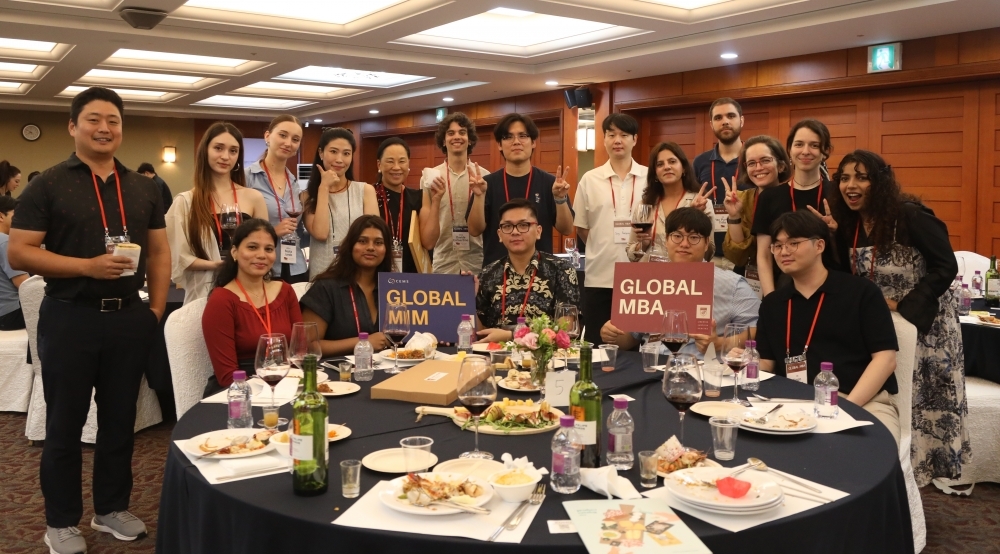
Korea Universtiy Business School Opens Admissions for Global Programs (G-MBA & G-MIM)-The Only CEMS Member School in Korea       Korea University Business School is now accepting applications for the Global MBA (G-MBA) and CEMS Global Master in Management (G-MIM) programs, both scheduled to commence in September 2026.      Cultivating Practice-Oriented Global Talent: Global MBA  The Global MBA (G-MBA) is a practice-oriented MBA program designed to cultivate future global leaders. The program offers a structured curriculum that equips students with essential business competencies required across diverse industries and cultural contexts, while also providing flexible track options aligned with individual career goals and circumstances.   The G-MBA is primarily offered as a one-year, full-time program, with opportunities to extend the period of study depending on the selected track: an exchange student track (18 months) or a dual-degree track (two years). Built on an intensive curriculum, the program also features weekly Global CEO Talks, where distinguished speakers from various fields share real-world insights and leadership experiences.    All courses are conducted entirely in English, enabling students to strengthen their communication skills for international business environments while deepening their understanding of global management and leadership. Applicants from all undergraduate majors are welcome, and the program is open to a wide range of participants—from early-career professionals preparing for global careers to working professionals seeking to advance into leadership roles. Upon successful completion of the program, graduates are awarded the Master of Business Administration (MBA) degree.      The Only CEMS Global MIM Program in Korea: Dual Recognition with the MIM Degree and the CEMS MIM Certificate  The CEMS Global Master in Management (G-MIM) is a one-year, intensive, full-time program offered in collaboration with CEMS, a global alliance of leading business schools. CEMS operates under the principle of “one country, one business school,” and in 2015, Korea University Business School was selected as the sole CEMS member institution in Korea.    The CEMS Graduation Ceremony was held in Rio de Janeiro, Brazil, in 2025, and is scheduled to take place at Korea University in 2026, making the upcoming ceremony particularly meaningful for the School and its community.    The G-MIM program offers a curriculum in which students study for one semester at Korea University and one semester at a leading partner business school overseas. Through learning in diverse national, cultural, and business environments, participants build a strong global network while strengthening their practice-oriented competencies. All courses are conducted entirely in English, and the program also includes an eight-week global corporate internship.    The program is open to undergraduate graduates (or expected graduates) in business, economics, or related fields, with a primary focus on early-career candidates with less than two years of full-time work experience who aspire to become future leaders. Upon completion of the program, students are awarded both the Master in Management (MIM) degree and the CEMS Master in International Management (CEMS MIM) Certificate.      World-Class Educational Infrastructure and International Accreditation: Three-Round Admissions Process  Korea University has continued to strengthen its educational and research capabilities, supported by the largest full-time faculty body in Korea, and offers a world-class educational environment. Another key strength is that Korea University was the first institution in Korea to obtain and maintain AACSB and EQUIS accreditation and re-accreditation across all degree programs.    Admissions for this intake will be conducted in three rounds, with information sessions held in each round to provide applicants with detailed program information. For inquiries regarding admissions and applications, please contact the MBA Administrative Office at +82-2-3290-1309.   

2026.01.22 Views 486

[Interview on Retirement and the SK Research Award] Professor Jongwon Park

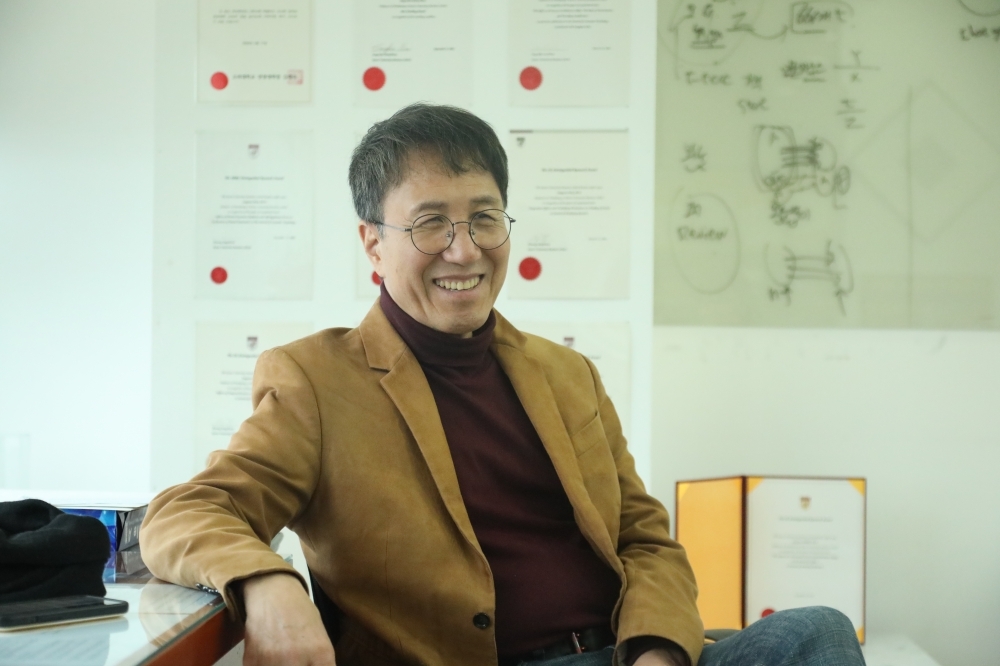
[Interview on Retirement and the SK Research Award]  Professor Jongwon Park — 33 Years of Research and Education, and What Comes Next      After more than three decades devoted to the lecture halls and research offices of Korea University Business School, Professor Jongwon Park has reached a pause known as retirement. As a researcher, an educator, and a member of the academic community who grew alongside the institution, his years at the university represent far more than a length of service—they are deeply intertwined with the very history of the Business School. Having met countless students and colleagues, and having moved tirelessly between classrooms, meeting rooms, and research spaces to help shape the School as it is today, he now stands at a new turning point marked by “retirement.” Yet his steps are not slowing; rather, they continue toward new questions and deeper reflection.    This interview captures his reflections on the years spent at the podium, memories of campus life, relationships with students, and research that continues even as he enters retirement. His words offer a candid perspective shaped by decades of moving in step with the Business School. What follows is a conversation with Professor Park as he marks this transition.    Q1. Now that you are leaving the Business School where you spent so many years, how do you feel day to day? Are there moments when it still doesn’t feel real?  Honestly, it’s a difficult question to answer. Since last year, as I began to think, “There isn’t much time left,” I found myself wanting to spend more time at the university. I wanted to come to my office more often and meet with students more frequently, but frequent overseas trips and teaching commitments meant that I wasn’t in Korea as much as I had hoped. That was my biggest regret. I also experienced a flexible semester, teaching for half the term here and for the other half in New Zealand, where my wife lives. As a result, I simply wasn’t physically present on campus very much. This past fall semester, I deliberately took on a regular course so that I could meet students more often and intentionally increase my interactions with fellow faculty members. But once the semester ended and the break began, that’s when it really started to sink in. The thought of having to leave and clear out my office made everything feel real. (Laughs) I even jokingly thought, “Should I just keep occupying the office?” Recently, I’ve received congratulations at various events marking my retirement, and a large-scale BGS performance was also held. Going through those moments, retirement has gradually begun to feel real. Still, it doesn’t feel completely concluded. In February next year, I plan to attend a major marketing conference with my students, and they will all be presenting papers. With plans like that still ahead, it still feels like my work is very much ongoing.    Q2. You have spent well over 30 years at Korea University Business School. What does this period mean to you now?  For me, it was a scholar’s time. I believe that the essence of being a professor does not end with teaching; ultimately, it is time accumulated through research. I will remember the 33 years I spent here as years devoted to scholarship. In that sense, I consistently emphasized the value of research and helped support the Business School’s shift from a teaching-centered model to a research-centered one. In the past, it was taken for granted that professors taught multiple courses per semester, and there were times when writing textbooks was valued more highly than publishing academic papers. I believed that the importance of research would continue to grow, and that for research to truly take root, institutional systems and academic culture needed to evolve together. I remained engaged in that process of change and played my own role in helping the School move toward an environment that supports researchers in aiming for top-tier journals and growing academically. Those years remain the most vivid and defining in my memory.    Q3. You have served in many roles, including professor, associate dean, and director of the AMP program. When did you feel most like yourself?  To be honest, administrative work was not something that suited me particularly well. I served in various administrative positions, including department chair, but the responsibilities that came with them were never easy. Still, I understood that the decisions made in those roles could directly affect the School’s reputation and research environment, so whenever I took on such responsibilities, I approached them with a strong sense of duty. As department chair, in particular, I focused on reorganizing systems and processes with a long-term, future-oriented perspective. At the time, the roles of dean and graduate school dean were separate, and I believed that integrating them was necessary for the Business School to gain greater momentum for growth. Building consensus required meeting senior professors individually and persuading them, which was no small task. During that process, Dean Jang Ha-sung was a tremendous source of support, and together with many senior colleagues, we worked to guide the School through a period of change. Seeing that the integrated dean–graduate dean system has continued to function stably to this day, I sometimes think, “I’m glad we made that decision back then.” Moments like that make the hardships of the past feel worthwhile. Looking back, those years—when I worked hands-on, meeting people and building consensus in pursuit of a better future—may have been the moments that felt most true to who I am.    Q4. Are there any scenes or moments from everyday campus life that stand out in your memory, apart from teaching and research?  Personally, I often recall a period in the mid-1990s when I was struggling to focus on my research and decided to pack my bags and retreat to Mt. Songnisan to devote myself entirely to academic work. It was driven by a sense of youthful determination—I cut off all contact and went in thinking, “This time, I’ll focus only on research.” Then one day, the dean contacted me urgently, saying there was something the school absolutely needed. That call brought me back to campus, where I ended up taking on the role of department chair. Looking back, it may seem like a rather unconventional choice, but it reflected how desperate and earnest I was at the time. I feel deep gratitude toward the colleagues who shared those ups and downs with me, as well as to the dean who called me back to the school.    Q5. Looking back now, is there something you feel you can say to yourself, “I did well”?  In many ways, this connects to what I mentioned earlier. I have always thought of myself as closer to a scholar than simply a professor, and I did everything I could to support junior colleagues who wished to pursue a scholarly path. When I look back on what was accomplished through those efforts, there are many things I feel I can say were done well. One such effort was working toward an environment where professors would not need to supplement their income through outside lectures, but could instead focus on research. This involved restructuring promotion and evaluation systems around research performance, establishing research support mechanisms, and refining faculty recruitment and support frameworks. Expanding administrative support—by significantly increasing the number of contract staff so that individual professors would not bear administrative burdens alone—was part of the same effort. I was also involved in establishing the Research Committee, serving as its chair, creating the SK Research Paper Award, and participating in revisions to the journal list. Most importantly, in order to address the inadequate support for doctoral students at the time, we introduced tuition waivers and monthly stipends, laying the groundwork for doctoral students to focus stably on their roles as research assistants. Ultimately, I had one guiding hope: that good research would not depend solely on individual willpower, but would become something that could naturally flourish within a supportive institutional environment. If I was able to help move the School even a little closer to that goal, I believe I can say to myself that I did well.  (Editor’s note: The research-performance-centered institutional reforms and expanded research support infrastructure promoted by Professor Park later became an important foundation for the Business School to become the first in Korea to meet international accreditation standards such as AACSB and EQUIS, which evaluate not only educational quality but also faculty research capability and performance management systems.)    Q6. As a space rather than just a workplace, how do you think you will remember Korea University Business School?  It feels like the place where my life truly took shape. I spent far more time at the School than at home, and more time sharing meals with students than eating at home. Students came to feel like family, and there were many nights when we stayed up working together. In the past, the environment was far from comfortable—there was even a rule that the lights in research offices had to be turned off by 11 p.m. Even so, enduring those conditions, it became a place where I spent more time than anywhere else, even more than home. People often say that happiness in life rests on two pillars: family and work. I feel deeply grateful that I was fortunate on the “work” side as well. Being able to research, to speak about what I wanted to say, to meet students—and to have all of that become my profession—I can’t imagine a better place to work than this.    Q7. Even as you approach retirement, you have continued active research and recently received the SK Research Paper Award. What motivated this research, and what was the core question?  This research began with a broad question: how do people’s preferences change depending on context? It reflects an attempt to examine more closely changes that cannot be fully explained by traditional consumer behavior models emphasized in behavioral economics. While this research itself is a significant achievement for me, I would also like to take this opportunity to mention one particularly meaningful paper. The paper that received the SK Research Paper Award last year was completed solely with my students, without any foreign co-authors. Achieving strong results and receiving an award through “research done by us alone” was especially meaningful. All of my research has always been conducted together with my students, and that fact is deeply significant to me. Many ideas emerged during trips with students, often from seminar discussions held over lunch. Questions raised in everyday conversations became research ideas and eventually papers, and the studies introduced here were born in the same way. I believe research does not emerge only in special moments, but from time accumulated together. I feel great pride that these meaningful papers were published in prestigious journals and recognized with awards.    Q8. This research seems readily applicable to real-world marketing practice. What implications should marketers pay particular attention to?  I believe these effects may appear even more clearly in online environments than in offline ones. In physical stores, there are many variables—such as crowding or avoidance factors—that can dilute the impact. On the web, however, attention is more easily focused on a single point, which can make the effect more pronounced. Mobile environments, however, present a different situation. Because user behavior is largely driven by vertical scrolling, attention tends to be more dispersed, potentially weakening the same effect. When applying these findings in practice, marketers need to carefully consider the usage context specific to each channel.    Q9. Based on this research experience, what advice would you like to give to students who aspire to study consumer behavior or marketing?  Consumer behavior is more irrational than we often assume. The same applies to customer satisfaction. Doing a good job alone is not enough; what truly matters is how consumers perceive and evaluate what is done for them. Just as parents cannot fully understand their own children, it is difficult to claim that we truly “know” consumers. Nevertheless, we still need to make predictions to some extent, which is why the idea of predictable irrationality is so important. If we can understand behavior, we can predict it; and if we can predict it, we can turn that understanding into strategy. In this regard, a book such as Predictably Irrational can also be very helpful.    Q10. Finally, is there anything you would like to say to members of the Business School and to readers of this interview?  The Business School is home to many outstanding professors, and in recent years, many newly appointed faculty members with impressive backgrounds have joined us as well. What truly matters, I believe, is how the School supports these individuals so that their potential can fully flourish and develop in a world-class direction. I hope that anyone who dreams big—big enough to aspire to compete with Harvard—will feel encouraged to challenge themselves here. I also hope that Korea University will remain a source of deep pride in the hearts of its members. I would also like to express my gratitude. I have always felt thankful toward my students. Many things were possible because students chose me as their advisor. I wanted to tell them, “Your potential is greater than you think,” and I have seen many cases where that proved to be true. I believe that the role of an advisor is ultimately to believe in that potential and to help build the path forward together. Lastly, I would like to thank my senior colleagues and peers as well. Thanks to everyone who supported and celebrated my retirement in so many ways, I feel both happy and deeply grateful.    Though he steps away from the podium upon reaching retirement, his questions about research and education remain firmly in the present tense. The time he spent at Korea University Business School stands as more than a record of classes taught or research achievements; it reflects a steady fulfillment of roles and responsibilities within an academic community. While he lays down the title of professor, the questions he raised and the directions he set will continue to resonate throughout the School’s teaching and research. Even as he brings a long career to a close, he continues to leave questions for the next generation.        Below are introduction to a paper by Professor Jongwon Park that received the SK Research Paper Award, as mentioned in the interview.    In 2025, a paper co-authored by Professor Jongwon Park of Korea University Business School, titled “The Impact of a Horizontal Versus Vertical Product Display on the Attraction Effect” (with Jungkeun Kim and Harmen Oppewal), was accepted for publication in the Journal of Marketing Research and received the SK Research Paper Award. This study examined how horizontal versus vertical product displays influence consumer choice and found that horizontal displays generate a stronger attraction effect than vertical displays. This occurs because horizontal displays make it easier for consumers to compare alternatives and quickly recognize asymmetrically dominated relationships. These effects were confirmed in both real purchase situations and hypothetical choice scenarios, and were observed consistently across various product categories. The findings highlight the importance of spatial display design in shaping consumer judgment and choice.    (Original) Marketers can display their products horizontally or vertically in both online and offline settings. This display orientation has been shown to influence consumers’ judgments about individual products. The present research extends the literature by investigating the moderating impact of display orientation on the attraction effect, one of the most well-established context effects in choice. A total of eleven studies, including seven pre-registered experiments, document a novel finding that the attraction effect is stronger when choice alternatives are displayed horizontally rather than vertically. This moderating influence is replicated in both consequential choices and hypothetical scenarios and shown to generalize over diverse product categories. We explain this influence by proposing that a horizontal (vs. vertical) display increases the ease of comparing choice alternatives, leading consumers to notice the asymmetric dominance (AD) relationship among them more easily. Consistent with this mechanism, we find that the moderating influence of display orientation attenuates when individuals are guided to recognize the AD relationship or when their ability to compare vertically displayed products is momentarily enhanced. The present research thus demonstrates a significant effect of spatial orientation on the comparison and evaluation of alternatives. Theoretical and managerial implications of findings are discussed.     In 2024, a paper co-authored by Professor Jongwon Park, titled “Consumer Moral Decision Making: The Impact of Alignable versus Nonalignable Differences” (with Sang Kyu Park, Young Joo Cho, Jungkeun Kim, and Jin Yong Lee), was accepted for publication in the Journal of Consumer Research and received the SK Research Paper Award. This study examined how alignable differences and nonalignable differences—frequently examined in consumer decision-making—operate in contexts involving moral attributes. While prior research has proposed an alignability effect, in which alignable differences exert a greater influence on choice, this study demonstrated a nonalignability effect in moral attribute trade-offs. Across eight studies (N = 2,861), the findings showed that nonalignable moral differences exert a stronger influence on consumer choice. In other words, even when an option is somewhat inferior on alignable moral criteria, consumers tend to prefer it if it presents a unique, nonalignable moral superiority over alternatives. These findings suggest that when designing moral or ESG-related messages, the way information is structured for comparison—whether alignable or nonalignable—can itself play a decisive role in shaping consumer choice.    (Original) Consumer choice decisions often involve a tradeoff between an alignable difference (a difference along a shared attribute) and a nonalignable difference (a difference between unique attributes of each alternative). For example, Café A provides friendly service, while Café B offers unwelcoming service (an alignable difference). However, Café A occasionally makes billing errors, and Café B has comfortable seating (a nonalignable difference). Prior research shows that alignable differences tend to have a greater impact on choice than nonalignable differences (known as the “alignability effect”). Yet, little research has examined tradeoffs involving moral attributes. Contrary to the prevailing evidence, eight studies (N = 2,861) demonstrate that in moral attribute tradeoffs, nonalignable (vs. alignable) differences have a greater impact on choice (termed the “nonalignability effect”). Consequently, consumers prefer an alternative that is superior on a nonalignable moral difference but inferior on an alignable moral difference. Moreover, in moral–quality tradeoffs, where one alternative is more ethical but is of lower quality, consumers show a stronger preference for the ethical alternative when its moral superiority is represented by a nonalignable (vs. alignable) difference. The nonalignability effect is driven by consumers’ unique decision process in making moral attribute tradeoffs, characterized by categorical valence coding and attribute-by-attribute win–loss counting.

2026.01.14 Views 689

Cultivating Leaders Who Drive the Growth of People and Organizations, Korea University CHRO Program 

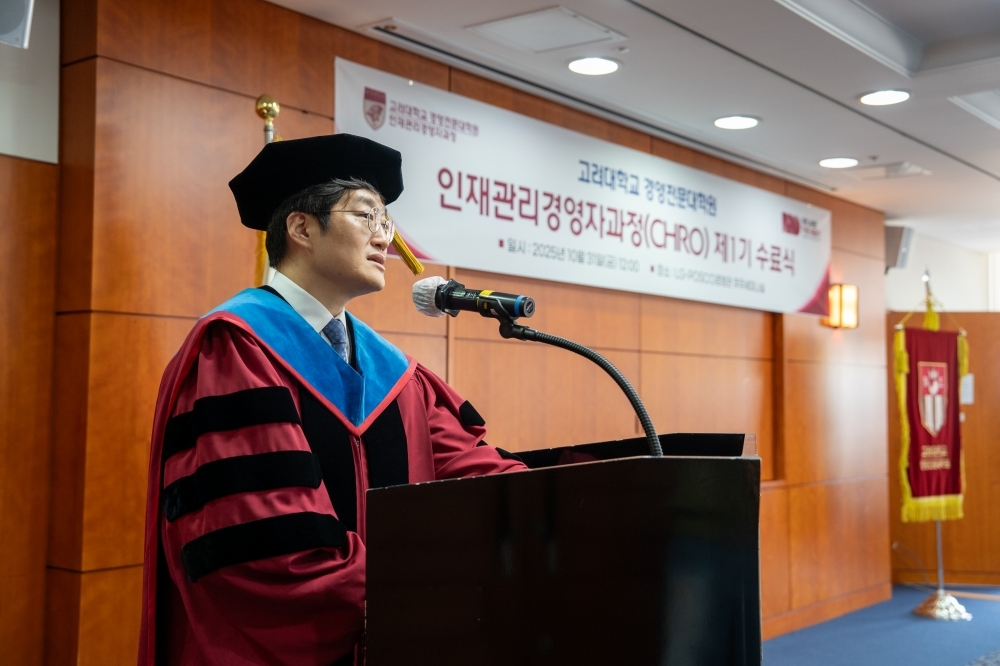
Cultivating Leaders Who Drive the Growth of People and Organizations, Korea University CHRO Program      Korea University’s Chief Human Resources Officer Program (CHRO) Program Completes Its First Cohort, Opens Enrollment for the Second   Korea University Business School has launched the Chief Human Resources Officer (CHRO) Program to redefine the role of human resource management in an era of rapidly changing business environments. Amid rapid technological advancement, generational shifts, and the expansion of ESG-driven management, HR is no longer viewed merely as a support function but has emerged as a core element of organizational strategy. In response to these changes, the CHRO Program was designed to systematically cultivate the expertise and strategic thinking required of HR leaders, reflecting the practical needs of today’s business landscape.    Over approximately seven months, the CHRO Program addressed key topics in human resources and organizational management in a balanced manner, including talent management strategy, organizational culture, leadership, performance management, global HR trends, People Analytics, M&A and PMI, and digital transformation. During the summer, an overseas training program was offered, enabling participants to examine HR issues from an international perspective. Courses were delivered jointly by academic experts and industry practitioners, ensuring both theoretical depth and practical applicability. A key outcome of the program was the formation of a strong professional network, as HR leaders from diverse industries came together in a single cohort to share experiences and challenges.    The commencement ceremony for the first CHRO cohort, held on October 31, marked the conclusion of the seven-month program and provided an opportunity to reflect on its achievements. In his congratulatory remarks, Dean Eonsoo Kim commended the graduates for completing the program while balancing work and study, emphasizing that “Commencement” represents not merely an end, but a new beginning. He added that “the challenging journey undertaken by the inaugural cohort will serve as an important benchmark for the future development of the program.” Program Director Kwanghyun Kim also shared his reflections, noting that “the participation and feedback of the first cohort became the foundation for the program’s continued growth.”    Graduates have described the CHRO Program as a “practice-oriented curriculum that delivers insights readily applicable to the workplace.” Many noted that the program not only broadened their understanding of paradigm shifts in HR, but also expanded their strategic thinking across overall organizational management. Below are testimonials shared directly by graduates of the first CHRO cohort.    Testimonials from Graduates of the First CHRO Cohort  Noh ○○ | Hyundai Movex  “For over 20 years, I have worked in HR, and through repetitive routines, I began to feel that I was becoming stagnant. At that point, I realized I needed a new opportunity for growth, and that was when I learned about Korea University’s Chief Human Resources Officer Program. After reviewing the curriculum, I decided to enroll without hesitation. The wide-ranging lectures on talent management and labor relations, as well as digital transformation, AI, and the global economy, significantly broadened my perspective as an HR professional. In particular, the Global HR course was an invaluable experience, providing practical direction as I was grappling with challenges related to overseas subsidiaries and workforce management. I would confidently recommend this program to anyone who is deeply committed to the sustainable growth of people and organizations.”    Yoon ○○ | CJ CheilJedang  “As an HR professional, one of the most challenging aspects of my role was developing HR strategies and articulating a clear vision for growth. Immersed in day-to-day operations, I found myself focused primarily on addressing short-term issues, only to later realize that my own thinking was falling behind the pace of change. The CHRO Program became a valuable source of knowledge and ideas, enabling me to approach issues from a more multidimensional perspective. My exchange with peers from the first cohort was also a tremendous source of support and inspiration. Even the opportunity to step away from the field, albeit briefly, to reflect on theory and emerging trends makes this program highly worthwhile. I would strongly recommend it to those considering the next step in their journey as HR leaders.”    Kwak ○○ | Samsung Card  “My time at Korea University, an institution rich in history and tradition, was a meaningful journey in my growth as an HR leader. The CHRO Program offered a valuable forum for sharing broad insights through in-depth lectures and discussions led by an outstanding faculty and seasoned industry experts. The strategic HR curriculum—reflecting the future business environment, including AI, digital transformation, and M&A strategies—was particularly impressive. In addition, the overseas training program and workshops enabled me to expand my network with diverse HR leaders, an experience that remains a lasting asset. I would confidently recommend this program to HR leaders who are committed to driving both corporate growth and organizational culture transformation.”    Preparing for the Next Stage of HR Strategy: Applications Open for the Second CHRO Cohort  Based on the successful outcomes of its inaugural cohort, Korea University Business School plans to operate the second cohort of the Chief Human Resources Officer (CHRO) Program for approximately seven months, from April to October 2026. Applications for the second cohort will open on Monday, January 12, 2026, and will close early once the program reaches capacity.    Korea University has built extensive educational capabilities that bridge academia and industry, supported by one of the largest full-time faculty bodies in Korea. In addition to its 93 full-time professors, distinguished domestic and international experts from various fields participate in the program, further enhancing its academic depth. The Business School’s dedicated facilities—including the Korea University Business School Main Building, Hyundai Motor Business Hall, and LG–POSCO Business Hall—are equipped with state-of-the-art classrooms, lounges, and learning spaces. Designed to naturally facilitate lectures, discussions, and professional exchange, this educational infrastructure provides an environment that supports a healthy balance between learning and reflection. Furthermore, Korea University continues to be recognized for its global competitiveness. It was the first university in Korea to join the CEMS Global Alliance and holds prestigious international accreditations from AACSB and EQUIS, while also earning strong positions in the QS World University Rankings.    The second CHRO cohort is designed for corporate HR executives and HR leaders, with a focus on reinterpreting HR and organizational issues from a strategic perspective and strengthening decision-making capabilities. Moving beyond a theory-driven approach, the program examines how organizational strategy and talent management are interconnected through real-world corporate cases and discussion-based learning. Faculty members from both academia and industry participate to provide actionable insights and practical guidance that can be immediately applied in the field.    Overseas training is also one of the program’s key features. Through this component, participants gain an international perspective on HR issues while expanding their global networks. In addition, domestic workshops and company visit programs hosted by cohort members encourage interaction across industries and professional backgrounds, creating opportunities to share hands-on experiences from the field. The fact that HR leaders from diverse industries come together in a single cohort and continue meaningful exchange and collaboration is widely regarded as a core strength of the CHRO Program.    Through the CHRO Program, Korea University Business School plans to further strengthen its practice-oriented education, empowering HR to play a more proactive role at the center of organizational strategy. In an ever-changing business environment, the second CHRO cohort is expected to be a meaningful choice for HR leaders who seek to advance the growth of both people and organizations and prepare for the next stage of their professional journey.    Contact  Korea University Business School EEC  ☎ 02-3290-2707 | ✉ kubseec@korea.ac.kr 

2026.01.14 Views 792

Solidarity and Giving Across Generations…KUBS Alumni Night Celebrates 120 Years of Legacy

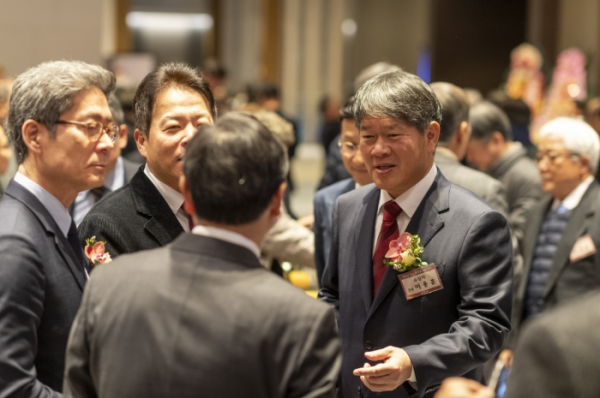
Solidarity and Giving Across Generations… Korea University Business School Alumni Night Celebrates 120 Years of Legacy    Korea University Business School maintains active engagement and networking through its alumni association, composed primarily of graduates. The “43rd Alumni Night,” a signature event celebrating this spirit of connection, was held on Thursday, December 4, at the Grand Ballroom on the fifth floor of the Grand InterContinental Seoul Parnas. This year’s event was particularly meaningful as it took place during the 120th anniversary of the Business School’s founding, bringing together intergenerational exchange and philanthropic engagement. The evening began with a cocktail reception, followed by a pre-opening performance, an opening declaration and ceremonial entrance of the flags, the introduction of distinguished guests, greetings and congratulatory remarks by alumni association leaders, academic reports, scholarship presentations and award ceremonies, a toast and dinner, and celebratory performances. A large number of alumni, university officials, and current students attended, filling the venue.      Opening and Introduction of Distinguished Guests  The opening ceremony was hosted by alumni Jong-wook Ahn (Business ’89) and Ina Jung (Home Economics Education ’08). The Korean national flag, the Business School flag, and the Alumni Association flag were carried in by alumni Seung-hyun Shin, Kyung-tae Kim, and Kyung-sun Han from the Class of 1998. Notably, Kyung-sun Han carried the Alumni Association flag as the female alumni representative, adding special significance to the moment. This was followed by the national anthem and the introduction of distinguished guests. Applause filled the hall as the names of symbolic figures, including the oldest alumnus, were announced.     Greetings and Congratulatory Remarks  In his welcoming remarks, Dong-Seop Lee, President of the Business School Alumni Association, expressed his gratitude, saying, “Thanks to the participation of many alumni from across generations in the various events organized by the Alumni Association this year, we were able to continue fostering opportunities for communication and exchange.” He added, “I hope today’s gathering will be a meaningful occasion for all alumni.”    In the congratulatory remarks that followed, Myung-Ho Seung, President of the Korea University Alumni Association, said, “Since its first event in 1982, Alumni Night has served as a forum for sharing the traditions and pride of the Business School,” adding that “the experiences and achievements of senior alumni have also become a benchmark for younger generations.”    In a video message, Korea University President Dong-One Kim stated, “As we celebrate the University’s 120th anniversary, we have been carrying out commemorative initiatives across education, research, and infrastructure,” and expressed his hope that “the Business School will continue to play a vital role as a central pillar of the University in the years ahead.”      Presentation of the Business School’s Achievements and Vision  Dean Eonsoo Kim shared the Business School’s major achievements and outlined its future vision. He highlighted a range of accomplishments, including ranking first nationwide in the number of successful Certified Public Accountant (CPA) examinees and maintaining the highest number for ten consecutive years; achieving an average global ranking in the top 40 across major fields in the QS World University Rankings; ranking 4th globally in the QS Master’s in Management (CEMS MIM) program; and placing 61st worldwide in the Financial Times Executive MBA rankings. He also reported the continued maintenance of AACSB and EQUIS accreditations, sustained membership in CEMS, and a cumulative enterprise value of KRW 274.5 billion generated by companies housed in the Startup Research Institute.    This was followed by an overview of the faculty profile and an introduction of newly appointed faculty members for the 2025 academic year, along with a detailed report on scholarships established through alumni donations and their disbursement. The presentation also covered internationalization outcomes, including exchange student programs, and concluded with an introduction to the KUBS 120 MARCH campaign and guidance on participation in giving initiatives.    Dean Kim stated, “Building on our current QS global ranking in the top 40, we aim to reach the global top 30 by 2030,” adding that “we will pursue further growth centered on the 3C and 4Tech strategies.” He continued, “Your participation plays a vital role in nurturing outstanding management talent and in laying a strong foundation for national and social development,” and called for active engagement.      Alumnus of the Year and Special Awards  The Alumnus of the Year Awards were presented to Yong-hoon Lee, Chief Executive Officer of InTimes Inc. (Business ’84); Hyung-geun Bae, President and Chief Executive Officer of Hyundai Motor Securities (Business ’84); and Ji-young Choi, Director-General for International Economic Affairs at the Ministry of Economy and Finance (Business ’89). Each recipient was recognized for outstanding achievements in global education, corporate finance and ESG management, and international finance, respectively.    In addition, the Class of 1979 Alumni Group received a Special Award in recognition of its contribution to upholding a meaningful tradition between senior and junior alumni by pledging annual scholarship donations of KRW 35 million beginning in 2024, totaling KRW 175 million. This symbolic moment demonstrated Korea University’s long-standing traditions of devotion to one’s alma mater and classmate solidarity, as 46 years of deep friendship among classmates were extended to support current students.    A Special Donation by the Class of ’98 That Illuminated the 120th Anniversary  The collective donation made by the entire Class of 1998 stood out as one of the most symbolic moments of this year’s Alumni Night. A total of 126 classmates took part, raising approximately KRW 79 million, which was formally presented at the event. This initiative was voluntarily carried out by the entire class and was particularly meaningful in that many alumni participated wholeheartedly despite their busy professional lives.    The donation will be used to support scholarships for younger students and to enhance the educational environment of the Business School, with particular emphasis on programs designed to strengthen students’ global competencies. Reflecting on the contribution, the Class of 1998 Alumni Group stated, “We all shared the belief that the learning and friendships we gained at Korea University formed an important foundation in our lives, and we wished to pass those precious experiences on to future generations.” This donation has been recorded as the collective footprint of an entire generation that joined the Business School on its 120-year journey.      At the End of a Night Where Tradition Met the Future  Following the presentation of special awards, the event drew to a close with a celebratory toast, dinner, performances, and the singing of the university anthem. This year’s Alumni Night went beyond a simple social gathering, serving as an occasion for alumni to collectively reflect on the 120-year history of Korea University Business School and to reaffirm its vision for the next 120 years.  Warm solidarity connecting generations, unwavering pride in the alma mater, and wholehearted support for younger generations came together to once again reinforce the stature of the Business School. It is hoped that the warmth and shared commitments of this night will continue to serve as a driving force in further advancing the Business School’s development and strengthening the bonds of its alumni community. 

2025.12.29 Views 1299

KUBS Builds Exchange Network with 113 Partner Universities in 33 Countries

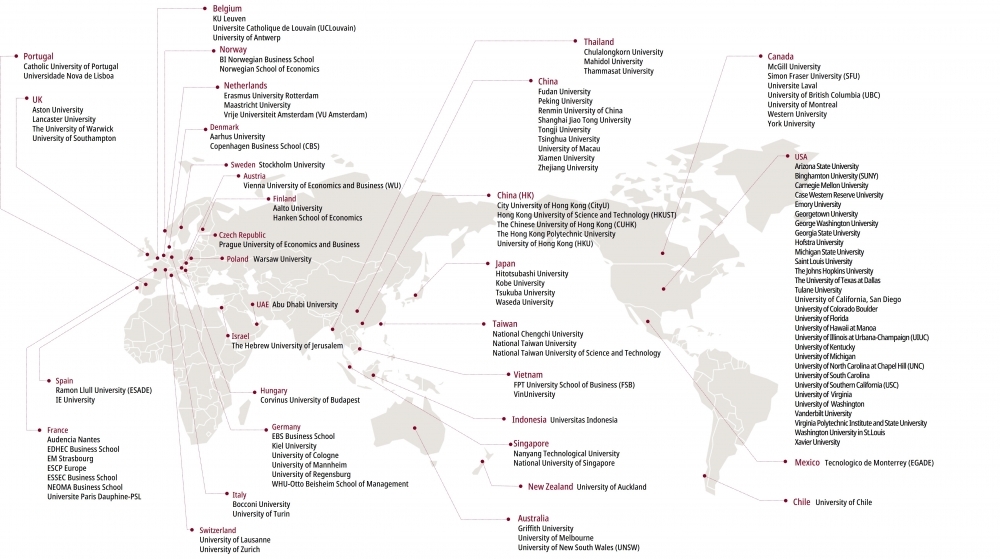
Korea University Business School Builds Exchange Network with 113 Partner Universities in 33 Countries    In addition to the university-wide program, Korea University Business School (KUBS) operates its own exchange program each semester in partnership with leading business schools around the world. As a college-led model, the Business School directly oversees all processes—from forming agreements to selection, credit transfer, and scholarship support—providing a fully streamlined system. KUBS students spend one semester at a partner institution, and the credits they earn are transferred back toward their degree at Korea University.    As of Fall 2025, Korea University has established partnerships with 113 universities across 33 countries, with nine new institutions joining the exchange network this year alone. The network includes world-renowned business schools and is evenly distributed across North America, Europe, and Asia, allowing students to maintain depth in their business major while gaining exposure to diverse regional curricula. The program is highly rated by students, as it offers a well-balanced combination of academic diversity and cultural experience.    Korea University Business School is the first business school in Korea to earn both AACSB and EQUIS international accreditations and is an active full member of the CEMS Global Alliance. Through these accreditations and its engagement in global alliance, KUBS continues to strengthen its international reputation while further enhancing the credibility of KUBS students participating in exchange programs.    The Business School reduces the burden on students by providing airfare scholarship support, clear credit recognition procedures, and a transparent selection process. On campus, the school expands English-only course offerings and operates the KUBS Buddy Program to help inbound exchange students adjust to campus life and to promote natural interaction between domestic and international students. Pre-departure preparation is also systematic. Through orientations, send-off ceremonies, and experience-sharing sessions, the school provides practical information on local life, housing, and course registration strategies. It also offers clear guidance on curriculum analysis for each partner university and on credit recognition procedures, enabling students to maintain continuity in their major. These efforts ensure that students can continue their academic plans seamlessly even after studying abroad.      Applications are accepted every January and July, following announcements on the KUBS website. Because an English résumé and original scores from tests such as TOEFL are required, interested students are advised to prepare in advance. The standard exchange period is one semester, but it may be extended up to one year if necessary. Students selected for airfare scholarships may also receive additional living expense scholarships if further support is needed. With various support pathways available, it is essential for students to proactively review the required qualifications.    With its identity as a “business-centered global exchange program,” the KUBS exchange program is one of the most practical options for students who wish to build international competencies early in their academic journey. For more detailed information about application procedures and selection timelines, students may visit the Korea University Business School website (click) or contact the KUBS International Affairs Team for assistance.      2025 Spring Semester Exchange Program: University of Southern California  (Yoon Jang, Business ’20)    USC is a prestigious institution ranked among the top 10 business schools in the United States. Both faculty and students are exceptionally capable, contributing to an academically rigorous environment that continuously motivated me. The most memorable course was Financial Analysis and Valuation, where we conducted valuations using real corporate cases and received direct feedback from active VC and PE professionals. It was a truly hands-on experience. Although the workload was substantial, I gained a deep understanding of how theory connects seamlessly with practice. Exposure to diverse viewpoints through team projects and case analyses further enriched my learning.  At first, I was concerned about adapting to a completely new environment, but USC’s comprehensive security system ensured that I always felt safe. Interacting with friends from various countries broadened my cultural perspective, and I experienced significant personal growth in this new setting. Even within a short period, I noticed natural changes not only in my English proficiency but also in the way I approached problem-solving and handled unfamiliar situations. Above all, gaining the courage to set aside fear and embrace challenges was the most meaningful outcome.  If you are considering an exchange program, I strongly encourage you to apply without hesitation. Adjusting to a new environment may not always be easy, but the academic and personal growth you will gain is truly invaluable. 

2025.12.08 Views 1103

Korea University Business School Opens Applications for 2026 Spring Intake of DBA and MBA Programs 

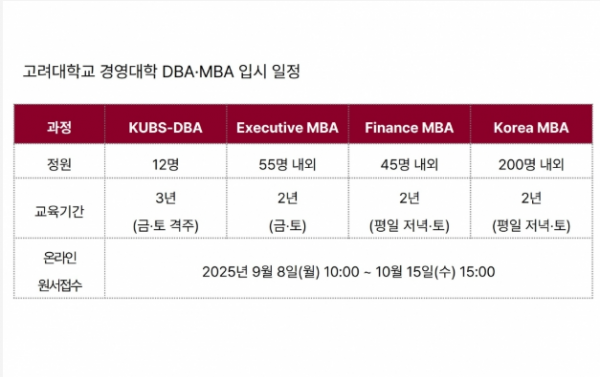
Korea University Business School Opens Applications for 2026 Spring Intake of DBA and MBA Programs  Korea University Business School is now accepting applications for the 2026 Spring Intake of its DBA and MBA programs. The programs offered include the KUBS-DBA (Doctor of Business Administration), Executive MBA, Finance MBA, and Korea MBA. Applications can be submitted through the KUBS online admission system (biz.korea.ac.kr/admission), and the application deadline is Friday, October 15, at 3 p.m.  KUBS Establishes a Full-Cycle Business Education System Connecting Undergraduate to MBA and DBA    Korea University Business School (KUBS) stands as a pioneer in Korean business education, leading innovation built upon its 120-year tradition. In 1905, Korea University established the nation’s first Department of Commerce, marking the beginning of business education in Korea, and once again made history in 1963 by introducing the country’s first MBA program, opening a new chapter in professional business education. Since then, KUBS has successfully launched specialized part-time MBA programs such as the Korea MBA for working professionals, the Executive MBA for senior executives, and the Finance MBA for finance specialists. In response to the globalization trends of the 2000s, it also introduced full-time programs such as the Global MBA—taught entirely in English—and the CEMS Global MIM, jointly operated with leading universities abroad, to meet the evolving educational needs of the time. Furthermore, with the launch of the KUBS-DBA (Doctor of Business Administration) program in 2025, the school has established a comprehensive lifelong education framework encompassing the undergraduate, MBA, and DBA stages of a business career—solidifying its status as a true leader in business education through continuous innovation.    International Accreditation and QS Rankings Confirm Educational Excellence: KUBS Ranked Among World’s Top 50    This comprehensive educational portfolio has demonstrated its excellence through international accreditations and global evaluations. Korea University Business School (KUBS) became the first business school in Korea to receive AACSB (Association to Advance Collegiate Schools of Business) and EQUIS (European Quality Improvement System) accreditations for all its programs, and has continuously achieved successful reaccreditations, maintaining and enhancing its globally recognized academic standards. In addition, KUBS is the only member school in Korea of the CEMS Global Alliance, which allows only one business or economics school per country to join, actively collaborating with leading global universities and multinational corporations. Recently, KUBS ranked 28th in Marketing, 42nd in Business & Management Studies, and 50th in Accounting & Finance in the QS World University Rankings by Subject, further solidifying its global academic reputation across all areas of business education.    Korea MBA: A Premier Traditional MBA Program Designed to Strengthen Professional Expertise and Global Networks (▶Learn More About Admission)    Korea MBA (K-MBA) is Korea’s first MBA program and the flagship program of Korea University Business School. As the oldest and most prestigious MBA in the country, it carries on a proud tradition of academic excellence and leadership development. K-MBA’s greatest educational strength lies in its rich and well-balanced curriculum. In addition to essential core courses for managers, the program offers a wide range of electives covering every field of business, allowing students to design a study plan aligned with their interests and career goals. Through the Renaissance Program, graduates can return after completing their degree to take courses they were unable to enroll in during their studies, ensuring continuous opportunities for lifelong learning. Students also gain global insight and business acumen through the Overseas Field Trip, which includes lectures by distinguished local experts and visits to major companies in key global economies. They can further broaden their academic horizons through student exchange programs with partner universities abroad and a dual degree program with the KU Graduate School of Management of Technology (MOT).  Beyond academics, K-MBA is renowned for its strong alumni network and exceptional sense of unity. This tradition begins with orientation, where new students and alumni learn about Korea University’s history and cheering culture together, and culminates in the Korea–Yonsei Games. Various small groups—such as professional clubs, “ti-moim” (alumni gatherings organized by zodiac sign), and hobby-based clubs in areas like soccer, scuba diving, music, wine, photography, and investing—foster vibrant interaction and lifelong friendships. Through these activities, students and alumni not only enrich their campus experience but also build a far-reaching professional network. Today, the K-MBA alumni association boasts nearly 10,000 members active across diverse industries, serving as a powerful source of support for future leaders. 

2025.10.14 Views 3240

  • 1
  • 2
  • 3
  • 4
  • 5
  • 마지막페이지로