TOP

KUBS News

Total 1416

Department of Business Administration, Graduate School, Korea University Recruiting New Students

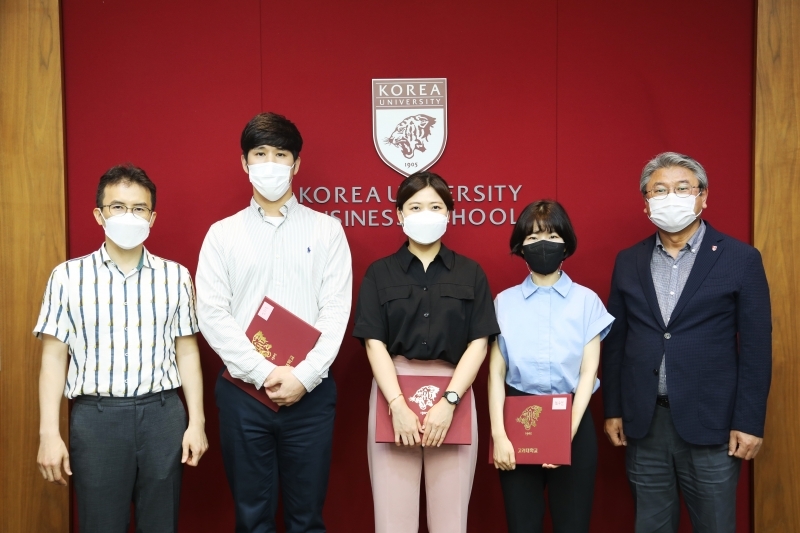
Department of Business Administration, Graduate School, Korea University Recruiting New Students for Fall 2026… Applications Open Until April 9   A new opportunity is opening for those seeking to advance both their research direction and career development. The Department of Business Administration at the Graduate School of Korea University has begun accepting applications for domestic students for the Fall 2026 intake, with the application deadline set for 5:00 PM on Thursday, April 9.   As the business environment continues to evolve rapidly, the criteria for selecting a graduate program are also shifting. Beyond the name of the major, the strength of the research environment and academic network has become an increasingly important factor.    ▲ A group of full-time faculty members at Korea University Business School pose for a commemorative photo.    Korea University Business School boasts one of the largest research infrastructures in the country, supported by 95 full-time faculty members. This is considered a key strength, as it enables applicants to choose academic advisors who closely align with their research interests and topics. The faculty’s diverse expertise, spanning a wide range of subfields and research areas, provides a strong foundation for graduate students to conduct rigorous and advanced research.    As a research-oriented graduate school, Korea University Business School is also strengthening its interdisciplinary research environment to reflect rapidly evolving industries and societal needs. With a focus on the so-called “4Tech” fields—AI, semiconductors, robotics, and energy—the school is expanding the scope of business research beyond traditional boundaries and fostering the exploration of emerging challenges. Through this approach, students are able to analyze business phenomena from a more multidimensional perspective and develop their research questions into independent scholarly work.    Its research infrastructure is another key strength. Graduate students are provided with dedicated research spaces, including offices, seminar rooms, and lockers, along with access to data analysis software such as SAS, SPSS, STATA, and MATLAB. In addition, Korea University Library houses approximately 3.31 million volumes and 86,000 non-book materials, offering a comprehensive foundation for academic research.    In particular, students have access to major databases such as Bloomberg, Compustat, CRSP, WRDS, and LSEG Workspace. Recently, thanks to a donation from Eugene Investment & Securities, the number of Bloomberg terminals has been expanded to 12, further enhancing the research environment in finance and related fields.    Korea University Business School also offers a range of scholarship programs to support students in focusing on their research. These include full tuition coverage through research and teaching assistantships, as well as research scholarships under the BK21 program and merit-based scholarships. Approximately KRW 2.3 billion in scholarships are awarded annually, along with programs that encourage research activities, such as support for participation in international academic conferences.    For the Fall intake, the department will admit students to master’s, doctoral, and integrated master’s–doctoral programs in the following fields: Management, Global Business, Strategy, Finance, Information Systems (IS), and LSOM. The Marketing field will recruit only for doctoral and integrated programs, while Accounting and Business Analytics are excluded from this round of admissions.    The Fall admissions cycle is particularly meaningful as it provides another opportunity for applicants who have reassessed their academic or career paths following the Spring admissions cycle. For those who have further refined their research interests or career goals, this can serve as a strategic opportunity to select a research environment that best fits their needs.    Daeil Nam, Associate Dean for Research at Korea University Business School, stated, “As business studies become increasingly interconnected with industry, the importance of research environments and networks continues to grow,” adding, “We support our students in expanding their research and connecting it to real-world applications.”      ▶ Apply for Fall 2026 Domestic Graduate Admissions at Korea University ◀ 

2026.04.13 Views 42

| Let`s listen to the Winner of the Lecture Award! | "My teaching goal is to help students find

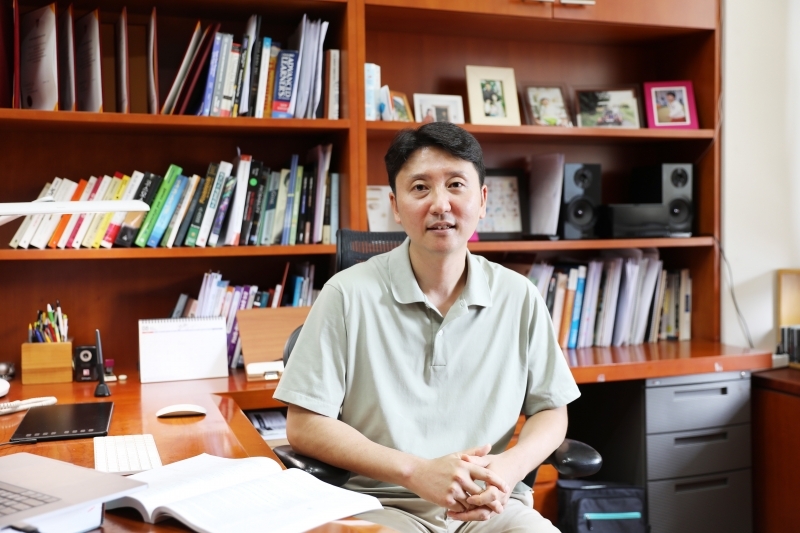
| Let's listen to the Winner of the Lecture Award! | Professor Kihoon Kim   "Let's listen to the Winner of the Lecture Award!" interview of this semester, which is part of the KUBS(Dean=Johnseok Bae) Teaching Committee Program, is joined by Professor Kihoon Kim, who won the Excellence Lecture Award through the MBA Teaching Award in the fall semester of 2021. Through this interview, some of Professor Kim's teaching methods will be revealed.   "My teaching goal is to help students find their own logical basis"     Professor Kihoon Kim (Major in LSOM, winner of the MBA Teaching Award for the fall semester of 2021)   Q1. Congratulations on winning the MBA Teaching Award for the fall semester of 2021 [Data Analytics and Statistics] subject! Please briefly introduce what kind of course this is. A few years ago, 'Business Statistics', a compulsory subject during the K-MBA program, was reorganized into a class called 'Data Analytics and Statistics'. Recently, the demand for data analytics has been increasing, so the curriculum has been changed to a course that addresses the need. The course was able to be reorganized thanks to the changing the name and curriculum of the course that swims with the tides and hope to meet the needs of the students. [Data Analytics and Statistics] course adds 'Visualization'  that is required in this era in addition to the Statistics classes that were conducted in the past. I used Excel before, but now I use an open-source program called 'R'. Recently, the programs that are usually implemented in practice are R and Python, and I lecture with R. For students, statistics course was a boring and dull subject in the past. Recently, however, there have been many students interested in analyzing data, and my class focuses on how to actually use, express, and analyze statistics. Statistical knowledge is important, of course, but I focus on how to use it to analyze data, for example, using statistical techniques to determine whether this promotion is effective or not. There are three ways to analyze data: Descriptive analysis, Predictive analysis, and Prescriptive analysis. In the case of descriptive analysis, if Analysis method analyzes data that has occurred in the past and derives insights, Predictive analysis is an analysis method that identifies possibilities for the future, and Prescription analysis is an analysis method that finds the best alternative in the future, such as a doctor's "prescription." My [Data Analytics and Statistics] course could be described as a class that contains some descriptive and predictive analysis.   Q2. What do you think the students liked so much about this course? When I checked the Lecture Evaluation sruvey, many students said, "It was good to learn statistics that are actually helpful." I tend to give tasks that can be used in practice, such as drawing a graph using data directly, or finding out the relationship between 2 variables, not just the theory in the book. Since the tests are all open books and open notes, there is no need to memorize the theory, and it is not difficult if you follow the class well and understand it properly. There seem to be many students who get intimidated by ‘statistics’ at first, saying that it is difficult because you need to memorize everything, but I think students liked the course because it was a class that teaches practical knowledge, not statistical knowledge that only needs to be memorized.   Throughout the class, students who were originally experienced in statistical analysis seemed to be making much better use of it, and students who say, "I have nothing to do with statistics at all" seemed to be actually applying analysis to statistics. There are many people who are worried about whether they can follow the class, but my class focuses on "utilization," so I encourage them that if they follow one by one, they will do well. So that after the class is over, students who had difficulty in the beginning could also feel confident that they really could.   Q3. Was there anything that didn't go well or that didn't go well as you thought in this class? It has been a while since I moved to R from Excel, but I think there was a lot of class workload when I first changed the program. In addition to teaching about statistics, I gave my students the task of analyzing with field data as a final project. I remember the students having a hard time at that time. So I had no choice but to skip the project in the next course. I'm still sad about this part. I think what's really helpful for students is to perform analysis with field data. If I have a chance, I want to deliver the theory in a compact way and incorporate project using business data in my class again. I am planning to continue to think about this.   Q4. You won the Excellence Lecture Award during the non-face-to-face lecture due to COVID-19. Please share your experience in running an online class.    Actually, I did a survey of students after the Midterms, and only 2 students said that they would come to the face-to-face class. So I kept the class going online. And as I often have excercises in class, many students actually said that non-face-to-face was better. Especially with two electronic devices, it was icing on the cake. I think it would have been more effective if you were using one to listen to the class, and the other to conduct excercises. I think the advantage of non-face-to-face classes was that you can ask questions through online chat. Students would ask and answer simple questions to each other freely even if I didn't answer them during the class. Among the statistics classes, there were not many students in my class, and I think the class had small number of students because there is a prejudice that it is difficult to take classes with R, not Excel. Maybe it was because there were not many students, but it was convenient to answer address the questions one by one. For me, the good thing about face-to-face classes is that I can catch up faster on whether students are following well. Since non-face-to-face is only shared on the online screen, you can only ask students if they can follow you during the class. It's okay if students ask questions on their own, but if they don't, it's sometimes like shouting in the air. At that time, I think I had to take a break or raise new problems.     Q5. What do you have in mind the most when you first give a lecture? First of all, I like to find out the background of the students. During self-introduction time at the beginning of the class, I often ask the students about how much experience they have in data analysis and how much statistics they have used in actual work. I find out about how many students have no experience at all and how many students are more advanced than I thought, and think about how to take the pace of this class before starting the course. Of course, there are bound to be people who have no experience in statistics. In that case, there are times when I explain it more slowly in class. On the other hand, there are students who have been actively using R, but these students often do not know the statistical knowledge. For those who know how to use R well, I think I can help them in terms of statistical knowledge.      Q6. Do you have any methods or know-how on communicating effectively with students in class? First of all, I recall actively used the chat window in the non-face-to-face class. In my class, I always have time to practice with data after explaining the theory, and in face-to-face classes, I used to walk around the classroom and look at the practice screen and receive questions. In fact, this part of online class was not so easy, so I had no choice but to explain it with words or show my screen. Still, problems that could not be solved were asked while sharing the screen with screen capture. I think on this aspect, online class was a little difficult. And I use a program called 'Classum' to communicate with students. When asked by e-mail, there were many overlapping questions among students and it was a little cumbersome to answer them every time, but in Classum, students can answer each other when they post questions and see other people's questions and answers. I think it’s more efficient and active Q&A is possible because there are cases where students freely post questions that they wouldn’t ask professors, and answer each other. Although the utilization of Classum varies from class to class, if it is operated well for the first two weeks of class, it will be able to be used well throughout the entire course.   Q7. How do you discover and use the materials necessary for class (e.g., example cases, readings, assignments, etc.)?   Data materials can be found in textbooks, or public data. I actively utilize public data, such as when, where, and how much you rent in a bike sharing program. And in my class, there is always a practice using data, so I share the materials used in the practice using a program called Dropbox. Dropbox synchronizes immediately when you modify a file, so you don't have to download the data everytime. Dropbox folders can be created and used directly on the desktop, making it convenient for students and me to share materials.     Q8. Lastly, is there your own teaching philosophy and educational philosophy that you would like to share?   Actually, when I was a student, I struggled when I was learning statistics. It wasn't fun and I didn't know how to use statistical theory. I don't remember having any fun with things like "Hypothesis Verification." So I aim to give a lecture to students so that they can actually utilize statistics as much as possible. Therefore, I tend to give lectures with the main focus of "Can I teach students to understand easily?" I think the key point I think in all subjects, including Operations Management, Statistics, and Game theory, as well as this subject, is "How can students easily follow and express their understanding with their own thoughts?" All the tests in my subject are 'Open book, Open notes'. This is because I think how to combine and utilize the learned knowledge to solve real problems, and the making knowledge yours is important. It means that you don't have to memorize class contents such as models, formulas, etc. and you should 'understand'. I hope that students will use their heads to learn how to apply the contents of the class and develop logic. I contemplate to give students to problems that can be solved if they understand, not memorize the lecture content no matter how new the type of problem is. In fact, there are many cases where there are no correct answers in practice. I play a role in leading the students to the making a logical supporting basis for themselves based on given data and knowledge. I think the biggest goal of the lecture is to develop students' ability to find solutions with their own thoughts and logic.

2022.09.14 Views 3303

EEC of Korea University Graduate School of Business stands as the leader in the Corporate-customized

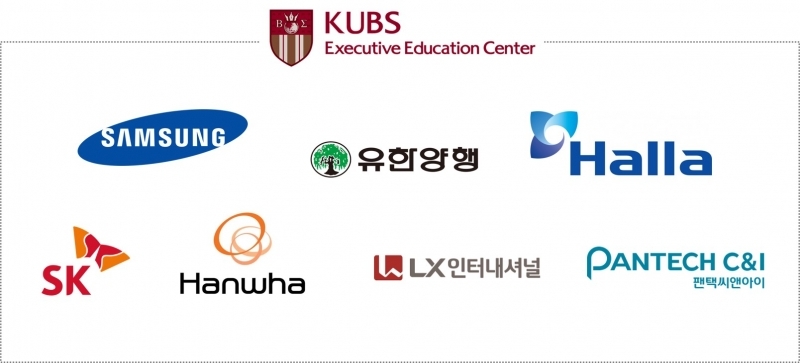
The Executive Education Center (hereinafter referred to as EEC) of Korea University Graduate School of Business (Dean = Johngseok Bae) has contributed to the application of the latest management techniques directly to the corporate field through the operation of ESG-AMP program introducing various management theories and ESG management techniques to CEOS of Korean companies.   Furthermore, EEC provides customized education programs that meet various business management education needs of corporates. In order to develop the capabilities and strengthen the expertise of corporate executives and employees, faculty of KUBS in charge of the program, Program Managers, and companies closely cooperate with each other to design the program.   The educational fields and composition of the curriculum currently in progress are also diverse. In addition to subject-specific operations such as △ Finance· Accounting △ Marketing △ Management Strategy, it is possible to organize educational programs by the status or level of participants, such as △ Executive △ Director △Working Group. It is also possible to add a practical curriculum such as case studies or projects.   In fact, EEC of Korea University Graduate School of Business is being sought after by various companies in order to experience the best curriculum among Business schools at Korea. Currently, △Samsung Electronics Financial MBA course △ Yuhan Executives course △ Halla Group Executives course △ SK Capital Market Expert course △ LX International Business Academy △ Hanwha Promotion Candidate course △ Pantech C&I Leadership course are in operation.   In particular, Samsung Electronics Financial MBA course, which has been in operation for 24 years since 1999, has been operated only for Samsung Electronics' Financial Personnel, but recently, the scope of students has been expanded to include Samsung Display, Samsung Electro-Mechanics, and Samsung SDI. In addition, Halla Group's Executive course has been in operation for 6 years, Hanwha's Promotion Candidate course has been for 3 years, and Yuhan's executive course has been for 2 years, building trust by conducting long-term courses with KUBS.    In addition, EEC is accelerating growth by attracting Commissioned training programs for new corporates every year. This year alone, companies such as △SK Group △LX International △ Pantech C&I chose a customized course for companies at Korea University Graduate School of Business.   Yongkeun Yoo, the Associate Dean of Korea University Graduate School of Business, said, "Number of requests for customized curriculum operation to KUBS is rising," adding, "We hope that Corporate-customized curriculum will be an opportunity to provide new solutions to corporations beyond the simple industry-academic cooperation."

2022.08.22 Views 4144

"2022 E-MBA Junior SMART Camp" for E-MBA Students and Alumni’s children held

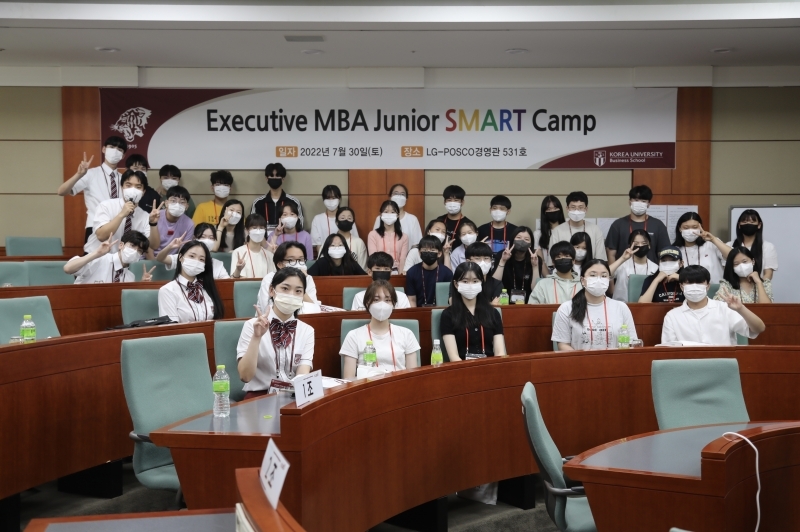
"2022 E-MBA Junior SMART Camp" for E-MBA Students and Alumni’s children held   The "E-MBA Junior SMART Camp,"hosted by Korea University Graduate School of Business (Dean= Johngseok Bae) Executive MBA (hereinafter E-MBA), was held on July 30th(Sat) at LG-POSCO Building Room 531.   The Junior Smart Camp is designed to help E-MBA student’s and alumni’s children set more specific careers and goals by experiencing the business education field that their parents are studying at first hand. The camp, which is held every two years, was suspended due to COVID-19 after 2018, but has been resumed for the first time in 4 years.     As it was held after a long time, the 43 participants showed great enthusiasm. Participants were selected on a first-come, first-served basis, from the first grade of middle school to the third grade of high school among the children of E-MBA students and alumni. Participation fees are fully supported by KUBS.   The event began with a welcoming speech from E-MBA professor Jinbae Kim. Professor Kim said, "Everyone must have attended this camp with different reasons, and they must have different dreams and goals," adding, "I hope today you will bring home good experiences or precious relationships to achieve your dreams later on."   Followed by the speech, Mentor Introduction and KU Introduction was given by KUBE, KUBS Student Ambassador. Students eagerly participated in the camp, creating group chants and answering quizzes. In the subsequent Campus Tour, the students also toured the △3rd building of KUBS Building △ the Main Building of Korea University △ the Centennial Memorial Hall, and carried out a mission to take pictures.     In the afternoon, "Designing College Life" and "Professor's Special Lecture" were followed. In “Designing College Life” session, students listened to the Senior students at KUBS about the general college life based on the booklet distributed in advance, and became a college student for a moment and designed activities from the first to the fourth grades. In addition, Business lectures were held for teenagers, including △ Corporate management and Accounting Fraud (Professor Jinbae Kim), and △ What IS Marketing?(Professor Shijin Yoo). The children of E-MBA students and alumni had an opportunity to develop Business Thinking by taking classes directly from the faculty at the classroom where their parents studied.       At the end of the camp, all participants were awarded a certificate of completion of the "EMBA Junior SMART Camp" under the name of Korea University's Graduate School of Business.   Meanwhile, the Junior Smart Camp's "SMART" is an acronym for five words, including △ Strategic △ Motivated △ Advanced △ Relational △ Talented, and contains the purpose of the event for teenagers to learn about Business and develop their own motivation and talents. From the first planning stage of the camp, a name contest was held for E-MBA Wonwoo and friends, and the "EMBA Junior SMART Camp" submitted by Baek Chaehyun (12th class of E-MBA) was finally selected. 

2022.08.16 Views 3710

CDTB Colloquium, "How AI, Machine Learning should be incorporated in Corporate Management”

CDTB Colloquium, “How AI, Machine Learning should be incorporated in Corporate Management”   The Colloquium organized by the Korea University Business School (Dean = Johngseok Bae) Center for Digital Transformation & Business (Center Director = Byungjo Kim, hereinafter CDTB), was held on August 5th(Fri) at the SUPEX HALL of LG-POSCO Building. The lecture, which was conducted both online and offline, was given by Park Dongyu, Partner of PwC Consulting, under the topic of " How AI, Machine Learning should be incorporated in Corporate Management."    Partner Park Dongyu shared his personal history of studying Electrical Engineering during his undergraduate years, followed by studying Business at Graduate School, and having both experienced Korean and U.S. branches of consulting firms. He said, “I was able to approach problems in many aspects as I got my hands on many cases.” He added, “While I was in charge of Machine Learning at PwC Consulting, I felt that data analysts were divided into left and right brain types," and "I thought it was important to understand each analyst's tendency, so I chose the subtitle of this lecture as 'left-brain type data analysts and right-brain type data analysts'."     Partner Park said, "When analyzing data, Left-brain type consultants refer to prior data such as papers and focus on visualization through algorithms, while right-brain consultants interview people who will actually use the product in order to understand the whole industry." He then stressed, "I'm not saying that any analysis method is right, but I hope you think about where your strengths will be by looking at these two cases with errors."    The first case was a request by an insurance company to establish a base for Target Marketing Promotion by analyzing the preference of insurance products by customers. In this case, the left-brain type consultant read papers on product recommendation algorithms and visualized them by applying similar logic, but the right-brain type consultant pushed ahead with modeling prioritizing customers and agents, starting with the question, "Which customer has a high probability of additional contracts?" In the second case, when asked by a gas company to simulate the optimal price of each gas station, the left-brain consultant tried to turn machine learning by collecting as much price difference data and sales data as possible, but the right-brain consultant started with essential questions such as "Does competition mean being at the side of the road?" Partner Park Dongkyu said, "It is important not to be buried in numbers, but to choose what you can understand and continue to rotate the simulation," adding, "In addition, we should never stop talking to sales workers on the site."      At the end of the lecture, Partner Park Dongkyu said, "Since each person has different strengths, we can't do everything well. So I hope you think a lot about what BA expertise is from today," adding, "During data analysis, you may miss something, so it’s necessary to have someone to ask the essential questions." After 20 minutes of lively Q&A session, the Colloquium ended.

2022.08.16 Views 3143

Towards becoming one of KUBS! … “The 2022 13th KUBS Teen Mentoring Day” held in success

Towards becoming one of KUBS! … “The 2022 13th KUBS Teen Mentoring Day” held in success   The 13th KUBS(Dean=Johngseok Bae) Teen Mentoring Day(hereinafter ‘Mentoring Day’) was held successfully on July 23rd(Sat).   The event was directed by the Student Ambassador KUBE and current KUBS student mentors, while 93 students were selected prior to the event among about 500 high school student applicants in first and second grades. The Mentoring Day, which was held offline for the first time in three years due to the easing of social distancing guidelines, was held in the order of Introducing KUBS, Special lectures on Business, Campus Tours, Business Excercise, and Mentoring from KUBS students.      Mentor-mentee participants met for the first time at SUPEX Hall on the 4th floor of LG-POSCO Building at 10 a.m. on the same day, and KUBE student ambassadors first introduced "KUBS Campus Life and Major Tracks." In particular, through guidance on specifics of 7 majors (△Finance △Accounting △ LSOM △ Marketing △ International Business △ Management △ MIS) and three tracks (△ Business analytics △ Entrepreneurship and Revolution △ Social values and ESG management), students had a time to go through the basics of Business major, and the advantages that only KUBS has. The introduction was followed by Professor Jang Jin-wook, KUBS professor, who gave a lecture on "Special Lecture on Business Management." Many of the students who took the special lecture said, "Thanks to the easy-to-understand explanation of the Business major and the negotiation process, I was able to learn things that I didn't know."   After lunch, Campus Tour of Korea University followed. There were opportunites for Mentee students to make memories by providing group photo missions at the KUBS building, Hosang Inscription, and Central Plaza for mentee students to take photos with the campus in the background. After an hour-long tour, each group conducted a "Business Excercise." The practice consisted of a program in which mentees experience the Business Negotiation process based on the contents of the special lecture with their Student Mentors. Students carried out the process of negotiating transactions, such as analyzing and discussing data by taking on the role of used car Buyers and Sellers.     After the practice, Mentor Story Sharing and Q&A continued through Mentoring from KUBS students. Various vivid stories of KUBS student mentors were exchanged as Mentee students were curious about how to get into KUBS, such as studying methods, grade management, and school activities, and about college life. After that, the Mentoring Day Event was completed with a survey and Rolling Paper. In the follow-up survey, the participating students expressed satisfaction about the Mentoring Day providing many useful information, saying, "The event was very trustworthy because the students gave me details that were unknown anywhere," and "I was very motivated to see my friends with the same dream and mentors who were already walking on that path."     Meanwhile, Teen Mentoring Day is an annual event hosted by KUBS to improve high school students' career plans and studies and is held every January and July. In addition, a "Regular Campus Tour and Meeting Day for High School Students" is also planned to be held in mid-October this year, where high school students can also participate.

2022.08.08 Views 3757

  • 첫페이지로
  • 71
  • 72
  • 73
  • 74
  • 75
  • 마지막페이지로