TOP

KUBS News

Total 1433

[SK Awards Interview] Professor Minjae Koo: In an Era of Uncertainty, Diverse Cultural Backgrounds

[SK Awards Interview] Professor Minjae Koo: In an Era of Uncertainty, Diverse Cultural Backgrounds Improve Forecast Accuracy Uncertainty does not affect everyone equally. As U.S. firms faced growing import competition from China, most analysts saw their forecast accuracy decline. Yet some were less affected than others. Professor Minjae Koo focused on precisely that difference. His research suggests that the cultural context behind the numbers — and analysts’ own cultural backgrounds — can shape how information is processed in capital markets. Professor Koo, who joined Korea University Business School (KUBS) in 2025, received his second SK Award for the study, “Forecasting Under Uncertainty: Import Penetration and Analysts’ Cultural Advantage.” The study empirically examines how international competition affects the role of information intermediaries. In an era when geopolitical tensions have become a daily reality, the research shows that diversity can be more than a value — it can also provide a tangible competitive advantage. The following is an interview with Professor Koo about the research and the award. Q1. Congratulations on being recognized with the SK Awards. Could you share your thoughts on the award? First, I would like to express my sincere gratitude for this meaningful award. It is a great honor to have my research recognized at Korea University. I would also like to take this opportunity to extend my deep appreciation to my co-authors, who worked with me on this research, and to everyone who supported our work. Q2. Could you briefly introduce the research for which you received the award? This study analyzes how Chinese import penetration affects the earnings forecast accuracy of financial analysts covering U.S. firms. In particular, we examined whether Chinese analysts have an informational advantage in such an environment. Our empirical analysis shows that the more U.S. firms were affected by Chinese import penetration, the more analysts’ forecast accuracy declined overall. However, the decline in forecast accuracy was substantially smaller among Chinese analysts. This suggests that cultural background and contextual knowledge can improve analysts’ ability to process information in complex international competitive environments. Q3. What motivated you to begin this research? The international competitive landscape has shifted rapidly due to recent developments such as the U.S.–China trade tensions and the restructuring of global supply chains. I became interested in whether these macro-level changes might affect not only firm performance and corporate strategy but also how information is produced in capital markets. The study began with the question, “How do international economic shocks change the role of information intermediaries?” The research ultimately showed that cultural background can play an important role in complex international environments. Q4. What impact do you expect this research to have on society or industry? This study demonstrates the value that cultural diversity and expertise can bring to financial markets as globalization deepens and geopolitical risks increase. For companies and financial institutions, the findings highlight the importance of professionals with diverse cultural backgrounds and international perspectives, alongside strong technical capabilities. From a policy perspective, the study also highlights the role of human capital in reducing information asymmetry amid rising international tensions. Q5. Since joining KUBS in 2025, you have already received the SK Awards twice. Is there a secret behind these consecutive achievements? I wouldn’t say there is any particular secret. I believe these achievements were made possible by strong teamwork with my co-authors and constructive feedback from reviewers and editors. Through this study, I was reminded once again that research is not a solitary journey, but a collaborative process that becomes increasingly refined through diverse perspectives and constructive critique.   Q6. Many students today are interested in pursuing careers in accounting. What message would you like to share with them? Accounting is no longer just a discipline that records numbers. In class, I often refer to Nietzsche’s famous statement: “There are no facts, only interpretations.” I understand this to mean that even identical numbers can be viewed and interpreted differently through various lenses. In today’s increasingly dynamic and fast-changing world, I believe such interpretation can become even more complex. Therefore, I would encourage students interested in accounting careers — whether in financial accounting, auditing, or management accounting — to broaden their horizons. They should explore not only fields directly connected to accounting, such as international politics and ESG, but also subjects that may seem less related at first glance, including literature and philosophy. Doing so can help them develop stronger intuition and critical thinking skills. I believe a humanities-based perspective can be very helpful when making broader, more strategic decisions.   About the Paper :   In 2026, “Forecasting Under Uncertainty: Import Penetration and Analysts’ Cultural Advantage,” co-authored by Professor Minjae Koo of Korea University Business School, was accepted for publication in the Journal of International Business Studies. The paper also earned Professor Koo an SK Award. The study examines how analysts’ earnings forecast accuracy shifts as U.S. firms face mounting import competition from China and identifies cultural background as an important factor in information processing under complex international competition. The milestone is especially meaningful as it marks Professor Koo’s second SK Awards since joining KUBS in 2025.   “Forecasting Under Uncertainty: Import Penetration and Analysts’ Cultural Advantage” This study empirically analyzes how import competition from China affects the earnings forecast accuracy of analysts covering U.S. firms. The analysis finds that analysts’ forecasts grew less accurate as U.S. firms faced higher exposure to Chinese import competition. However, Chinese analysts were relatively less affected by this negative impact and delivering more accurate forecasts than their non-Chinese peers.   This informational advantage was even more pronounced when analysts had strong industry expertise or extensive experience covering Chinese firms, and it became stronger during periods of intensifying U.S.–China tensions. Furthermore, the study finds that investors recognized these differences and responded more strongly to forecasts issued by Chinese analysts. By demonstrating that cultural background and expertise can serve as important informational assets in international competitive environments, the study offers new insights into the role of information intermediaries in global capital markets.   ▶ View the full paper: “Forecasting Under Uncertainty: Import Penetration and Analysts’ Cultural Advantage”   KUBS Student Reporter Reporting and Photography by Yeontae Kim

2026.08.14 Views 894

2023 March KUBS Academic News

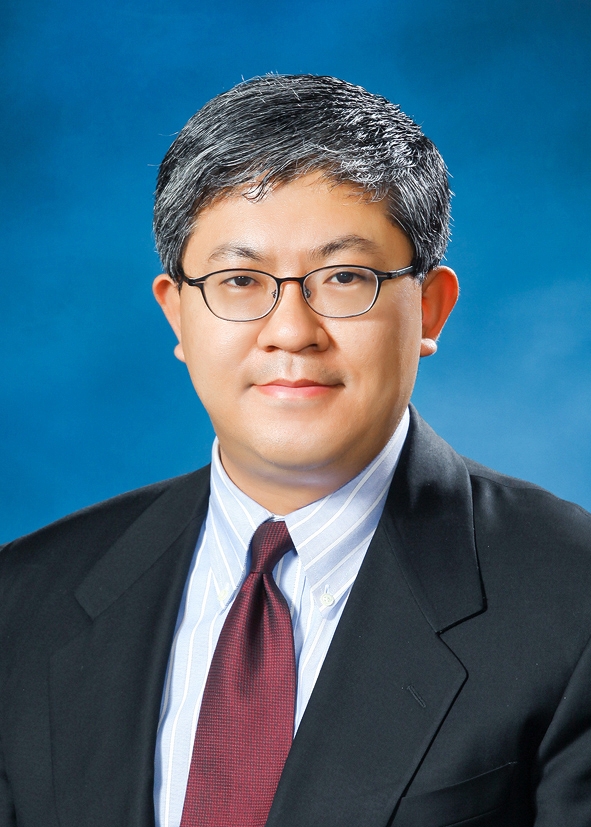
2023 March KUBS Academic News   1. New faculty members appointed   Korea University Business School appointed 2 new faculty members including Professor Lee Kyuhan (MIS) and Professor Lee Jaemin (Business Management) from 2023 March.   Professor Lee Kyuhan received a bachelor’s degree in Business School and a master’s degree in MIS from Seoul National University. After he received a Ph.D. degree from University of Arizona in the United States, he had been an assistant professor at W. P. Carey School of Business – at Arizona State University since 2021. He was appointed as a KUBS MIS professor this March.   Professor Lee Jaemin received a bachelor’s degree and a master’s degree in Business School from Seoul National University. After he received a Ph. D. degree in Business Management and Entrepreneurship from INSEAD in France, he had been an assistant professor at Imperial College Business School in the United Kingdom since 2016. He was appointed as a KUBS Business Management professor.       2. Professor Yi Hansang         Professor Yi Hansang (Accounting) will leave his office for 3 years from this March 1st and start his position as the 9th President of the Korea Accounting Institute. Korea Accounting Institute is a higher organization of the Korea Accounting Standards Board (KASB) and Korea Sustainability Standards Board (KSSB) and Professor Yi will also serve as the chair of the two boards.   Also, Professor Yi will start his position as a private member of a private-public joint ESG policy conference (Hosted by the Vice Minister of Economy and Finance, joined by 8 government departments and private members) from this February. He will be consulting on pending issues regarding national ESG policy.

2023.03.28 Views 4377

Park GiRam’s special lecture on student startups suggest a guide for beginning startups

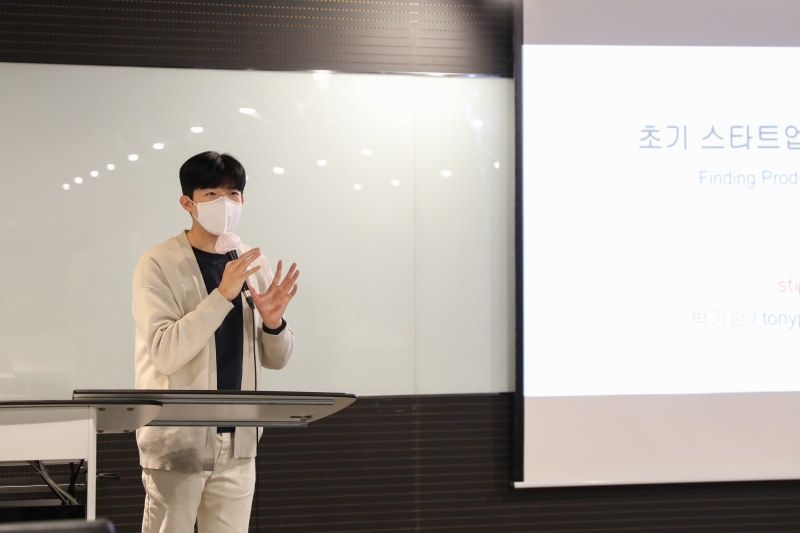
Park GiRam’s special lecture on student startups suggest a guide for beginning startups   The last special lecture of 2022 Fall Entrepreneurship Academy Lecture series, hosted by KUBS Startup Station(Director = Hojung Shin), was held on December 20th (Tue). STIPOP co-CEO Park GiRam gave a lecture on the topic of “Student startups and a guide for beginning startups.”     STIPOP provides emoticon services for online communication in the global market. CEO Park began the lecture by explaining about ‘Product Market Fit (PMF)’ which startups experience in their journey.   Mr. Park explained that PMF can be defined in a variety of ways. PMF can be defined as when a product satisfies consumers in a good market and achieves over 40% of retention. A CEO’s role differs depending on whether the firm achieves PMF, so he emphasized the importance of recognizing whether the firm is in a pre-PMF stage or PMF stage.    Mr. Park suggested a data-driven method to achieve PMF. A firm should recognize improvements to be made, consumer groups that benefit from the firm’s goods and services, and the specific benefits they provide to consumers by collecting data. This data can act as solid ground for achieving PMF.   He further explained detailed guidelines for startups. The lecture consisted of tips for beginning startups such as the importance of product development cycles, methods for filtering and gathering customer feedback, guides to setting goals for beginning companies, recruiting, team building, and scaling up items.     A Q&A session followed the special lecture. STIPOP co-founders Park GiRam and Cho Junyong both participated and received specific questions regarding the special lecture and their startup experience. One participant asked about tips on expanding the business abroad, and received a detailed response about the relationship with investors and the precise cost of establishing a corporation in the U.S.   The special lecture provided detailed, realistic advice on running early-stage startups to participants who aim to establish a startup on their own. 

2023.02.15 Views 6270

2023 KUBS MBA Admissions Open

2023 KUBS MBA Admissions Open   Global MBA, a program that nurtures global talent with expertise on the field - A personalized program that provides multiple degrees, exchange student programs etc. ‘CEMS MIM’ (12th in QS world university rankings) acquirable when graduating Global MIM   Korea University Business School (Dean=Professor Sang Yong Kim) is now accepting applications for 2023 MBA admissions. Admissions are open for two MBA programs: △Global MBA (G-MBA) △Global MIM (G-MIM). G-MBA is a compact, one year program that equip students with professional skills necessary to be global CEOs in the future. This program can be tailored to students’ wishes. Students may be an exchange student to more than thirty universities abroad for an additional semester after they complete the MBA program or acquire another degree by attending ESCP Business School France or EBS Business School in Germany for an additional year. The G-MBA program is designed to enhance understanding of business activities and develop global insights for those who wish to deepen their expertise, change career paths, start a business etc.  ▶ G-MBA program description (Click)   G-MIM is a program only run by KUBS in Korea. The first semester takes place in Korea University, and the second semester takes place in one of the CEMS partner schools. CEMS is a Global Alliance of leading business schools, where only one university can be affiliated in each country. Other CEMS member schools include △ Cornell University) △ The London School of Economics and Political Science △ HEC Paris △National University of Singapore. G-MIM requires an eight week internship abroad and three language certificates. Students can receive a CEMS MIM certificate if eligible. CEMS MIM ranks 12th in QS Masters in Management Rankings 2023.  ▶G-MIM program description (Click)   2023 KUBS MBA admissions has two application rounds. An admissions briefing session is scheduled for each round to provide detailed information about the programs and application process. The 1st round’s briefing session is scheduled on January 31st (Tue) and will be held both online and offline. Applications are received until February 17th (Fri). The 2nd round receives applications until March 24th (Fri) and the admissions briefing session is scheduled on March 2nd (Thu). For further inquiries on admissions, please contact the administration office (02-3290-5365).  ▶ Admissions - G-MBA              ▶Admissions - G-MIM       

2023.02.15 Views 5175

KUBS Graduate School team awarded the Excellence Award on Financial Services Commission ‘D-Test Bed’

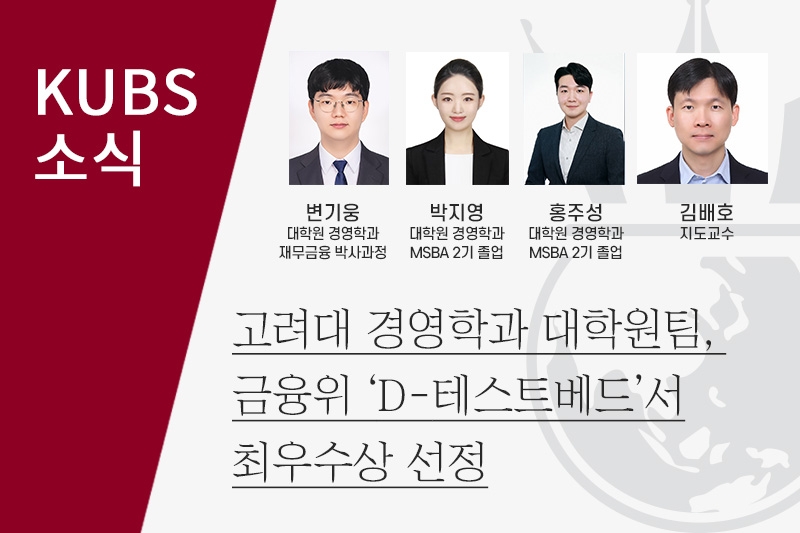
KUBS Graduate School team awarded the Excellence Award on Financial Services Commission ‘D-Test Bed’     Korea University Business School (Dean=Sang Yong Kim) stated that Team ‘KUBS_FinBA’ (Academic advisor = Baeho Kim) finally won the ‘Excellence Award (Fintech Center Chairman Award)’ on ‘D-Test Bed’ hosted by Financial Services Commission.    ‘D-Test Bed’ is a test environment providing business that allows startups, and pre-entrepreneurs to prove business value and the realistic possibility of innovative Fintech ideas based on financial data.   Korea University Team ‘KUBS_FinBA’ including △Kiwoong Byun (KUBS Monetary and Financial Ph.D. candidate) △Jiyoung Park (KUBS MSBA 2nd Class Graduate) △Jusung Hong (KUBS MSBA 2nd Class Graduate) went through tests on the theme of ‘Developing Credit Evaluation Model using Insurance Information and Cost Benefit Analysis of Financial Accommodation Policy’. Through this test, the team analyzed from a statistical and economic perspective that insurance information can be useful when developing an alternative credit evaluation model based on machine learning using financial/non-financial combined information, and credit/insurance information provided by D-Test Bed. Also, the team provided a useful methodology to related policymakers, after going through quantitative proof on cost-effectiveness essential for accommodation policy targeted at financially excluded groups.   The Financial Services Commission selected a total of 31 participating teams after recruitment and evaluation last August. Based on the result reports and presentations submitted by each team, the final 6 teams have been awarded after evaluation from internal/external judges. The Grand Prize was awarded to ‘AnTok’ which proposed a detailed assessment model for small or medium-sized businesses’ credit risks. ‘WinkStonePartners’ which proposed an alternative credit assessment model applicable to Indonesia awarded the Excellence Award along with ‘KUBS_FinBA’. The Participation Award was awarded to Overtake Corp. Finnebo Corp. SmallTicket.  Prof. Kim who advised the team said “It was a meaningful time to apply various data, which is accessible through D-Test Bed participation, into academic research methodology and lead to policy implications. He also said, “I will keep participating in various projects to prove innovative ideas with passionate students.”    To meet the needs of the new times of digital transformation, KUBS introduced ‘MS in Business Analytics(MSBA)’ for the first time in Korea in 2020 to educate integrated business talent with knowledge of Business Analytics, data design, utilization, and information ethics. 

2023.02.15 Views 4020

Final Presentation of the MSBA 3rd Capstone Project Held: Business Models and Solutions Proposed for

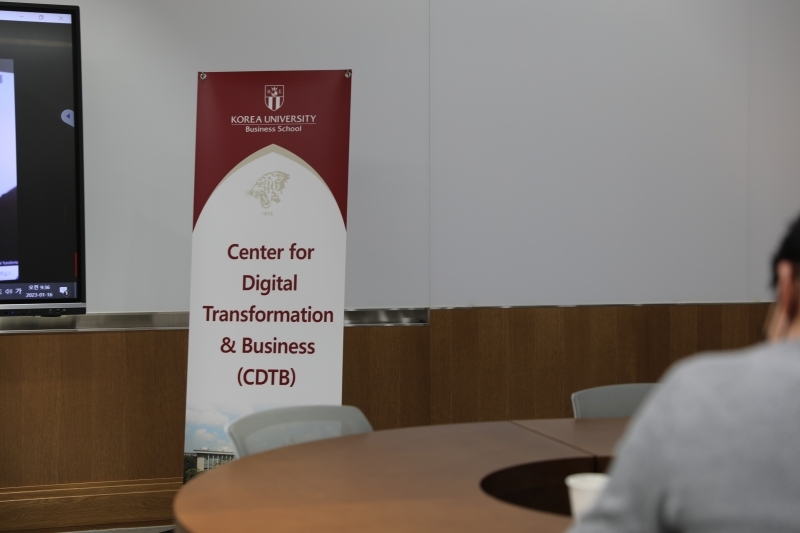
Final Presentation of the MSBA 3rd Capstone Project Held: Business Models and Solutions Proposed for the Digital Transformation Era.   MSBA’s 3rd Capstone Project Presentation held A platform for Industry-Academia Cooperation Network and Discussion   2022 MSBA 3rd Capstone Project Presentation was successfully held at LG-POSCO Building on the 16th and 17th of January. KUBS CDTB (Center for Digital Transformation & Business; Director= Jaehwan Kim) hosted this event to contemplate about business tasks that arise in the Digital Transformation era. Students devised business models using data provided by cooperating businesses, which were evaluated by corporate staff and professors based on the model’s prospects. This event was held both online and offline.     A total of nine teams presented to KUBS professors and cooperating businesses such as △ Korea Credit Information Services △Hanmi Pharmaceutical △ HS Ad & LG Display △ LG H&H △LG CNS. After their presentation, each team received comments from corporate partners and professors, followed by an announcement of the results. Four out of nine teams presented on the first day of the Capstone Project Presentation. Team 1 (Kim Yejin, Kim Hyejin, Jin Zhenlan) presented on the topic of ‘A marketing strategy and effectiveness prediction model to raise gamer awareness on OLEDs.’ Team 1 pointed out that sales data could not be immediately used to evaluate marketing activities, and successfully designed a model that predicted the effectiveness of advertisements and developed it as a web application. A staff of HS Ad & LG Display commented that “this presentation has many items that we can utilize in practice” and praised the students by saying, “we will soon invite them as guest speakers.”      Team 2 (Ji Saein, Choi Yeonsu) presented on the topic of ‘A study on the effect of fulfilled attributes on consumer satisfaction.’ This team devised a KANO model that compares the attributes emphasized by a company and the attributes that consumers mention and pointed out the model’s possible usages and extensibilities. LG H&H commented that “this approach was never attempted in the firm, but our data machine learning team considers it as a very meaningful model with potential for growth.” Team 2’s advisor, Professor Shijin Yoo said, “it was a difficult process for a complicated brand but the students did a great job.” He further mentioned that “predicting with data and extracting business insight in a balanced manner is very important. This is what differentiates business from statistics or industrial engineering and should be the aim of the MSBA program.”     Team 3 (Ko Sehyun, Kim Dodam, Ha Sangho) cooperated with Korea Credit Information Services (KCIS) and gave a presentation on the topic of ‘the attributes affecting the default rate of savings bank borrowers’ lending at medium interest rate’. This study proved that insurance credit information can be used as alternative data for predicting defaults. A KCIS staff commented, “we asked for a savings bank borrower-centered study, and this exceeded our expectations. Based on this research, we will contemplate to discover more variables and approaches to this issue.”     Team 4(Yoon Sungjae, Kim Seokwon, Cheon Myungjun) presented about ‘an analysis on defaulting borrowers for rebound financial aid.’ This team classified users with bad credit scores and successfully improved the model for credit evaluation and rebound financial aid. A KCIS staff said, “We did not provide data of current credit scores and thus it would have been difficult to pick out users with bad credit scores. It was impressive to see the team set their own criteria to filter users. We will discuss more about providing our data to more institutions.” Professor Joon Ho Hwang complimented the team by saying, “Predicting and analyzing whether a user that defaulted can recover is an important research question. This study is very meaningful since it acts as a starting point for further research.”   On the second day, the five teams that collaborated with LG CNS and Hanmi Pharmaceutical gave their presentations. Team 5 (Kim Hyoeun, Kim Hyesun) presented on the topic of ‘Optimization of DPS inventory through association analysis.’ This team recognized that speeding up the sorting process is a critical task for the e-commerce industry. With association analysis, team 5 discovered key variables that directly affect the acceleration of shipping speed in DPS(Digital Picking System). An LG CNS staff complimented that “it would have been difficult to conduct a study alongside with a busy schedule of six modules. It’s common for researchers to get obsessed in their methodology, rather considering their clients’ needs. I hope the team continues to find solutions by focusing on business problems.”   Team 6 (Kang Seungyeon, Park Yeonseo, Jang Hanbyol) analyzed customer traits and behavioral data and presented on ‘A Target marketing strategy derived by LG CNS marketing data analysis.’ The team analyzed marketing in B2B(Business-to-Business) environments and researched about lead generation from potential customers. Team 6 emphasized that “marketing is less emphasized in B2B and considering that LG CNS provides IT services, this is the first study that fits LG CNS’s unique needs.” An LG CNS staff commented that “it’s true that it has been only two years since B2B marketing began. Due to lack of data, we were concerned about whether our marketing was effective. This collaboration has been quite successful and has provided a good basis for setting marketing plans for this year.” Professor Jaehwan Kim said, “during the project, we were concerned that a slight miss in our suggestions would result in a huge financial burden. The project was successful thanks to the advice and insight of the LG CNS marketing team.”     Team 7 (Kim Hyungjun, Hong Subin, Kim SeoA) presented on the topic of ‘Sensing and predicting new technology trends.’ The team collected and analyzed data regarding rechargeable batteries and predicted 25 promising new technologies. An LG CNS staff said, “We had not been able to be the first-movers to adapt to new technologies, which cost us to lose dominance in the market. This study focuses on rechargeable batteries, but can be expanded to any field for trend sensing. We hope to nurture new businesses by further improving this useful technology.”     Team 8 (Kim Hyunkyung, Ryu Jiwon, Yoo Jiho) collaborated with Hanmi Pharmaceutical and presented about ‘Designing a model for detecting side effects through SNS crawling.’ This team trained a model that classified medicine side effect reports and constructed a process that derived insights. Team 8 emphasized that “unlike others, this research preprocessed information extracted from raw user review data on various medications.” Hanmi Pharmaceutical’s strategy team said, “We were worried for not being able to set a research topic in the first meeting. This research seems useful since there are marketing strategies that use mining techniques. We want to commend the researchers for their hard work and results.”       Team 9 (Ahn Yoojung, Choi Jonghyun) presented on the topic of ‘The effects of medicine reclassification policies on medicine sales.’ This team used a differences-in-differences method to analyze the effects of medicine reclassification policies and suggested strategies based on the results. A staff of Hanmi Pharmaceutical commented, “much of pharmaceutical data contained unfamiliar variables but the team handled it well. This research can be used in various categories other than medicine reclassification policies.”   All nine teams were accepted for the project. The organizer of the event, BA area chair Professor Baeho Kim said, “the Capstone Project is the core of MSBA. I am looking forward to seeing our students improve. This event was made possible by the hard work and effort of many people.”  Professor Kim concluded the event by thanking those who participated.    Meanwhile, the award ceremony for the best presenting group of the MSBA Capstone Project was held on Wednesday, February 8. The best groups are △Group 1 (Hye-sun Kim, Hyo-eun Kim) △Group 7 (Ye-jin Kim, Hye-jin Kim, ZHENLAN JIN) and △Group 9 (Yu-jeong Ahn, Jong-hyun Choi).   (Clockwise from top left) Jong-hyeon Choi, Professor Baeho Kim, Dean Sang Yong Kim, Area Chair Hyun Seok Lee, Professor Jae Hwan Kim, Ye-jin Kim, Yu-jeong Ahn, Hye-jin Kim, Hyo-eun Kim, ZHENLAN JIN, Hye-sun Kim

2023.02.15 Views 4960

Armed with the Best Faculty and Real-world Curriculum, Recruitment of KUBS Advanced Management Progr

Armed with the Best Faculty and Real-world Curriculum, Recruitment of KUBS Advanced Management Program · ESG Advanced Management Program begins   Korea University Business School(Dean=Sang Yong Kim) is recruiting new students for the Advanced Management Program(hereinafter referred to as AMP) and ESG Advanced Management Program in the Spring Semester of 2023. The application deadline for both courses is until February 24th (Fri) this year, and new students will be admitted in March. The training period will be held for about 16 weeks from March 13th (Mon), starting with orientation on March 10th (Fri), and classes will be held every Monday from 6 p.m. to 9 p.m.   The Advanced Management Program at Korea University is a training course for CEOs with a long tradition. It was opened for the first time in Korea in 1975 and has produced more than 5,000 graduates over a period of more than 40 years. It provides an educational venue for leaders in various sectors of society, including government-affiliated organizations and state-run companies, as well as corporations, to learn the latest management theories and strategies necessary for global business. The AMP course has steadily developed high-quality programs since its inception. The curriculum is filled with key elements that can be used in the rapidly changing business environment and actual business fields. In detail, △ New Market Development Strategy △ Global Economic Environment △ Sustainable Business △ Digital Transformation Trend △ Humanities and Liberal Arts Lectures for CEOs who need knowledge of various integration of fields are organized. (Click on the logo to redirect to Program Introduction page)   Currently, KUBS AMP course is recruiting new students (95th class) in the spring semester of 2023. About 50 to 60 people will be selected among CEOs and executives of companies or persons with equivalent qualifications. Inquiries about the admission process and submission of applications can be found on the KUBS website(biz.korea.ac.kr/eec/amp/admission).     Meanwhile, ESG Advanced Management Program at Korea University aims to train CEOs who can learn the latest domestic and international trends related to ESG management, establish and implement ESG strategies optimized for each company, and communicate with various stakeholders. Experts at the forefront of ESG management will participate as instructors to provide training that can be applied directly to practice, and an "Overseas Field Trip" is also scheduled to understand the current status of ESG management overseas. The curriculum consists of sessions such as △Introduction to ESG △ Business & Environment △ Business & Social Issues △ Business & Governance △ ESG Strategy and New Paradigm. (Click on the logo to redirect to Program Introduction page)   The recruitment of ESG-AMP of the 3rd class for the Spring semester of 2023 is currently undergoing, and the deadline is on February 24th(Fri). Any CEO or employee of a public or government agency, interested in the latest trends and action plans related to ESG management, are eligible to apply. An application for admission, a self-introduction letter, and a certificate of employment or business registration shall be submitted, and the final members shall be selected through document screening and individual interviews. Details related to admission can be found on the KUBS website(biz.korea.ac.kr/eec/esgamp/admission).

2023.01.30 Views 4459

  • 첫페이지로
  • 71
  • 72
  • 73
  • 74
  • 75
  • 마지막페이지로