TOP

KUBS News

Total 1417

[Entrepreneurship Academy Lecture On-Demand] “Coding Now Done by ‘Vibe’”

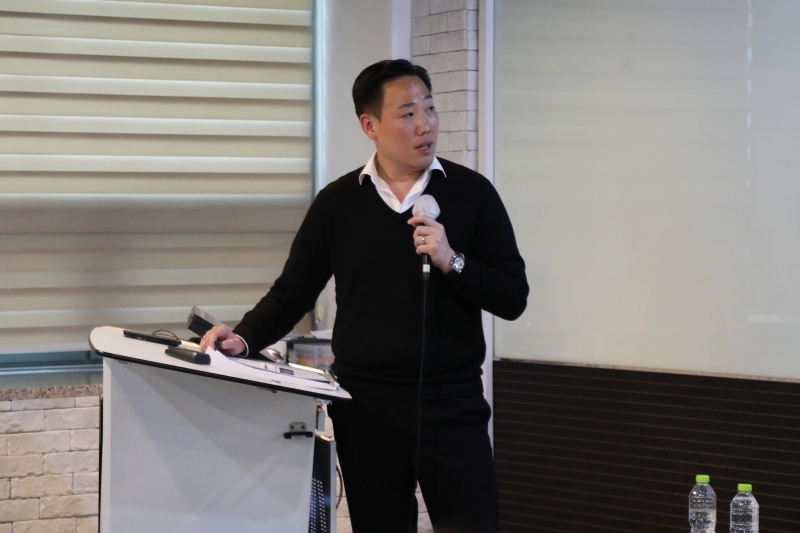
“Coding Now Done by ‘Vibe’”... Special Lecture on AX-Based Startup Insights   On March 17, the Entrepreneurship Academy Lecture On-Demand was held, hosted by Korea University Startup Institute. The session featured Malacca, an AX strategist and AX builder, who delivered a hands-on lecture titled “Vibe Coding Practice: From Planning to MVP Deployment (Gemini & Firebase),” combining AI-based development methods with real-world startup experience.    The lecture drew strong interest from students and was held across two classrooms in the Hyundai Motor Hall. Approximately 170 participants attended, reaching maximum capacity. Although each classroom accommodates around 100 people, attendance exceeded seating capacity, with even stair areas being utilized. To accommodate all participants, a live Zoom broadcast was conducted simultaneously, allowing students to join from both classrooms.      Participants were highly engaged in the hands-on session, following along with coding exercises during the lecture. Students had the opportunity to build simple programs in real time, gaining practical experience with AI-based development processes.    During the lecture, AI-based processes were introduced, emphasizing that AI is not merely a tool but a key driver of AX (AI Transformation), transforming corporate workflows and organizational culture. While highlighting the high productivity of AI “vibe coding,” Malacca also noted the need for safeguards such as “context engineering” and “harness” to address the challenges of maintaining complex systems. He further emphasized that the essence of entrepreneurship lies not in technology-driven thinking, but in validating hypotheses through customer interviews. He advised that “starting quickly, failing, and learning fosters a virtuous cycle of growth driven by execution.”      During the session, Malacca utilized “Jjap Slack,” a tool he personally developed using vibe coding, to facilitate real-time interaction through live comments, enabling participants to ask questions and receive feedback instantly. The session was particularly meaningful in that it was conducted using the same harness template provided to students, allowing them to work with programs at a level applicable to real-world practice.    This “Entrepreneurship Academy Lecture On-Demand 1” highlighted both the evolving role of developers in the AX era and the practical capabilities required for entrepreneurship, offering students integrated insights that bridge technology and business perspectives. The Korea University Startup Institute plans to continue expanding hands-on, practice-oriented startup education programs. 

2026.04.14 Views 112

“The Business School that Changed Me...Seeing My Students Succeed Was the Most Rewarding Part”

On February 28th, a retirement ceremony for Professors Soo Young Kwon, Kyung Suh Park, and Jaemin Han was held at the Ahn Young-Il Hall on the 6th floor of the LG-POSCO Building. Professor Soo Young Kwon cultivated younger scholars at the KUBS for 31 years, Professor Kyung Suh Park for 24 years, and Professor Jaemin Han for 33 years. In light of their retirement, the KUBS Newspaper interviewed them to hear their thoughts.    “The Business School that Changed Me...Seeing My Students Succeed Was the Most Rewarding Part”  [Interview with a Retiring KUBS Professor] Professor Kyung Suh Park      Firstly, Professor Kyung Suh Park has achieved outstanding academic accomplishments in the field of finance through numerous papers and books, holding significant positions within the university such as Director of the Corporate Governance Research Institute, Director of the Business Management Research Institute, Head Professor of the Finance MBA, and leader of the Management Studies Asia Hub project team. Outside the university, he played a crucial role in the advancement of the business administration field by serving as President of the Korean Finance Association, Vice President of the Korean Securities Association, auditor of the Korean Financial Association, and more. Furthermore, he promoted the prestige of the KUBS both domestically and internationally through roles like Director of the Korea ESG Standards Authority, Chairman of the Korea Exchange's Listing Disclosure Committee and Index Committee, Chairman of the Public Fund Management Committee, and Research Chairman at the Korea Institute of Finance.    Q: You graduated from the Department of Business Administration at Korea University. How were you as a student?    A: Until high school, I was a student who only focused on studying, perhaps with a shy personality. However, upon entering KUBS, I engaged in a student society called KCC. I had the opportunity to drink with my seniors and juniors while participating in club activities and academic studies. I was from the class of '77, and back then, we often drank makgeolli without any side dishes because we often didn’t have enough money. Through these experiences, I became more active and extroverted. The unique culture at Korea University, especially the strong senior-junior relationships, changed who I am.    Q: Was there a moment during your school days that led you to pursue a career as a scholar?    A: Like most, I focused on having fun during the early days of my school years, so my grades were not great for a while. I had studied hard through high school, but since it was forced study, I ended up not studying much upon reaching university. After barely graduating and serving in the military, I joined a company but then had the opportunity to pursue an MBA in the United States. It was then that I became self-motivated in studying and started to find it interesting. For the first time, I found studying to be enjoyable. That was when I decided to pursue a Ph.D.    Q: Having spent two-thirds of your life at Korea University, how do you feel about retiring?    A: First and foremost, I am grateful to Korea University for making me who I am today. It was a precious opportunity and a great pleasure to teach my juniors in the place where I studied. Korea University has especially strong senior-junior relationships, which was a source of great satisfaction and pride for me. The most rewarding thing was seeing my students succeed in society after graduation. Even now, I feel happiest when I join them for a drink when they invite me.    Q: You have been the director of the Corporate Governance Research Institute for a long time. Are there any memorable episodes?    A: While there is no specific episode, the purpose of the institute led to research and policy seminars related to the governance issues of domestic companies. In this process, I often made candid remarks that business owners or major shareholders (so-called owner-managers) might not have wanted to hear, leading to somewhat uncomfortable relationships with them. It is encouraging that various governance improvement policies, such as Value-up Korea, are being considered due to the consensus among investors and policymakers that the undervaluation of domestic companies' stocks is mainly due to problems with domestic corporate governance practices.    Q: As a prominent scholar in corporate governance, what values do you think companies should pursue in the governance (G) area of ESG management?    A: I believe most scholars and investors agree that the goal of a company should be to maximize corporate value. However, this concept is centered around shareholders, so I also agree with the argument that the interests of various stakeholders, such as employees, the local community, and the global environment, should be considered simultaneously. Especially since Korea has achieved a certain level of economic growth and society's expectations and demands regarding various issues arising from corporate activities have significantly increased, companies failing to meet these expectations can cause various problems.    However, outcomes like corporate social responsibility and environmental protection are difficult to measure in economic value, leading to agency problems where companies and their managers might not choose the appropriate level at which to address these issues. This problem is particularly severe in companies with low ownership concentration, as confirmed by many studies. The recent step back from emphasizing ESG management by American companies and investment firms like BlackRock reflects this context. It seems that companies need the wisdom to appropriately reflect the demands of the societies they belong to.    Q: During your time at KUBS, you have mentored many students. Do you have any memorable episodes with your students?    A: I remember when two of my Ph.D. students - we were discussing their ongoing paper in the lab one day as usual, when suddenly they announced that they were getting married and asked me to officiate their wedding. I still keep in touch with them and see them doing well, which makes me think how good it was to become a professor. Additionally, it's very heartwarming when I work with companies, and the person in charge greets me saying that they were a student who attended my undergraduate classes. Ultimately, seeing my students do well is the most memorable aspect.    Q: If you were to express KUBS in one word or one sentence differently, how would you like to express it?    A: As I mentioned before, I would like to say it is a “place that changes people.” The four years of college life at Korea University transformed me from a very introverted person to someone more proactive and adventurous. So, I’d say, “The KUBS is a place that changes people.”    Q: Professor, having a close relationship with the KUBS, what would you like to say to all members of the business school?    A: Based on my personal experience, I am very proud of the university culture at Korea University. It allows for passion and provides various enjoyable experiences through strong bonds with seniors and juniors as a social community. However, I feel that the unique advantages of Korea University are gradually disappearing. It would be good if the business school could support activities within the school, such as club activities, that can maintain such aspects. I hope the identity of ‘fellowship’ and the tight-knit alumni network continue in the business school, which will celebrate its 120th anniversary next year. Thank you. 

2024.04.01 Views 2914

[Interview with a Retiring KUBS Professor] - Professor Jaemin Han

On February 28th, a retirement ceremony for Professors Soo Young Kwon, Kyung Suh Park, and Jaemin Han was held at the Ahn Young-Il Hall on the 6th floor of the LG-POSCO Building. Professor Soo Young Kwon cultivated younger scholars at the KUBS for 31 years, Professor Kyung Suh Park for 24 years, and Professor Jaemin Han for 33 years. In light of their retirement, the KUBS Newspaper interviewed them to hear their thoughts.    [Interview with a Retiring KUBS Professor] - Professor Jaemin Han      Professor Jaemin Han graduated from the Department of Commerce at Korea University in 1981 and earned a Ph.D. in Business Administration from Iowa State University in 1988. After obtaining his doctorate, he worked as a senior researcher at the Industrial Science and Technology Research Institute under POSCO for about two years before joining the faculty of KUBS as a professor in March 1991.    During his tenure at Korea University, he mentored 17 Ph.D. and 18 Master’s students. Notably, he put significant effort into nurturing 'Management Information Systems' as an independent field of study within business education. He developed not only related degree programs but also various non-degree programs to cultivate a wide range of talents in information technology.    In terms of university administration, he contributed to the development of the KUBS through positions such as the Vice Dean and the Director of the Institute for Business Research and Education. He also performed necessary administrative tasks for the advancement of Korea University, including serving as the Chief of the Planning and Budgeting Office and utilizing various committees. Particularly, he was the first to plan and develop research evaluation systems like SK and IBRE, laying the groundwork for the KUBS to advance further as a research college.    His contributions extend to research and academic society activities as well. He published a total of about 50 papers in domestic and international journals and was active in numerous related academic societies, including serving as a standing director of the Korean Academy of Management and a vice president of the Korea Society of Management Information Systems. Additionally, in social activities, he served as an IT consultant for KB Kookmin Bank, Hana Bank, and the Korea Exchange, and also held the position of external director for Busan Bank, CJ O Shopping, among others. In government agencies, he contributed to national policy-making as a member of the National Science and Technology Council Policy Advisory Committee and a professorial adviser to the Ministry of Foreign Affairs and Trade's Innovation Committee. 

2024.04.01 Views 2721

“Fast-Tracking to Catch Up with Corporate Giants”: Special Lecture by Kim Soo-yong, CEO of Life Oasi

“Fast-Tracking to Catch Up with Corporate Giants”: Special Lecture by Kim Soo-yong, CEO of Life Oasis    On March 19, the Entrepreneurship Academy special lecture, hosted by the Startup Research Institute (Director=Jungbien Moon) at KUBS (Dean= Sang Yong Kim), took place on the KUBS Main building The Stage, located on the 2nd floor. The lecture was delivered by Soo-yong Kim, CEO of Life Oasis.      As part of the Entrepreneurship Academy lecture series, Kim, the Life Oasis CEO, took the stage. Kim focused on the topic of “Early-stage Strategies for Surviving in the Red Ocean” during his lecture. Life Oasis operates the language exchange app “Heart” and the dating app “Will You.” Kim, a growth hacker, previously worked with the English conversation app “Tutoring” and served as a growth consultant for numerous domestic unicorn companies.      Kim explained the concept of being a “first mover,” pioneering paths that no one has taken before, and the “fast follower,” mimicking and catching up with market leaders. He discussed strategies for competing against established services offered by large companies. Kim emphasized the importance of finding “uncomfortable” competitors in lucrative markets and suggested creating a business model canvas based on competitors’ reviews. Additionally, he highlighted the power of storytelling, as well as the significance of value sharing and collaboration among team members. The lecture concluded with a Q&A session.      Young-woo Choi (Economics ’19), a student who attended the lecture, stated, “In this era of rapidly changing trends and fierce competition, I was curious about the survival strategies adopted by startup companies.” He added, “Especially, the lecture was more convincing as the CEO shared his real-life experiences.” He further expressed, “It was great to gain insights as both a startup founder and an investor.”   

2024.04.01 Views 2394

Nice to Meet You! Global MIM Incoming Orientation

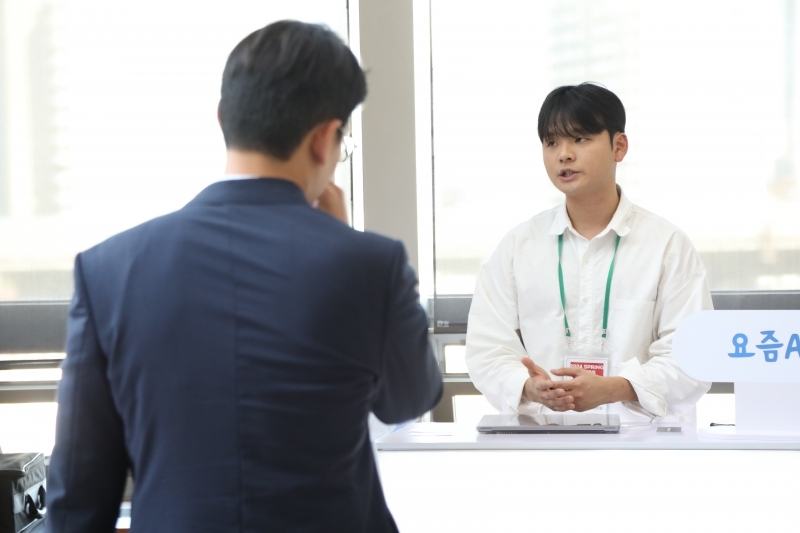
Nice to Meet You! Global MIM Incoming Orientation    The "Global MIM Incoming Student Orientation" (hereinafter the orientation), jointly operated by Korea University Business School (Dean=Sangyong Kim) and CEMS, took place on February 29th at the LG POSCO Building's Cuckoo Hall on the 6th floor and Hyundai Motorstudio Goyang.      The CEMS Global Alliance in Management Education, a consortium of the world's elite business schools with a 35-year tradition, includes only one business school from each country, which is recognized as the best, and involves 33 universities worldwide. Since acquiring full membership status in 2015, Korea University's Business School has been the sole CEMS member institution in South Korea.    Students attending the orientation were welcomed with opening remarks by Global MIM Program Academic Director Tony C. Garrett, a welcome speech by Dean Sangyong Kim, a campus tour with KUBE, the Business School's student ambassador, and an introduction to the program and administrative details. Dean Kim expressed his welcome to students participating in the Global MIM program, highlighting, “Since introducing the country's first MBA program in 1963, Korea University Business School has been leading management education in Korea.” He also noted, "The Global MIM program allows students to grasp global economic and management trends at a glance and tailor the curriculum to their preferences," encouraging students to leverage Korea University's strong alumni network and enjoy various aspects of Korean culture, such as K-pop and K-dramas.      The day concluded with an English tour at Hyundai Motorstudio Goyang, one of the global companies participating in CEMS. 

2024.03.28 Views 3066

  • 첫페이지로
  • 51
  • 52
  • 53
  • 54
  • 55
  • 마지막페이지로