TOP

KUBS News

Total 1417

[Entrepreneurship Academy Lecture On-Demand] “Coding Now Done by ‘Vibe’”

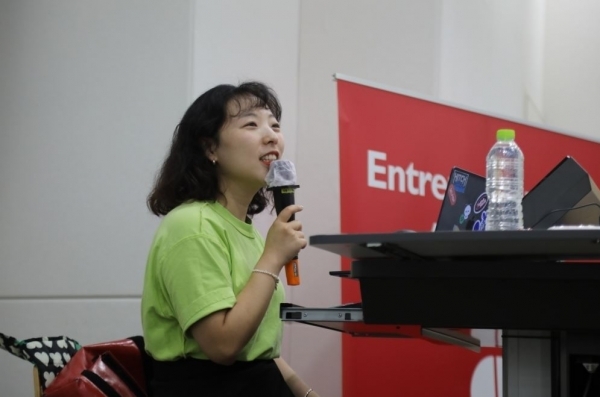
“Coding Now Done by ‘Vibe’”... Special Lecture on AX-Based Startup Insights   On March 17, the Entrepreneurship Academy Lecture On-Demand was held, hosted by Korea University Startup Institute. The session featured Malacca, an AX strategist and AX builder, who delivered a hands-on lecture titled “Vibe Coding Practice: From Planning to MVP Deployment (Gemini & Firebase),” combining AI-based development methods with real-world startup experience.    The lecture drew strong interest from students and was held across two classrooms in the Hyundai Motor Hall. Approximately 170 participants attended, reaching maximum capacity. Although each classroom accommodates around 100 people, attendance exceeded seating capacity, with even stair areas being utilized. To accommodate all participants, a live Zoom broadcast was conducted simultaneously, allowing students to join from both classrooms.      Participants were highly engaged in the hands-on session, following along with coding exercises during the lecture. Students had the opportunity to build simple programs in real time, gaining practical experience with AI-based development processes.    During the lecture, AI-based processes were introduced, emphasizing that AI is not merely a tool but a key driver of AX (AI Transformation), transforming corporate workflows and organizational culture. While highlighting the high productivity of AI “vibe coding,” Malacca also noted the need for safeguards such as “context engineering” and “harness” to address the challenges of maintaining complex systems. He further emphasized that the essence of entrepreneurship lies not in technology-driven thinking, but in validating hypotheses through customer interviews. He advised that “starting quickly, failing, and learning fosters a virtuous cycle of growth driven by execution.”      During the session, Malacca utilized “Jjap Slack,” a tool he personally developed using vibe coding, to facilitate real-time interaction through live comments, enabling participants to ask questions and receive feedback instantly. The session was particularly meaningful in that it was conducted using the same harness template provided to students, allowing them to work with programs at a level applicable to real-world practice.    This “Entrepreneurship Academy Lecture On-Demand 1” highlighted both the evolving role of developers in the AX era and the practical capabilities required for entrepreneurship, offering students integrated insights that bridge technology and business perspectives. The Korea University Startup Institute plans to continue expanding hands-on, practice-oriented startup education programs. 

2026.04.14 Views 46

[Executive MBA International Residency Program in Spain and the USA] – Learning Business and Finance

[Executive MBA International Residency Program in Spain and the USA] – Learning Business and Finance at Top-Tier Institutions   The KUBS Graduate School Executive MBA (E-MBA) program (Dean=Sang Yong Kim) conducted its International Residency Program (IRP) for the first semester of the 2024 academic year. The IRP is a core course in the E-MBA curriculum, where esteemed faculty from renowned international universities teach regular classes, and students study at prestigious universities in the United States and Europe while visiting local businesses.      First, the IPR, which took place from June 22 to June 30, was held at ESADE, a business school affiliated with Ramon Llull University in Barecelona, Spain. Professor Daeki Kim and the class of 21 participated in the program. ESADE is the first business school in Spain to receive the “triple crown” accreditation, which includes AACSB (Association to Advance Collegiate Schools of Business), EQUIS (European Quality Improvement System), and AMBA (Association of MBAs). It is also a member of CEMS (Global Alliance in Management Education), along with the business school.     During their time at ESADE, the students attended lectures on various topics, including: ▶Introduction to doing business in Spain & the EU ▶Market & Non-Market Environment & the EU ▶Disruptive technologies & new business models / AI for Business ▶Creating growth Ventures ▶Social innovation, Social Issues ▶Leadership and Social Responsability / Sustainable business models ▶Simulation: Managing successful collaboration ▶Closing & certificates.     Additionally, they participated in a winery tour at Torres, one of the largest wineries in Spain, which has been family-run for five generations since the 1870s. The students also had the opportunity to experience Spanish culture by visiting landmarks such as Park Güell and the Sagrada Família.     Following this, from June 29 to July 7, the IRP continued with a visit to Yale University in New Haven, Connecticut, USA. Professor Shijin Yoo and the class of 22 participated in this program. Yale University, an Ivy League school, is one of the most prestigious universities in the United States, with a history dating back to its founding before the American Revolution. As of 2020, Yale has produced 60 Nobel laureates, five Fields Medalists, three Turing Award winners, and five U.S. presidents.      At Yale, the students attended lectures on topics such as: ▶Behavioral Economics: Beliefs, Goals, and Choices / Two System Theory of Choice ▶Systematic Approaches to Creativity / Technology and Human Experience  ▶Thinking 101 ▶Finance and the Global Economy ▶Managing the Customer Decision Journey in the Digital Era / Economics of AI and Business Strategy ▶World Economic Outlook ▶Social Network Interventions ▶Foundations of Corporate Governance ▶Influence & Persuasion.  The students were also divided into two groups to explore American culture, visiting locations such as New York City and Niagara Falls.     

2024.08.12 Views 3267

Top Programs for Executives Aiming Higher, `AMP` and `MSP`

Top Programs for Executives Aiming Higher, 'AMP' and 'MSP'    The Korea University Business School has established the Executive Education Center (EEC) to effectively operate non-degree programs and customized corporate programs. The EEC offers programs designed to develop essential competencies for top executives and corporate professionals, based on the longstanding tradition and innovative mindset of the Business School’s faculty, in response to the rapidly changing global business environment.     The EEC’s programs are broadly divided into customized corporate education programs and non-degree courses, including the Advanced Management Program (AMP), the Management Studies Program (MSP), and the Crimson Global Leadership Program (Crimson GLP). Among these, AMP and MSP are currently open for enrollment.       Currently, the AMP is recruiting for its 98th session (Fall 2024). The AMP recruits once a year, in the spring and fall, and applications and required documents must be submitted by August 23rd. However, as enrollment may close early once the capacity is filled, it is advisable to apply as soon as possible if interested. Eligibility criteria include ▶corporate CEOs and executives, ▶senior government officials (chief commissioner or higher in the administration or business departments), ▶military generals, and ▶other individuals with equivalent qualifications. The AMP involves attending classes for one semester.     What makes the AMP of KUBS special is that it has always been the first and the best. Established in 1975 as the first of its kind in Korea, the AMP has produced over 5,000 alumni CEOs to date. Completing the AMP means becoming an alumnus of KUBS and gaining access to a network of over 5,000 CEO alumni. This is supported by the unique curriculum of the AMP. The AMP curriculum is based on three major themes: 'The Changing Business Environment,' 'Core Management Topics,' and 'People-Centered Change Implementation,' with a focus on people-centered lectures.      In addition, some lectures are designed as joint events with previous and subsequent cohorts. For instance, the 95th and 96th cohorts had a joint event lecture on understanding Korean traditional music. During the program, students naturally form networks by attending classes together with senior cohorts and, after graduation, with junior cohorts.   Furthermore, AMP boasts state-of-the-art lecture halls and lounges exclusively for AMP participants in the Hyundai Motor Hall, providing a top-notch educational environment. The distinguished faculty, with extensive field experience and advanced management theories, equip participants with rational and strategic management mindsets and high-level management techniques, helping them to become top CEOs.      While the AMP is a program for top executives, the MSP is a program open to future corporate leaders. Established in 1963 alongside the first management school in Korea, the MSP has produced over 10,000 alumni to date. Through a high-level curriculum that includes the latest management theories, the MSP provides executives with the knowledge and insights they need.   The MSP 105th session, currently recruiting until September 5th, follows the same principle as AMP in closing enrollment early once capacity is reached, so early application is recommended. The target audience includes corporate managers and executives, individual business owners, professionals, and those with equivalent qualifications who wish to engage with the latest management theories and case studies, with classes held over one semester.      What makes Korea University’s MSP special is its focus on innovative leadership and management case studies. Notably, the lectures are led by the distinguished faculty of KUBS, the largest in Korea with over 80 full-time professors. Through lectures from scholars in various fields, such as marketing, accounting, LSOM, and finance, participants naturally acquire rational and strategic management techniques.      MSP also operates in dedicated classrooms and lounges in the Hyundai Motor Hall, equipped with state-of-the-art facilities. The classrooms are designed in a horseshoe shape to facilitate active communication between lecturers and students, and a dedicated program manager helps ensure smooth completion of the course. Upon completing the MSP, participants become alumni of Korea University. During the program, participants form strong bonds by attending classes, networking, and participating in overseas study tours with about 20 peers, and the network of over 10,000 alumni becomes the most "powerful weapon" in life.      For more detailed information about AMP and MSP offered by the KUBS EEC, please visit the KUBS website or contact AMP (02-3290-1695) or MSP (02-3290-2709). 

2024.08.12 Views 3099

[Finance MBA Overseas Field Trip – Vietnam] Ho Chi Minh City, the Financial and Economic Hub of Sout

[Finance MBA Overseas Field Trip – Vietnam] Ho Chi Minh City, the Financial and Economic Hub of Southeast Asia    KUBS Graduate School (Dean=Sang Yong Kim) runs an “Overseas Field Trip” program to enhance the international business acumen of its Part-time MBA students. This program, which was put on hold due to COVID-10, resumed in 2022, allowing students to explore leading global regions and support their growth as global business leaders.      The Finance MBA (F-MBA) program visited Tokyo, Japan, in 2023 and this year traveled to Hanoi, Vietnam. Hanoi is the financial center of Vietnam, a key player in Southeast Asia and a strategic gateway for many Korean companies expanding into the region. The overseas field trip, which took place from June 29 to July 3, spanned five days and four nights, with 35 F-MBA students and Professor Bumjean Sohn participating.      During the trip, the F-MBA students visited several significant sites, including the War Remnants Museum, Shinhan Bank’s Vietnam headquarters, the Ho Chi Minh Stock Exchange, and the COBI Group. COBI Group, a major Vietnamese distribution company, has been making aggressive investments in Vietnam, including the opening of “COBI HOME,” a massive shopping mall in Ho Chi Minh City that distributes interior materials and furniture. Additionally, the Ho Chi Minh Stock Exchange has been closely collaborating with the Korean financial sector, having activated the Korea Exchange (KRX) trading system in May, 12 years after signing an information technology service agreement with KRX.   

2024.08.12 Views 2436

Precious Memories for Future Little Tigers…The 17th Youth Mentoring Day

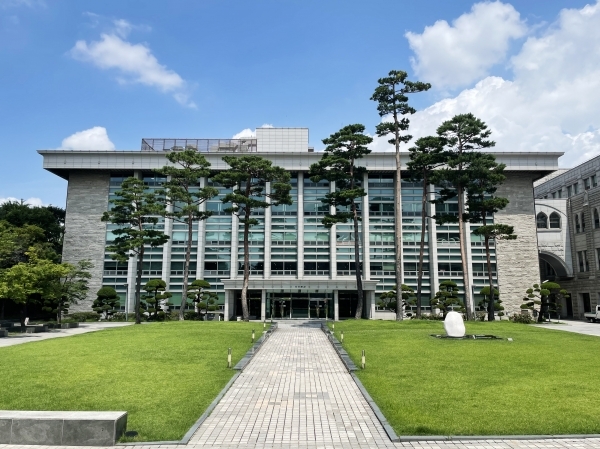
Precious Memories for Future Little Tigers…The 17th Youth Mentoring Day    On July 27th, Korea University Business School (Dean=Sangyong Kim) held the 17th Youth Mentoring Day at the LG-POSCO Business Hall and the Hyundai Motor Hall. This mentoring day, targeted at high school students nationwide, was organized independently by the student ambassadors of the Business School, known as KUBE, with the participation of KUBS students as mentors. The event included △Introduction to Korea University Business School, △Overview of the 7 majors and 3 tracks within the Business program, △Special Lecture on Business studies by Professor Jungbin Moon, △Campus Tour, △Hands-on Business Practice Sessions, and △Talk with senior students.      The introduction to the Korea University Business School began with a tour of its main buildings (the KUBS Main Building, LG-POSCO Business Hall, and Hyundai Motor Hall). KUBE emphasized that it is significant for a single college to use three dedicated buildings, noting that the LG-POSCO Business Hall and Hyundai Motor Hall were constructed entirely through alumni donations, adding to their meaningful legacy.  Additionally, the participants were introduced to the "Dream Scholarship," a scholarship program unique to KUBS. This scholarship, which provides living expense support, is one of the proudest features of KUBS. The students also learned about opportunities for exchange programs facilitated by the international team within KUBS. The event also highlighted various aspects ofstudent life at Korea University, including the annual Ko-Yon Games, which all Korea University students can enjoy.       Following this, an explanation of the 7 majors and 3 tracks within the Business School was provided. For undergraduate students, the Business School offers seven major options: Business Management, Global Business, Marketing, Finance, Accounting, Information Systems (IS), and Logistics Service & Operations Management (LSOM). After the introduction of the Business School major, and tracks, a quiz was held for the participants, with Korea University souvenir awarded to those who answered correctly.      Next, Professor Jungbin Moon delivered a special lecture on business studies. The topic was "East Asia and Global Business in the Context of 21st Century Global Order." Professor Moon explained the geopolitical dynamics in East Asia and, through various case studies, discussed the core values that South Korea should pursue. In summary, Professor Moon’s lecture emphasized the following:  South Korea is a leading advanced nation, and the country's strength derives from its globally influential companies. Moreover, South Korea's national power is currently at a historic peak. While the United States is South Korea's most important ally and trading partner, China remains one of the country's largest trading partners. The era of U.S. dominance is over, and the U.S.-China competition will be the most significant global conflict structure for at least the next 30 years. Although China is advancing rapidly in this power struggle, the outcome of this rivalry is uncertain due to China's inherent limitations.  In essence, South Korea's semiconductor industry, which is central to the reorganization of global supply chains amid the U.S.-China competition, should focus on maintaining resilience. This requires South Korea to approach the conflict with a flexible, pragmatic stance, aligning its core values to diversify global supply chains and strengthen the resilience of its businesses and economy.        In the afternoon, activities included a campus tour, business practice sessions, and mentoring. The campus tour allowed participants to explore the Business School buildings— the Business School Main Building, LG-POSCO Business Hall, and Hyundai Motor  Hall—as well as some parts of the Korea University campus, including the Main Hall and the Central Plaza. The business practice session involved students directly applying the strategies discussed in Professor Moon's lecture to develop their own business strategies.        The event concluded with a mentoring session and a closing ceremony. During the mentoring session, participants asked questions about tips for admission to Korea University Business School, including advice on managing academic records. The mentors offered practical advice on internal assessments and the College Scholastic Ability Test (CSAT) and provided encouragement to the students from their own experiences. KUBE expressed their hopes that the participants would one day join Korea University Business School and become "little tigers."      The 18th Youth Mentoring Day at Korea University Business School is scheduled for the upcoming winter break. Interested participants can apply through the KUBE website (biz.korea.ac.kr/kube). 

2024.08.12 Views 2379

  • 첫페이지로
  • 41
  • 42
  • 43
  • 44
  • 45
  • 마지막페이지로