TOP

KUBS News

Total 1428

Interview with Professor Woochan Kim, Recipient of the Hongjo Order of Service Merit - Leading Corp

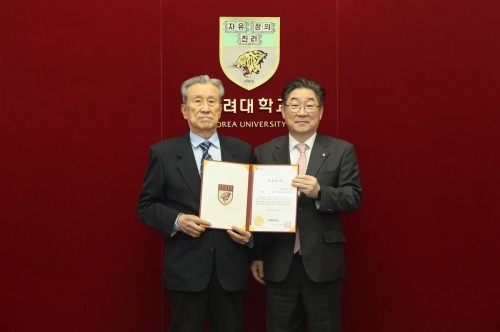
[Interview with Professor Woochan Kim, Recipient of the Hongjo Order of Service Merit] Leading Corporate Governance Reform with Unwavering Conviction     On April 1, Professor Woochan Kim received the Hongjo Order of Service Merit at the 25th Fair Trade Day ceremony, hosted by the Korea Fair Trade Commission, in recognition of his contributions to establishing a fair and competitive market order. Having long been at the forefront of corporate governance reform, Professor Kim has consistently raised critical questions about Korea’s corporate governance system. More recently, he has expanded his work into the policymaking arena by serving on a number of national advisory bodies and committees. In this interview, Professor Kim reflects on the path he has taken, shares his views on corporate governance reform and economic growth, and offers advice to students. Below is an edited transcript of the interview.   Q1. Congratulations on receiving the Hongjo Order of Service Merit. Could you share your thoughts on receiving the honor? First, I would like to express my gratitude to everyone who has supported me. The achievements for which I received this honor were the result of a collective effort by my colleagues and me. I could never have received this honor without the support of the full-time research fellows at the Solidarity for Economic Reform and the Economic Reform Research Institute. I would like to extend my sincere thanks to all of them.   Q2. You were recognized for your efforts to curb self-dealing and improve related regulations through your work as Director of the Economic Reform Research Institute and in other roles. What does this honor mean to you personally? The path of corporate governance and chaebol reform that I have pursued has never been an easy one. Because the issues we address are deeply connected to structural interests within our society, bringing about change requires considerable time and patience. At times, I found myself wondering, “Why am I doing this?” or “Could I be doing something wrong?” Receiving this honor validated the path I have taken and reassured me that I have been moving in the right direction.     Q3. Was there a defining moment that first sparked your interest in corporate governance and led you to make it your lifelong work? I gradually found myself drawn to the field. I first learned about corporate governance while studying abroad. During my doctoral studies, I attended a guest lecture by Professor Andrei Shleifer of Harvard University’s Department of Economics. Hearing him explain corporate ownership structures was what first drew my attention to the field.Then the Asian financial crisis occurred. At the root of the crisis was the chaebol problem. Korean banks borrowed funds in foreign currencies, converted them into Korean won, and lent the money to chaebol groups. The chaebol groups failed to use those funds effectively and were unable to repay their debts, which contributed to the financial crisis. That was when I realized that the chaebol issue was a problem of national importance. After becoming a professor, I joined the People’s Solidarity for Participatory Democracy and participated in the minority shareholder movement with Professor Hasung Jang. I found it rewarding to take direct action, such as attending shareholders’ meetings and filing shareholder derivative suits. I later joined the Solidarity for Economic Reform when it was established and have remained involved ever since.   Q4. On March 31, you stepped down as the founding Director of the Economic Reform Research Institute, which you had led since its establishment. What led you to step down after such a long tenure? We would also like to know the most valuable takeaway from your time as Director. Our work began with the Economic Democratization Committee of the People’s Solidarity for Participatory Democracy. In 2006, several of us who had worked together left the organization and founded the Solidarity for Economic Reform. Soon afterward, we concluded that its activities needed to be supported by empirical policy research, and we launched the Economic Reform Research Institute in 2009. I served as its founding Director for 17 years. I had been considering stepping down for several years, and as my external responsibilities suddenly increased this year, I decided that it was time to leave the position. One of the most important lessons I learned while leading the institute was that capable members are more important than anything else if an organization is to function effectively. The members of our organization are exceptionally capable experts who work largely behind the scenes. No matter what I ask them—even about subjects I know little about—they can provide an answer within minutes. I also learned how important it is for capable individuals to share common values. Everyone at the institute shares the same mission and sense of purpose: improving corporate governance. Because of this shared commitment, we have been able to resolve differences of opinion without much difficulty. I believe I was able to achieve many meaningful results over the past 17 years because I had the opportunity to work with such talented and committed people.   Q5. In March, you were appointed as a member of the Growth Economy Subcouncil of the National Economic Advisory Council. How do you believe corporate governance is connected to the country’s medium- and long-term economic growth strategy? The central challenge in achieving sustainable economic growth is determining how efficiently we can use the capital and labor available to us. Corporate governance reform is therefore essential to improving the efficiency of capital.Shareholders provide capital to a company with the expectation that its managers will use it efficiently. In many cases, however, managers invest in non-core businesses or hold real estate unrelated to the company’s operations. In many cases, returning such funds to shareholders through dividends would represent a more efficient allocation of capital. If shareholders then invest those dividends in more productive companies, the efficiency of capital allocation across the economy as a whole will improve.     Q6. You were also appointed vice chair of the Financial Consumer Protection Advisory Committee at the Financial Supervisory Service. In your role as a champion for financial consumers, is there a particularly urgent issue that you would like to address? It would be difficult to single out just one urgent issue. Financial consumer protection can be broadly divided into four areas. First, there is the problem of mis-selling in the design and sale of financial products. Second, there is financial crime. As technology continues to advance, the number of victims of phishing scams has been increasing. Third, the threat of cyberattacks is also growing. Finally, there is the need to promote inclusive finance and shared growth initiatives. Financial support and protection for vulnerable groups are equally important. All of these issues are important, so it is difficult to say that any one of them is more urgent than the others. The Financial Consumer Protection Advisory Committee is the highest-level advisory committee within the Financial Supervisory Service, demonstrating how seriously the agency regards financial consumer protection.   Q7. You also lead research at Korea University as Director of the Asian Institute of Corporate Governance. What unique contribution can a university research institute make to society that national advisory bodies or civic organizations cannot? The Asian Institute of Corporate Governance is Korea’s first and virtually only university-affiliated research institute dedicated to corporate governance. Taking advantage of its position within a university, the institute contributes through academic research rather than policy research. In addition to traditional corporate governance issues, we have broadened the scope of our work by supporting research projects related to environmental, social, and governance issues. We also feature internationally renowned professors at our annual online symposium.   Q8. Last November, the second National Corporate Governance Competition for Students was held by the Korea Corporate Governance Forum and the Asian Institute of Corporate Governance. Was there a particular reason or concern that led you to organize the competition? Were there any student proposals from the competition that particularly stood out to you? The first competition was open only to students at Seoul National University School of Law. However, the number of participants fell short of our expectations. For the second competition, we therefore opened it to undergraduate students in order to encourage broader participation. The fundamental purpose of the competition is to encourage university students to take a greater interest in corporate governance issues and understand their importance. Many students participated in the second competition, so I believe we accomplished that objective. All of the participants presented outstanding ideas, but the Gold Prize-winning team was the most memorable. What distinguished the team was that it proposed an idea that controlling shareholders could also accept. Most of the other teams made proposals that were unlikely to be accepted in practice, but the Gold Prize-winning team presented an approach that could also provide economic benefits to controlling shareholders. I found that particularly impressive.   Q9. What issues do you hope Korea University Business School students who aspire to enter the field of corporate governance research will consider during their university years? After graduation, many business school students enter fields that provide professional services to companies. In many cases, however, their work ultimately serves the interests of controlling shareholders or individual executives. I hope students recognize that there is also a third path. They can choose to stand with shareholders and pursue work that contributes to corporate governance reform. This field remains very small at present, but it may grow considerably in the future. I hope students will also consider careers in this direction.   Q10. While concluding some of your previous responsibilities, you have also taken on many new positions. Do you see this period as a turning point in your life? Finally, what is your next goal or challenge? I do not think of it as a particularly significant turning point. I have continued to do the same kind of work, and I intend to keep doing it in the future. As for my next challenge, I am considering a new form of publication that is neither a conventional printed book nor a standard e-book. I am thinking about creating a book using Notion, which would allow me to incorporate multimedia content, include a variety of links, and continually revise and update the material. Corporate governance reform involves a complex web of interests and can therefore become a lonely struggle. Nevertheless, Professor Kim has continued this work steadily, regarding it both as a mission and as something he genuinely enjoys.The path he has followed with unwavering conviction is far from over. He continues to move forward, taking on the challenges that remain unresolved.   KUBS Student Press | Reporting by Jinyoung Kim

2026.07.24 Views 64

Connected Through `Business` — 2024 Fall Semester Mentoring Day 

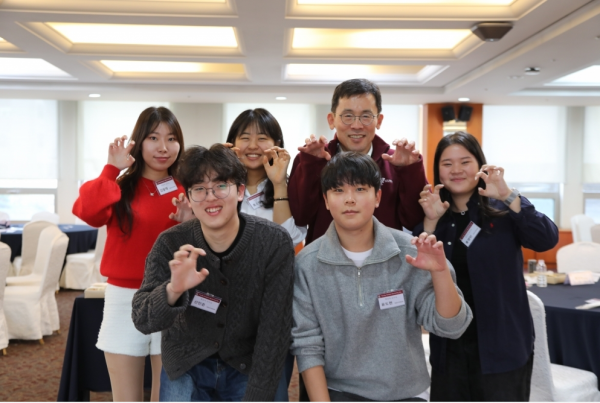
Connected Through 'Business' — 2024 Fall Semester Mentoring Day    Korea University Business School (KUBS, Dean: Eonsoo Kim) successfully hosted its 2024 Fall Semester Faculty Mentoring Day on November 20-21. The event took place at the Cuckoo Seminar Room and Young Il Ahn Hall in the LG-POSCO Hall, where faculty advisors and students came together to share lunch and engage in conversations. Since 2007, KUBS has organized Mentoring Day annually to promote interaction between faculty and students.      During the event, professors and students discussed topics such as academics, campus life, and career planning. Professor Kihoon Kim shared, “I couldn’t join last year as I was on sabbatical, but it’s wonderful to meet so many new students this time. While it’s hard to dive into deep conversations during the first meeting, it’s great to establish a relationship where students feel comfortable asking questions in the future.”      Jaesung Kim, a Business major (Class of 2020), who spoke with Professor Kim, commented, “I entered university during the COVID-19 pandemic, took a leave of absence, and served in the military, so I didn’t have many opportunities to meet professors in person. It was great to have meaningful conversations this time.” Another student, Ji Hyang Ahn (Business, Class of 2024), remarked, “Talking with a professor reassured me, knowing there’s someone to rely on during my university life. It was also a great opportunity to meet students from various countries.”    The event concluded on a warm and congenial note, leaving participants with a sense of connection and inspiration. 

2024.11.26 Views 2753

"Producers of Knowledge" – KUBS-DBA Admissions Information Session Successfully Held

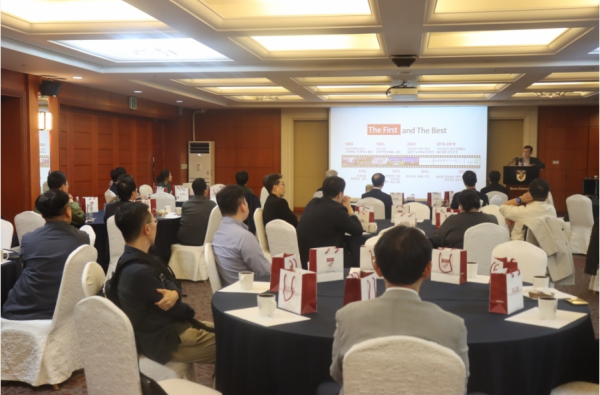
"Producers of Knowledge" – KUBS-DBA Admissions Information Session Successfully Held    On October 17, the Korea University Business School (KUBS) hosted an admissions information session for the 2025 Doctor of Business Administration (KUBS-DBA) program at the Young Il Ahn Hall of the LG-POSCO Hall. The event, led by Associate Dean for MBA Programs Gangseog Ryu, featured a detailed presentation and welcomed attendees who had pre-registered to learn more about the KUBS-DBA program.     The KUBS-DBA program is a doctoral degree designed to develop Korean-style business theories based on practical and professional experiences. It distinguishes itself from traditional academic Ph.D. and MBA programs. While MBA programs emphasize acquiring and applying management knowledge for practical use, KUBS-DBA focuses on creating new knowledge derived from real-world experience and practice. In essence, the program positions itself as a "producer of knowledge," transforming professional experience into academic and practical insights.    Although the KUBS-DBA and traditional Ph.D. programs both emphasize knowledge creation, their objectives and approaches differ. Ph.D. programs focus on establishing universal, generalized, and abstract theories, typically presented in the form of academic papers. In contrast, the KUBS-DBA program prioritizes the development of specific, practical theories that can be applied in real-world settings. Research outputs include not only academic papers but also practical papers, business case studies, and professional books.      To design the KUBS-DBA program, KUBS leveraged its extensive expertise to develop an optimal curriculum. The program fosters innovative and valuable knowledge based on practical experience, enabling learners to realize their research through dissertations, case studies, and seminar presentations.    The three-year program follows a structured, step-by-step approach to knowledge development. Year 1 focuses on building foundational capabilities for independent and creative research while exploring potential research topics. Year 2 involves studying advanced and specialized subjects tailored to individual interests, refining research topics further. Year 3 is dedicated to writing and presenting the doctoral dissertation.    Graduates of the KUBS-DBA program, who earn the Doctor of Business Administration degree, have the opportunity to pursue diverse career paths. By balancing their studies with professional work, they can apply their specialized knowledge within their organizations and in broader professional contexts. Potential career options include roles as business consultants, researchers, freelance professional lecturers, and academic positions such as full-time, industry-focused, adjunct, or visiting professors, empowering graduates to mentor and guide the next generation of professionals.      As part of the 2025 admissions process, document screening results were announced on November 22, with interviews scheduled for November 30. Final admission results will be released on December 13. 

2024.11.25 Views 3170

Alumnus Hui Sung Yoo Donates 1 Billion KRW, Continuing His Legacy of Generosity

Alumnus Hui Sung Yoo Donates 1 Billion KRW, Continuing His Legacy of Generosity      Mr. Hui Sung Yoo (Class of 1958), an alumnus with a heartfelt wish to dedicate everything to his alma mater, Korea University, and its Business School, has an inspiring history of giving that dates back to 2011. That year, he appeared at Korea University and made a remarkable donation of 1 billion KRW to fund the construction of KUBS’s new building. In 2015, he once again visited his alma mater, handing over another check for 1 billion KRW to the development fund. In 2017, he donated a 155-square-meter (approx. 50-pyeong) apartment in Seoul’s Seocho District, valued at 2.4 billion KRW at the time, which held cherished memories of raising his children.    Mr. Yoo’s philanthropy knows no bounds. He donated 1 billion KRW each in 2019 and 2020, followed by additional contributions of 1 billion KRW in early 2022 and again in May 2023, earning him the nickname “The 85-Year-Old Donation King.” Then, in November 2024, much like in 2011, he quietly reappeared to hand over another check for 1 billion KRW to KUBS’s development fund. With this, his total contributions to Korea University and its Business School have reached an astounding 9.4 billion KRW.    On November 19, a ceremony titled the “KUBS Insung Fund Donation Ceremony” was held in the university president’s office. The event, celebrating Mr. Yoo’s latest donation of 1 billion KRW, was attended by President Dong-One Kim, Vice President for Development and External Affairs Hojung Shin, Dean Eonsoo Kim, Mr. Yoo’s children, and fellow alumni from the Class of 1958.    At the ceremony, Mr. Hui Sung Yoo shared, “I have always expressed my desire to give everything I have to Korea University throughout my life, and I plan to continue adhering to this philanthropic philosophy. As we approach the university’s 120th anniversary, I feel immense pride as an alumnus witnessing its ongoing development.” He added, “I hope that the faculty of KUBS will impart knowledge to students through their research, and that these students, through their dedicated studies, will grow into leaders shaping the future, creating a virtuous cycle.”    In response, President Dong-One Kim expressed heartfelt gratitude, saying, “We deeply appreciate the unwavering love you have shown for your alma mater over the past 13 years. The Insung Fund you have generously donated will actively support the research efforts of KUBS faculty and help nurture creative talents who will lead emerging trends.”    The KUBS Insung Fund, named after the Chinese characters for “仁” (In) from the names of Mr. Yoo’s mother and grandmother, and “星” (Sung) from his own name, supports research initiatives by the school’s faculty. Mr. Yoo’s contributions have been utilized in various ways, including the Insung Scholarship Fund, Insung Research Fund, and Insung Research Award. In recognition of his generosity, Lecture Room B205 in the Hyundai Motor Hall has been named the “Hui Sung Yoo Lecture Room.” 

2024.11.21 Views 3758

“The Startup Train Keeps Running”… 2024 FALL CHOO CHOO DAY

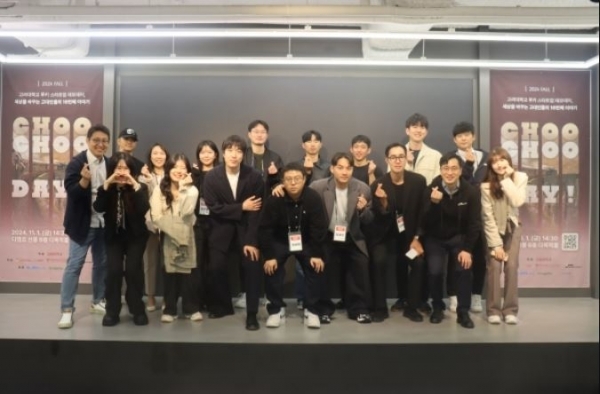
“The Startup Train Keeps Running”… 2024 FALL CHOO CHOO DAY     On November 1, the Startup Institute (Director: Jungbien Moon) of Korea University Business School (Dean: Eonsoo Kim) hosted the startup demo day, ‘2024 FALL CHOO CHOO DAY,’ at D.CAMP Seolleung. Organized by the Startup Institute and supported by the LINC 3.0 Project Group and Campus Town Promotion Team, the event was sponsored by the Banks Foundation for Young Entrepreneurs (D.CAMP), Iljin Global, and Donghwa Group. Key figures in attendance included Dean Eonsoo Kim, Vice Dean Dae Il Nam, panelists, and five teams from the Startup Station. The panelists featured ▲ Kang Ki-hyun, Partner at FASTVENTURES ▲ Jung In-oh, Team Leader at POSTECH ▲ Kim Ha-kyung, CEO of ZDVC ▲ Eom Se-yeon, CEO of AUM Ventures ▲ Kim Ha-jung, Investment Analyst at Daseong Ventures, and ▲ Kim Na-yeon, Investment Analyst at Bon Angels.       In the opening remarks, Young-Kyung Kim, Director of the Iljin Startup Support Center at the Startup Institute, stated, 'We have organized this demo day to bring together individual investors, venture capitalists, government agencies, startup-related organizations, and media representatives. We hope for continued support and interest in our future events.' Dean Eonsoo Kim followed, emphasizing that ”Korea University Business School was the first to establish a startup center and has supported 139 teams to date. We are excited to showcase the growth stories and future potential of the five teams presenting today.”     Young-Hoon Park, CEO of D.CAMP, also shared his encouragement, stating, “Our mission is to nurture and develop startup teams, and I hope that the five teams presenting today will experience significant growth and benefit from our ongoing support."       The five startup teams showcased at CHOO CHOO DAY included:     ▲ Alphamonto, an all-in-one styling service offering personalized solutions for men.     ▲ MATARI, which provides high-end Korean dining experiences, starting with the mechanized restoration of traditional Korean liquor.     ▲ Daebong, Daebong, an agricultural sourcing partner for online sellers     ▲ HEARLERS, an AI-powered, personalized interactive counseling service.     ▲ AKEO edu, a customized coding tutor platform.          Before the presentations, Tae-Hyun Kim, CEO of Landing—a graduate startup team from the 14th cohort of Startup Station that participated in last year’s CHOO CHOO DAY—took the stage as an open mic speaker. Landing is a platform designed to streamline workflows for generative AI in design. CEO Kim envisioned the future achievements of the five teams, offering a virtual portrayal of the goals they might one day reach. He went on to advise, “Around this time last year, I felt like I had bought my ticket at the Startup Station and was beginning my journey. If your destination is clear, pursue your big dreams, even if there are obstacles along the way.”       The event featured five-minute pitches from each startup team, followed by a seven-minute Q&A session with panelists and the audience. The day concluded with closing remarks from Jungbien Moon, Director of the Startup Institute, followed by a networking session for all participants. 

2024.11.07 Views 3648

BA Alumni Share Practical Knowledge on Using Business Analytics in the Workplace… DTB Colloquium

BA Alumni Share Practical Knowledge on Using Business Analytics in the Workplace… DTB Colloquium    On October 30, the Center for Digital Transformation & Business (CDTB) at Korea University Business School hosted a ‘DTB Colloquium’ at LG-POSCO Hall. The event featured two sessions led by BA alumni, focusing on practical cases of Business Analytics (BA) knowledge application in professional fields."     The first session featured Kunsu Park, a graduate from the fourth BA cohort and a member of SK Siltron’s HR2 Team, who shared his experience applying data analysis techniques in human resources (HR) to support corporate decision-making.       Park explained HR data analysis through BA in four main stages: Status Reporting, Advanced Reporting, Issue Resolution, and Predictive Analysis. He outlined that after establishing an understanding of the current status, analysis progresses to advanced reporting to address various HR issues. Issue resolution then involves targeted analyses to solve specific problems, while predictive analysis focuses on supporting decision-making processes. However, Park noted that 'most domestic companies are still only at the status reporting stage, and it is rare to see cases advancing to higher-level analyses or predictive stages.’     He also presented a case study analyzing employee dissatisfaction and needs using review data from Blind, an anonymous workplace community. He explained, 'Blind allows employees to leave honest, anonymous reviews of their companies, making it possible to analyze genuine opinions.' By examining review data from 2020 to 2024 for companies in the semiconductor and battery sectors, including Samsung Electronics, SK Hynix, and LG Energy Solution, he identified key factors contributing to employee dissatisfaction.     Park emphasized the importance of using data to understand employee needs as a foundation for corporate decision-making, underscoring that feedback-based HR decisions are essential. He explained that BA-driven analysis could 'serve as a way to reflect employee opinions,' though he cautioned that 'anonymous review data has limitations when used as a predictive source and requires more thorough validation.' His presentation illustrated the practical applications of BA in HR and suggested ways corporate decision-making can evolve through data-driven insights.       The second session featured Sungjae Yoon, an AI Consultant at LG Management Research Institute, who discussed 'AI-Based Industrial Trend Analysis and Relevant Answer Generation (RAG) Technology Applications.' A graduate of the third BA cohort, Yoon is currently addressing a variety of business challenges through AI-driven consulting. As the think tank of LG Group, LG Management Research Institute conducts research on major AI-related industrial trends and develops AI technologies to support these studies. Specifically, Yoon has been working on a project utilizing BERTopic and RAG models to analyze and summarize extensive research data and the latest trends, while also enhancing the intelligence of the internal research environment.       Yoon explained the use of BERTopic for trend analysis and text clustering, describing how he leverages this text clustering technique to analyze extensive report data by categorizing research topics and extracting keywords. 'By utilizing large language models (LLMs) for Korean embedding and topic naming, we overcame previous analysis limitations,' Yoon noted.    This approach enables effective identification of changes in specific trends and a deeper understanding of relevant companies. For example, when analyzing trends related to a prominent company like NVIDIA, meaningful insights are extracted, such as associations with Microsoft or OpenAI.     Yoon emphasized that "AI-based technologies are essential for uncovering valuable insights from massive datasets and enhancing research efficiency." He concluded by highlighting that “various AI technologies, including RAG, will play a pivotal role in transforming research environments in the future.”       The CDTB at the Business School organizes 4-5 DTB Colloquiums and Seminars annually to promote business strategies and trends related to digital transformation. 

2024.11.07 Views 3500

A New Beginning and a Meaningful Conclusion: The Farewell Ceremony for KUBE’s 19th Term and the Laun

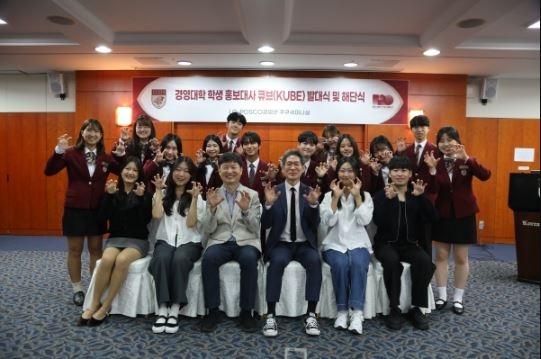
A New Beginning and a Meaningful Conclusion: The Farewell Ceremony for KUBE’s 19th Term and the Launch Ceremony for the 21st Term   The farewell ceremony for the 19th term and the launch ceremony for the 21st term of the KUBE student ambassadors at Korea University Business School (Dean: Eonsoo Kim) took place on September 30 at the LG-POSCO Hall. Dean Eonsoo Kim, Vice Dean Hyun Seung Na, and student ambassadors from the 19th, 20th, and 21st terms attended the event.      During the first semester of the 2024 academic year, KUBE engaged in a range of activities, including regular campus tours, official events, alumni meetings, the 17th Youth Mentoring Day, and ongoing promotional activities. After presenting the activity report, 20th-term President Je-woo Yoon stated, "We will strive to further enhance the Business School this semester." Dean Eonsoo Kim expressed deep gratitude for the passion and dedication of the KUBE student ambassadors in promoting the Business School and encouraged them to continue their impactful work.        At the farewell ceremony, 19th-term member Jung-won Je (Business '23) shared, "While the knowledge gained in school lectures is valuable, the responsibility and attitude I developed through KUBE are irreplaceable experiences. I will support the new 21st term as they start their journey."      Meanwhile, 21st-term member Woo-jin Shin (Business '23) remarked, "KUBE shaped my first impression of the Business School. I will carry a sense of pride and responsibility as a student ambassador over the next year." The event concluded with Dean Eonsoo Kim presenting certificates of participation, awards, and scholarships to the students, followed by a commemorative photo session. 

2024.11.04 Views 3238

  • 첫페이지로
  • 41
  • 42
  • 43
  • 44
  • 45
  • 마지막페이지로