TOP

KUBS News

Total 1417

[Entrepreneurship Academy Lecture On-Demand] “Coding Now Done by ‘Vibe’”

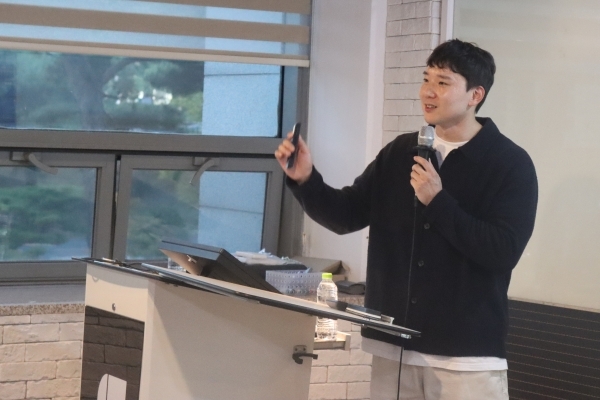
“Coding Now Done by ‘Vibe’”... Special Lecture on AX-Based Startup Insights   On March 17, the Entrepreneurship Academy Lecture On-Demand was held, hosted by Korea University Startup Institute. The session featured Malacca, an AX strategist and AX builder, who delivered a hands-on lecture titled “Vibe Coding Practice: From Planning to MVP Deployment (Gemini & Firebase),” combining AI-based development methods with real-world startup experience.    The lecture drew strong interest from students and was held across two classrooms in the Hyundai Motor Hall. Approximately 170 participants attended, reaching maximum capacity. Although each classroom accommodates around 100 people, attendance exceeded seating capacity, with even stair areas being utilized. To accommodate all participants, a live Zoom broadcast was conducted simultaneously, allowing students to join from both classrooms.      Participants were highly engaged in the hands-on session, following along with coding exercises during the lecture. Students had the opportunity to build simple programs in real time, gaining practical experience with AI-based development processes.    During the lecture, AI-based processes were introduced, emphasizing that AI is not merely a tool but a key driver of AX (AI Transformation), transforming corporate workflows and organizational culture. While highlighting the high productivity of AI “vibe coding,” Malacca also noted the need for safeguards such as “context engineering” and “harness” to address the challenges of maintaining complex systems. He further emphasized that the essence of entrepreneurship lies not in technology-driven thinking, but in validating hypotheses through customer interviews. He advised that “starting quickly, failing, and learning fosters a virtuous cycle of growth driven by execution.”      During the session, Malacca utilized “Jjap Slack,” a tool he personally developed using vibe coding, to facilitate real-time interaction through live comments, enabling participants to ask questions and receive feedback instantly. The session was particularly meaningful in that it was conducted using the same harness template provided to students, allowing them to work with programs at a level applicable to real-world practice.    This “Entrepreneurship Academy Lecture On-Demand 1” highlighted both the evolving role of developers in the AX era and the practical capabilities required for entrepreneurship, offering students integrated insights that bridge technology and business perspectives. The Korea University Startup Institute plans to continue expanding hands-on, practice-oriented startup education programs. 

2026.04.14 Views 44

A Journey of Learning Through Sharing: Fall 2024 KUBS Scholarship Certificate Award Ceremony

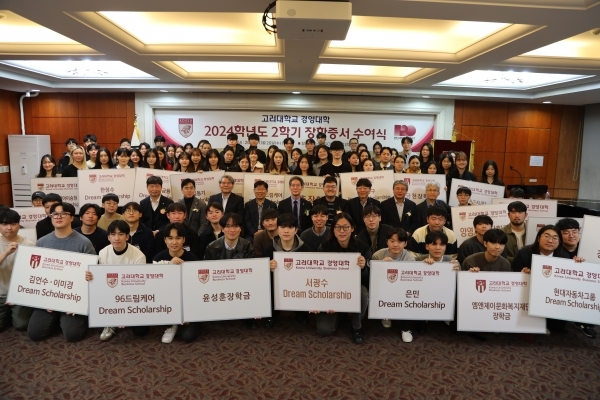
A Journey of Learning Through Sharing: Fall 2024 KUBS Scholarship Certificate Award Ceremony    On November 20, the Fall 2024 KUBS Scholarship Certificate Award Ceremony was held at the Young Il Ahn Hall of the LG-POSCO Hall, hosted by Korea University Business School (KUBS, Dean: Eonsoo Kim). The ceremony was attended by over 100 scholarship recipients, Dean Eonsoo Kim, Associate Dean Hyun Seung Na, Professor Johngseok Bae from KUBS and Professor Young-gun Ko from the School of Psychology, Auditor Kwang Soo Seo, Alumni Association President Nam Ki Kim, and other distinguished guests.      The event proceeded in the following order: opening remarks and introduction of guests, the dean’s address, the scholarship certificate awards, a special lecture by Professor Young-gun Ko, a dinner, guest remarks, a thank-you speech, the singing of the school anthem, group photos, and closing remarks. In his address, Dean Eonsoo Kim expressed gratitude, stating, “Thanks to the generous contributions of donors, KUBS is able to provide not only the High Achievement Scholarship but also living expense scholarships.” He encouraged the scholarship recipients, including 83 students awarded the High Achievement Scholarship and 87 students who received the KUBS Dream Scholarship, to grow into individuals who, with a sense of gratitude, would one day give back to their juniors.    The awarding of scholarships began with the Kwang Soo Seo Dream Scholarship, followed by others such as the Eun Min Dream Scholarship, the M&J Cultural Welfare Foundation Scholarship, the Class of '96 Dream Scholarship, and the Sung Hoon Yoon Scholarship. The ceremony also included a special lecture by Psychology Professor Young-gun Ko on the topic of “The Psychology of Happiness.”      Professor Ko emphasized the importance of reflecting on the direction of one’s life and shared insights on pursuing happiness and altruism. He congratulated the scholarship recipients and expressed his honor in addressing them. Following the lecture, a dinner was held, during which Auditor Kwang Soo Seo and Dr. Sung Hoon Yoon shared their thoughts.      Auditor Seo shared his story of becoming a donor and noted that he has been donating to KUBS for a decade. He encouraged students to become links in the virtuous cycle of giving back. Dr. Yoon highlighted that his decision to start giving at a young age was motivated by his desire to honor the teachings of Professor Jaehwan Kim during his doctoral studies. He underscored that the primary purpose of scholarships is to address the financial challenges that hinder students from focusing on their studies.      In her speech, Seung Hyun Jeong (Business, Class of ’24) expressed her gratitude to donors, stating, “The scholarship allowed me to focus on school activities instead of part-time jobs.” She pledged to strive to be an exemplary student in line with the donors’ intentions. The event concluded with the singing of the school anthem and a group photo session.   

2024.11.29 Views 2508

Korea University Asian Institute of Corporate Governance Hosts Seminar on European Mandatory Tender

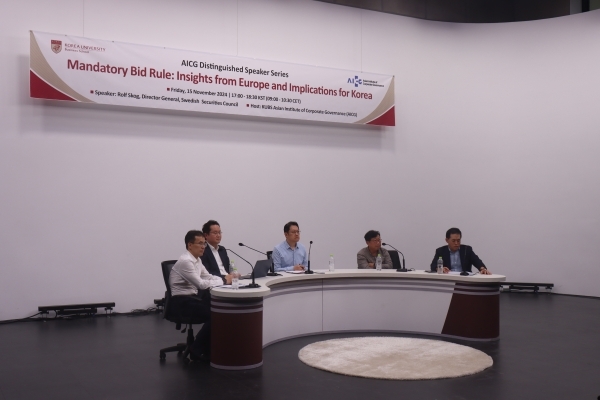
Korea University Asian Institute of Corporate Governance Hosts Seminar on European Mandatory Tender Offer Practices with a Swedish Expert    On November 15, Korea University Business School Asian Institute of Corporate Governance hosted an online seminar featuring Rolf Skog, the Secretary-General of the Swedish Securities Council. The seminar, titled “Experiences of Operating the European Mandatory Tender Offer System and Its Implications for Korea,” aimed to explore strategies for implementing a suitable mandatory tender offer system in Korea by examining Sweden’s case studies. The seminar was moderated by Professor Joon Ho Hwang, with panelists including Professor Woojin Kim from Seoul National University Business School, Professor Woochan Kim, H&Q Korea Co-CEO Yuchul Rhim, and Professor Joon Hyug Chung from Seoul National University School of Law.      The seminar began with a keynote presentation by Secretary-General Rolf Skog on the topic of “The Mandatory Tender Offer System: Sweden’s Experience.” Secretary-General Skog highlighted that corporate acquisitions in Sweden have become more active since the introduction of the mandatory tender offer system. He noted, “While there were initial concerns about a potential chilling effect, these concerns have since dissipated, and there have been no demands for system revisions.” He shared this as a case of successful system implementation.    Secretary-General Skog provided a detailed explanation of the Swedish Securities Council's practices. The Swedish Securities Council is a self-regulatory body responsible for interpreting laws related to corporate acquisitions and granting special exemptions from the mandatory tender offer system. The Council handles approximately 60 to 70 cases annually, focusing on maintaining transparency and fairness in its operations.      The mandatory tender offer system is triggered when an acquirer, together with related parties, obtains 30% or more of a company’s shares. Related parties include spouses, minor children, affiliated companies, and parties acting in concert regarding voting rights. The methods of share acquisition can vary, including purchase, inheritance, or the exercise of conversion rights. However, instruments such as preemptive rights or convertible bonds are included only once they are converted into shares.     Upon triggering the mandatory tender offer, the acquirer must disclose their shareholding immediately and propose a tender offer for all remaining shares within four weeks. If the tender offer is not made, the acquirer is required to reduce their shareholding to below 30%. The tender offer price is determined based on the higher of the two: the highest purchase price paid during the six months preceding the trigger or the volume-weighted average price over the most recent 20 trading days.    Special exemptions are granted in cases where an individual’s shareholding exceeds 30% as a result of participating in a rights offering or where the individual holds more than 30% but is not the largest shareholder. However, further shareholding increases are not permitted under these exemptions. The mandatory tender offer system does not apply if an acquirer obtains over 30% of shares through a public tender offer made to all shareholders. While such legal exceptions could potentially allow for low-priced tender offers that lower subscription rates, such cases are rare in Sweden.    In the event of non-compliance, restrictions are imposed on voting rights for shares exceeding the 30% threshold, and corrective orders are issued. These measures reflect the system’s intent to enhance fairness and accountability in corporate acquisitions.      The panel discussion that followed focused on “Experiences in Operating the European Mandatory Tender Offer System and Its Implications for Korea.” The discussion began with an analysis of Sweden’s experience, where initial concerns about a potential chilling effect at the time of the system’s introduction proved unfounded. In fact, the market for acquisitions became more active, and no demands for revisions to the system were raised. Meanwhile, the strategy of proposing low tender offer prices, known as “lowballing,” has been rare in Sweden but has emerged as an issue in other EU countries, suggesting the potential for increased regulatory discussions in the future.    Since the system’s adoption, companies have often preferred methods that avoid triggering mandatory tender offer obligations. In cases where the acquisition of controlling shareholders’ stakes is expected to push ownership beyond the 30% threshold, companies have frequently opted for tender offers targeting all shareholders, including controlling shareholders, at a single price agreed upon in advance with the controlling shareholder.    Regarding Korea’s proposed “50%+1 share” approach to the mandatory tender offer system, panelists highlighted that it may fail to sufficiently protect minority shareholders by limiting their opportunity to sell their shares during changes in control. This approach is not adopted in major European countries for this reason.    The panel also noted that differential pricing in tender offers would be challenging to implement. In Sweden, there is a strong belief that control premiums should be distributed equitably among both minority and controlling shareholders. This principle, driven by institutional investors, supports the requirement that all shares in a tender offer must be purchased at the same price.    The Swedish Securities Council was praised for its strengths, including efficient processing and an expert-driven membership. While decisions that might take months for the Financial Supervisory Authority are resolved in just days by the Council, the Council also enjoys greater trust due to its expertise. Although appeals of Council decisions are allowed, they are exceedingly rare.    Finally, for financially distressed companies, decisions on whether to grant special exemptions for shareholdings exceeding 30% are made based on what serves the best interests of the shareholders. However, such cases represent a small proportion of the total number of exemptions granted.      Meanwhile, Korea University Business School Asian Institute of Corporate Governance organized this seminar as a platform to explore strategies for introducing a mandatory tender offer system tailored to Korea’s capital market and corporate environment, drawing on European case studies. The institute plans to continue conducting related research and hosting seminars in the future. 

2024.11.29 Views 2495

Discussing ESG Strategies in the Pharmaceutical Industry" - ESG Research Competition Final Prese

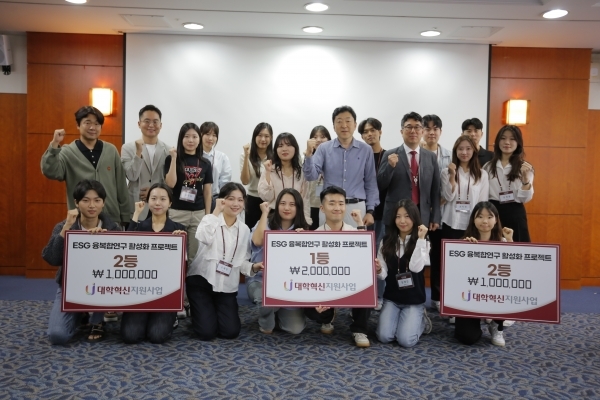
Discussing ESG Strategies in the Pharmaceutical Industry" - ESG Research Competition Final Presentation Successfully Concludes   On September 27, the final presentation of the "ESG Research Competition" was held at the Cuckoo Hall in the LG-POSCO Building. This year’s competition centered on the theme of "ESG in the Pharmaceutical Industry," with participating students refining their research based on feedback received during the interim presentation. A total of four teams presented their findings, discussing ESG strategies to enhance sustainability in the pharmaceutical sector from various perspectives. The event drew attention for its in-depth research and passionate presentations.      Team 2 presented on "The Current State of ESG in the Pharmaceutical and Biotech Industries" and "Circular Economy." Beginning with an explanation of the necessity of ESG practices tailored to the unique characteristics of the pharmaceutical industry, the team introduced key ESG initiatives and circular economy models. They then conducted a comparative analysis of ESG activities by domestic and international pharmaceutical companies, highlighting the pressing issue of unused medication disposal, which has become a significant challenge in the industry.    By addressing the practical challenges faced by domestic pharmaceutical companies, the team proposed improvements to current recovery policies and offered practical solutions. Their presentation concluded with a discussion of the difficulties encountered during the research process and the feedback they received. It was well-received for its meaningful contribution to conveying the importance of ESG practices and actionable strategies within the pharmaceutical industry.    Team 3's presentation focused on the theme of "Developing ESG Guidelines Specialized for Contract Manufacturing Organization (CMO) Businesses." The team began by outlining their research and highlighting limitations in the current ESG evaluation framework for the pharmaceutical industry. They pointed out that differing sub-sector classification systems across various evaluators create inconsistencies in ESG assessment criteria.    This inconsistency, they explained, can lead to confusion in the ESG evaluation results for companies. To address this issue, the team proposed the development of a specialized pool of ESG issues tailored to CMOs, providing a focused approach to resolving these challenges.      The team argued for the development of an ESG evaluation framework that reduces reliance on evaluators' subjective judgments and ensures higher reliability. Their presentation received positive feedback for proposing ESG evaluation guidelines tailored specifically to the unique CMO sector within the pharmaceutical industry. By emphasizing the need for ESG strategies optimized for the characteristics of this specialized field, the team highlighted a critical step toward advancing sustainable practices in the sector.    The final team, Team 4, presented on the topic of "Company-Specific Strategies for Reducing Greenhouse Gas Emissions in the Domestic Pharmaceutical Industry." They began by explaining the increasing importance of managing carbon emissions in the face of stricter greenhouse gas regulations, which served as the motivation for their research. Highlighting the growing significance of carbon management in the business operations of pharmaceutical companies, the team analyzed ESG activities of both domestic and international firms to identify the challenges and propose solutions for greenhouse gas emissions in the Korean pharmaceutical industry.    The team specifically proposed the standardization of carbon emission measurements and the prioritization of ESG initiatives, presenting concrete and actionable improvement strategies. Their presentation garnered significant attention for offering practical strategies to reduce greenhouse gas emissions, aligning with the growing emphasis on environmental responsibility within the pharmaceutical industry.    After all the team presentations concluded, the attending professors evaluated each team's work and provided detailed feedback. Ultimately, Team 1 was awarded first place, while Teams 2 and 3 tied for second place. Each team's research topics and presentations demonstrated creative and practical approaches to addressing ESG challenges in the pharmaceutical industry. Through the feedback received, participants further refined their research and gained a deeper understanding of the importance of ESG management.      To conclude the event, participants gathered for a group photo to commemorate the day's achievements. This final presentation served as a valuable opportunity for exploring various ESG strategies and actionable solutions for sustainable development in the pharmaceutical industry. It also provided students with a meaningful experience to showcase their creativity and research skills. 

2024.11.28 Views 2547

The Global MIM Program at the Graduate School of Business offers a Skill Seminar recognized as one o

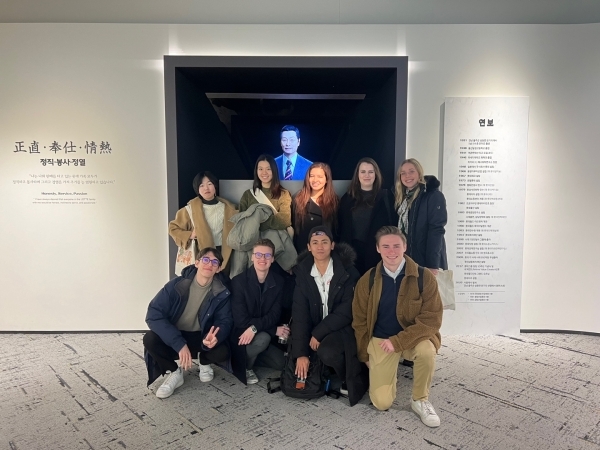
The Global MIM Program at the Graduate School of Business offers a Skill Seminar recognized as one of the best worldwide      Korea University Business School (Dean: Kim Eonsoo) has been operating the Global MIM (Master in Management) program in collaboration with the CEMS Global Alliance in Management Education (hereafter CEMS) since becoming a full member of this prestigious network of leading business schools in 2015.    The CEMS MIM program, also known as the Global MIM, is a one-year full-time master's program in management. Students can earn a Master’s degree from Korea University Business School and a CEMS MIM (Master in International Management) certificate upon completion. Additionally, through the exchange program curriculum, Global MIM students have the opportunity to take courses for one semester at a CEMS partner school.    CEMS also offers a global internship program in collaboration with its corporate partners, requiring Global MIM students to complete a mandatory 8-week overseas internship. Through internships at leading global companies such as Hyundai Motor Group, McKinsey & Company, Google, and L'Oréal, Global MIM students gain practical experience by applying management theories to real-world business scenarios, fostering their growth into global business leaders.    In line with this, the Graduate School of Business provides extensive support to ensure high-quality lectures and active exchange among CEMS students. One standout program is the Skill Seminar. Designed as a training seminar to equip students with practical skills, the Skill Seminar is not only essential for launching a successful career but also plays a critical role in helping students adapt seamlessly to the international business environment. Topics covered in the Skill Seminar include sustainability strategies, personal and career development, consulting skills, marketing and communication techniques, leadership, and team building.    Through the Skill Seminar, students acquire a diverse range of practical skills needed in the workplace and develop the competencies required to thrive in a global business environment. As part of these efforts, the Business School organized a visit to SM Entertainment, where students attended a special lecture on K-POP. Additionally, a visit to Lotte Tower in Jamsil featured lectures on Lotte affiliates and the global Lotte market.    Meanwhile, the Skill Seminar is a mandatory component for business schools operating the CEMS MIM program. Notably, Korea University Business School's Global MIM recently ranked first in the 23/24 T1 Skill Seminar evaluation. This achievement highlights the exceptional quality of the Skill Seminar offered by the Global MIM program, placing it among the best in business schools worldwide. 

2024.11.28 Views 9024

Recent Market Trends and IR Insights from a VC Analyst: Entrepreneurship Academy featuring Park Ji H

Recent Market Trends and IR Insights from a VC Analyst: Entrepreneurship Academy featuring Park Ji Hyung, Senior Investment Manager at LB Investment    On October 8, Korea University Business School hosted a special lecture as part of its Entrepreneurship Academy at "The Stage," located on the 2nd floor of the Business Main Building. The lecture featured Park Ji Hyung, Senior Investment Manager at LB Investment, who shared insights on three pivotal topics: (1) recent market trends, (2) effective strategies for investment pitching (IR), and (3) the daily operations of venture capital (VC) professionals. The session concluded with an engaging Q&A, allowing students to interact directly with the speaker.      T Senior Investment Manager Park Ji Hyung began by sharing his experiences at Neowiz, where his roles in marketing and business development provided him with valuable insights into the processes of venture capital (VC). He shared specific anecdotes from his time at the company, describing how his team prepared, developed, and successfully launched games on a global scale. Reflecting on these experiences, he stated, "VC professionals come from various fields. My experience at a gaming company gave me familiarity with mobile apps and games, which provides a strong foundation when making investment decisions."    Next, Senior Investment Manager Park Ji Hyung discussed recent market trends, focusing on the U.S. market. He explained that he chose to highlight the U.S. because "the Korean VC market often follows the trends set by the U.S." Park described the current U.S. VC market as the most favorable environment for investors in the past decade, attributing this to a significant rise in down-round valuations in recent years, which has created highly advantageous conditions for investors in the VC space.    However, Park noted that the down-round rate remains relatively low for early-stage investments. Supporting his insights with data, he highlighted that the median pre-money valuation of venture companies is on a recovery trend, comparing Q1 2023 to Q1 2024. He also pointed out that while there were only 228 mega-deals (exceeding KRW 1.12 trillion) in 2022 and 2023 combined—the lowest since 2017—the emergence of mega-deals involving AI-based companies is becoming more frequent in 2024.    Park emphasized, "SaaS companies continue to command high valuations, but the key trend here is the AI wave." According to his data, the release of ChatGPT in Q4 2022 triggered a surge in AI-related investments, leading to an expansion in AI's share of the VC landscape. U.S. VC investors are increasingly aggressive in securing stakes in even small AI startups, reflecting the growing significance of AI in the market.      The outlook for U.S. venture capital in 2024 presents a complex landscape. Senior Investment Manager Park Ji Hyung observed, "The number of startup bankruptcies is rising due to failures in securing funding," adding that "VC investors are highly interested in new AI technologies, which is translating into active investments." He also noted that investors are closely monitoring expectations for IPO recovery, potential interest rate cuts, and developments surrounding the U.S. presidential election later this year.    In the session on "Investment Pitching (IR) Insights," Park discussed common mistakes made in IR materials and highlighted factors that can either attract or deter VC investors from founders. He offered practical advice for current and aspiring entrepreneurs, as outlined below.    Many entrepreneurs focus heavily on their company's past achievements. However, as the investment adage goes, "Investors pay for the future." This highlights that investors prioritize a company's plans and potential for future growth over its past accomplishments.    Park emphasized the importance of presenting a logical and coherent process in an IR pitch. Investors are not just looking for forecasts; they want to see a clear connection between the business's current performance and its potential to achieve significantly larger results within the next 5 to 7 years. Entrepreneurs should focus on demonstrating how their present achievements will drive future growth and create sustainable, long-term value.    Park concluded the lecture by highlighting the importance of a compelling vision for founders. He emphasized that founders should present a vision so powerful that it leaves investors feeling captivated by the company’s potential. Moreover, founders must convey their determination to dominate their industry, demonstrating both ambition and focus.    “The goal is for investors to leave your IR presentation thinking, 'I have to invest in this company,'" Park advised, offering the audience a clear takeaway on how to captivate and secure investor interest. 

2024.11.28 Views 2313

Discovering Careers Night: HR Consulting and Preparing for the Era of Multi-job Careers 

Discovering Careers Night: HR Consulting and Preparing for the Era of Multi-job Careers    On October 10th, Korea University Business School (KUBS, Dean: Eonsoo Kim) hosted the event “Discovering Careers Night (Job多한밤)” at the SUPEX Hall in the LG-POSCO Hall. This event serves as a platform where alumni share their career and life experiences with current students, offering guidance and resolving concerns about future paths. Alumni from diverse fields participate in this program, which, on this occasion, featured Jin Seok Park (Business Administration, Class of ’91) and Jung Kwon Hwang (Business Administration, Class of ’91), who gave lectures on HR consulting and strategies for diversifying income.    The first speaker, Jin Seok Park, currently serves as the Country Managing Director of Korn Ferry Korea and previously held the position of Vice President at Mercer Korea. Park described Korea University Business School as a place that nurtures future leaders, encouraging students to strive toward leadership roles. Highlighting the importance of global leadership, he advised, “Aspire beyond being a leader in Korea—dream big and seek opportunities to operate on the global stage.”    Park also provided practical advice for those interested in HR consulting. “HR consulting plays a critical role in resolving organizational personnel issues and building leadership aligned with corporate strategies,” he said. He emphasized the need for strategic thinking and a deep understanding of organizational structures, regardless of one’s major. He also encouraged students to gain diverse internship experiences, particularly during their summer or winter breaks in their junior year.    The second speaker, Jung Kwon Hwang, a seasoned professional who has held positions at Hyundai Securities, Truston Asset Management, KB Asset Management, and now serves as an advisor to Worksmate, focused on the shifting dynamics of the labor market. He stressed the need for students to adapt to a rapidly changing job environment and build personalized career portfolios, especially as the era of “multi-job careers” emerges.      “In the future job market, a portfolio combining regular employment, short-term jobs, and investment income will become increasingly important,” Hwang noted. He pointed to Japan’s thriving market for ultra-short-term jobs and the concept of “freeters” (a combination of “free” and “part-timer”) as examples. He urged students not only to gain experience in the gig economy but also to explore ways to generate additional income through investments.    Hwang also addressed shifting corporate expectations. “Today, companies value experience over creativity in new hires,” he said, contrasting the current emphasis on practical skills and work experience with the creativity-centered evaluations of the past. He concluded by advising students to move beyond a focus on credentials, instead prioritizing career-building during their university years and differentiating themselves through skills and experience.    Both Jin Seok Park and Jung Kwon Hwang provided actionable advice for students. Park emphasized the values learned at KUBS and the importance of HR-related experience in growing as a global leader. Hwang highlighted the need to adapt to changes in the labor market by building a personalized career portfolio and preparing for the rise of multi-job careers. 

2024.11.27 Views 2193

  • 첫페이지로
  • 36
  • 37
  • 38
  • 39
  • 40
  • 마지막페이지로