TOP

KUBS News

Total 1417

[Entrepreneurship Academy Lecture On-Demand] “Coding Now Done by ‘Vibe’”

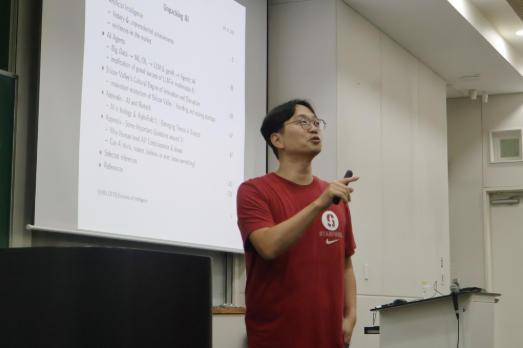
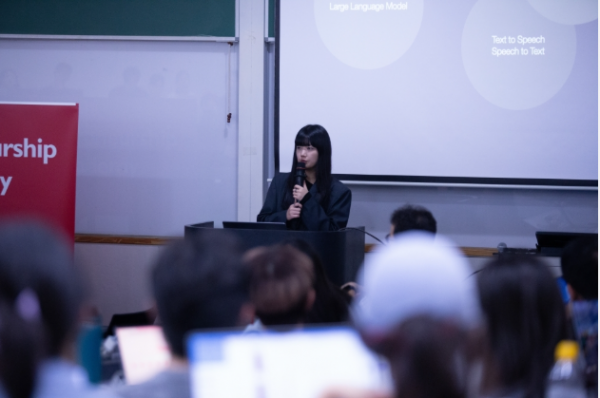
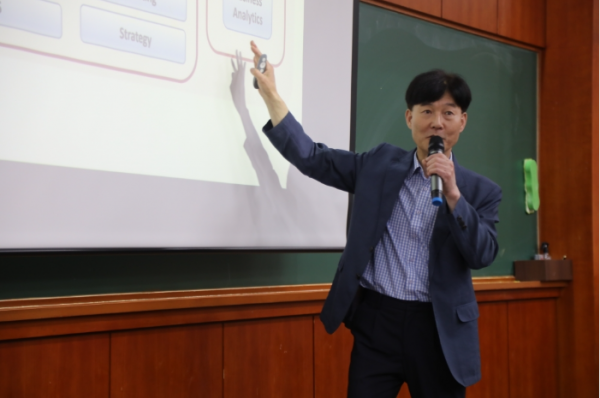
“Coding Now Done by ‘Vibe’”... Special Lecture on AX-Based Startup Insights   On March 17, the Entrepreneurship Academy Lecture On-Demand was held, hosted by Korea University Startup Institute. The session featured Malacca, an AX strategist and AX builder, who delivered a hands-on lecture titled “Vibe Coding Practice: From Planning to MVP Deployment (Gemini & Firebase),” combining AI-based development methods with real-world startup experience.    The lecture drew strong interest from students and was held across two classrooms in the Hyundai Motor Hall. Approximately 170 participants attended, reaching maximum capacity. Although each classroom accommodates around 100 people, attendance exceeded seating capacity, with even stair areas being utilized. To accommodate all participants, a live Zoom broadcast was conducted simultaneously, allowing students to join from both classrooms.      Participants were highly engaged in the hands-on session, following along with coding exercises during the lecture. Students had the opportunity to build simple programs in real time, gaining practical experience with AI-based development processes.    During the lecture, AI-based processes were introduced, emphasizing that AI is not merely a tool but a key driver of AX (AI Transformation), transforming corporate workflows and organizational culture. While highlighting the high productivity of AI “vibe coding,” Malacca also noted the need for safeguards such as “context engineering” and “harness” to address the challenges of maintaining complex systems. He further emphasized that the essence of entrepreneurship lies not in technology-driven thinking, but in validating hypotheses through customer interviews. He advised that “starting quickly, failing, and learning fosters a virtuous cycle of growth driven by execution.”      During the session, Malacca utilized “Jjap Slack,” a tool he personally developed using vibe coding, to facilitate real-time interaction through live comments, enabling participants to ask questions and receive feedback instantly. The session was particularly meaningful in that it was conducted using the same harness template provided to students, allowing them to work with programs at a level applicable to real-world practice.    This “Entrepreneurship Academy Lecture On-Demand 1” highlighted both the evolving role of developers in the AX era and the practical capabilities required for entrepreneurship, offering students integrated insights that bridge technology and business perspectives. The Korea University Startup Institute plans to continue expanding hands-on, practice-oriented startup education programs. 

2026.04.14 Views 59

120 Years of the Business School, Discussing the Next 60 Years 

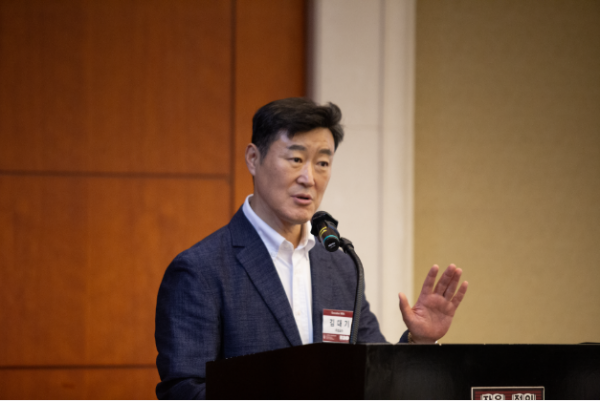
120 Years of the Business School, Discussing the Next 60 Years  To commemorate its 120th anniversary, Korea University Business School (KUBS) hosted a talk concert titled “Mapping the Future: Business Society in 60 Years” on Friday, September 26. The event took place on the Floating Floor of the third floor in the Hyundai Motor Hall, featuring a congratulatory address by Young-Seop Lee, Chair of the KUBS Alumni Association, and overall moderation by Hojung Shin, Committee Chair. In addition, talent development directors from thirty of Korea’s leading corporations attended as VIP guests, underscoring the event’s mission to explore the future of business and management education together.  Chair Lee remarked, “I would like to express my gratitude to everyone who joined us today in celebrating this meaningful 120th anniversary.” He added, “In a time of intense competition, it is challenging to look far ahead, but reflecting on what will change and what will remain constant is a worthwhile endeavor. Building on our achievements to date, we must continue nurturing individuals who possess the resilience to thrive amid an ever-changing environment.”  Rather than simply reflecting on the past, the event served as an opportunity to ask how the next sixty years should be envisioned. By linking the past, present, and future, KUBS opened a new chapter of challenge and innovation.    The Path of Business Administration in the Course of Civilizational History  The first session focused on historical reflection. Professor Youngheon Cho of the Department of History Education at Korea University introduced his book The Path of Business Administration: 120 Years of Korea University Business School Seen through Civilizational History, emphasizing that “there have always been turning points in history, and each has brought about great change.” He interpreted the abolition of China’s civil service examination in 1905 as a key turning point in East Asian history, explaining how this shift came to be viewed as the starting point of modern business administration. He added, “From the objective perspective of an outsider rather than an insider, I sought to examine business administration within the broader context of civilizational history—not merely as a chronological record, but as a subject of scholarly inquiry.”    Students’ Imagination Unfolds: Envisioning Business 60 Years into the Future  On the next stage, students’ imaginations came to life under the theme “Mapping the Future.” Five finalist teams, selected through a preliminary video screening, envisioned what society and business might look like 60 years from now—each approaching the theme from a different perspective, including education, AI, space, death, and the ocean.   The grand prize went to Team ‘Badaieum’ (SeaConnect), composed of students majoring in Business Administration and English Language & Literature. Starting from the premise of “a Korean Peninsula submerged by the end of the 21st century,” the team proposed Oceanus Korea, the world’s first marine city. This eco-friendly floating metropolis—interconnecting residential, industrial, research, and lifestyle districts—was recognized as a visionary solution enabling humanity to pursue both survival and prosperity in the era of climate crisis. The judging panel commended the team for “addressing a global challenge like climate change with a creative and concrete urban model,” while the team also received enthusiastic support from the audience in the final vote.   Other presentations included Eduvantage, proposing educational innovation through AI; Vf, exploring the role of AI in reshaping corporate management paradigms; GetSetGo, introducing a new service model to prepare for death; and PLAN D, outlining future business strategies based on space technology. The students’ bold and creative ideas vividly demonstrated how the Business School remains closely connected to the challenges and possibilities of the future society.    Shaping the Future Together: Expert Panel Talk  The second part of the event featured a panel talk with leading experts. Participants included Taeseung Kwak, CEO of Hyunbo Corp; Minjung Kim, Professor at Korea University Business School; Heecheon Kim, Head of the Lotte Human Resources Development Institute; Seonhwa Shin, CEO of UCK; Junho Woo, CEO of Woo & Partners; Donggeon Lee, CEO of MyRealTrip; Joon Chae, Chair of the Korean Association of Graduate Schools of Business and Dean of Seoul National University Business School; and Jaehwa Choi, CEO of Bunjang (Bungaejangter).  CEO Kwak shared, “For forty years, our company has grown on a foundation of traditional manufacturing, including auto parts. Now, we are expanding into the secondary battery sector with the goal of becoming a 100-year company.” He added, “Listening to the students’ presentations, I was intrigued by how AI could potentially replace human tasks such as talent development and organizational management.”  CEO Lee remarked, “No matter how the business landscape changes, it is essential to ride the wave first,” adding, “Today’s discussions reaffirmed the importance of having a mindset that embraces new opportunities without hesitation.  Junho Woo, CEO of Woo & Partners, remarked, “I have witnessed how the flow of capital—beginning with cryptocurrency—has continuously evolved and expanded into new forms. No matter how sophisticated systems become, the final decision always rests with people. That is why, going forward, individuals with insight and leadership will become even more crucial.”  Jaehwa Choi, CEO of Bunjang (Bungaejangter), shared, “During my time at Google, I experienced a culture without hierarchical bosses, where everyone was free to pursue what they wanted and collaborate to solve problems. In the future, job boundaries will continue to blur, and organizations are likely to be restructured around shared challenges and problem-solving.”  Seonhwa Shin, CEO of UCK, noted, “Only one out of ten companies survives beyond 60 years, and most fail to last even 20. Just as Samsung ventured into semiconductors despite initial skepticism, fostering an environment where opinions can flow freely from the bottom up and maintaining a horizontal organizational culture will be key to corporate longevity.”  Heechun Kim, Director of the Lotte Human Resources Development Institute, emphasized, “There is still a shortage of people who think with the mindset of a founder—those who truly consider what customers need. When individuals from diverse majors and backgrounds learn together, they can grow into genuine global talent, and creating such an environment is fundamental to nurturing future leaders.”  Joon Chae, Chair of the Korean Association of Graduate Schools of Business, advised, “What students must learn is that no one can accomplish everything alone. Through group experiences, gaining an appreciation for the value of cooperation and coordination will become an essential asset in any future organization.”  Professor Minjung Kim emphasized, “In the age of AI, information and predictive capabilities are likely to become increasingly leveled. Therefore, the ability to reinterpret problems from one’s own perspective and to solve them creatively will be what truly sets individuals apart. The importance of innovation, just as in the past, will remain unchanged.”  The event continued under the moderation of Dean Eunsu Kim, featuring active discussion and the exchange of diverse perspectives on the future of society. Bringing together students’ creative ideas and experts’ insights, the talk concert concluded as a meaningful forum exploring how the Business School can prepare for the next 60 years.    A Toast to the Future: Indoor Garden Party Reception  The lively discussions continued into the Indoor Garden Party held on the B1 level. The session was hosted by Associate Dean Hyunseung Nah, with congratulatory remarks delivered by Alumni Association Chair Young-Seop Lee and Heechun Kim, Director of the Lotte Human Resources Development Institute.  Chair Lee emphasized, “We must respond flexibly to changing circumstances while remaining deeply attuned to the values that should never change.” Director Kim opened the evening with a toast, declaring, “Our future is what we make.”  Far more than a simple dinner, the Garden Party served as an extended networking forum that brought together students, faculty, alumni, and industry leaders. Building on the talk concert that reflected on 120 years of history and envisioned the next 60, the gathering offered a space for free and meaningful exchange, where participants experienced both the academic tradition and the vibrant community of the Business School.   

2025.10.14 Views 1993

AMP Holds Inauguration Ceremony Marking Its 50th Anniversary and 100th Cohort 

AMP Holds Inauguration Ceremony Marking Its 50th Anniversary and 100th Cohort  On Monday, September 22, Korea University Business School’s Advanced Management Program (AMP) held an inauguration ceremony for its 100th cohort at SUPEX Hall, located in the LG‑POSCO Building.    The ceremony began with the introduction of distinguished guests, followed by an opening address delivered by Dean Eonsoo Kim of Korea University Business School. Dean Kim remarked, “I sincerely welcome all members of the 100th cohort,” emphasizing that “the number 100 carries special significance, and the fact that the AMP has continued without interruption for 50 years since its establishment in 1975 is a remarkable achievement.” He added, “I hope this program will provide opportunities to ask new questions, foster meaningful exchange, and gain broad insights.”    Afterwards, Jaehwan Park, Chair of the Business Administration Awards Committee, delivered congratulatory remarks on behalf of the President of the AMP Alumni Association. He stated, “Over the past half-century, the AMP has nurtured countless leaders who have demonstrated leadership across all sectors of society. I sincerely congratulate you on becoming part of this proud tradition.”  Following the singing of the university anthem and a group photo session, the KUBE student ambassadors of the Business School guided participants on a campus tour. Through the tour, new members experienced Korea University’s history and campus environment firsthand, deepening their appreciation and understanding of the university.  In the lecture room dedicated to the AMP program at the Hyundai Motor Business Hall, Professor Jaiho Chung delivered a keynote lecture titled “Three Keywords for Understanding the Global Economy in 2025.” Focusing on Trumpnomics 2.0, central bank independence, and yen carry trade, Professor Chung offered an in-depth analysis of the future trajectory of the global economy, capturing the keen interest of the participants. During the Q&A session that followed, numerous questions were raised, reflecting the cohorts’ strong intellectual curiosity and academic enthusiasm.    At the evening banquet, cohort members exchanged business cards and continued networking, sharing their professional backgrounds and aspirations during the self‑introduction session, and bonding over shared toasts. Accompanied by a generous dinner and a makgeolli (traditional Korean liquor) ceremony, the event concluded in a warm and convivial atmosphere filled with fellowship and celebration.    Now celebrating its 100th cohort, Korea University’s AMP has established itself as one of Korea’s premier executive education programs, helping to shape the history of leadership education in the country. This milestone cohort represents both a new beginning and a symbolic turning point—marking the start of the next fifty years beyond a proud half-century of tradition, and opening a new chapter in the future of Korea University’s AMP. 

2025.10.14 Views 1582

Korea University Business School Opens Applications for 2026 Spring Intake of DBA and MBA Programs 

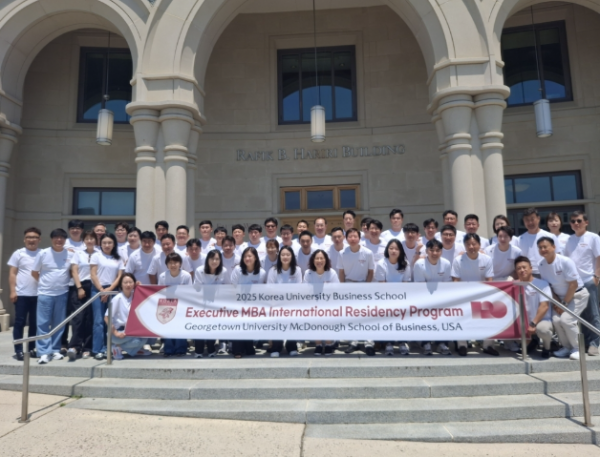
Korea University Business School Opens Applications for 2026 Spring Intake of DBA and MBA Programs  Korea University Business School is now accepting applications for the 2026 Spring Intake of its DBA and MBA programs. The programs offered include the KUBS-DBA (Doctor of Business Administration), Executive MBA, Finance MBA, and Korea MBA. Applications can be submitted through the KUBS online admission system (biz.korea.ac.kr/admission), and the application deadline is Friday, October 15, at 3 p.m.  KUBS Establishes a Full-Cycle Business Education System Connecting Undergraduate to MBA and DBA    Korea University Business School (KUBS) stands as a pioneer in Korean business education, leading innovation built upon its 120-year tradition. In 1905, Korea University established the nation’s first Department of Commerce, marking the beginning of business education in Korea, and once again made history in 1963 by introducing the country’s first MBA program, opening a new chapter in professional business education. Since then, KUBS has successfully launched specialized part-time MBA programs such as the Korea MBA for working professionals, the Executive MBA for senior executives, and the Finance MBA for finance specialists. In response to the globalization trends of the 2000s, it also introduced full-time programs such as the Global MBA—taught entirely in English—and the CEMS Global MIM, jointly operated with leading universities abroad, to meet the evolving educational needs of the time. Furthermore, with the launch of the KUBS-DBA (Doctor of Business Administration) program in 2025, the school has established a comprehensive lifelong education framework encompassing the undergraduate, MBA, and DBA stages of a business career—solidifying its status as a true leader in business education through continuous innovation.    International Accreditation and QS Rankings Confirm Educational Excellence: KUBS Ranked Among World’s Top 50    This comprehensive educational portfolio has demonstrated its excellence through international accreditations and global evaluations. Korea University Business School (KUBS) became the first business school in Korea to receive AACSB (Association to Advance Collegiate Schools of Business) and EQUIS (European Quality Improvement System) accreditations for all its programs, and has continuously achieved successful reaccreditations, maintaining and enhancing its globally recognized academic standards. In addition, KUBS is the only member school in Korea of the CEMS Global Alliance, which allows only one business or economics school per country to join, actively collaborating with leading global universities and multinational corporations. Recently, KUBS ranked 28th in Marketing, 42nd in Business & Management Studies, and 50th in Accounting & Finance in the QS World University Rankings by Subject, further solidifying its global academic reputation across all areas of business education.    Korea MBA: A Premier Traditional MBA Program Designed to Strengthen Professional Expertise and Global Networks (▶Learn More About Admission)    Korea MBA (K-MBA) is Korea’s first MBA program and the flagship program of Korea University Business School. As the oldest and most prestigious MBA in the country, it carries on a proud tradition of academic excellence and leadership development. K-MBA’s greatest educational strength lies in its rich and well-balanced curriculum. In addition to essential core courses for managers, the program offers a wide range of electives covering every field of business, allowing students to design a study plan aligned with their interests and career goals. Through the Renaissance Program, graduates can return after completing their degree to take courses they were unable to enroll in during their studies, ensuring continuous opportunities for lifelong learning. Students also gain global insight and business acumen through the Overseas Field Trip, which includes lectures by distinguished local experts and visits to major companies in key global economies. They can further broaden their academic horizons through student exchange programs with partner universities abroad and a dual degree program with the KU Graduate School of Management of Technology (MOT).  Beyond academics, K-MBA is renowned for its strong alumni network and exceptional sense of unity. This tradition begins with orientation, where new students and alumni learn about Korea University’s history and cheering culture together, and culminates in the Korea–Yonsei Games. Various small groups—such as professional clubs, “ti-moim” (alumni gatherings organized by zodiac sign), and hobby-based clubs in areas like soccer, scuba diving, music, wine, photography, and investing—foster vibrant interaction and lifelong friendships. Through these activities, students and alumni not only enrich their campus experience but also build a far-reaching professional network. Today, the K-MBA alumni association boasts nearly 10,000 members active across diverse industries, serving as a powerful source of support for future leaders. 

2025.10.14 Views 4324

120th Anniversary Hoh-sang Daedongje Festival: Panthera Colors the KUBS Campus 

120th Anniversary Hoh-sang Daedongje Festival: Panthera Colors the KUBS Campus  To commemorate the 120th anniversary of its establishment, Korea University Business School held the student-led festival Hoh-sang Daedongje: PANTHERA on September 25 (Thursday) and 26 (Friday). On the first day, the 57th Undergraduate Student Council organized events that filled the campus with the passion of business students, while on the second day, the Korea MBA and Finance MBA Student Councils organized a special evening that put MBA students in the spotlight. Bringing together both undergraduate and MBA communities, this Hoh-sang Daedongje carried even greater significance as a festival celebrating the 120-year legacy of Korea University Business School.  This year’s Daedongje reclaimed the name “Hoh-sang Daedongje,” steeped in long-standing tradition, while adding a new symbolic title, “Panthera.” “Panthera” is derived from the scientific name of the tiger, Panthera Tigris, and reinterprets the tiger—long a symbol of Korea University—into an expression of the unique identity of the Business School. This Daedongje bridged tradition and innovation, providing a celebratory space for students to open the future together.  The first day of the festival was filled with youthful energy and excitement. In the outdoor plaza in front of the third-floor lobby of the LG-POSCO Business Hall, a photo booth was set up, allowing students to capture memories using 29 different photo frame designs. Themed booths organized by the undergraduate student council and each class were met with great enthusiasm. Visitors actively participated in a stamp rally event, adding to the festive spirit. Creatively themed booths—ranging from traditional tiger motifs to imaginative reinterpretations of movies and dinosaurs—captured everyone’s attention.  The stage performances brought the excitement to its peak. Student bands and dance clubs such as “You and I,” “OKAL,” “Anti-7am Class Movement,” “Broden,” “Wild Eyes,” and “Reckless People” filled the stage, and when the faculty band BGS took the stage, students’ cheers shook the campus. Finally, singers eSFAI, Kid Milli, and Giriboy lit up the night with youthful energy through their spectacular performances.  On the second day, MBA students took center stage. The evening program, organized by the Korea MBA and Finance MBA student councils, began with opening remarks by the host and congratulatory words from Dean Eunsu Kim. The excitement continued with a performance by the Dinga Band, greetings from the MBA student council leaders, and a rousing school chant. The highlight of the night was the much-anticipated “MBA King of Singing Contest,” where students showcased their own performances.  The MBA King of Singing Contest, in particular, was a stage where students showcased their hidden singing talents and flair, filling the venue with school spirit and camaraderie reminiscent of their school days. While the undergraduate stage highlighted youthful energy and creativity, the MBA stage stood out for its strong bonds of fellowship and mature interaction. At the final awards ceremony, 120th Anniversary Committee member Ho-jung Shin personally awarded the winner, encouraging all participants who took part in the contest.  “Hoh-sang Daedongje: Panthera” was more than a campus event—it was an occasion where undergraduates, graduate students, faculty, and staff came together to celebrate and reaffirm the identity and pride of the Business School. One student shared, “This year’s Daedongje, which blended tradition and innovation, will remain a special memory,” while an event organizer remarked, “Hoh-sang Daedongje was a meaningful occasion that united the Business School community in sharing a vision for the future. We will continue to move forward with the indomitable spirit of the tiger.”  Above all, this year’s Daedongje was especially meaningful as undergraduate and MBA students came together to celebrate under the unified name “Hoh-sang Daedongje.” This experience, which bridged tradition and innovation and connected generations, served as an opportunity to reaffirm the strength of Korea University Business School as it moves toward the next 120 years. 

2025.10.14 Views 1710

[Interview with Newly Appointed Faculty for Fall 2025] Professor Dae hoon Noh

[Interview with Newly Appointed Faculty for Fall 2025] Professor Dae hoon Noh — Decoding Innovative Business Models Through Game Theory  In September 2025, Korea University Business School appointed five new faculty members, each bringing expertise in diverse areas of research: Professor Dae hoon Noh (LSOM), Professor Juyoung Lee (Business Administration), Professor Seunghoo Chung (Business Administration), Professor Jae Young Cho (Strategy), and Professor Angela Aerry Choi (Information Systems).  To mark the occasion, KUBS News sat down with the newly appointed professors to introduce their research interests and educational philosophies to our readers.    Q1. Please introduce yourself.  Hello, my name is Dae hoon Noh, and I’m an Assistant Professor in the LSOM (Logistics, Service & Operations Management) area at Korea University Business School. Prior to joining KUBS in the Fall 2025 semester, I was an Assistant Professor at the University of San Diego (USD) in the United States. My research focuses on the game-theoretic analysis of innovative business models, particularly those based on platform businesses. I study how firms make decisions simultaneously and how those decisions impact society as a whole.    Q2. What led you to join Korea University Business School, and how do you feel about it?  I have always considered returning to Korea, and I’m deeply honored to join Korea University. I’m particularly impressed by the outstanding research capabilities of the faculty at KUBS and look forward to meaningful collaborations. It’s also deeply fulfilling to teach KUBS students. I will do my utmost to support them as they grow into future leaders of society after graduation.    Q3. What is the research area or topic you are currently focusing on?  As mentioned, my research focuses on the game-theoretic analysis of innovative business models. To illustrate this further, one of my studies examines the competition between global ride-hailing services like Uber and traditional taxi operators—exploring when each model has a competitive advantage and what the broader societal implications of such competition are. In addition to this, I conduct game-theoretic analyses of innovative business models across various industries.    Q4. What is your philosophy when teaching or guiding students?  I aim to help students grasp the essence of the material rather than relying on rote memorization. No matter what content is covered over the course of a semester, knowledge gained through memorization alone tends to fade quickly.  However, if students can understand the lecture material as a coherent and structured narrative, then even if they forget some of the details over time, they will be able to recover that knowledge much more quickly when they revisit it. I strive to design my lectures with that kind of lasting understanding in mind.    Q5. Beyond academic knowledge, what do you think students must learn during their college years?  I believe communication skills are essential. It’s important to be able to communicate your ideas clearly and in an organized manner, tailored to the audience. Even if you excel academically or analytically, your capabilities may still be undervalued if your delivery is weak. I hope students get plenty of practice articulating what they’ve learned to others effectively.    Q6. As a new faculty member at the Business School, what are your goals or visions for the future?  I hope to see the Business School recognized as a world-class institution. The President, Dean, and many dedicated faculty members are already working tirelessly toward this goal, and I hope to contribute in my capacity by producing high-quality research.    Q7. Lastly, could you offer some words of advice and encouragement to Korea University students heading out into the world?  University life is a time filled with both joy and idealism, as well as uncertainty and anxiety about the future. The path most commonly taken may appear to be the only right one, and straying from it can feel unsettling — but in reality, there are many different paths forward.  Don’t be afraid to be different. Use your time in college to explore a variety of experiences and work hard to discover the path that truly suits you — for the sake of the person you’ll be 10 or 20 years from now. I encourage you to seek support from your professors and alumni along the way. Make the most of Korea University’s exceptional community — it will serve as a great source of strength throughout your life. 

2025.10.13 Views 1843

[Interview with Newly Appointed Faculty for Fall 2025] Professor Juyoung Lee

[Interview with Newly Appointed Faculty for Fall 2025] Professor Juyoung Lee — A New Beginning at My Alma Mater, Embracing the Next Challenge  In September 2025, Korea University Business School appointed five new faculty members, each bringing expertise in diverse areas of research: Professor Dae hoon Noh (LSOM), Professor Juyoung Lee (Business Administration), Professor Seunghoo Chung (Business Administration), Professor Jae Young Cho (Strategy), and Professor Angela Aerry Choi (Information Systems).  To mark the occasion, KUBS News sat down with the newly appointed professors to introduce their research interests and educational philosophies to our readers.    Q1. Please introduce yourself.  Hello, my name is Juyoung Lee, and I recently joined Korea University Business School as an Assistant Professor in the Business Administration area. I studied sociology at both Korea University and Brown University in the United States, and later transitioned into the field of business while working as a postdoctoral researcher at the Ivey Business School. Before joining Korea University, I spent four years as an Assistant Professor in the Department of Management at Hong Kong Polytechnic University.    Q2. What led you to join Korea University Business School, and how do you feel about it?  This new beginning at Korea University Business School is both a new challenge and a valuable opportunity for me to grow as a more insightful researcher and a better educator. Above all, I look forward to the meaningful experiences I’ll share with my students.    Q3. What is the research area or topic you are currently focusing on?  My current research focuses on the relationship between corporate short-termism and environmental performance. Existing studies have argued that short-term orientation hinders long-term investment and negatively impacts environmental outcomes. However, short-termism is not inherently detrimental. Firms with a short-term orientation may be better positioned to respond swiftly to urgent issues.  For instance, when peer firms are sanctioned for violating environmental regulations, short-term-oriented companies are more likely to take prompt corrective action. This study examines such responses to explore the conditions under which short-termism may positively influence environmental performance.    Q4. What is your teaching philosophy when leading classes and mentoring students?  I am currently teaching organizational theory. Through the course, I hope students move beyond the mere acquisition of knowledge and gain meaningful insights.  Organizational theory not only addresses internal organizational dynamics but also offers valuable perspectives for understanding broader social structures. I hope students will learn to view organizations and society through multiple lenses and continue developing their own independent thinking. I look forward to supporting them along the way.    Q5. Besides academic knowledge, what do you think students must learn during their college years?  Looking back on my twenties at Korea University, I can confidently say that I gained invaluable lessons that extended far beyond the classroom—lessons learned through diverse activities on and off campus, and through interactions with fellow students across all year levels.  I hope today’s students will also take this uniquely free and possibility-filled stage of life to broaden their perspectives on society through a wide range of experiences.    Q6. As a new faculty member at the Business School, what are your goals or visions for the future?  I hope to join students and senior colleagues on a shared journey of learning and discovery—working together to generate new insights and create meaningful value.    Q7. Lastly, could you offer some words of advice and encouragement to Korea University students heading out into the world?  I encourage you to face the world with confidence, live with passion, and color your life boldly with your own unique identity. 

2025.10.13 Views 1782

  • 첫페이지로
  • 11
  • 12
  • 13
  • 14
  • 15
  • 마지막페이지로