TOP

KUBS News

Total 1433

[SK Awards Interview] Professor Minjae Koo: In an Era of Uncertainty, Diverse Cultural Backgrounds

[SK Awards Interview] Professor Minjae Koo: In an Era of Uncertainty, Diverse Cultural Backgrounds Improve Forecast Accuracy Uncertainty does not affect everyone equally. As U.S. firms faced growing import competition from China, most analysts saw their forecast accuracy decline. Yet some were less affected than others. Professor Minjae Koo focused on precisely that difference. His research suggests that the cultural context behind the numbers — and analysts’ own cultural backgrounds — can shape how information is processed in capital markets. Professor Koo, who joined Korea University Business School (KUBS) in 2025, received his second SK Award for the study, “Forecasting Under Uncertainty: Import Penetration and Analysts’ Cultural Advantage.” The study empirically examines how international competition affects the role of information intermediaries. In an era when geopolitical tensions have become a daily reality, the research shows that diversity can be more than a value — it can also provide a tangible competitive advantage. The following is an interview with Professor Koo about the research and the award. Q1. Congratulations on being recognized with the SK Awards. Could you share your thoughts on the award? First, I would like to express my sincere gratitude for this meaningful award. It is a great honor to have my research recognized at Korea University. I would also like to take this opportunity to extend my deep appreciation to my co-authors, who worked with me on this research, and to everyone who supported our work. Q2. Could you briefly introduce the research for which you received the award? This study analyzes how Chinese import penetration affects the earnings forecast accuracy of financial analysts covering U.S. firms. In particular, we examined whether Chinese analysts have an informational advantage in such an environment. Our empirical analysis shows that the more U.S. firms were affected by Chinese import penetration, the more analysts’ forecast accuracy declined overall. However, the decline in forecast accuracy was substantially smaller among Chinese analysts. This suggests that cultural background and contextual knowledge can improve analysts’ ability to process information in complex international competitive environments. Q3. What motivated you to begin this research? The international competitive landscape has shifted rapidly due to recent developments such as the U.S.–China trade tensions and the restructuring of global supply chains. I became interested in whether these macro-level changes might affect not only firm performance and corporate strategy but also how information is produced in capital markets. The study began with the question, “How do international economic shocks change the role of information intermediaries?” The research ultimately showed that cultural background can play an important role in complex international environments. Q4. What impact do you expect this research to have on society or industry? This study demonstrates the value that cultural diversity and expertise can bring to financial markets as globalization deepens and geopolitical risks increase. For companies and financial institutions, the findings highlight the importance of professionals with diverse cultural backgrounds and international perspectives, alongside strong technical capabilities. From a policy perspective, the study also highlights the role of human capital in reducing information asymmetry amid rising international tensions. Q5. Since joining KUBS in 2025, you have already received the SK Awards twice. Is there a secret behind these consecutive achievements? I wouldn’t say there is any particular secret. I believe these achievements were made possible by strong teamwork with my co-authors and constructive feedback from reviewers and editors. Through this study, I was reminded once again that research is not a solitary journey, but a collaborative process that becomes increasingly refined through diverse perspectives and constructive critique.   Q6. Many students today are interested in pursuing careers in accounting. What message would you like to share with them? Accounting is no longer just a discipline that records numbers. In class, I often refer to Nietzsche’s famous statement: “There are no facts, only interpretations.” I understand this to mean that even identical numbers can be viewed and interpreted differently through various lenses. In today’s increasingly dynamic and fast-changing world, I believe such interpretation can become even more complex. Therefore, I would encourage students interested in accounting careers — whether in financial accounting, auditing, or management accounting — to broaden their horizons. They should explore not only fields directly connected to accounting, such as international politics and ESG, but also subjects that may seem less related at first glance, including literature and philosophy. Doing so can help them develop stronger intuition and critical thinking skills. I believe a humanities-based perspective can be very helpful when making broader, more strategic decisions.   About the Paper :   In 2026, “Forecasting Under Uncertainty: Import Penetration and Analysts’ Cultural Advantage,” co-authored by Professor Minjae Koo of Korea University Business School, was accepted for publication in the Journal of International Business Studies. The paper also earned Professor Koo an SK Award. The study examines how analysts’ earnings forecast accuracy shifts as U.S. firms face mounting import competition from China and identifies cultural background as an important factor in information processing under complex international competition. The milestone is especially meaningful as it marks Professor Koo’s second SK Awards since joining KUBS in 2025.   “Forecasting Under Uncertainty: Import Penetration and Analysts’ Cultural Advantage” This study empirically analyzes how import competition from China affects the earnings forecast accuracy of analysts covering U.S. firms. The analysis finds that analysts’ forecasts grew less accurate as U.S. firms faced higher exposure to Chinese import competition. However, Chinese analysts were relatively less affected by this negative impact and delivering more accurate forecasts than their non-Chinese peers.   This informational advantage was even more pronounced when analysts had strong industry expertise or extensive experience covering Chinese firms, and it became stronger during periods of intensifying U.S.–China tensions. Furthermore, the study finds that investors recognized these differences and responded more strongly to forecasts issued by Chinese analysts. By demonstrating that cultural background and expertise can serve as important informational assets in international competitive environments, the study offers new insights into the role of information intermediaries in global capital markets.   ▶ View the full paper: “Forecasting Under Uncertainty: Import Penetration and Analysts’ Cultural Advantage”   KUBS Student Reporter Reporting and Photography by Yeontae Kim

2026.08.14 Views 939

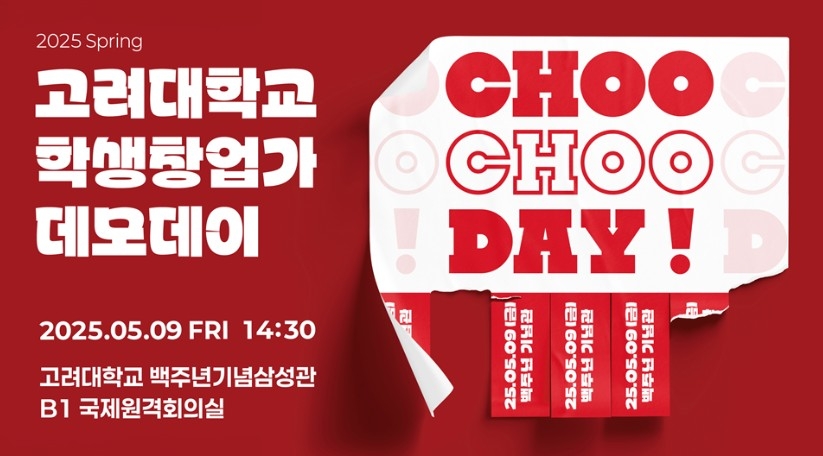
Riding the Spring Breeze: 2025 Spring CHOO CHOO DAY to Be Held

Riding the Spring Breeze: 2025 Spring CHOO CHOO DAY to Be Held      The Startup Station of Korea University Business School will host the 2025 Spring CHOO CHOO DAY on Friday, May 9 at 2:30 PM. The event will be held in person at the International Remote Conference Room, located on B1 of the Centennial Memorial Samsung Hall.    A total of five startups will participate in CHOO CHOO DAY, each showcasing their unique products and services. The participating companies are:  NAWA: Cup끼리, a smart trash bin that washes, dries, compresses, and collects used cups.  Markworks: Markworks, an AI-powered trademark similarity judgment and proactive search solution designed for patent attorneys.  ReB.Lively: NoriCare, a healthcare solution specializing in chronic disease management for seniors.  Peekaboo Labs: CARVE, a solution that enables users to build dedicated on-device AI systems with just one line of code.  Atlo: DITTO, an empathetic, personalized chatbot that responds to and resonates with human emotions.    The event is open to anyone interested in startups. Registration can be completed through the link below:    ▶ [Register Here]    CHOO CHOO DAY is a startup demo day where young entrepreneurs, nurtured through the Startup Research Institute’s incubation program, present and demonstrate their products and services. Held twice a year in the spring and fall, the event serves as a valuable platform for participating startups to attract early-stage investment and advance to the next stage of growth. 

2025.05.09 Views 3568

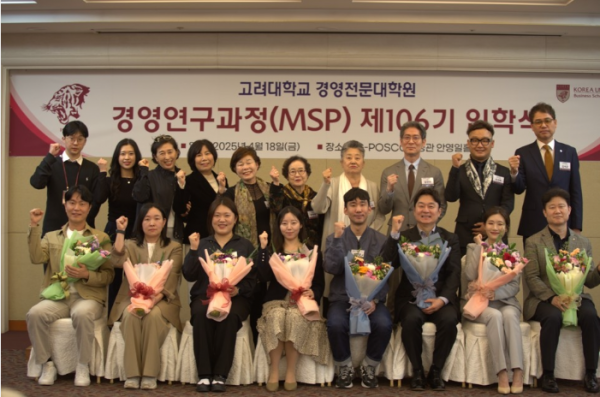
KUBS Holds Entrance Ceremony for the 106th Class of the MSP Cohort

“Doing Better by Being Different” – KUBS Holds Entrance Ceremony for the 106th Class of the MSP Cohort      On Friday, April 18, the Korea University Business School held the entrance ceremony and orientation for the 106th cohort of the Management Studies Program (MSP) at Ahn Young-Il Hall, located on the 6th floor of the LG-POSCO Hall. A total of eight new students joined the 106th cohort, embarking on a new journey of learning and growth together. MSP is a Mini MBA program tailored for young leaders, aiming to strengthen their strategic thinking and practical capabilities.      In his welcome address, Dean Eonsoo Kim of Korea University Business School emphasized, “At Korea University Business School, under the philosophy of ‘Doing Better by Being Different,’ we aim to nurture leaders who contribute to society through a differentiated approach to education.” He added, “You will cultivate the insight to navigate today’s rapidly changing business environment through the framework of 3C — Curiosity, Collaboration, and Contribution — and 4Tech —  AI, Semiconductors, Robotics, and Energy.”      Professor Seokkyun Kim, Academic Director of MSP, introduced the curriculum, faculty, and student activities, highlighting MSP’s unique strengths not only in academic excellence but also in fostering a broad and influential professional network. In his congratulatory remarks, Alumni Association President Hwan-gi Son said, “The passion and effort you dedicate over the next six months will surely become invaluable assets for your future,” and added, “It is a great honor to learn from top-tier faculty, and I look forward to the lasting connections that will be formed under the name of ‘alumni.’”      Following the speeches, the President and Vice President of the Alumni Association presented flower bouquets to the new students. The ceremony concluded with a rendition of the Korea University school song and a commemorative group photo.      Launched in 1963, the Management Studies Program (MSP) is Korea’s leading executive education program, boasting a tradition of over 60 years. It attracts mid- to senior-level executives, public sector leaders, and professionals from a wide range of industries. Korea University Business School remains committed to delivering relevant and impactful business education that responds to the evolving demands of society. 

2025.04.25 Views 3522

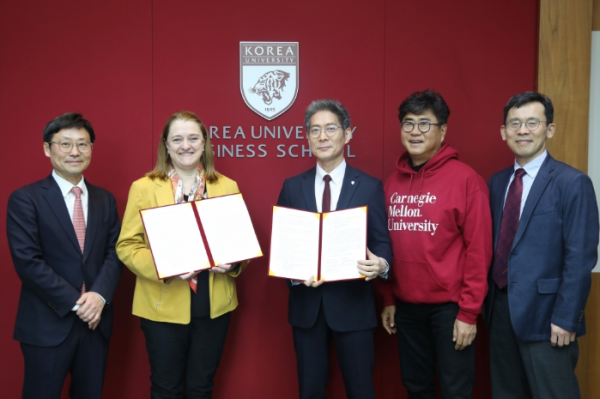
KUBS Signs MoU with Carnegie Mellon University’s Tepper School of Business

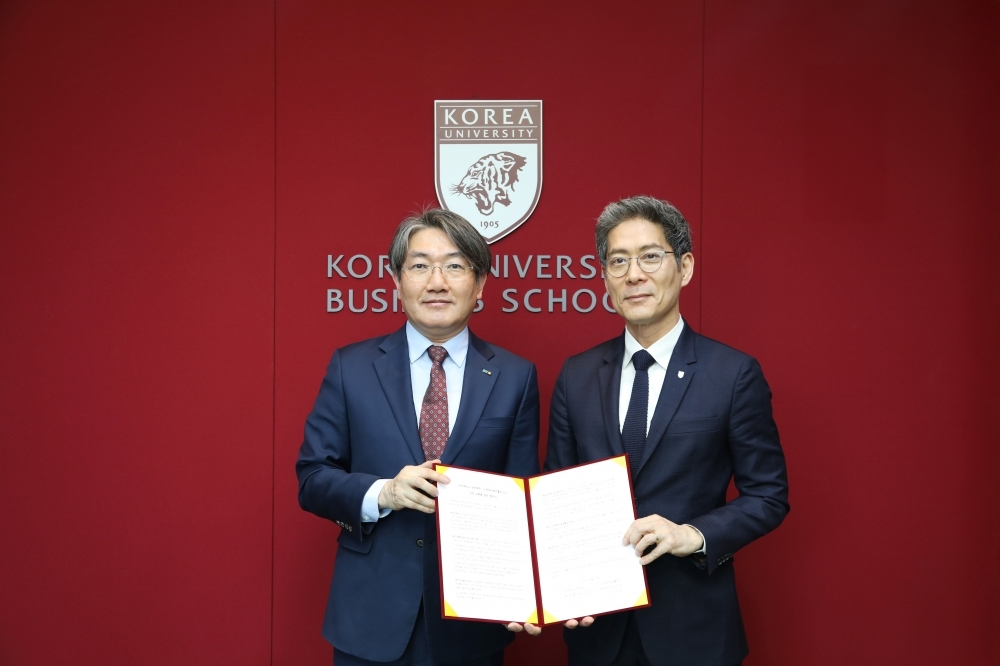
Korea University Business School Signs MoU with Carnegie Mellon University’s Tepper School of Business for International Collaboration      On Friday, April 4, Korea University Business School (KUBS) signed a Memorandum of Understanding (MoU) with the Tepper School of Business at Carnegie Mellon University (CMU) to strengthen international collaboration. The signing ceremony took place at the Dean’s Office, located on the first floor of the KUBS main building.  This in-person ceremony was made possible by the visit of Professor Isabelle Bajeux-Besnainou, Dean of the Tepper School of Business, to Korea University. Representing KUBS were Dean Eonsoo Kim, Associate Dean Gangseog Ryu, and Associate Dean Byung Cho Kim. The two institutions shared their vision and explored potential areas of cooperation.  Under the MoU, the two schools agreed to collaborate in the following areas:  ▲ faculty exchange for research and educational activities,  ▲ student exchange programs,  ▲ joint development and operation of courses within degree programs, and  ▲ cooperation on the development of new degree programs and curricula.      Following the signing, Dean Kim and Dean Bajeux-Besnainou participated in a commemorative photo session and exchanged gifts symbolizing their respective institutions.  Dean Eonsoo Kim stated, “Partnering with the Tepper School of Business—one of the world’s leading business schools—will be a meaningful step toward expanding KUBS’s global network. We will actively work to ensure this partnership leads to tangible exchanges and outcomes.”  Through this agreement, KUBS aims to further enhance its global competitiveness in education and research, and to solidify its position as a leading business school dedicated to nurturing global leaders.      The Tepper School of Business at Carnegie Mellon University is widely recognized for its data-driven approach to business education. Most recently, it ranked 6th in the 2025 U.S. News & World Report for undergraduate business programs in the United States, reaffirming its excellence and reputation. 

2025.04.18 Views 3847

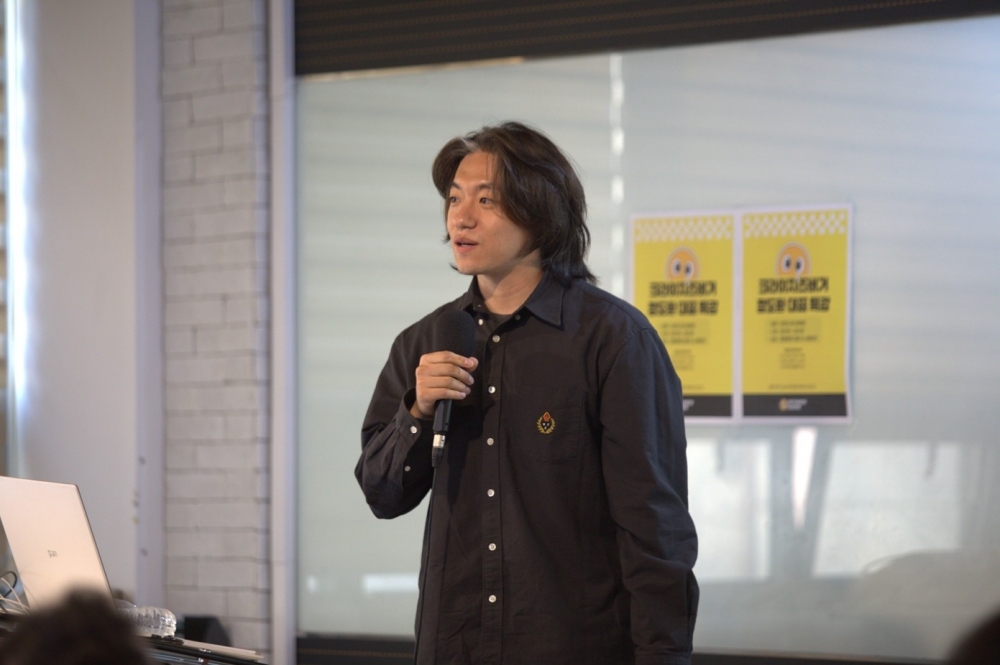
Entrepreneurship Academy Lecture by Jung Dohwan, Co-CEO of CRYCHEESEBURGER 

“Brands Are Ultimately Built by People” – Entrepreneurship Academy Lecture by Jung Dohwan, Co-CEO of CRYCHEESEBURGER      A special lecture organized by the Startup Station at Korea University Business School took place on Tuesday, April 8, at The STAGE on the second floor of the Main Building. Under the theme “Launching and Operating an F&B Brand,” the lecture was delivered by Jung Dohwan, Co-CEO of CRYCHEESEBURGER, a handcrafted burger brand, who shared practical insights into entrepreneurship and brand management.      Jung opened the lecture by explaining what led him to enter the F&B industry, emphasizing its systems-oriented nature and the appeal of offline business. “F&B is a field where you can gain hands-on experience in every aspect of business, from logistics and product development to marketing and customer experience,” he said. “Its biggest advantage is the ability to rapidly test and implement hypotheses in real time.”    He then shared the brand philosophy behind CRYCHEESEBURGER. As a casual dining brand, CRYCHEESEBURGER centers its core value on “delivering a satisfying dining experience at a reasonable price.” Jung emphasized, “What sets a brand apart is offering products and experiences that match its positioning,” and added, “Above all, the most important thing is to be honest with your customers.”    He also shared practical lessons from his journey as a founder and operator. “While having an efficient business strategy is important, the essence of any business ultimately lies in people,” he said. “What matters most is having teammates you can trust—those who are willing to climb the mountain with you.” On leadership, he noted, “The most effective way to motivate your team is by leading through example,” adding, “Never forget that, in the end, every leader is judged by their results.”      Toward the end of the lecture, a Q&A session was held with Korea University students preparing to launch their own startups. Jung encouraged them, saying, “Don’t trap yourself in a narrow mold—take charge of your life and career, and carve out your own path.” He reiterated the importance of maintaining a broad and open perspective.    CRYCHEESEBURGER is a Korea-based handcrafted burger brand that launched its first store in Bucheon in 2013 and currently operates seven company-owned locations throughout the Seoul metropolitan area. Jung Dohwan, who formerly served as an investment professional at Fast Ventures, supported the growth of numerous startups. He now leads the company as an F&B executive, putting into practice a distinctive branding strategy. 

2025.04.17 Views 3561

KUBS KULSOM Advances to Global Student Challenge Final with 5th Place Worldwide in Preliminary Round

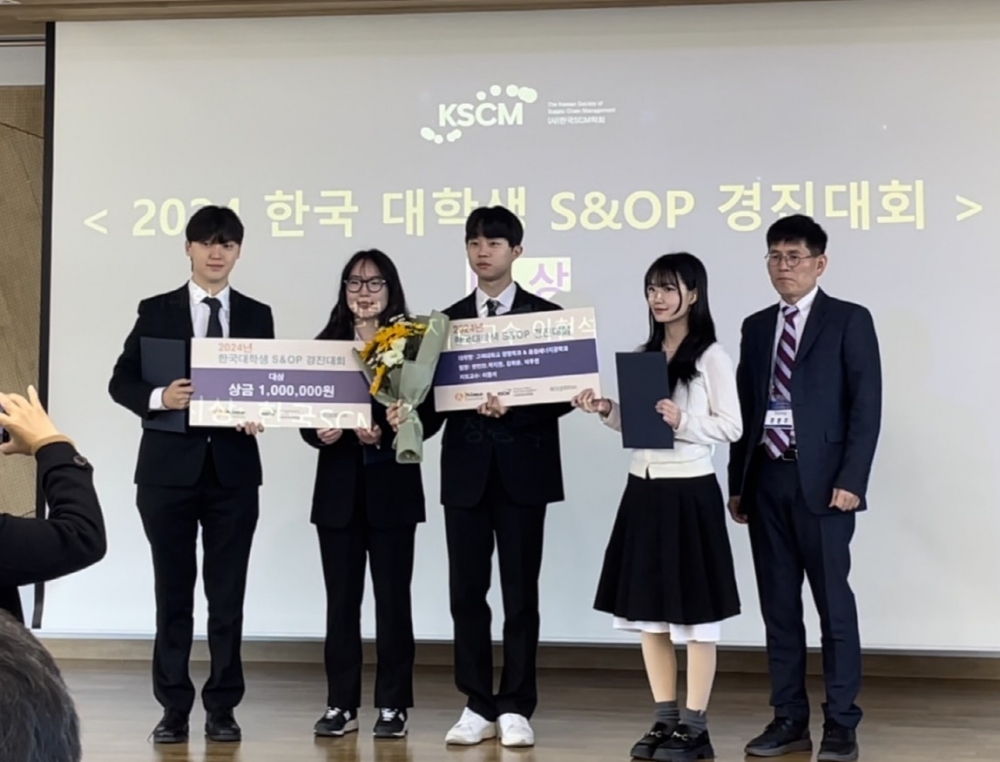
Korea University Business School’s KULSOM Advances to Global Student Challenge Final with 5th Place Worldwide in Preliminary Round      KULSOM (Korea University Logistics, Service and Operations Management), a student academic society at Korea University Business School, has advanced to the Final Round of the Global Student Challenge (GSC), a prestigious international supply chain management competition. Representing South Korea after winning the national S&OP (Sales and Operations Planning) competition, KULSOM placed 5th among 143 teams worldwide in the preliminary round.    KULSOM is composed of students interested in LSOM (Logistics, Service and Operations Management), a discipline within business administration. KULSOM has actively participated in both domestic and international competitions based on its academic and practical understanding of supply chain and operations strategy. In this event, the team competed under the name “KULSOM” along with Korea University’s official logo, further enhancing the university’s presence on the global stage.    Professor Hyun Seok Lee, academic director and LSOM professor, remarked, “This outstanding achievement reflects the students’ passion and hard work. It is a source of great pride to see Korea University Business School’s strengths once again recognized on the global stage.”      The GSC is an international competition hosted by Inchainge, a supply chain education institution based in the Netherlands. It brings together university students from around the world who specialize in supply chain and operations management to compete through strategic simulations modeled after real-world business scenarios.    KULSOM is now making thorough preparations for the Final Round, aiming to deliver another strong performance and take another leap forward on the global stage. 

2025.04.16 Views 3837

MSBA Meets Industry: Korea University Business School Signs MOU with Hyundai GF Holdings 

MSBA Meets Industry: Korea University Business School Signs MOU with Hyundai GF Holdings      On Tuesday, April 15, Korea University Business School (KUBS) signed a memorandum of understanding (MOU) with Hyundai GF Holdings Co., Ltd. to launch the 2025 Capstone Project for its MSBA (Master of Science in Business Analytics) program.    Attending on behalf of KUBS were △Dean Eonsoo Kim, △Associate Dean Byung Cho Kim, △Director of the Center for Digital Transformation in Business (CDTB) Kyung Sam Park, and △Jeunghyun Kim, academic director of the BA program. Hyundai GF Holdings was represented by Executive Vice President Sungil Kim and three other senior executives.      The event began with a tea reception, followed by the official signing of the MOU and a commemorative group photo. Both institutions expressed their commitment to establishing a practical and sustainable industry-academia partnership.    Dean Eonsoo Kim stated, “The Capstone Project serves as a bridge between theory and practice, offering students the opportunity to solve real-world problems while providing companies with creative, data-driven solutions.”    Executive Vice President Sungil Kim commented, “I hope today’s agreement marks the beginning of a productive partnership through close collaboration between academia and industry, leading to mutual growth for both students and the company.”      Following the agreement, MSBA students will engage in team projects tackling real-world challenges provided by the company, thereby strengthening their practical data analysis skills and gaining valuable hands-on experience.    KUBS remains committed to cultivating industry-ready professionals equipped with data-driven problem-solving skills through ongoing collaboration with corporate partners. 

2025.04.16 Views 4314

  • 첫페이지로
  • 31
  • 32
  • 33
  • 34
  • 35
  • 마지막페이지로