TOP

KUBS News

Total 1427

Turning Financial Data into Research - Special Lecture on Exploring Bloomberg Data for Academic Rese

"Turning Financial Data into Research" Special Lecture on Exploring Bloomberg Data for Academic Research     The Bloomberg Terminal contains one of the world's most comprehensive collections of financial market data. However, transforming that information into meaningful research variables requires multiple steps, from exploring available data and verifying variable definitions to extracting data and constructing research datasets. To help students navigate this process, Korea University Business School (KUBS) held a special lecture titled "Financial Data Exploration and Research Applications Using Bloomberg" on Friday, May 15, at the LG-POSCO Building. The session was led by Dr. Ha-yeon Park of the Korea University Business Administration Education and Research Group for BK21 FOUR and was attended by KUBS graduate students. The Bloomberg Terminal is a widely used financial data platform that provides access to real-time market information, company data, and financial analytics. During the lecture, students learned how to search for and extract financial data using both the Bloomberg Terminal and its Excel Add-in, while also exploring how Bloomberg data can be effectively applied to academic research. Dr. Park introduced the basic structure of the Bloomberg Terminal and demonstrated practical methods for exploring financial data. She guided students through the process of identifying research variables and verifying their definitions, emphasizing that carefully confirming variable names, definitions, and available options before downloading data is essential for ensuring research accuracy. She then explained how to extract data using the Excel Add-in and organize Bloomberg data into structured datasets suitable for empirical research. In the latter part of the lecture, Dr. Park demonstrated how Bloomberg data can support academic research by drawing on several case studies, including examples from her own work. She explained how ETF-related data can be identified, extracted, and organized according to different research objectives. She also advised students not to rely exclusively on Bloomberg, noting, "Rather than using Bloomberg as a single data source, I recommend using it for the types of data in which it has particular strengths." She emphasized the importance of cross-checking Bloomberg data with other databases whenever appropriate. The lecture provided students with a practical overview of how financial data can be translated into research—from developing research questions and selecting appropriate variables to constructing reliable datasets. By following the entire workflow, participants gained a clearer understanding of how Bloomberg data can be explored, evaluated, and incorporated into academic research. The lecture also reflects Korea University Business School's recent expansion of its Bloomberg Terminal infrastructure. As part of a financial data hub established through a KRW 1 billion donation from Eugene Investment & Securities, KUBS increased the number of Bloomberg Terminals from one to twelve—the largest Bloomberg Terminal installation among universities in Korea. Nine terminals have been installed in the Sudang CLC Lounge, while the remaining three are available through remote-access accounts.     The Bloomberg Terminal is one of the most widely used financial data platforms in investment banking, asset management, equity research, and other finance-related fields. Hands-on experience with the platform provides students with valuable practical skills that can help them transition into careers in the financial industry. Students who complete the Bloomberg Market Concepts (BMC) certification may also find it beneficial when preparing for the CFA examination or applying for internships in finance. With the expanded infrastructure significantly improving access throughout the semester, more students now have the opportunity to work directly with real-time market data in their coursework, research projects, and academic studies. KUBS Student Press Reporting by Chaewoo Lee Photography by Jinyoung Park

2026.07.22 Views 294

[Interview] Behind the Scenes of Preparing ‘Hosang Daedongje: PANTHERA

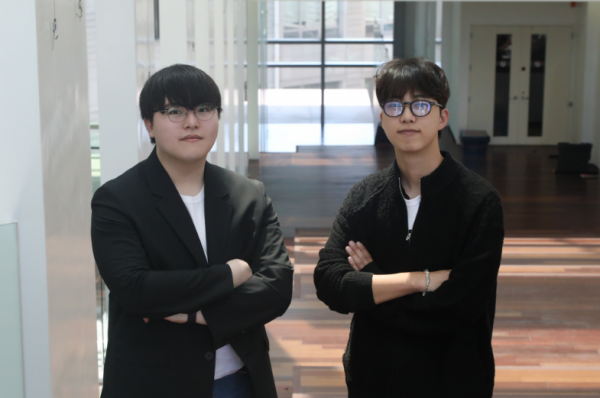
[Interview] A Festival Made Together, A Tradition Continued Together – Behind the Scenes of Preparing ‘Hosang Daedongje: PANTHERA’  The signature festival of Korea University Business School, Hosang Daedongje, is returning this year with a fresh new subtitle: PANTHERA. In particular, this year’s festival carries symbolic significance that goes beyond being a mere student event, as it is being prepared in celebration of Korea University’s 120th anniversary in 2025.  With the festival now scheduled for September, the name Daedongje officially adopted, and joint planning underway with the university administration, this year’s Hosang Daedongje is set to bring many changes. To learn more about these developments and the preparations behind them, we sat down with Student Council President Jeho Choi and Vice President Seungmin Yoo to hear the behind-the-scenes story and their vision for the future of the festival.    Q1. What is the biggest difference in this year’s Hosang Daedongje compared to previous years?  -President Jeho Choi:  The biggest change is the timing. In previous years, the festival was typically held in May, but this year it has been moved to September. It wasn’t originally planned in connection with the university’s 120th anniversary. Rather, the Student Council began organizing the event independently, and through discussions with the university administration, it naturally developed into a collaborative effort.    -Vice President Seungmin Yoo:  There has been a tendency for many events to be concentrated in the first semester, so we wanted to create a meaningful festival for the fall semester as well. Since 2025 marks the 120th anniversary of Korea University, preparing a festival that also commemorates this milestone made the planning even more meaningful.    Q2. What meaning and message are embedded in the name “Hosang (虎商)”?  -President Jeho Choi:  Hosang is a compound of Ho (虎)—the tiger, which symbolizes Korea University—and Sang (商), meaning business. It embodies the identity and pride of the Business School. The official name this year is “Korea University Business School Hosang Daedongje: PANTHERA”, with Panthera being the Latin term for tiger. In the past, we simply used the name “Hosangje,” but to elevate it from a one-time event to an established brand, we decided to add “Daedongje.” Upon reviewing past materials, we found records where the term “Hosang Daedongje” was used, so we felt it wouldn’t seem unfamiliar.    -Vice President Seungmin Yoo:  The term Hosang may feel unfamiliar to students who entered the university after the COVID-19 pandemic. We felt the need to rebrand it in a more intuitive and persuasive way. By adopting “Daedongje,” a common naming convention for university festivals, we restructured the name as “Hosang Daedongje.” Just as the name suggests, we hope students can feel the unique symbolism and pride associated with Korea University Business School.    Q3. What was your main focus when planning this festival?  -President Jeho Choi:  Our primary goal was to create a festival that everyone could enjoy together. We didn’t want it to be an event catered to only a select group of students, but rather one that all members of the Business School could take part in and feel a sense of belonging to.    -Vice President Seungmin Yoo:  Instead of centering the festival around just a few main events, we aimed to encourage broad participation through a diverse range of programs. In addition to booths, pubs, and performances, we also prepared a garden party on the Business Lawn to ensure there was something for everyone to enjoy.    Q4. Who are you working with to prepare this festival, and how are the roles divided?  -President Jeho Choi:  The Student Council is taking the lead in planning the festival, and externally, we’re working closely with the 120th Anniversary Committee, the Dean’s Office, and the Public Relations Team. The festival preparation team is organized into five departments, which collaborate organically based on their respective roles.    -Vice President Seungmin Yoo:  Each department operates according to its designated responsibilities.  △ The Planning & Operations Department manages booths, pub operations, safety protocols, and overall coordination. △ The Stage Production Department is in charge of planning the main performance and stage-related programs. △ The Finance & Partnerships Department handles collaboration with external vendors and manages the budget. △ The Art Direction Department oversees festival branding and visual content production. △ Lastly, the Career Events Department organizes career-related programs such as the garden party and competitions, in collaboration with the university administration. Thanks to each team fulfilling its role diligently, the festival preparations have been progressing smoothly and reliably.    Q5. What has been the most difficult part or unexpected challenge in the preparation process so far?  -President Jeho Choi:  The most unexpected part was that we ended up preparing the festival in collaboration with the Business School administration. It was initially planned as an independent student initiative, but in pursuit of a richer, more meaningful event, the administration offered enthusiastic support—and we’re truly grateful for that.    -Vice President Seungmin Yoo:  As the scale of the festival expanded, it evolved from a student-led event into one closely connected to the university as a whole. This naturally brought about administrative and logistical challenges. It hasn’t been easy to take full responsibility for all aspects of the process from a student’s standpoint, but we’ve done our best to approach it with a strong sense of responsibility.    Q6. What are some of the main programs planned for this year’s Hosang Festival?  -President Jeho Choi:  In addition to booths, pubs, and stage performances, an academic forum is scheduled to commemorate the 120th anniversary of Korea University. We plan to invite selected award recipients and create an opportunity for meaningful interaction with alumni.    -Vice President Seungmin Yoo:  On the second day of the festival, a garden party will be held on the Business Lawn. It will bring together graduates and current students, and in a time when such intergenerational exchange is increasingly rare, we hope it will serve as a meaningful occasion for connection.    Q7. How are you promoting and communicating to encourage student participation?  -President Jeho Choi:  We’re approaching the festival’s naming and design with care to ensure it isn’t seen as “an event only for those already interested.” Our goal is to establish it as a recognizable brand that all students can relate to and feel a part of.    -Vice President Seungmin Yoo:  We’re running dedicated social media accounts and using card news and video content as promotional tools. During the festival, we also plan to set up photo booths around the Business School campus to create a welcoming environment where students can naturally engage with the festivities.    Q8. What message would you like to convey to Business School students through this festival?  -President Jeho Choi:  Through this festival, I hope students can feel a sense of pride in being part of the Business School and experience the joy of coming together as a community. More than just an event, I hope it becomes a lasting and meaningful memory.    -Vice President Seungmin Yoo:  It’s rare—even compared to other colleges—to have a college-level festival of this scale. I hope this festival becomes a symbolic event that bridges the past, present, and future, allowing students to feel proud of being part of a tradition they are helping to carry forward.    Q9. As President and Vice President, what thoughts or sense of responsibility have you felt while preparing this festival?  -President Jeho Choi:  As many former presidents have said, the festival is the largest and most impactful event during a Student Council term. With that comes a deep sense of responsibility—but also immense fulfillment. I’m especially grateful to our Vice President, who has stood by me throughout this journey, and to every member of the executive committee who has been working so hard to make this festival a success.    -Vice President Seungmin Yoo:  While the festival itself lasts only a short time, its preparation takes months of effort behind the scenes. At every step, I’ve been thinking about how we can better reach and connect with our fellow students. I’ve received tremendous support from the President and all the executive committee members, and I sincerely thank each and every one of them for their dedication and teamwork.    Q10. What moment are you personally looking forward to the most in the festival?  -President Jeho Choi:  I see the stage performance as the climax of the festival. It’s the moment where all our hard work comes together, so I’m especially eager to see how the students respond. I’m also looking forward to the new university-hosted program on the second day, which is being introduced for the first time this year.    -Vice President Seungmin Yoo:  While I’m also excited about the stage events on the first day, I’m personally most looking forward to the garden party on the second day. It’s rare to have an occasion where juniors and seniors come together like this, and I hope it becomes a meaningful moment that leaves lasting memories.    Q11. Any final words to fellow Business School students?  -President Jeho Choi:  To those who will join us in the future: I’ve never once regretted choosing Korea University Business School. My campus life has been incredibly rewarding, and I truly believe our school excels both academically and in spirit. To my fellow students—thank you for placing your trust in me. I will do my best to prove that your choice was the right one.    -Vice President Seungmin Yoo:  We’re working hard to live up to the trust you’ve given us. To future students: I hope you make the most of all the unique opportunities that only Korea University Business School can offer. Enjoy every moment to the fullest.    Q12. Any advice or encouragement you’d like to give to the next student council who will plan the future festival?  -President Jeho Choi:  Since the festival hasn’t concluded yet, I hesitate to give concrete advice—but if I could offer some encouragement: a festival is one of the few events where you get to see real-time reactions from your peers, and that makes the experience incredibly rewarding. I hope you keep that in mind and prepare with excitement and anticipation.    -Vice President Seungmin Yoo:  It may be challenging to match the budget or scale of this year’s Daedongje, but by incorporating meaningful elements—such as career or academic content like the second-day program—you can create something with even greater depth. Most importantly, never forget the effort and dedication of your fellow executive members. Support and encourage one another throughout the process. 

2025.08.01 Views 2969

The World Met at K-CLUB: Discussing Global Leadership at Korea University Business School 

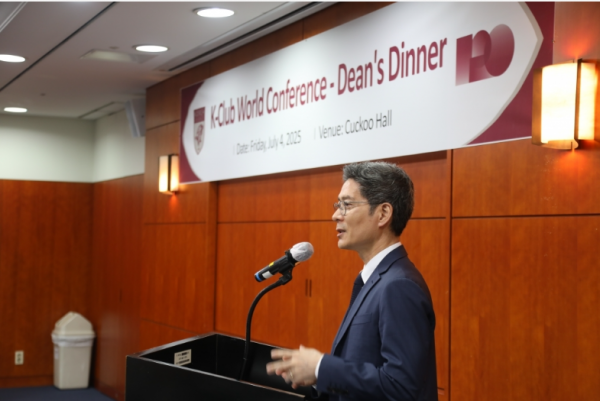
The World Met at K-CLUB: Discussing Global Leadership at Korea University Business School  On Friday, July 4, Korea University Business School (KUBS) successfully hosted the K-Club World Conference, a global platform for academic exchange that featured diverse academic sessions and a dinner with distinguished scholars from both Korea and abroad. Gathering researchers and experts from around the world, the conference provided a valuable opportunity to share academic insights and explore avenues for collaboration toward a sustainable future.  In his welcoming remarks, Dean Eonsoo Kim of Korea University Business School stated,  The year 2025 marks both the 120th anniversary of Korea University and a pivotal moment for the K-CLUB program to take a major leap forward,” he said. “Through exchanges with scholars who are producing outstanding research across the globe, Korea University will establish itself as a central hub in the global research collaboration network.  One of the highlights of the event was Theme 9: Insight and Foresight of Business & Industry, held in Room 312 of the SK Future Hall. This session brought together global scholars from various fields of business for an in-depth discussion on the future of industries and sustainable management. Prof. Jay Hyuk Rhee, Director of the ESG Research Center, served as the session chair and led the discussions, while the presenters contributed diverse perspectives on the key challenges confronting contemporary business and management practices, facilitating vibrant academic exchange.  In Session 1, Professor Darjan Karabašević delivered a presentation on the application of Multi-Criteria Decision-Making (MCDM) techniques in business and management. Professor Mustafa Tevfik Kartal examined the impact of environmental changes on sustainability. Professor Umair Akram explored the relationship between artificial intelligence and consumer behavior, while Professor Sunil Kumar proposed disruptive innovation as a strategy for achieving sustainable development.  Session 2 began with a presentation by Professor Ender Demir on strategic responses in an uncertain financial environment. Professor Mahmood Ahmad explored the potential of green finance and ecological innovation in overcoming the resource curse. Professor Gurmeet Singh reflected on his scholarly journey, sharing professional insights and experience. Professor Keng Boon Ooi introduced case studies highlighting innovation in industrial management through information systems. Lastly, Professor Justin Paul offered practical guidance on writing high-quality review papers, providing valuable research know-how.  After the sessions, participants were taken on a campus tour led by KUBE, the student ambassadors of Korea University Business School. The tour began at the KUBS Main Building, where they visited the KUBS Wall of Honor and reflected on the significance of major donors' names and their dedicated contributions to the school's advancement. They then moved to the Startup Station, where they explored the hands-on environment that supports student entrepreneurship, along with the innovative educational programs offered there. At the Hyundai Motor Hall, participants observed how the donor names engraved on the staircase wall embody a culture of voluntary giving that sustains the school’s long-term growth. Finally, at the LG-POSCO Hall, they learned that the building was designed by the same architect behind the Shilla Hotel, and experienced first-hand how its hotel-quality spatial design expresses the school’s educational philosophy and identity. The tour received a highly positive response as it allowed participants to experience the school’s rich heritage, future-oriented vision, and the symbolic values embedded in its architecture and spaces.  In the evening, the Dean’s Dinner, held at Cuckoo Hall, brought together domestic and international faculty members for a warm and meaningful gathering that extended beyond academic exchange, fostering a sense of camaraderie and friendship. The dinner provided a relaxed and welcoming setting for scholars from diverse cultural backgrounds to engage in dialogue, with vibrant discussions on potential joint research and ongoing collaboration.  The K-Club World Conference served as a symbolic event that encapsulated Korea University Business School’s commitment to global leadership, sustainability-driven scholarship, and knowledge-based international cooperation. It reaffirmed KUBS’s status as a knowledge hub that bridges academia and practice, and connects Korea with the global community. Looking ahead, KUBS will continue to expand its foundation for sustainable growth and international collaboration in an evolving global landscape, striving to become a leading global platform for education and research for future generations. 

2025.08.01 Views 3592

[Interview] Professor Taewon Park’s CEMS Skill Seminar – Learning “Real Business” Through Field Expe

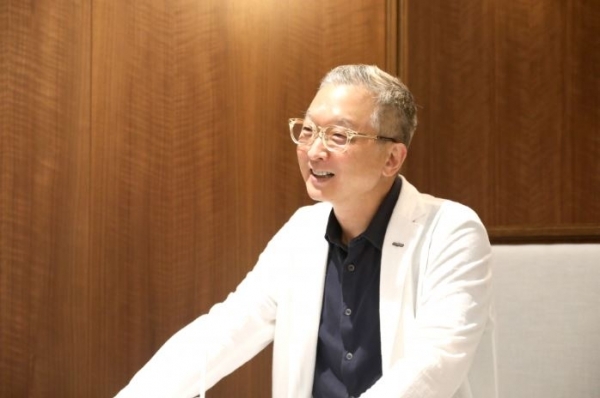
[Interview] Professor Taewon Park’s CEMS Skill Seminar – Learning “Real Business” Through Field Experience     Field-based education that allows students to directly observe and engage with corporate transformation and innovation is drawing increasing attention. Korea University Business School’s (KUBS) CEMS Skill Seminar reflects this trend by offering students a unique opportunity to experience real-world business environments firsthand. The seminar was planned and led by Professor Taewon Park—Vice Chairman of Hancom Inc. and Board Member of Chung-Ang University—who used the transformation of Doosan Group as a central case study to emphasize the importance of practical, experience-driven business education that goes beyond theory. KUBS Business Weekly sat down with him to learn more about what “real business” means in today’s educational landscape and what he hopes to cultivate in future global business leaders.   1. What inspired you to design and lead the CEMS Skill Seminar? Each year, I teach a course on “Transformation” to students in the G-MIM program, focusing on how businesses evolve across generations. In particular, I use the case of Doosan Group, where I have built my career, to illustrate how corporate strategies shift and adapt over time. Doosan, founded in 1896, is one of the oldest companies in South Korea.   The company began as Park Seung-jik Store, a dry goods shop, in its first generation. In the second generation, it expanded horizontally and vertically, focusing on OB Beer and other B2C consumer goods businesses. In the third generation, Doosan underwent major restructuring, selling off its consumer businesses including OB Beer, and pivoting toward B2B industries such as heavy industries and construction equipment. In its current, fourth generation, the company is undergoing another transformation, shifting its focus to next-generation energy (such as SMRs), smart machinery, and advanced technology industries.   This Skill Seminar was designed to help students understand how businesses, like Doosan, adapt their strategies in response to technological and societal change in order to survive and grow. At the same time, the course aims to enhance students’ practical understanding of business by introducing key terminology used in real-world corporate settings.   2. What kind of learning or insights did you hope students would gain through the field visits and company tours? Whether or not they come from a business background, most students are exposed to management primarily through theory-based courses. However, real-world business is far more complex and dynamic. In my lectures, I emphasize the “Real Business World,” sharing how companies actually operate. This program allowed students to see how theory is applied in practice through two on-site learning experiences. The first was a visit to Doosan’s headquarters in Bundang, where students observed the office environment and employees’ working styles, and toured the corporate history museum, which outlines how the company’s business evolved through each generation. The second was a two-day field trip to Changwon, where students visited five factories—including smart factories—and experienced Doosan’s cutting-edge manufacturing processes firsthand. They also had the opportunity to see high-level technologies such as small modular reactors (SMRs) and gas turbines up close, both of which are manufactured by only a few countries worldwide. Through these visits, students were able to gain a vivid understanding of global industrial competitiveness.   3. Were there any memorable moments or student reactions during the seminar? What left the deepest impression on me was how satisfied students were with aspects of the program beyond the classroom. During the on-site learning experience, students stayed comfortably in five-star hotel accommodations, each with a private room. We also provided a ten-course dinner paired with wine. After dinner, students naturally gathered and continued to socialize through second and third rounds of informal meetups. This gave them the chance to share stories they didn’t get to exchange during class, and to build a stronger sense of connection and belonging. Rather than just a corporate site visit, the seminar became a meaningful experience of shared learning and interaction. I believe experiences like this leave a lasting impression. Perhaps thanks to programs like this, Korea University ranked first among the 33 CEMS member schools worldwide last year. I believe the Skill Seminar played a meaningful role in achieving that recognition.   4. What are your hopes for the KUBS CEMS program and the Skill Seminar moving forward? I find it highly encouraging that Korea University’s international standing has been rising in recent years. As an adjunct professor who also works in the field, I believe the role of faculty with real-world industry experience is becoming increasingly important. Education grounded in practical experience helps students cultivate realistic judgment and a global business mindset. I hope that the CEMS Skill Seminar will continue to serve as a dynamic educational platform that bridges theory and practice, Korea and the world—enabling students to grow into globally competitive and practice-ready business leaders.

2025.07.31 Views 2467

“Strict Yet Kind”: Professor Jongsoo Kim on His Teaching Philosophy and Seoktap Award 

“Strict Yet Kind”: Professor Jongsoo Kim on His Teaching Philosophy and Seoktap Award      Professor Jongsoo Kim, recipient of the Seoktap Teaching Award for the second semester of 2024, is a faculty member in the field of Management and Strategy. He teaches the undergraduate course Business Strategy and the graduate course Strategic Management Methodology, fostering deep engagement with students and emphasizing foundational knowledge. Appointed as a new faculty member in September 2024, Professor Kim actively conducts research in innovation, mergers and acquisitions (M&A), and human capital. Despite it being his very first semester of teaching, he was honored with the Seoktap Teaching Award in recognition of his exceptional instructional skills. KUBS Weekly spoke with Professor Kim to learn more about his teaching philosophy, classroom approach, and aspirations for the future.    Q1. Please briefly introduce yourself.  A1. My name is Jongsoo Kim, and I joined Korea University in September of last year. I’m in the Management and Strategy area, and my main research interests include innovation, mergers and acquisitions (M&A), and human capital. I currently teach Business Strategy at the undergraduate level and Strategic Management Methodology for graduate students.    Q2. What are your thoughts on receiving the Seoktap Teaching Award?  A2. As a Korea University alumnus, I used to look up to professors who received this award and thought to myself, “If I ever become a professor, I’d love to win that someday.” So it’s truly an honor to actually receive it. I hope to keep working hard and, hopefully, earn more awards in the future.    Q3. What values do you prioritize most in your teaching?  A3. My teaching philosophy is: “Be strict but kind.” In fact, it’s a personal principle I try to apply not only in the classroom but in all areas of life. When students have questions or are facing difficulties, I do my best to respond kindly. I also make it a rule to reply to emails or messages within two hours.    Q4. Is there anything you particularly focus on in communicating with students?  A4. Some students may sometimes feel that the pace of the course is slow, but I believe it’s important to repeatedly explain the core structure and logic. Once that foundation is solid, it becomes much easier for them to understand new material. I also make a constant effort to communicate openly and without barriers with my students.    Q5. Do you have any memorable classes or students?  A5. Since I assign fixed seats in my classes, I’ve come to remember the expressions and eye contact of students who react to my explanations. When I see students looking at me attentively, it makes me reflect—“Am I teaching well right now?” That eye contact gives me a lot of encouragement.    Q6. Do you have any special methods or routines for preparing your classes?  A6. Before the first class of each week, I always check the latest business or economic news. I choose one story and use it to illustrate a concept from the course. For example, I recently used the NewJeans case to explain equity structure and why conflicts can arise from it. Students found it highly engaging, and their level of focus increased noticeably.    Q7. Outside of class, is there any advice you'd like to share with students—on careers, life, attitude, or anything else?  A7. These days, I often see students writing emails as if they were instant messages. That’s why I take time during class to teach proper email etiquette. It’s not just a technical skill—it reflects your basic attitude toward communication in professional settings. One message I always emphasize is: “Attitude over brains.” The fact that you’re at Korea University already proves you're smart enough. From that point on, attitude becomes even more important. Of course, skills matter—but in the long run, people with a good attitude and humility tend to earn better opportunities and go farther. And I believe it’s especially important to treat those in more difficult positions with kindness. Once you're out in the real world, people are more likely to remember your attitude than your ability.    Q8. What are your future plans or goals?  A8. In a course evaluation, one student wrote, “Professor Kim’s Business Strategy course could become a signature course for KUBS.” I was deeply encouraged by that comment, and I’d really like to live up to it and make that vision a reality.    Q9. Lastly, is there anything you’d like to say to KU Business Journal readers and the KUBS community?  A9. Just yesterday, I went for a walk with my five-year-old daughter and bought her some ice cream. That small moment felt incredibly precious. With the weather being so hot and everyone caught up in their busy routines, I hope you can find a brief moment to pause and enjoy something simple—like sharing an ice cream. Whether you’re a professor or a student, I know you’re all doing your best in your own way. But sometimes, it’s those small, quiet moments that bring the greatest comfort. I hope you won’t forget to make space for them.   

2025.07.29 Views 3219

“I Prefer Wrong Answers” – Why Professor Minjung Kim’s Class Is Special

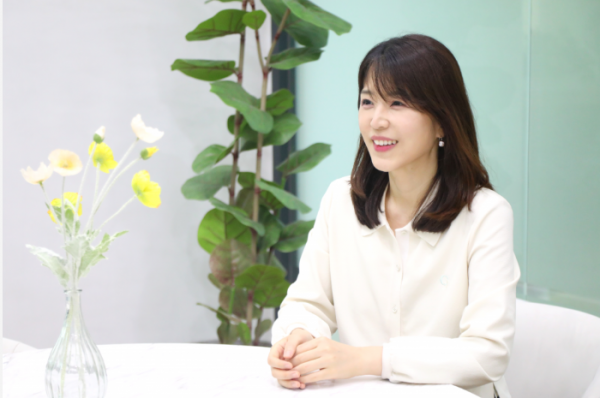
“I Prefer Wrong Answers” – Why Professor Minjung Kim’s Class Is Special      Professor Minjung Kim, recipient of the 2024 Fall Semester Seok-Top Excellence in Teaching Award, is a faculty member specializing in Business Strategy, Technological Innovation, and Global Strategy. She teaches “International Business” and “Strategic Management,” leading courses that emphasize critical thinking and open communication. After earning her undergraduate and master’s degrees at Korea University, Professor Kim obtained her Ph.D. overseas and taught abroad before returning to her alma mater. In her very first semester back, she was met with enthusiastic praise from students, ultimately earning her this distinguished award. With her classes characterized by rigorous discussions, sincere attention to each individual student, and a strong focus on critical thinking, Professor Kim’s teaching goes far beyond simple knowledge transmission—creating an environment that fosters student growth and development. The KU Business Journal sat down with Professor Minjung Kim to hear about her educational philosophy, what shapes her classes, and her vision for the future.      Q1. Please briefly introduce yourself.  A1. I’m Professor Minjung Kim, with a focus on Business Strategy, Technological Innovation, and Global Strategy. At the moment, I teach “International Business” and “Strategic Management.”    Q2. How did you feel about receiving the Seok-Top Excellence in Teaching Award?  A2. I was truly surprised and delighted to receive this award for the very first semester I taught after returning to my alma mater. I still vividly remember taking classes in LG-POSCO Hall as a student, and now, being able to teach in that same place feels incredibly special and meaningful.  I’m sincerely grateful to the students for their positive feedback, which made this recognition possible. I often reflect on the inspiring guidance I received from my professors during my undergraduate and master’s years, and I teach with the hope of becoming a professor who can have the same kind of positive impact on my students.    Q3. What do you value most in your teaching?  A3. I place great importance on cultivating students’ critical and logical thinking. Rather than simply memorizing facts, I encourage them to ask questions like “Why is that?” or “Is there another perspective?” My classes are discussion-oriented, where students are encouraged to exchange diverse viewpoints. I believe this process helps them develop the kind of thinking that can be applied meaningfully in real-world contexts.    Q4. Is there anything you pay particular attention to when communicating with students?  A4. I make a conscious effort to remain approachable so that students feel comfortable coming to me without hesitation. I often tell them, “I actually prefer wrong answers,” because an incorrect answer doesn’t necessarily mean the thinking behind it is wrong. By sharing different perspectives and refining our ideas together, we often arrive at a much deeper understanding. I’m grateful that students seem to respond positively to this approach.    Q5. Do you have a memorable class or student?  A5. One student once shared that when they opened their textbook to prepare for an exam, they were surprised to find that they already understood most of the material. That truly made me happy, as it meant the class itself had already helped them internalize the content. Another student started a small bungeoppang (fish-shaped pastry) business and, out of respect for local vendors, chose to open only after 9 p.m. I was so impressed by their sense of initiative and responsibility that I went out at that hour to cheer them on. Later, the student sent me a message saying they were touched by how close they felt to a professor. That experience reminded me how important it is to stay connected with students and to create more opportunities to support and encourage them up close.      Q6. Do you have any personal know-how when it comes to preparing lectures or conducting classes?  A6. I place great emphasis on ensuring students truly understand the material. I constantly try to anticipate where they might struggle and design my lectures to address those points. Since not all students are comfortable asking questions, I proactively clarify concepts that may be confusing. I also continuously refine my teaching materials to better support this approach.    Q7. Do you have any advice for students outside of class?  A7. These days, many students tend to pursue safe paths in the face of uncertainty and competition. But I encourage them to take on challenges—even the smallest ones. Small steps in everyday life can lead to meaningful discoveries about what they truly enjoy and where their strengths lie. Rather than fearing failure, I hope they cherish the learning and growth that come from the process.      Q8. What are your goals for future research and teaching?  A8. Although I’m now in my fifth year as a professor, I still consider myself a learner—continuously working to create better and more engaging classes. I’m committed to contributing through both teaching and research to help Korea University students become globally minded leaders.  In terms of research, while I’ve mainly focused on U.S.-based cases so far, I plan to shift my attention toward exploring concrete strategies that can strengthen innovation performance among Korean companies.      Q9. Finally, do you have any words for readers of The Business Review and members of the Business School?  A9. Korea University holds a truly special place in my heart. Even while I was pursuing my Ph.D. and teaching at other institutions, the strong sense of connection and community at KU never left me. Since returning, I’ve come to appreciate that even more deeply. I hope to continue growing—as both a professor and a proud alum—so that I can give back meaningfully to this remarkable community. 

2025.07.29 Views 3437

  • 첫페이지로
  • 21
  • 22
  • 23
  • 24
  • 25
  • 마지막페이지로