TOP

KUBS News

Total 1427

Turning Financial Data into Research - Special Lecture on Exploring Bloomberg Data for Academic Rese

"Turning Financial Data into Research" Special Lecture on Exploring Bloomberg Data for Academic Research     The Bloomberg Terminal contains one of the world's most comprehensive collections of financial market data. However, transforming that information into meaningful research variables requires multiple steps, from exploring available data and verifying variable definitions to extracting data and constructing research datasets. To help students navigate this process, Korea University Business School (KUBS) held a special lecture titled "Financial Data Exploration and Research Applications Using Bloomberg" on Friday, May 15, at the LG-POSCO Building. The session was led by Dr. Ha-yeon Park of the Korea University Business Administration Education and Research Group for BK21 FOUR and was attended by KUBS graduate students. The Bloomberg Terminal is a widely used financial data platform that provides access to real-time market information, company data, and financial analytics. During the lecture, students learned how to search for and extract financial data using both the Bloomberg Terminal and its Excel Add-in, while also exploring how Bloomberg data can be effectively applied to academic research. Dr. Park introduced the basic structure of the Bloomberg Terminal and demonstrated practical methods for exploring financial data. She guided students through the process of identifying research variables and verifying their definitions, emphasizing that carefully confirming variable names, definitions, and available options before downloading data is essential for ensuring research accuracy. She then explained how to extract data using the Excel Add-in and organize Bloomberg data into structured datasets suitable for empirical research. In the latter part of the lecture, Dr. Park demonstrated how Bloomberg data can support academic research by drawing on several case studies, including examples from her own work. She explained how ETF-related data can be identified, extracted, and organized according to different research objectives. She also advised students not to rely exclusively on Bloomberg, noting, "Rather than using Bloomberg as a single data source, I recommend using it for the types of data in which it has particular strengths." She emphasized the importance of cross-checking Bloomberg data with other databases whenever appropriate. The lecture provided students with a practical overview of how financial data can be translated into research—from developing research questions and selecting appropriate variables to constructing reliable datasets. By following the entire workflow, participants gained a clearer understanding of how Bloomberg data can be explored, evaluated, and incorporated into academic research. The lecture also reflects Korea University Business School's recent expansion of its Bloomberg Terminal infrastructure. As part of a financial data hub established through a KRW 1 billion donation from Eugene Investment & Securities, KUBS increased the number of Bloomberg Terminals from one to twelve—the largest Bloomberg Terminal installation among universities in Korea. Nine terminals have been installed in the Sudang CLC Lounge, while the remaining three are available through remote-access accounts.     The Bloomberg Terminal is one of the most widely used financial data platforms in investment banking, asset management, equity research, and other finance-related fields. Hands-on experience with the platform provides students with valuable practical skills that can help them transition into careers in the financial industry. Students who complete the Bloomberg Market Concepts (BMC) certification may also find it beneficial when preparing for the CFA examination or applying for internships in finance. With the expanded infrastructure significantly improving access throughout the semester, more students now have the opportunity to work directly with real-time market data in their coursework, research projects, and academic studies. KUBS Student Press Reporting by Chaewoo Lee Photography by Jinyoung Park

2026.07.22 Views 365

[Interview with Newly Appointed Faculty for Fall 2025] Professor Angela Aerry Choi

[Interview with Newly Appointed Faculty for Fall 2025] Professor Angela Aerry Choi — Move Forward Steadily with a Long-Term Perspective, Rather Than Focusing Only on Immediate Results.  In September 2025, Korea University Business School appointed five new faculty members, each bringing expertise in diverse areas of research: Professor Dae hoon Noh (LSOM), Professor Juyoung Lee (Business Administration), Professor Seunghoo Chung (Business Administration), Professor Jae Young Cho (Strategy), and Professor Angela Aerry Choi (Information Systems).  To mark the occasion, KUBS News sat down with the newly appointed professors to introduce their research interests and educational philosophies to our readers.    Q1. Please introduce yourself.  After earning my Ph.D. in Management Engineering from KAIST, I started my academic career as an Assistant Professor at Florida State University. I later continued my research and teaching at Sungkyunkwan University Business School before recently joining Korea University Business School. My research focuses on Information Systems and Business Analytics, exploring data-driven decision-making and consumer behavior in digital environments. Through my research, I strive to achieve both academic excellence and social impact by collaborating with industry partners.    Q2. What led you to join Korea University Business School, and how do you feel about it?  My academic journey through KAIST, Florida State University, and Sungkyunkwan University has allowed me to gain diverse academic and cultural experiences. Korea University is an academic community that harmonizes tradition and innovation, and it is a great honor for me to join such a distinguished institution. I was deeply inspired by KUBS’s vision of fostering global leaders through data and technology, which led me to join the school. I am committed to leveraging my research and teaching experience to contribute to the development of Korea University and the growth of its students.    Q3. What research areas or topics are you currently focusing on?  My research focuses on consumer behavior in the context of digital platforms and artificial intelligence (AI). I use experimental methods to examine how the credibility of AI-generated review summaries and the authenticity of influencer marketing influence consumer decision-making. I also study how users form habits and sustain continued use in digital health and fintech services. Drawing on my research experience at Florida State University and Sungkyunkwan University, I pursue meaningful research that bridges academia and industry on a global scale.    Q4. What is your teaching and mentoring philosophy?  I believe that classes should go beyond delivering knowledge and serve as a space where students learn to define and solve problems independently. Drawing on my experience, I value experiential learning that integrates both theory and real-world data. One of my core teaching philosophies is fostering an environment where students feel comfortable taking risks and learning from failure. Ultimately, my goal is to help students develop the ability to tell compelling stories with data.    Q5. Besides academic knowledge, what do you think students must learn during university life?  Developing collaboration and communication skills is one of the most important goals of university education. Through my Ph.D. program at KAIST and my research and teaching experiences in the U.S. and Korea, I have come to deeply appreciate the value of understanding and working effectively across differences. While academic achievement is crucial, the experience of developing teamwork and leadership skills will be invaluable beyond graduation. That is why I encourage students to not only gain knowledge, but also learn how to grow together with others.    Q6. As a new faculty member at the Business School, what are your goals or visions moving forward?  I hope to contribute to positioning Korea University Business School as a global hub for research and education. In particular, I plan to generate both academic contributions and industry insights through empirical research leveraging data and technology. Above all, my goal is to become a globally recognized scholar by consistently publishing high-impact research in leading academic journals. Building on my previous experiences, I aim to expand my global network and contribute meaningfully to research, education, and industry.    Q7. Finally, do you have any advice or encouragement for Korea University students as they head out into the world?  As a researcher, I believe perseverance is the greatest virtue. To become a globally impactful scholar, it is more important to build a lasting body of meaningful knowledge over time than to seek short-term success. Whether in academia or in life, I hope students will maintain a long-term perspective and continue progressing with patience and consistency, rather than chasing immediate results. Failures and missteps are integral to the growth process, and it is through them that great achievements eventually emerge. 

2025.10.13 Views 2674

[From Learning to Teaching: Interview with Prof. Sohyeon Park, Newly Appointed to Ajou University]

[From Learning to Teaching: Interview with Professor Sohyeon Park, Newly Appointed to Ajou University] — Carrying the Lessons from Her Alma Mater, Shining in a New Role  Sohyeon Park, a Korea University alumna, recently took the next step in her academic journey with her appointment as an Assistant Professor in the Department of Business Administration at Ajou University Business School in March 2025. Drawing on her learning and research experience at her alma mater, Professor Park has been dedicated to nurturing future scholars in this new role. She graciously took the time to share her story with fellow alumni. Her appointment carries special meaning, as it highlights the academic excellence of a Korea University graduate now making her mark in a new academic environment. Here, Professor Park shares her thoughts as she flourishes in her new academic home.    Q1. First of all, congratulations on your appointment as an Assistant Professor at Ajou University Business School. Could you share your thoughts on this new position?  Hello, I’m Sohyeon Park, and I was appointed Assistant Professor in the Department of Business Administration at Ajou University Business School in March 2025. It’s an honor to have this opportunity to greet the students and professors of my alma mater, Korea University. As for how I felt about my appointment, you might relate to this: when I entered Korea University Business School in 2004 after years of preparation, it felt surreal—as if I were floating between a dream and reality. When I received the news of my appointment last year, I experienced a similar feeling, and my first semester went by in somewhat of a daze. Now, after one semester, I’ve quickly adjusted and have been keeping busy preparing for classes and conducting research.    Q2. Could you tell us about your academic journey and the path you have taken so far?  I graduated from Korea University Business School in 2009 and earned a Master’s degree in Advertising from the University of Texas at Austin in 2011. Following that, I worked as an advertising planner and digital marketer at Cheil Worldwide, an affiliate of Samsung, and at Double A Korea, a multinational paper company. Through these professional experiences, I came to recognize the importance of deeper academic inquiry. In 2018, I began my Ph.D. in Marketing at Korea University under the supervision of Professor Song Oh Yoon and earned my doctoral degree in February 2024.    Q3. Having graduated from Korea University and recently appointed as a faculty member, how did your experience at Korea University influence your academic journey?  My experiences at Korea University have profoundly shaped my entire journey. I was among the first cohorts to experience full English lectures, and studying alongside exchange students from various countries inspired me to dream of pursuing education abroad. In my sophomore year, I went to the U.S. for a language program and broadened my horizons through an internship arranged through the program. After returning to Korea, I decided to pursue graduate studies overseas and fully prepared before beginning my master’s program. At that time, I had little knowledge of doctoral studies and didn’t see it as my path, so I completed only my master’s degree before returning to Korea. Nevertheless, these accumulated experiences laid the foundation for my current academic path. Above all, Korea University has always been a strong stepping stone for me, giving me the confidence to take new steps forward with ease.    Q4. What research areas or topics do you plan to focus on going forward?  My research in marketing draws on theories from psychology and behavioral economics to examine consumer decision-making and behavioral change. My work covers topics such as advertising messages and pricing strategies, with interests that extend beyond commercial settings to non-commercial contexts as well. As the boundary between online and offline environments continues to blur, I primarily focus on online consumer purchasing behavior. Broadly speaking, I am interested in the wide range of factors that influence consumer decisions across different contexts, each of which can serve as a potential research topic. While my research scope may appear broad, it reflects the diversity of my academic interests.    Q5. As you step into the classroom, what educational philosophy do you consider most important?  In today’s world, simply delivering theories is no longer enough. Since COVID-19 and the rapid transition to the AI era, we have all realized that knowledge is accessible anywhere. For this reason, I place the greatest importance on helping students find their own motivation to learn and develop a sense of ownership in the classroom. Otherwise, I would be no different from generative AI that merely transmits information—and, in terms of the amount of knowledge, AI would likely surpass me.  To that end, I strive to balance theory and practice to inspire curiosity, encourage questioning, and help students take ownership of their learning. Above all, I prioritize interactive feedback and open communication with my students.    Q6. Finally, as a fellow Korea University alumna, what advice or encouragement would you like to share with your juniors?  Dear juniors at Korea University, it’s hard to believe that 20 years have already passed since I graduated. Twenty years ago, I could never have imagined the person I am today. During my school days, I once dreamed of becoming a TV producer, and at other times, I pictured myself as a successful advertising planner or a creative executive at an agency. Twenty years from now, you too may find yourselves in places you never expected—far from the dreams you hold today.  What I can say for sure is this: by making the best choices you can each day, surrounding yourself with good people, and sharing positive influence with others, your path will naturally unfold before you. Whatever path unfolds, remember that it is the result of your own choices—embrace it and make the most of it.  As for me, I don’t try to picture the next 20 years ahead. Instead, I do my best each day, following opportunities as they come and expanding my horizons. Perhaps when I’m 60, I’ll be doing something I can’t even imagine right now—but I know I’ll be proud of that future and find meaning in it. Even when the road ahead feels uncertain or dark, believe that you can be a small source of light for someone else, and always stand tall with confidence. That, I believe, is where true self-esteem begins.   

2025.10.13 Views 2528

[SK Paper Award Interview] Professor Juhyun Pyun on “A New Interpretation of Global Imbalances” 

[SK Paper Award Interview] Professor Juhyun Pyun on “A New Interpretation of Global Imbalances”  In 2025, Professor Ju Hyun Pyun of Korea University Business School, as a co-corresponding author, co-authored a paper titled “Fear of Appreciation and Current Account Adjustment” with Paul R. Bergin and Kyunghun Kim. The paper has been accepted for publication in the international journal Journal of International Economics and has been honored with the Paper Award at the SK Awards.  To celebrate the achievement, Professor Pyun shared insights into the research journey and the philosophy that guided his work.    Q1. First of all, congratulations on receiving the Paper Award. Could you briefly introduce yourself and your paper?  My paper analyzes, both empirically and theoretically, how the “fear of appreciation” — the tendency of some countries to resist currency appreciation — affects the process of current account adjustment, which represents the balance between a country’s exports and imports.  In the empirical analysis, we find that in countries that suppress currency appreciation through exchange rate policies, current account imbalances adjust faster when in deficit than when in surplus.  Using a multi-country monetary model, we then theoretically show how such policy constraints can explain this asymmetry in adjustment speed.  The paper offers a new approach to testing a long-standing hypothesis first proposed by Nobel Laureate Milton Friedman, while also illustrating how exchange rate and foreign exchange policy environments can have structural implications for global firms’ investment and supply chain strategies.    Q2. What motivated you to begin this research, and what was the core problem you aimed to address?  Global imbalances—particularly the persistent asymmetry in adjustment speeds between current account surplus and deficit countries—have long been a central topic in both academic and policy debates.  While previous discussions often emphasized Milton Friedman’s intuition that exchange rate flexibility facilitates adjustment, in practice, many emerging economies have resisted currency appreciation and accumulated substantial foreign reserves.  My research began with this question: Why does surplus adjustment tend to be slower, while deficit adjustment occurs more rapidly?  This question also holds practical significance for global firms, as a country’s exchange rate policy directly influences export competitiveness, the profitability of overseas investments, and the flow of global capital.    Q3. What is the most important message this paper conveys to academia or the industry?  The central message of the paper is that the asymmetry in current account adjustment speeds is not simply a market-driven outcome, but rather an institutional result of policymakers’ “fear of appreciation” stance.  From an academic perspective, the study points to a new direction for international macro-financial modeling—one that endogenizes policy constraints within theoretical frameworks. From a policy standpoint, it cautions that persistent foreign exchange market interventions may contribute to the prolonged nature of global imbalances.  For global firms, the findings imply that countries with larger current account surpluses tend to face greater uncertainty arising from exchange rate stabilization policies. In this sense, understanding a country’s policy stance—beyond merely forecasting exchange rate movements—becomes a crucial element of risk management in foreign investment, pricing, and supply chain decisions.    Q4. Do you have any personal methods for overcoming slumps that often occur in academic or research life?  When I experience slumps in my research life, they usually don’t stem from the research process itself, but rather from moments when journal reviewers fail to recognize the value of my work—which can be quite discouraging.  I don’t have a particular method for overcoming such moments, but I think the belief that research is my calling allows those slumps to pass rather quickly.    Q5. Are there any new research topics or directions you would like to explore in the future?  Looking ahead, I plan to examine how the recently revived debates over Trump-era tariff policies may be reshaping the mechanisms of global imbalance adjustment.  One of the key objectives of these U.S.-imposed tariffs is to address the country’s current account deficit, and I am particularly interested in how this policy shift is influencing global firms’ foreign investment patterns and localization strategies.  From the corporate perspective, this signals the emergence of a new era in which capital flows and exchange rate stability are being managed in fundamentally different ways.    Q6. Do you have any words of advice for students who wish to pursue a career as a researcher?  In social science research, I believe that what matters most is how we define our fundamental values in understanding the world and the people we study.  The perseverance to continue research, even when the results are not as expected, comes from that very conviction.    A summary of Professor Ju Hyun Pyun’s paper is introduced below.  This paper finds that one-sided nominal exchange rate interventions in the form of a “fear of appreciation” slow the adjustment of current account surpluses, providing new evidence in support of Friedman’s hypothesis that adjustment occurs more rapidly under flexible exchange rates. The analysis shows that countries with more flexible exchange rate regimes exhibit faster convergence than peggers in correcting current account deficits, but not in the case of surpluses. This asymmetry is linked to the one-sided suppression of currency appreciations observed in certain economies.  To capture this mechanism, we develop a multi-country monetary model that incorporates a “fear of appreciation” policy rule governing foreign exchange intervention, solved as an occasionally binding constraint. The model illustrates how government capital flows that sustain exchange rate regimes can influence international financial adjustment, and it successfully explains the pronounced asymmetry in current account adjustment speeds across different exchange rate regimes and current account positions. 

2025.10.13 Views 2391

"Creating Knowledge that Integrates Practice and Academia" 2026 KUBS-DBA Admissions Session

"Creating Knowledge that Integrates Practice and Academia" — 2026 KUBS-DBA Admissions Session Held  On Friday, September 5, Korea University Business School (KUBS) held an admissions information session for the 2026 KUBS Doctor of Business Administration (DBA) program at Ahn Young Il Hall in the LG-POSCO Building. The event was attended by Associate Dean Gangseog Ryu, Academic Director Professor Tae Kyu Kim, Professor Kyo Ryung Koo, current students from the Class of 2025, and prospective applicants who had pre-registered.  The session began with a welcome address by Professor Kim, followed by an overview of the KUBS-DBA program and its structure. The KUBS-DBA is a professional doctoral program in business administration designed to generate new business knowledge through the integration of practical experience and academic theory.  The program is structured to accommodate working professionals, with classes held biweekly on Friday afternoons and all day Saturday. It is a three-year program (six semesters) with an annual cohort size of 12 students.  Applicants must hold a master’s degree and have at least 10 years of practical experience. Graduation requirements include the completion of 36 credits, submission of a doctoral dissertation, and successful defense.  Professor Kim explained, “Because the program requires over ten years of professional experience, it is a process through which experts from diverse fields reflect on how to connect their real-world experience with academic theory.” He continued, “Unlike an MBA, the DBA program is not limited to the consumption of knowledge; it focuses on the creation of new knowledge. Also, unlike a Ph.D., which builds upon existing literature, this program allows students to deeply explore real-world challenges grounded in their own professional experience.” He emphasized that “this will be an academic journey to further develop and elevate your expertise.”  A small group of carefully selected students will pursue the three-year program while balancing their professional responsibilities through KUBS-DBA’s uniquely designed curriculum. They will receive intensive support from the faculty through small-group and one-on-one mentoring, and will develop their work experience into a variety of research outcomes—not only academic papers, but also practical theses, business case studies, and professional publications—thereby producing structured, applicable knowledge for the field. Furthermore, students will have access to an optimal learning environment, including dedicated classrooms, lounges, and research labs.  Finally, Professor Kim remarked, “Korea University Business School consistently delivers outstanding results, with the quality of its research papers ranking within the top 20 to 30 globally each year.” He added, “I encourage you to take on this challenge with high aspirations as future members of the Korea University community.”  During the Q&A session that followed, current students from the Class of 2025 shared their experiences in the program. One student noted, “We studied numerous academic papers and case studies, many of which offered practical insights that could be directly applied in real-world situations.” Another added, “After studying, I felt more confident tackling areas I had previously hesitated with at work. The strong theoretical foundation we built helped me identify the underlying roots and key structures of practical challenges.”  Meanwhile, applications will be accepted from Monday, September 8, 2025, through Wednesday, October 15, 2025, at 3:00 PM (KST). Final candidates will be selected through a document screening and interview process, with the results to be announced on Friday, December 19, 2025.  For more information, please contact the KUBS DBA office by phone (02-3290-1309 / 1366) or email (kubsdba@korea.ac.kr). 

2025.10.13 Views 2888

[SK Paper Award Interview] Professor Injun Noh: “Moving Forward with Curiosity and Patience” 

[SK Paper Award Interview] Professor Injun Noh: “Moving Forward with Curiosity and Patience”  In 2025, Professor Injun Noh of Korea University Business School co-authored the paper “Are All Generic Drugs Created Equal? An Empirical Analysis of Generic Drug Manufacturing Location and Serious Drug Adverse Events” (with John Gray, George Ball, Zachary Wright, and Hyunwoo Park), which was accepted for publication in the international journal Production & Operations Management and received the Paper Award at the SK Awards. Building on the good news of having also won a Paper Award earlier in the year, Professor Noh shared deeper reflections on the philosophy behind this latest research    Q1. First of all, congratulations on receiving the Paper Award. Could you briefly introduce yourself and your paper?  This study examines the quality issues of generic drugs, which are taken daily by millions of people worldwide. Because of intense price competition and declining profitability, the manufacturing of generics has steadily shifted from advanced economies such as the United States to emerging markets like India. However, information on supply chains—such as where a drug is manufactured—is not clearly disclosed to healthcare providers or consumers, making it difficult to empirically assess how these shifts affect patient safety and product quality.  In our research, we identified a novel data source that enabled us to trace the manufacturing locations of generic drugs and to compare quality outcomes by production site. Using the FDA’s equivalence criteria (same active ingredient, same formulation, and same route of administration), we found that generics manufactured in India showed a significantly higher incidence of serious adverse events compared with identical drugs manufactured in the United States.  This pattern was especially pronounced among older generic drugs facing greater market competition. These findings suggest that in less regulated environments typical of some emerging markets, drug quality—though less immediately visible—may deteriorate in the course of cost-cutting or supply chain optimization.    Q2. What is the most important message this study conveys to academia and industry?  This study is the first to provide large-scale empirical evidence on the quality issues of generic drugs manufactured in emerging markets—particularly India—an area that had previously been discussed only on the basis of anecdotal evidence.  The findings attracted extensive coverage in major global media outlets, especially in the United States. Notably, the core results of the study were cited in discussions by the U.S. House Committee on Energy and Commerce, underscoring its significance and impact.  At a time when healthcare systems worldwide are increasingly dependent on generic drugs as affordable treatment options, this research underscores the urgent need for greater transparency in drug supply chain information, differentiated regulatory approaches that account for manufacturing location and the intensity of price competition, and the establishment of more robust quality monitoring systems.    Q3. Do you have any personal methods for overcoming slumps that are common in academic life or research?  There are times when the numerous responsibilities of being a professor—managing projects, teaching, reviewing papers, and advising students—can feel both physically and mentally overwhelming. At such times, taking a short break to exercise helps me clear my mind and regain focus.    Q4. Are there any new research topics or directions you hope to explore in the future?  While my current research focuses primarily on the U.S. pharmaceutical industry, I hope to broaden its scope to encompass the Korean pharmaceutical sector and, more broadly, the healthcare industry as a whole.    Q5. Do you have any words of advice for students who wish to pursue a career as researchers?  I believe it is essential to observe the world with keen attention and to cultivate a habit of identifying meaningful and intriguing questions. At the same time, achieving lasting research outcomes requires going beyond momentary curiosity and dedicating oneself to sustained effort with patience and perseverance.    A summary of Professor Injun Noh’s paper is introduced below.  Generic drugs provide lifesaving, affordable treatments to millions of people each day. Over the past several decades, the manufacturing of generic drugs has been steadily shifting from advanced economies, such as the United States, to emerging economies, such as India. However, due to the opacity of global drug supply chains, the quality risks associated with manufacturing in emerging economies have not been systematically and empirically examined.  This study aims to fill this gap. To do so, we construct a novel dataset containing information on drug manufacturing locations, which enables us to compare the frequency of serious adverse events among generic drugs produced in different regions. Using exact matching analyses based on the equivalency criteria established by the U.S. Food and Drug Administration (FDA), we find that generic drugs manufactured in India—where most emerging-economy generics are produced—are associated with significantly higher rates of serious adverse events than their equivalents produced in the United States, where most advanced-economy generics are made.  We further find that this key result is driven by mature generic drugs, which are particularly susceptible to operational and supply chain cost-cutting efforts—efforts that may, unfortunately, compromise drug quality. Our findings offer important implications for regulatory policies, particularly regarding the FDA’s oversight of generic drugs. 

2025.10.13 Views 2344

Global MBA & MIM Welcome Event Brings Together Incoming Students from 15 Countries 

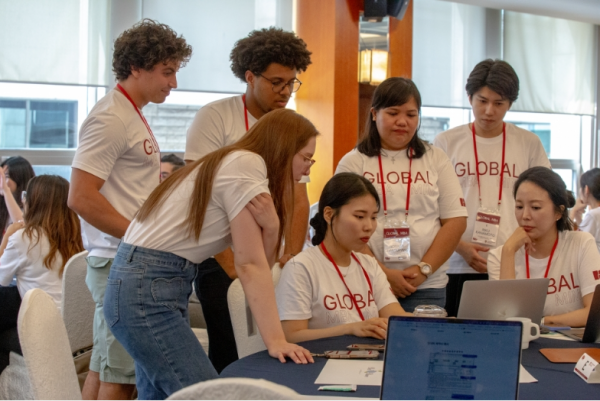
Global MBA & MIM Welcome Event Brings Together Incoming Students from 15 Countries  The Matriculation and Orientation for Korea University Business School (KUBS)’s Global MBA and CEMS Global MIM programs were held on Friday, August 29, at SUPEX Hall, LG-POSCO Building. Dean Eonsoo Kim, Associate Dean Gangseog Ryu, and Professors Tony C. Garrett and Betty Chung (Academic Directors), together with the incoming students, gathered to mark a fresh start.  The ceremony opened with a welcome address from Dean Kim, who welcomed 48 incoming students from 15 countries and 13 CEMS exchange students, noting, “The connections you forge through these programs will become a special asset and an opportunity to broaden your global perspective.” He added, “Just as Korea University changed my life, it will bring meaningful change to yours,” offering thanks in multiple languages.  In his subsequent remarks, Professor Tony C. Garrett, Academic Director for CEMS Global MIM, said, “Graduating from Korea University will open many doors of opportunity,” adding, “As Korea is in a golden era, I hope you will come to understand the country in depth.” Professor Betty Chung, Academic Director for the Global MBA, noted, “The faculty and your peers will become like family,” and encouraged students to “pursue experiences that are meaningful not only academically but also personally, and to actively share your cultures and traditions with one another.”  During the orientation, the KUBS International Affairs Team provided international students with essential information for their studies, including visas, insurance, and ID issuance. Students then split into Global MBA and CEMS Global MIM groups for program-specific sessions. The program directors provided detailed overviews of the curriculum; signature offerings such as “Global CEO & Top Leadership Talk” and the “Career Acceleration Program”; degree requirements; and the use of academic systems.  After the Q&A, students split into four groups for a campus tour led by KUBE, the KUBS student ambassadors. They visited key facilities—including LG-POSCO Building, the Business Main Building, and Hyundai Motor Hall—as well as dedicated classrooms and student amenities, getting acquainted with the spaces where they will study and spend their time. They also made a brief visit to the Humanities and Social Sciences Campus, including Central Plaza, asking questions freely and getting a feel for campus culture with guidance from the ambassadors.  In the afternoon, an alumni panel followed. Eight graduates, including former student president Jungwook Na, shared their experiences. The alumni highlighted the Global CEO & Top Leadership Talk, global workshops, and mentoring and networking as program strengths, advising students to “be someone who gives your best, not just the minimum.” They also offered practical tips on credit-completion strategies and participating in signature KU events such as Ipsilenti and the Ko–Yon Games, and answered questions from the incoming class. Afterwards, staff guided students through essential academic procedures—portal registration, the grade inquiry system, course registration, and degree requirements—after which they signed the Academic Pledge.  In the evening, teams delivered presentations. Using pre-assigned letters of the alphabet as a starting point, students chose team names and introduced one another. They described teammates with creative keywords—such as “free-spirited” and “can’t sit still”—and each team also highlighted its favorite spot on campus.  The program concluded with an immersion in Korea University’s cheering tradition. Led by the KU cheering squad and accompanied by the Elisée Band, students learned the alma mater and signature chants, and even took part in the signature “FM” routine. The program directors then evaluated team activities on creativity, presentation skills, and teamwork, announced the winning team, and closed with an awards presentation and words of encouragement: “We are very excited for the journey ahead.” 

2025.09.29 Views 3294

  • 첫페이지로
  • 16
  • 17
  • 18
  • 19
  • 20
  • 마지막페이지로