TOP

KUBS News

Total 58

See You in 2026 at Korea University: 2025 CEMS Annual Events, Rio

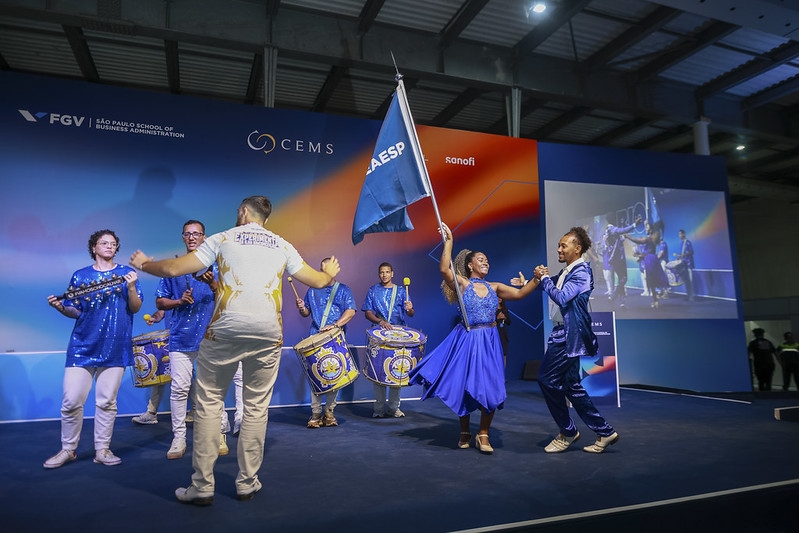
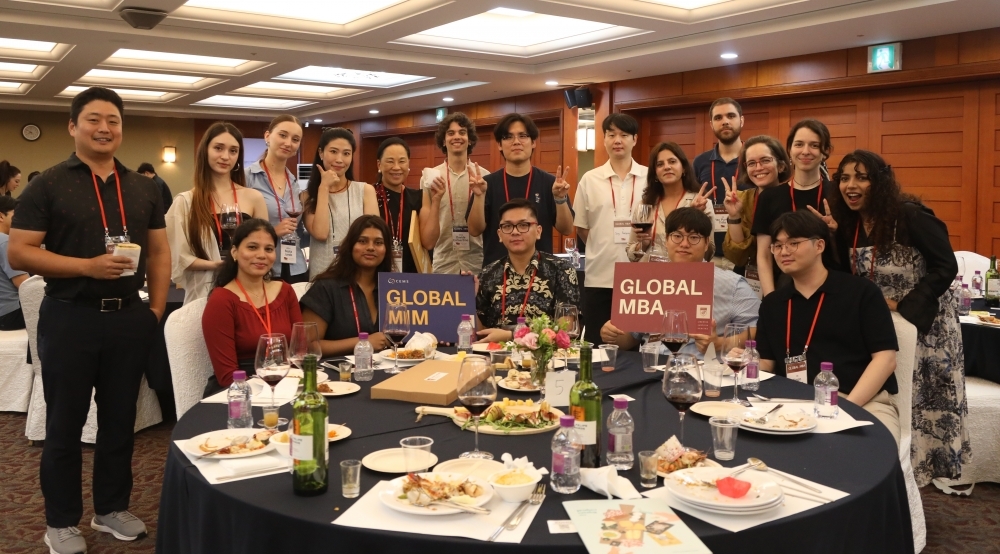
See You in 2026 at Korea University:  2025 CEMS Annual Events, Rio     In early December, Rio de Janeiro, Brazil—host city of the 2025 CEMS Annual Events organized by FGV-EAESP (FGV School of Business Administration)—became a venue where celebration and preparation unfolded simultaneously. While a graduation ceremony was taking place on stage, delegations from the next host institution were conducting site inspections and engaging in detailed discussions behind the scenes. The baton was officially passed, with the destination confirmed as Seoul in November 2026—Korea University Business School.    CEMS (Global Alliance in Management Education) is a global alliance of leading business schools operating under the principle of “one country, one school.” Because only one institution may represent each country, CEMS is clearly distinguished from conventional exchange agreements or other international accreditations. The term “national representative” is no exaggeration, as membership entails responsibilities commensurate with its prestige. In Korea, Korea University Business School is the sole member institution.      The CEMS MIM (Master in International Management) is the only degree program offered by CEMS. Students complete the common CEMS curriculum alongside distinctive courses and academic offerings provided by each member school. In the case of Korea University’s CEMS Global MIM program, students earn a master’s degree from Korea University in addition to the CEMS MIM certificate. In other words, the CEMS MIM is not a program operated independently by a single institution, but an educational framework jointly developed by member schools and implemented individually by each—an approach that closely aligns with the guiding principle of “Think Globally, Act Locally.”    The CEMS Annual Events serve both as a celebration of student achievement and as a forum where the CEMS headquarters and member schools come together to exchange ideas and engage in rigorous, productive discussions for the continuous development of the alliance. Over the course of two days, Program Directors from member schools collaborated to enhance academic systems and curriculum development, while program managers discussed strategies to strengthen student-centered administrative services. During representative meetings and the General Assembly, major policies were reviewed and key decisions were made, and a range of networking events took place in the evenings. On the final day, the highlight of the events—the graduation ceremony—was held. This year’s graduation in Rio welcomed more than 400 graduates from around the world, along with approximately 800 family members and guests. In addition to the conferral of diplomas, the ceremony featured inspiring congratulatory remarks and performances unique to Brazil, creating a rich and memorable celebration.      With Korea University confirmed as the host for 2026, this year’s Annual Events also served as an opportunity for the next host institution to conduct on-site inspections and carry out the operational handover. Accordingly, a five-member delegation from Korea University—Associate Dean Gangseog Ryu, Academic Director Tony C. Garrett, Professor Kayryung Koo, Team Head Bina Ok, and staff member Song Hee Chung—participated in the events and formally received the baton from FGV at the conclusion of the graduation ceremony. During the AE period, the delegation held handover meetings with FGV representatives to review plans and operational details, while also consulting with the CEMS headquarters on related matters. At the General Assembly, they unveiled a promotional video prepared for the 2026 events and shared updates on the preparation progress.     In nearly 40 years of CEMS history, Korea University’s hosting of the Annual Events in 2026 will mark the first time the events are held in Asia. Korea University, which has played a pioneering role in the history of management education in Korea, will use this occasion to establish a new milestone for the region. In particular, given that institutions such as the National University of Singapore and the Hong Kong University of Science and Technology joined CEMS earlier than Korea University, the decision to designate Korea University as the host reflects the institution’s demonstrated pride and spirit of challenge.    ▶ Watch the promotional video    From November 26 to 28, 2026, the CEMS community will gather at Korea University in Seoul, Republic of Korea. The upcoming Annual Events hosted by Korea University will be meticulously prepared to ensure they leave a lasting impression on CEMS members and serve as a model of best practice for future host institutions.    The event’s core visual element, the logo, was designed around eosahwa—a traditional flower symbolizing and celebrating graduates’ achievements—together with various motifs representing Korea’s past, present, and future. The traditional roof tile of Korean architecture symbolizes cultural heritage, craftsmanship, and an aesthetic refined over time, while the Taegeuk emblem represents harmony and balance, further strengthening the connection to Korean identity.    The promotional video was produced in line with the same visual concept, conveying the message that participants from around the world are brought together through K-culture and history, K-beauty, K-food, K-pop, and Korea University. The invitation extended by Korea University through this logo and video is simple: to meet in Seoul on November 26, 2026. Korea University Business School continues its steady preparations to welcome the CEMS community and to deliver, in Seoul, a week worthy of that invitation.

2026.01.23 Views 611

KUBS Opens Admissions for Global Programs (G-MBA & G-MIM)-The Only CEMS Member School in Korea

Korea Universtiy Business School Opens Admissions for Global Programs (G-MBA & G-MIM)-The Only CEMS Member School in Korea       Korea University Business School is now accepting applications for the Global MBA (G-MBA) and CEMS Global Master in Management (G-MIM) programs, both scheduled to commence in September 2026.      Cultivating Practice-Oriented Global Talent: Global MBA  The Global MBA (G-MBA) is a practice-oriented MBA program designed to cultivate future global leaders. The program offers a structured curriculum that equips students with essential business competencies required across diverse industries and cultural contexts, while also providing flexible track options aligned with individual career goals and circumstances.   The G-MBA is primarily offered as a one-year, full-time program, with opportunities to extend the period of study depending on the selected track: an exchange student track (18 months) or a dual-degree track (two years). Built on an intensive curriculum, the program also features weekly Global CEO Talks, where distinguished speakers from various fields share real-world insights and leadership experiences.    All courses are conducted entirely in English, enabling students to strengthen their communication skills for international business environments while deepening their understanding of global management and leadership. Applicants from all undergraduate majors are welcome, and the program is open to a wide range of participants—from early-career professionals preparing for global careers to working professionals seeking to advance into leadership roles. Upon successful completion of the program, graduates are awarded the Master of Business Administration (MBA) degree.      The Only CEMS Global MIM Program in Korea: Dual Recognition with the MIM Degree and the CEMS MIM Certificate  The CEMS Global Master in Management (G-MIM) is a one-year, intensive, full-time program offered in collaboration with CEMS, a global alliance of leading business schools. CEMS operates under the principle of “one country, one business school,” and in 2015, Korea University Business School was selected as the sole CEMS member institution in Korea.    The CEMS Graduation Ceremony was held in Rio de Janeiro, Brazil, in 2025, and is scheduled to take place at Korea University in 2026, making the upcoming ceremony particularly meaningful for the School and its community.    The G-MIM program offers a curriculum in which students study for one semester at Korea University and one semester at a leading partner business school overseas. Through learning in diverse national, cultural, and business environments, participants build a strong global network while strengthening their practice-oriented competencies. All courses are conducted entirely in English, and the program also includes an eight-week global corporate internship.    The program is open to undergraduate graduates (or expected graduates) in business, economics, or related fields, with a primary focus on early-career candidates with less than two years of full-time work experience who aspire to become future leaders. Upon completion of the program, students are awarded both the Master in Management (MIM) degree and the CEMS Master in International Management (CEMS MIM) Certificate.      World-Class Educational Infrastructure and International Accreditation: Three-Round Admissions Process  Korea University has continued to strengthen its educational and research capabilities, supported by the largest full-time faculty body in Korea, and offers a world-class educational environment. Another key strength is that Korea University was the first institution in Korea to obtain and maintain AACSB and EQUIS accreditation and re-accreditation across all degree programs.    Admissions for this intake will be conducted in three rounds, with information sessions held in each round to provide applicants with detailed program information. For inquiries regarding admissions and applications, please contact the MBA Administrative Office at +82-2-3290-1309.   

2026.01.22 Views 565

Cultivating Leaders Who Drive the Growth of People and Organizations, Korea University CHRO Program 

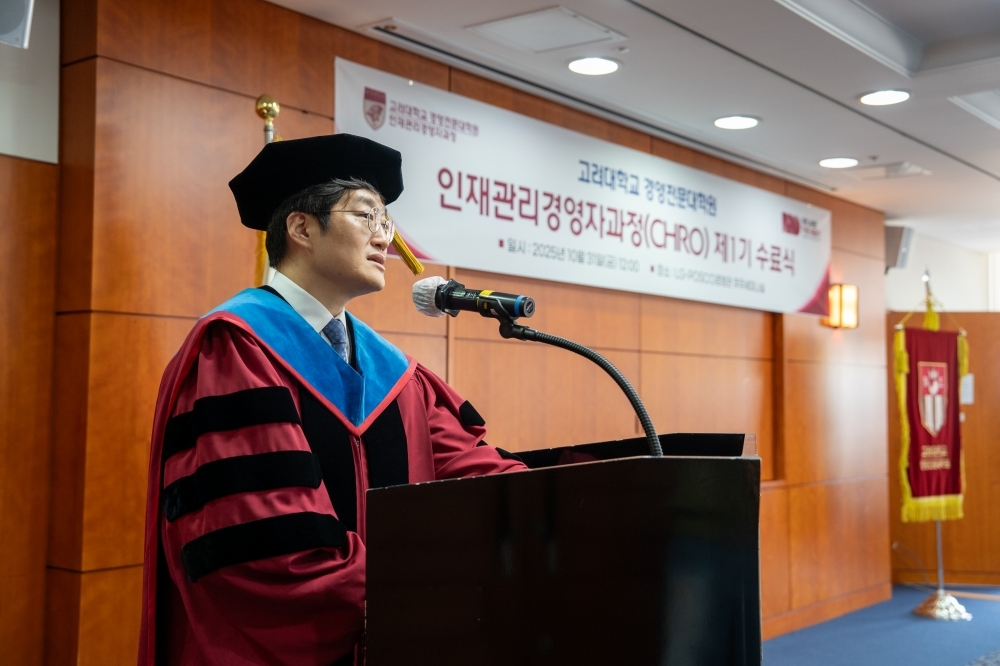
Cultivating Leaders Who Drive the Growth of People and Organizations, Korea University CHRO Program      Korea University’s Chief Human Resources Officer Program (CHRO) Program Completes Its First Cohort, Opens Enrollment for the Second   Korea University Business School has launched the Chief Human Resources Officer (CHRO) Program to redefine the role of human resource management in an era of rapidly changing business environments. Amid rapid technological advancement, generational shifts, and the expansion of ESG-driven management, HR is no longer viewed merely as a support function but has emerged as a core element of organizational strategy. In response to these changes, the CHRO Program was designed to systematically cultivate the expertise and strategic thinking required of HR leaders, reflecting the practical needs of today’s business landscape.    Over approximately seven months, the CHRO Program addressed key topics in human resources and organizational management in a balanced manner, including talent management strategy, organizational culture, leadership, performance management, global HR trends, People Analytics, M&A and PMI, and digital transformation. During the summer, an overseas training program was offered, enabling participants to examine HR issues from an international perspective. Courses were delivered jointly by academic experts and industry practitioners, ensuring both theoretical depth and practical applicability. A key outcome of the program was the formation of a strong professional network, as HR leaders from diverse industries came together in a single cohort to share experiences and challenges.    The commencement ceremony for the first CHRO cohort, held on October 31, marked the conclusion of the seven-month program and provided an opportunity to reflect on its achievements. In his congratulatory remarks, Dean Eonsoo Kim commended the graduates for completing the program while balancing work and study, emphasizing that “Commencement” represents not merely an end, but a new beginning. He added that “the challenging journey undertaken by the inaugural cohort will serve as an important benchmark for the future development of the program.” Program Director Kwanghyun Kim also shared his reflections, noting that “the participation and feedback of the first cohort became the foundation for the program’s continued growth.”    Graduates have described the CHRO Program as a “practice-oriented curriculum that delivers insights readily applicable to the workplace.” Many noted that the program not only broadened their understanding of paradigm shifts in HR, but also expanded their strategic thinking across overall organizational management. Below are testimonials shared directly by graduates of the first CHRO cohort.    Testimonials from Graduates of the First CHRO Cohort  Noh ○○ | Hyundai Movex  “For over 20 years, I have worked in HR, and through repetitive routines, I began to feel that I was becoming stagnant. At that point, I realized I needed a new opportunity for growth, and that was when I learned about Korea University’s Chief Human Resources Officer Program. After reviewing the curriculum, I decided to enroll without hesitation. The wide-ranging lectures on talent management and labor relations, as well as digital transformation, AI, and the global economy, significantly broadened my perspective as an HR professional. In particular, the Global HR course was an invaluable experience, providing practical direction as I was grappling with challenges related to overseas subsidiaries and workforce management. I would confidently recommend this program to anyone who is deeply committed to the sustainable growth of people and organizations.”    Yoon ○○ | CJ CheilJedang  “As an HR professional, one of the most challenging aspects of my role was developing HR strategies and articulating a clear vision for growth. Immersed in day-to-day operations, I found myself focused primarily on addressing short-term issues, only to later realize that my own thinking was falling behind the pace of change. The CHRO Program became a valuable source of knowledge and ideas, enabling me to approach issues from a more multidimensional perspective. My exchange with peers from the first cohort was also a tremendous source of support and inspiration. Even the opportunity to step away from the field, albeit briefly, to reflect on theory and emerging trends makes this program highly worthwhile. I would strongly recommend it to those considering the next step in their journey as HR leaders.”    Kwak ○○ | Samsung Card  “My time at Korea University, an institution rich in history and tradition, was a meaningful journey in my growth as an HR leader. The CHRO Program offered a valuable forum for sharing broad insights through in-depth lectures and discussions led by an outstanding faculty and seasoned industry experts. The strategic HR curriculum—reflecting the future business environment, including AI, digital transformation, and M&A strategies—was particularly impressive. In addition, the overseas training program and workshops enabled me to expand my network with diverse HR leaders, an experience that remains a lasting asset. I would confidently recommend this program to HR leaders who are committed to driving both corporate growth and organizational culture transformation.”    Preparing for the Next Stage of HR Strategy: Applications Open for the Second CHRO Cohort  Based on the successful outcomes of its inaugural cohort, Korea University Business School plans to operate the second cohort of the Chief Human Resources Officer (CHRO) Program for approximately seven months, from April to October 2026. Applications for the second cohort will open on Monday, January 12, 2026, and will close early once the program reaches capacity.    Korea University has built extensive educational capabilities that bridge academia and industry, supported by one of the largest full-time faculty bodies in Korea. In addition to its 93 full-time professors, distinguished domestic and international experts from various fields participate in the program, further enhancing its academic depth. The Business School’s dedicated facilities—including the Korea University Business School Main Building, Hyundai Motor Business Hall, and LG–POSCO Business Hall—are equipped with state-of-the-art classrooms, lounges, and learning spaces. Designed to naturally facilitate lectures, discussions, and professional exchange, this educational infrastructure provides an environment that supports a healthy balance between learning and reflection. Furthermore, Korea University continues to be recognized for its global competitiveness. It was the first university in Korea to join the CEMS Global Alliance and holds prestigious international accreditations from AACSB and EQUIS, while also earning strong positions in the QS World University Rankings.    The second CHRO cohort is designed for corporate HR executives and HR leaders, with a focus on reinterpreting HR and organizational issues from a strategic perspective and strengthening decision-making capabilities. Moving beyond a theory-driven approach, the program examines how organizational strategy and talent management are interconnected through real-world corporate cases and discussion-based learning. Faculty members from both academia and industry participate to provide actionable insights and practical guidance that can be immediately applied in the field.    Overseas training is also one of the program’s key features. Through this component, participants gain an international perspective on HR issues while expanding their global networks. In addition, domestic workshops and company visit programs hosted by cohort members encourage interaction across industries and professional backgrounds, creating opportunities to share hands-on experiences from the field. The fact that HR leaders from diverse industries come together in a single cohort and continue meaningful exchange and collaboration is widely regarded as a core strength of the CHRO Program.    Through the CHRO Program, Korea University Business School plans to further strengthen its practice-oriented education, empowering HR to play a more proactive role at the center of organizational strategy. In an ever-changing business environment, the second CHRO cohort is expected to be a meaningful choice for HR leaders who seek to advance the growth of both people and organizations and prepare for the next stage of their professional journey.    Contact  Korea University Business School EEC  ☎ 02-3290-2707 | ✉ kubseec@korea.ac.kr 

2026.01.14 Views 862

Solidarity and Giving Across Generations…KUBS Alumni Night Celebrates 120 Years of Legacy

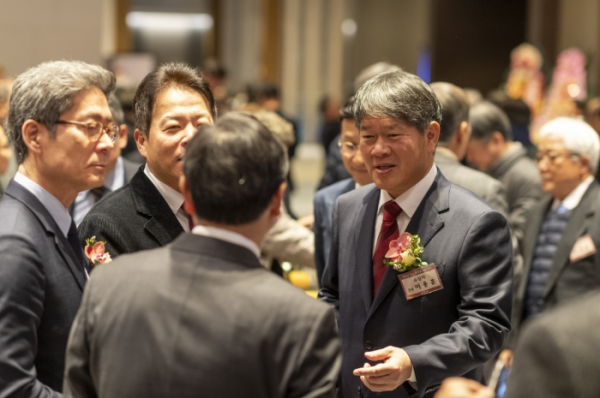
Solidarity and Giving Across Generations… Korea University Business School Alumni Night Celebrates 120 Years of Legacy    Korea University Business School maintains active engagement and networking through its alumni association, composed primarily of graduates. The “43rd Alumni Night,” a signature event celebrating this spirit of connection, was held on Thursday, December 4, at the Grand Ballroom on the fifth floor of the Grand InterContinental Seoul Parnas. This year’s event was particularly meaningful as it took place during the 120th anniversary of the Business School’s founding, bringing together intergenerational exchange and philanthropic engagement. The evening began with a cocktail reception, followed by a pre-opening performance, an opening declaration and ceremonial entrance of the flags, the introduction of distinguished guests, greetings and congratulatory remarks by alumni association leaders, academic reports, scholarship presentations and award ceremonies, a toast and dinner, and celebratory performances. A large number of alumni, university officials, and current students attended, filling the venue.      Opening and Introduction of Distinguished Guests  The opening ceremony was hosted by alumni Jong-wook Ahn (Business ’89) and Ina Jung (Home Economics Education ’08). The Korean national flag, the Business School flag, and the Alumni Association flag were carried in by alumni Seung-hyun Shin, Kyung-tae Kim, and Kyung-sun Han from the Class of 1998. Notably, Kyung-sun Han carried the Alumni Association flag as the female alumni representative, adding special significance to the moment. This was followed by the national anthem and the introduction of distinguished guests. Applause filled the hall as the names of symbolic figures, including the oldest alumnus, were announced.     Greetings and Congratulatory Remarks  In his welcoming remarks, Dong-Seop Lee, President of the Business School Alumni Association, expressed his gratitude, saying, “Thanks to the participation of many alumni from across generations in the various events organized by the Alumni Association this year, we were able to continue fostering opportunities for communication and exchange.” He added, “I hope today’s gathering will be a meaningful occasion for all alumni.”    In the congratulatory remarks that followed, Myung-Ho Seung, President of the Korea University Alumni Association, said, “Since its first event in 1982, Alumni Night has served as a forum for sharing the traditions and pride of the Business School,” adding that “the experiences and achievements of senior alumni have also become a benchmark for younger generations.”    In a video message, Korea University President Dong-One Kim stated, “As we celebrate the University’s 120th anniversary, we have been carrying out commemorative initiatives across education, research, and infrastructure,” and expressed his hope that “the Business School will continue to play a vital role as a central pillar of the University in the years ahead.”      Presentation of the Business School’s Achievements and Vision  Dean Eonsoo Kim shared the Business School’s major achievements and outlined its future vision. He highlighted a range of accomplishments, including ranking first nationwide in the number of successful Certified Public Accountant (CPA) examinees and maintaining the highest number for ten consecutive years; achieving an average global ranking in the top 40 across major fields in the QS World University Rankings; ranking 4th globally in the QS Master’s in Management (CEMS MIM) program; and placing 61st worldwide in the Financial Times Executive MBA rankings. He also reported the continued maintenance of AACSB and EQUIS accreditations, sustained membership in CEMS, and a cumulative enterprise value of KRW 274.5 billion generated by companies housed in the Startup Research Institute.    This was followed by an overview of the faculty profile and an introduction of newly appointed faculty members for the 2025 academic year, along with a detailed report on scholarships established through alumni donations and their disbursement. The presentation also covered internationalization outcomes, including exchange student programs, and concluded with an introduction to the KUBS 120 MARCH campaign and guidance on participation in giving initiatives.    Dean Kim stated, “Building on our current QS global ranking in the top 40, we aim to reach the global top 30 by 2030,” adding that “we will pursue further growth centered on the 3C and 4Tech strategies.” He continued, “Your participation plays a vital role in nurturing outstanding management talent and in laying a strong foundation for national and social development,” and called for active engagement.      Alumnus of the Year and Special Awards  The Alumnus of the Year Awards were presented to Yong-hoon Lee, Chief Executive Officer of InTimes Inc. (Business ’84); Hyung-geun Bae, President and Chief Executive Officer of Hyundai Motor Securities (Business ’84); and Ji-young Choi, Director-General for International Economic Affairs at the Ministry of Economy and Finance (Business ’89). Each recipient was recognized for outstanding achievements in global education, corporate finance and ESG management, and international finance, respectively.    In addition, the Class of 1979 Alumni Group received a Special Award in recognition of its contribution to upholding a meaningful tradition between senior and junior alumni by pledging annual scholarship donations of KRW 35 million beginning in 2024, totaling KRW 175 million. This symbolic moment demonstrated Korea University’s long-standing traditions of devotion to one’s alma mater and classmate solidarity, as 46 years of deep friendship among classmates were extended to support current students.    A Special Donation by the Class of ’98 That Illuminated the 120th Anniversary  The collective donation made by the entire Class of 1998 stood out as one of the most symbolic moments of this year’s Alumni Night. A total of 126 classmates took part, raising approximately KRW 79 million, which was formally presented at the event. This initiative was voluntarily carried out by the entire class and was particularly meaningful in that many alumni participated wholeheartedly despite their busy professional lives.    The donation will be used to support scholarships for younger students and to enhance the educational environment of the Business School, with particular emphasis on programs designed to strengthen students’ global competencies. Reflecting on the contribution, the Class of 1998 Alumni Group stated, “We all shared the belief that the learning and friendships we gained at Korea University formed an important foundation in our lives, and we wished to pass those precious experiences on to future generations.” This donation has been recorded as the collective footprint of an entire generation that joined the Business School on its 120-year journey.      At the End of a Night Where Tradition Met the Future  Following the presentation of special awards, the event drew to a close with a celebratory toast, dinner, performances, and the singing of the university anthem. This year’s Alumni Night went beyond a simple social gathering, serving as an occasion for alumni to collectively reflect on the 120-year history of Korea University Business School and to reaffirm its vision for the next 120 years.  Warm solidarity connecting generations, unwavering pride in the alma mater, and wholehearted support for younger generations came together to once again reinforce the stature of the Business School. It is hoped that the warmth and shared commitments of this night will continue to serve as a driving force in further advancing the Business School’s development and strengthening the bonds of its alumni community. 

2025.12.29 Views 1361

KUBS Builds Exchange Network with 113 Partner Universities in 33 Countries

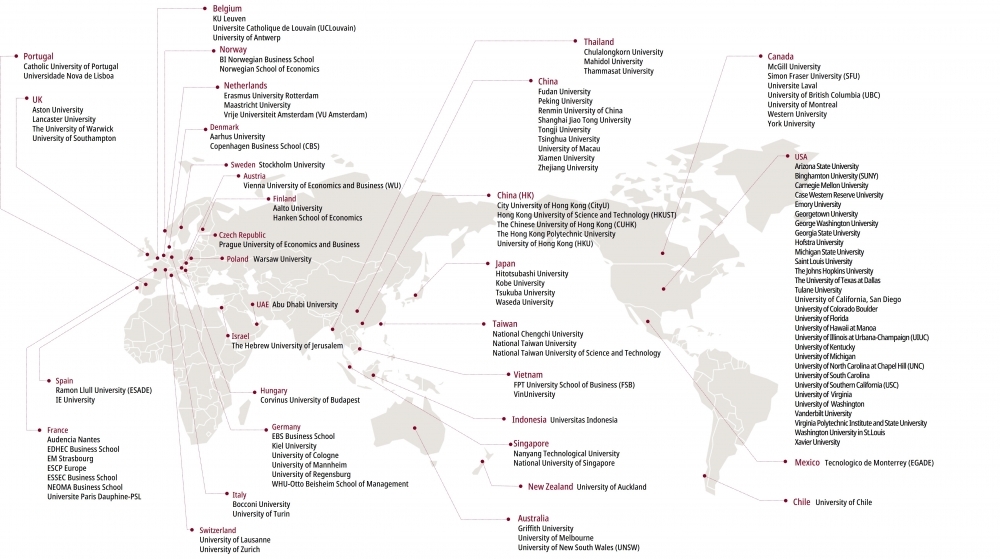
Korea University Business School Builds Exchange Network with 113 Partner Universities in 33 Countries    In addition to the university-wide program, Korea University Business School (KUBS) operates its own exchange program each semester in partnership with leading business schools around the world. As a college-led model, the Business School directly oversees all processes—from forming agreements to selection, credit transfer, and scholarship support—providing a fully streamlined system. KUBS students spend one semester at a partner institution, and the credits they earn are transferred back toward their degree at Korea University.    As of Fall 2025, Korea University has established partnerships with 113 universities across 33 countries, with nine new institutions joining the exchange network this year alone. The network includes world-renowned business schools and is evenly distributed across North America, Europe, and Asia, allowing students to maintain depth in their business major while gaining exposure to diverse regional curricula. The program is highly rated by students, as it offers a well-balanced combination of academic diversity and cultural experience.    Korea University Business School is the first business school in Korea to earn both AACSB and EQUIS international accreditations and is an active full member of the CEMS Global Alliance. Through these accreditations and its engagement in global alliance, KUBS continues to strengthen its international reputation while further enhancing the credibility of KUBS students participating in exchange programs.    The Business School reduces the burden on students by providing airfare scholarship support, clear credit recognition procedures, and a transparent selection process. On campus, the school expands English-only course offerings and operates the KUBS Buddy Program to help inbound exchange students adjust to campus life and to promote natural interaction between domestic and international students. Pre-departure preparation is also systematic. Through orientations, send-off ceremonies, and experience-sharing sessions, the school provides practical information on local life, housing, and course registration strategies. It also offers clear guidance on curriculum analysis for each partner university and on credit recognition procedures, enabling students to maintain continuity in their major. These efforts ensure that students can continue their academic plans seamlessly even after studying abroad.      Applications are accepted every January and July, following announcements on the KUBS website. Because an English résumé and original scores from tests such as TOEFL are required, interested students are advised to prepare in advance. The standard exchange period is one semester, but it may be extended up to one year if necessary. Students selected for airfare scholarships may also receive additional living expense scholarships if further support is needed. With various support pathways available, it is essential for students to proactively review the required qualifications.    With its identity as a “business-centered global exchange program,” the KUBS exchange program is one of the most practical options for students who wish to build international competencies early in their academic journey. For more detailed information about application procedures and selection timelines, students may visit the Korea University Business School website (click) or contact the KUBS International Affairs Team for assistance.      2025 Spring Semester Exchange Program: University of Southern California  (Yoon Jang, Business ’20)    USC is a prestigious institution ranked among the top 10 business schools in the United States. Both faculty and students are exceptionally capable, contributing to an academically rigorous environment that continuously motivated me. The most memorable course was Financial Analysis and Valuation, where we conducted valuations using real corporate cases and received direct feedback from active VC and PE professionals. It was a truly hands-on experience. Although the workload was substantial, I gained a deep understanding of how theory connects seamlessly with practice. Exposure to diverse viewpoints through team projects and case analyses further enriched my learning.  At first, I was concerned about adapting to a completely new environment, but USC’s comprehensive security system ensured that I always felt safe. Interacting with friends from various countries broadened my cultural perspective, and I experienced significant personal growth in this new setting. Even within a short period, I noticed natural changes not only in my English proficiency but also in the way I approached problem-solving and handled unfamiliar situations. Above all, gaining the courage to set aside fear and embrace challenges was the most meaningful outcome.  If you are considering an exchange program, I strongly encourage you to apply without hesitation. Adjusting to a new environment may not always be easy, but the academic and personal growth you will gain is truly invaluable. 

2025.12.08 Views 1172

An Era of Fog, an Education That Builds the Compass : MBA Achievements of 2025

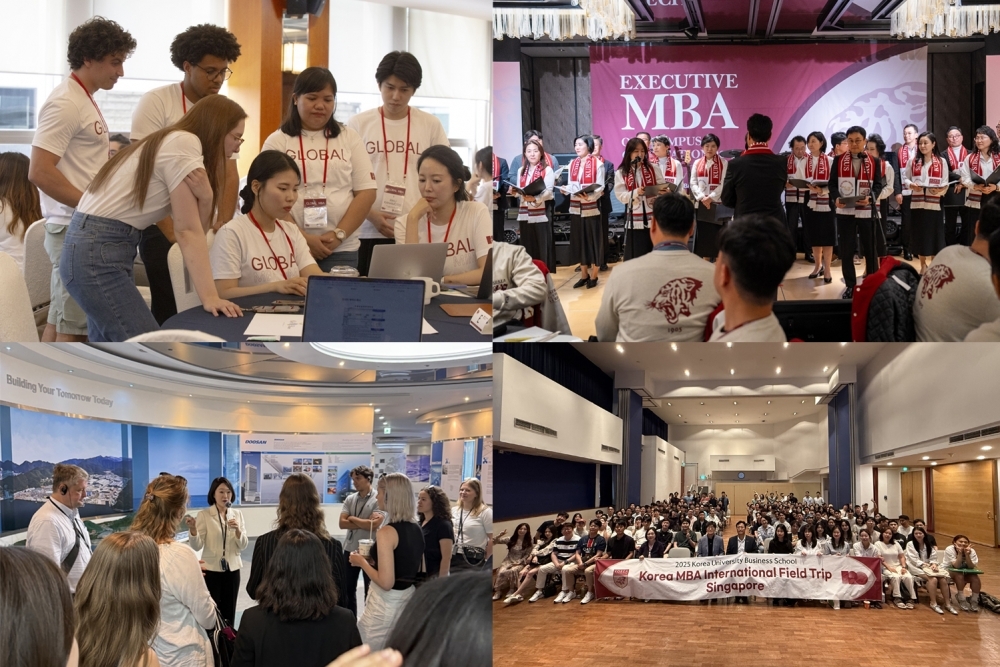
An Era of Fog, an Education That Builds the Compass : MBA Achievements 0f 2025     “The best way to predict the future is to create it.” Widely attributed to Peter Drucker, the father of modern management, this famous quote captures the essence of contemporary education—particularly the fundamental direction that leadership education must pursue. In an era where uncertainty has become the norm, the competencies required of leaders extend far beyond the mere accumulation of knowledge. True leadership lies in creative thinking and the ability to act—qualities that enable one to read the tides of change and build a new order within them.  Over the past year, Korea University has put this philosophy into practice by realizing an education model in which “learning becomes action.” Although each program—Korea MBA, Executive MBA, Finance MBA, KUBS-DBA, Global MBA, and CEMS Global MIM—targets a different audience and serves a distinct purpose, they all move toward a shared mission: to cultivate leaders who design their own futures in a rapidly changing world and drive positive transformation in society.  Here, learning is not simply the acquisition of knowledge; it is the act of creating the future. Students learn in the classroom, test what they have learned in real-world settings, and expand that learning once again in society. This cycle of learning represents the depth of education that Korea University strives for and is the driving force that has positioned the university as a standard-bearer of business education not only in Korea but across Asia.  Under this philosophy, Korea University has demonstrated over the past year—through a wide range of programs—that learning is the force that drives change.      Korea MBA: Building Practical Global Insight  The Korea MBA program offers an education that cultivates practical global insight grounded in management theory. From June 25 to 29, a total of 156 students participated in a global field study in Singapore under the guidance of Academic  Director Professor Kwanghyun Kim. Through visits to government agencies, startups, and global corporations, the students conducted an in-depth examination of Singapore’s developmental model as a city-state where digital transformation and ESG strategies intersect. This experience functioned as a dynamic learning platform—one that allowed students to test and deepen their classroom knowledge within the real global economic system.    Executive MBA: An Educational Laboratory for Practical Leadership  The Executive MBA has continued to deliver field-centered education under a clear mission to cultivate practical managerial leaders, with the ELITE project (Executive Learning & Interactive Team Exercise) at its core. The ELITE presentation event held this past August at Supex Hall in the LG-POSCO Hall marked the culmination of these efforts. Rather than a simple project showcase, the process in which participants identified real corporate challenges and developed actionable solutions functioned as a full-scale “management laboratory.” Participants presented structured strategies—integrating data analysis, interviews, and financial simulations—while addressing realistic topics in rapidly evolving markets such as healthcare, platform businesses, and O2O services. Judges commented, “The ideas are not only innovative but also highly applicable to real-world practice.”  The accompanying International Residency Program (IRP) further strengthened the global distinctiveness of the E-MBA curriculum. The 22nd cohort participated in lectures and institutional visits on ESG and innovation leadership at the Rotterdam School of Management (RSM), Erasmus University, in the Netherlands from July 5 to 12, gaining first-hand insight into Europe’s sustainable management models. The 23rd cohort, from June 21 to 28, explored the role of executives amid global geopolitical dynamics at Georgetown University in the United States, experiencing global leadership that navigates the intersection of policy and business. These programs are not simple study tours; rather, they reflect the core identity of the E-MBA—a process in which leaders think in the field and reflect deeply on the balance between social responsibility and innovation.      Finance MBA: Financial Education That Reads the ‘Flow’ Beyond the Numbers  The Finance MBA program spent the first year of its two-year curriculum engaged in a wide range of meaningful activities. From June 26 to 29, students traveled to Shanghai, China, to gain a comprehensive view of the present and future of the financial industry. Through visits to local investment firms, fintech companies, and global financial institutions, participants explored how technological advances are reshaping financial markets. Experiencing the dynamism of a global financial hub firsthand was regarded as an opportunity to develop “insight that reads the flow beyond the numbers.”  A key pillar of the curriculum, the Independent Study course, enables students to apply theories and methodologies learned in the core curriculum to real-world issues and derive practical solutions. Students work on team projects, receive close guidance from faculty advisors, and gain experience in scientifically analyzing and solving industry problems. Professor Bumjean Sohn noted, “Students may, in fact, learn even more through Independent Study than in regular classes.” Previous cohorts have tackled a wide range of topics, including “bond investment strategies for busy working professionals” and “the current landscape of generative AI–based financial services.”      Global MBA & CEMS Global MIM: The Intersection of Global Leadership  The Global MBA and CEMS Global MIM students participated together in Homecoming Day on Wednesday, August 20. Professor Betty Chung reflected on key programs carried out over the past year, including the Business Practicum, Career Acceleration Program, Global CEO Talk, and various company visits. One of the highlights was the Global CEO Talk, a weekly session featuring distinguished leaders from diverse industries for deep, interactive discussions. This year, the Italian Embassy also visited, providing students with a meaningful opportunity for cultural and professional exchange. During the Homecoming session that followed, alumni took the stage to share the connections they had built and the personal and professional growth they experienced throughout the program. They also offered practical insights, including internship cases facilitated through the Career Office.      KUBS-DBA: A ‘Practice-Oriented Research Platform’ Connecting Academia and Industry  The KUBS-DBA program, newly established this year, is an advanced research-centered program designed to bridge academia and industry by translating management theory into the language of practice. The inaugural cohort spent the first year of the three-year curriculum focusing on career development, practice-based scientific research, and activities aimed at knowledge creation and dissemination.  In particular, the seminar series—centered on emerging management themes such as ESG, AI, and data-driven decision-making—was recognized as a program that clearly demonstrated KUBS’s perspective on “how academia drives industry.” The KUBS-DBA is positioning itself not merely as a doctoral program but as a “managerial intelligence platform” that transforms accumulated knowledge into social value, presenting a new model for cultivating next-generation practical scholars who connect the corporate, academic, and policy spheres.  Korea University is realizing an innovative model of education that integrates theory and practice, domestic and global perspectives, and academia and industry. Every MBA program has evolved into more than simply a place to “learn management”; they have become “journeys in learning the mindset and responsibility of a leader.”  In 2025, Korea University’s MBA continues to ask: “What should a leader learn, and how will they change the world?” And, by proving the answer through action, it continues to create a new future each day. 

2025.12.08 Views 1166

Korea University Business School Opens Applications for 2026 Spring Intake of DBA and MBA Programs 

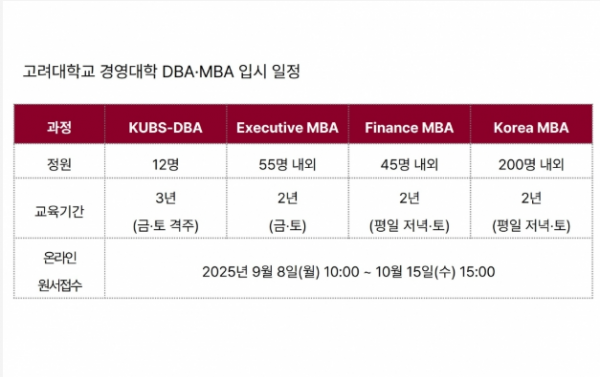
Korea University Business School Opens Applications for 2026 Spring Intake of DBA and MBA Programs  Korea University Business School is now accepting applications for the 2026 Spring Intake of its DBA and MBA programs. The programs offered include the KUBS-DBA (Doctor of Business Administration), Executive MBA, Finance MBA, and Korea MBA. Applications can be submitted through the KUBS online admission system (biz.korea.ac.kr/admission), and the application deadline is Friday, October 15, at 3 p.m.  KUBS Establishes a Full-Cycle Business Education System Connecting Undergraduate to MBA and DBA    Korea University Business School (KUBS) stands as a pioneer in Korean business education, leading innovation built upon its 120-year tradition. In 1905, Korea University established the nation’s first Department of Commerce, marking the beginning of business education in Korea, and once again made history in 1963 by introducing the country’s first MBA program, opening a new chapter in professional business education. Since then, KUBS has successfully launched specialized part-time MBA programs such as the Korea MBA for working professionals, the Executive MBA for senior executives, and the Finance MBA for finance specialists. In response to the globalization trends of the 2000s, it also introduced full-time programs such as the Global MBA—taught entirely in English—and the CEMS Global MIM, jointly operated with leading universities abroad, to meet the evolving educational needs of the time. Furthermore, with the launch of the KUBS-DBA (Doctor of Business Administration) program in 2025, the school has established a comprehensive lifelong education framework encompassing the undergraduate, MBA, and DBA stages of a business career—solidifying its status as a true leader in business education through continuous innovation.    International Accreditation and QS Rankings Confirm Educational Excellence: KUBS Ranked Among World’s Top 50    This comprehensive educational portfolio has demonstrated its excellence through international accreditations and global evaluations. Korea University Business School (KUBS) became the first business school in Korea to receive AACSB (Association to Advance Collegiate Schools of Business) and EQUIS (European Quality Improvement System) accreditations for all its programs, and has continuously achieved successful reaccreditations, maintaining and enhancing its globally recognized academic standards. In addition, KUBS is the only member school in Korea of the CEMS Global Alliance, which allows only one business or economics school per country to join, actively collaborating with leading global universities and multinational corporations. Recently, KUBS ranked 28th in Marketing, 42nd in Business & Management Studies, and 50th in Accounting & Finance in the QS World University Rankings by Subject, further solidifying its global academic reputation across all areas of business education.    Korea MBA: A Premier Traditional MBA Program Designed to Strengthen Professional Expertise and Global Networks (▶Learn More About Admission)    Korea MBA (K-MBA) is Korea’s first MBA program and the flagship program of Korea University Business School. As the oldest and most prestigious MBA in the country, it carries on a proud tradition of academic excellence and leadership development. K-MBA’s greatest educational strength lies in its rich and well-balanced curriculum. In addition to essential core courses for managers, the program offers a wide range of electives covering every field of business, allowing students to design a study plan aligned with their interests and career goals. Through the Renaissance Program, graduates can return after completing their degree to take courses they were unable to enroll in during their studies, ensuring continuous opportunities for lifelong learning. Students also gain global insight and business acumen through the Overseas Field Trip, which includes lectures by distinguished local experts and visits to major companies in key global economies. They can further broaden their academic horizons through student exchange programs with partner universities abroad and a dual degree program with the KU Graduate School of Management of Technology (MOT).  Beyond academics, K-MBA is renowned for its strong alumni network and exceptional sense of unity. This tradition begins with orientation, where new students and alumni learn about Korea University’s history and cheering culture together, and culminates in the Korea–Yonsei Games. Various small groups—such as professional clubs, “ti-moim” (alumni gatherings organized by zodiac sign), and hobby-based clubs in areas like soccer, scuba diving, music, wine, photography, and investing—foster vibrant interaction and lifelong friendships. Through these activities, students and alumni not only enrich their campus experience but also build a far-reaching professional network. Today, the K-MBA alumni association boasts nearly 10,000 members active across diverse industries, serving as a powerful source of support for future leaders. 

2025.10.14 Views 3331

  • 1
  • 2
  • 3
  • 4
  • 5
  • 마지막페이지로