


News
KUBS News
KUBS Holds Early Admission Orientation Attended by 144 Admitted Students and Parents
2026.01.14 Views 3361 국제실
Korea University Business School Holds Early Admission Orientation Attended by 144 Admitted Students and Parents
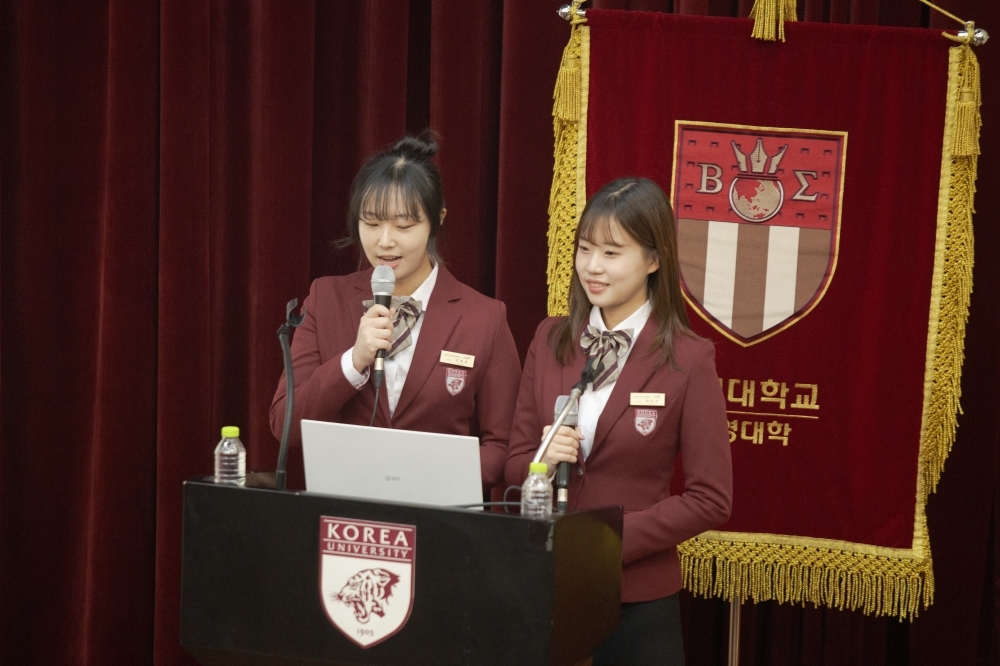
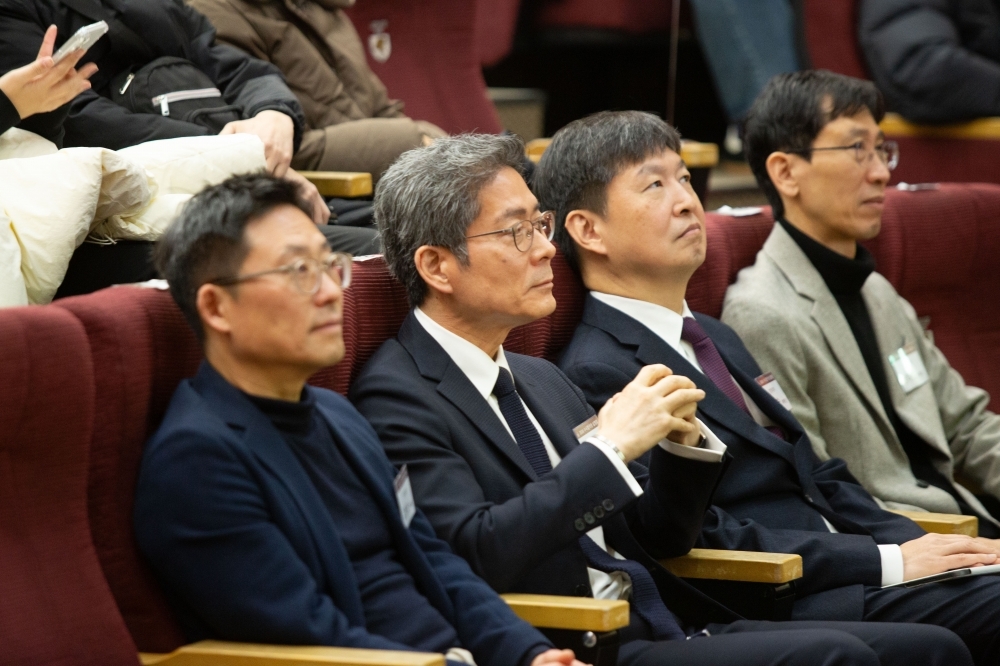
The 2026 Early Admission Orientation for admitted students to Korea University Business School was held on Sunday, December 14, at Supex Hall and Ahn Young-Il Hall in the LG-POSCO Building. A total of 144 admitted students and parents attended the event, along with Eonsoo Kim, Dean of the Business School; Hyun Seung Na, Associate Dean for Academic Affairs; Dae Il Nam, Associate Dean for Research; and Byung Cho Kim, Associate Dean for Planning.
The event was hosted by Hyo-won Ahn (Business ’24) and Da-jin Kim (Business ’25), members of KUBE, the official promotional ambassadors of Korea University Business School. The program began with a promotional video screening, followed by △an introduction to the history of the Business School and campus life △a presentation on the School’s vision by Dean Eonsoo Kim △student experience-sharing sessions △a Business School campus tour △a reception. Rather than serving as a simple welcome event, the orientation was designed to provide admitted students and parents with answers in one place to the questions they are most curious about prior to enrollment.
Curriculum, Tracks, Scholarships, and Career Paths: Designed to Answer “Pre-Admission Questions”
The introduction to the academic system was presented by integrating the curriculum and student support systems into a single, coherent framework. The Business School explained that it offers a wide range of academic fields, with approximately 68% of courses taught in English, along with diverse learning opportunities such as lectures by globally renowned scholars. Students can broaden their academic interests through nine areas of concentration, including Management, Finance, and Strategy. Options such as a combined bachelor’s–master’s program and a planned bachelor’s–master’s–doctoral program were also introduced.
In addition, the Business School operates five concentration tracks: △Business Analytics △Entrepreneurship and Innovation △Social Value and Sustainable in Business △Financial Analysis and Investment △AI and Business. It was also explained that students in the Department of Business Administration who meet the requirements for completing a concentration track are awarded an additional certificate alongside their degree.
The scholarship system was explained by covering national scholarships, university-wide scholarships, and scholarships unique to the Business School. Support is provided in three forms—tuition support, living expense scholarships, and program scholarships—and it was emphasized that various types are operated depending on students’ circumstances and needs. Regarding career support, programs such as alumni mentoring through the Career Development Center, domestic internships, career fairs, and referral-based recruitment were introduced. In addition, entrepreneurship competency enhancement programs, startup competitions, startup networks and space support offered by the Startup Station, as we as well as the operation of exam-preparation classes, were also explained.
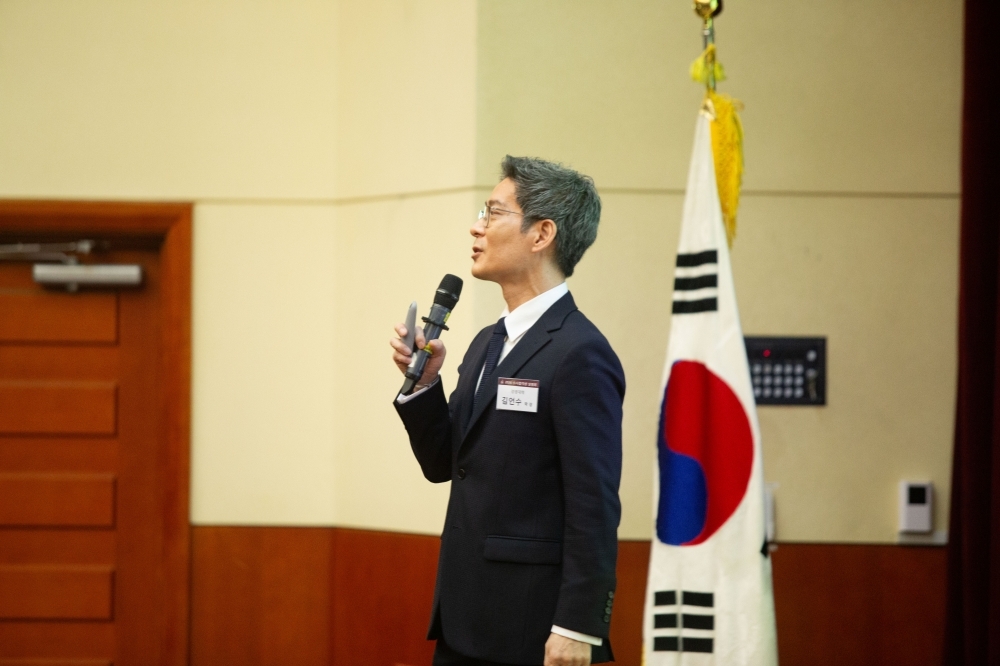
Dean Eonsoo Kim: “Creating Value Through Business… Cultivating Talent Centered on the 3Cs and 4Tech”
Dean Eonsoo Kim delivered congratulatory remarks and outlined the School’s direction. Emphasizing the essence of management, he stated, “Profit is merely the result of management activities, not the ultimate purpose. The purpose of management is to create value.” He added, “Learning how to make money simply by cutting costs is not the right approach to management.”
He also shared insights into the scale and composition of the Business School. Korea University Business School currently has 93 full-time faculty members, with a goal of expanding to 101 by this time next year, and reported that international students make up approximately 26% of the student body. Amid expectations of even more rapid change, he remarked, “No matter how much the world changes, we will nurture talent that embodies values that do not change.”
Dean Kim presented the School’s ideal talent profile as the 3Cs—Curiosity, Collaboration, and Contribution—and the 4Tech areas of Robotics, AI, Energy, and Semiconductors. In this context, he announced plans to establish an AI concentration track and a 4Tech micro-degree program, and introduced plans to create an ‘Art & Culture Zone’ in the basement level of Hyundai Motor Hall to foster interdisciplinary talent. Concluding his remarks, Dean Kim stated, “Even if all business schools in the world were to disappear, Korea University Business School must endure to the very end.”
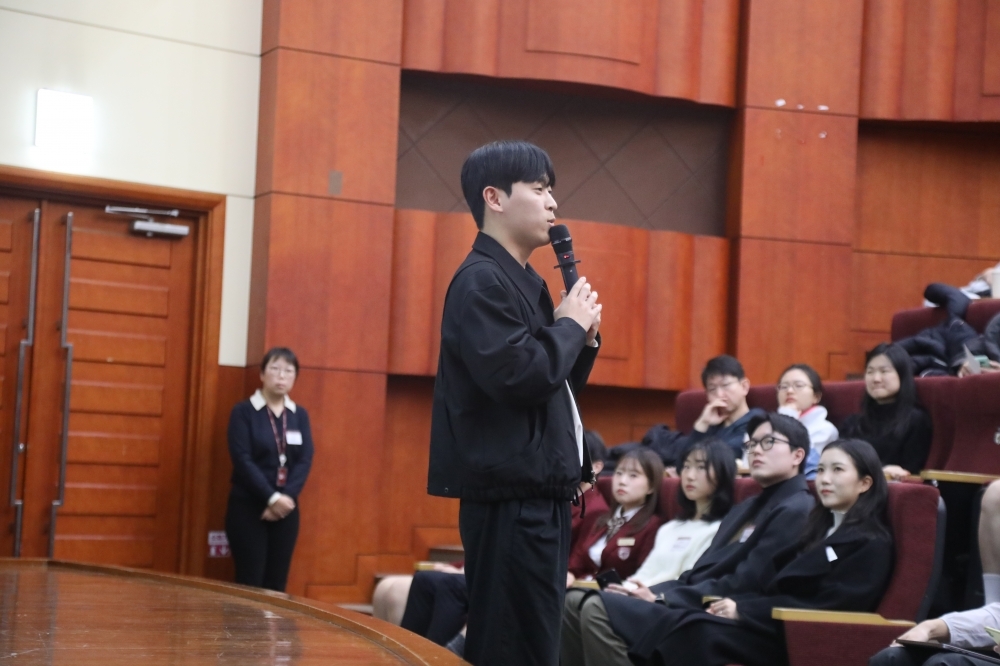
Seniors Share “Post-Admission Options”: Exchange Programs, Academic Societies, Startups, Professional Certifications, and Law School
The seniors’ experience-sharing session offered the most concrete picture of what students can pursue after enrollment. A wide range of pathways—including exchange programs, academic clubs, startups, preparation for professional certifications, and law school—were shared in a single session, illustrating how learning, experience, and career development are interconnected at the Business School.
Je Jung-won (Business ’23) first shared her experience participating in an exchange program at the University of Cologne in Germany. After taking five courses, she explained that she made use of the flexible semester system by focusing on classes during the first three months and on experiences and travel during the latter three months. She summed up the transformation she gained through the exchange program with the phrase, “A different place, a clearer me.”
Byun Ji-seok (Business ’20) then spoke about how he clarified his career path through his activities with KUVIC, a value-investing club. Key activities included writing corporate valuation-based reports, managing an internal fund, alumni lectures, internal competitions, homecoming events, and “Meet the Alumni” sessions. He emphasized that connections with seniors often led to practical advice and real support, highlighting the advantage of being able to engage with peers who share similar interests while also learning from alumni working in the industry. He also noted that, in addition to KUVIC, the Business School has 19 academic clubs.
Yoon Geon-jae (Business ’19) shared his startup experience with Kairos, explaining that the company builds proprietary assets based on artificial intelligence and content IP. He also spoke about the motivation behind choosing entrepreneurship, emphasizing the importance of turning shortcomings into strengths and crises into opportunities. He added that the Business School serves as a platform where individuals from diverse backgrounds can collaborate and connect. Toward the end of his presentation, he quoted a question posed by Kim Han-kook, CEO of Gentle Monster, leaving the audience with a thought-provoking reflection on “what truly motivates you to take action.”
Nam Taek-hoon (Business ’21) introduced the preparation process and support systems for the CPA (Certified Public Accountant) exam, focusing on the operation of the CPA preparation program. He explained that CPAs work in areas such as auditing, taxation, financial advisory, and accounting consulting, playing a key role in building corporate trust and supporting decision-making. He then outlined the structured mock exams, academic management, and mentoring provided by the CPA preparation program “Jeongjincho,” along with benefits such as subsidies for external preparatory courses, mentor–mentee programs, and shared academic resources. He added that students selected through faculty interviews may also receive living expense scholarships, and concluded his presentation with the advice, “Try many experiences before you begin.”
Kim Eun-su (Business ’19), an alumnus currently enrolled in the 16th cohort of Korea University Law School, shared insights into the law school admission process and how to prepare during undergraduate studies. She explained that law school follows a three-year, six-semester structure characterized by an intensive academic workload and multiple examinations throughout the program. The selection process, she noted, considers both quantitative factors—such as LEET and English scores—and qualitative factors, including personal statements, document evaluations, and interviews. She added that the broad academic exposure she gained at the Business School, including coursework in marketing and international business, was helpful in pursuing career paths such as corporate law, and highlighted the breadth of learning experiences and the network as key strengths of the Business School.
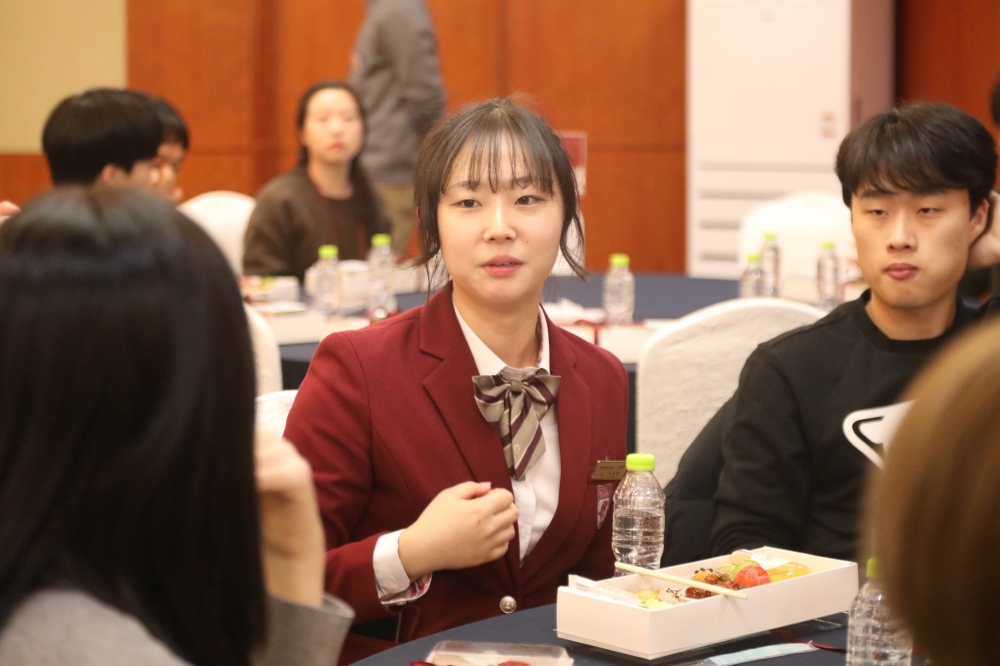
Q&A Based on Pre-Submitted Questions
The Q&A session focused on questions submitted in advance by attendees and was moderated by Hyun Seung Na, Associate Dean for Academic Affairs. Topics included the unique strengths of Korea University’s Department of Business Administration, the double major system, the exchange student application process and selection timeline, club activities, career paths after graduation, law school admission rates, the major curriculum, and recommended professional certifications. Associate Dean Na and the senior students who had presented earlier provided detailed responses, addressing the admitted students’ questions and concerns.
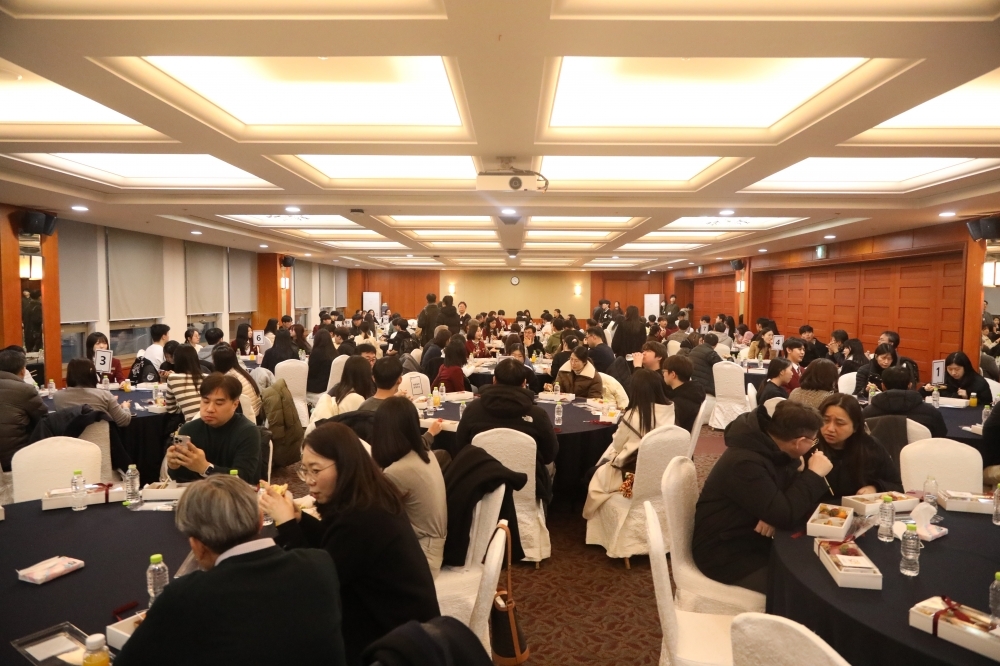
“A Time to See and Ask in Person”—Campus Tours in 12 Groups and a Reception
After the event at SUPEX Hall concluded, admitted students and parents were divided into 12 groups to participate in campus tours of the Business School’s three buildings. Despite the cold weather, excitement was evident on the faces of the admitted students, while parents watched on with calm and warm expressions. Following the tours, a reception was held at Ahn Young-Il Hall, where KUBE members sat at each table to facilitate question-and-answer discussions. Ahn Hyo-won (Business ’24) shared that conversations covered “practical topics such as senior–junior campus culture, varsity jackets, clubs, academic societies, and dormitory life.” Kim Ye-eun, an early admission student who was seated at the same table, remarked, “As someone from outside the Seoul area, I rarely had opportunities to explore the city. It was great to actually visit the campus instead of just viewing it online, and to learn concretely what we study through seniors’ explanations. Things I had only imagined before now feel real and tangible.”