TOP

KUBS News

Total 1387

The Era of Zero Development Costs: What Should Startups Prepare For?

The Era of Zero Development Costs: What Should Startups Prepare For?  KUBS Startup Station Explores a New Approach to Entrepreneurship Through ‘Vibe Coding’      In today’s startup landscape, the ability to deliver the right technology exactly where customers need it has become more important than simply possessing technology. Reflecting this shift, the “Startup Essential” course hosted by KUBS Startup Station—together with software developer Malacca—offered practical solutions to one of the most pressing challenges startups face: building an app quickly and at minimal cost.    With web and mobile applications now virtually essential across most industries, the course aimed to guide startups in building their own services while reducing both development costs and staffing burdens. The curriculum was designed as a hands-on program, using AI tools to streamline and accelerate the development process.    Vibe coding—a concept recently highlighted by Andrej Karpathy—refers to a development approach that moves away from traditional coding focused on syntax and writing code line by line. Instead, developers communicate intent and requirements in natural language, while AI takes the lead in implementation. In this model, the core skill is no longer “how well you write code,” but how clearly you articulate what you want to build and why—so that AI can accurately translate your ideas into a working product.    In the past, app development was a major barrier for startups. Building even a basic product typically required a full team—product managers, designers, and both front-end and back-end developers—often pushing initial costs into the tens of millions of won. Rapid advances in AI-powered development tools, however, are now reshaping that equation.      A World Where App Development Costs Are ‘Almost Zero’  To make these changes tangible rather than merely theoretical, the course was structured around hands-on practice in a local development setup. Participants configured a Node.js–based web application environment, set up a project directory, and executed source code step by step—gaining firsthand experience of the core development workflow. They also explored how AI can assist in editing, running, and even controlling the development environment using Antigravity, Google’s AI-powered code editor. Features that were traditionally separate—such as image generation (Nano Banana) and voice command input—were seamlessly integrated into a single workflow, emerging as one of the session’s most notable highlights.    Even without advanced programming expertise, participants were able to describe screen layouts and functional requirements in natural language and have AI implement both front-end and back-end components, carrying the process all the way through to deployment. The exercise demonstrated the scalability and broader potential of vibe coding. As barriers to implementation continue to fall, startups are positioned to test ideas more rapidly and iterate with greater frequency.    The session also introduced the concept of ontology through examples using the IPOs all-in-one system. Rather than focusing solely on functional implementation, an ontology-driven approach structures a service so that AI can understand its underlying concepts and meaning. In other words, before deciding what to build, it becomes essential to organize why it is needed—and embed that logic into the system. This perspective is particularly relevant for startups operating under tight timelines, where rapidly developing MVPs (Minimum Viable Products) and validating market response are critical. The discussion extended beyond creating a minimal feature set, emphasizing the possibility of designing “Minimum Viable Projects”—initiatives that remain executable even with limited resources.    Another emerging concept addressed in the lecture was MCP (Model Context Protocol). MCP is a standardized framework that enables AI agents to connect directly with external systems, expanding AI’s role beyond code generation or user interface design to the execution of real-world service functions. For example, if a startup seeks to integrate payment functionality into its application, it can connect banks or payment gateway providers’ modules—such as APIs or SDKs—through MCP. This approach allows complex integrations to be implemented relatively quickly without building every component from scratch. The case illustrated how vibe coding is evolving beyond rapid prototyping to encompass core business functions, including payments and data processing.        Not a Silver Bullet: The Limits of Vibe Coding and the Need for ‘Classical Processes’  Despite its clear advantages, vibe coding is not without limitations. AI may sometimes perform tasks it was not asked to do or interpret requirements in unintended ways, producing outcomes that diverge from the original intent. Rather than attributing these issues solely to the limitations of AI itself, the session highlighted that many of these challenges stem from how requirements are communicated.    This brought the discussion back to the importance of traditional development processes. From idea generation and intent definition to brainstorming, user journeys, screen flows, use cases, sitemaps, information architecture (IA), functional specification documents (FSD), wireframes, UI specifications, and prototyping, the standard web and app development workflow remains essential for effectively leveraging AI agents.    Ultimately, giving AI clear direction is not about relying on vague intuition; it requires precise, structured documentation. Even in the era of vibe coding, this foundational principle remains unchanged.      Roles Still Needed in the AI Era: ‘Basic Attitude’ and ‘Foundational Language’  The course emphasized that even as AI-driven development environments become more widespread, the roles of developers and product managers remain critical. Referring to the widely used Linux developer mantra “RTFM (Read The Manual),” the instructor noted that teams should not accept AI-generated outputs at face value, but instead review and understand them before moving forward.    Key human responsibilities highlighted included continuously monitoring what the AI is doing, reading error messages and diagnosing their cause, and—when issues arise—going beyond simply requesting a fix to understanding the context and underlying reasons behind the error. Participants were also encouraged to keep learning better implementation approaches and alternative solutions, and to broaden their perspectives through publicly available practical content such as YouTube tutorials.    In addition, even in vibe coding environments, a basic understanding of planning and development terminology remains essential. Knowing the names of layout elements, component-level terms, and fundamental HTML tags enables teams to communicate requirements more precisely to AI. In other words, regardless of professional coding ability, a minimum shared vocabulary is necessary to describe how a service’s screens and functions should be structured.    Finally, the course noted that rather than overwhelming AI with many requirements at once, it is often more effective to break tasks into stages and proceed sequentially. In web and app development, moving step by step—starting with structural design, followed by screen layout, and then functional implementation—makes it easier to revise requirements, refine outputs, and reduce unnecessary errors.        Vibe Coding: A Practical Breakthrough for Early-Stage Startups  The significance of this Startup Essential session lies in its emphasis on building immediate, actionable capabilities for portfolio startups. KUBS Startup Station designs its lectures and curricula around the real needs of the startups it supports, providing tools and knowledge that can be applied directly in practice rather than remaining theoretical.    In an era when virtually every business requires an app, the session offered a practical path forward for early-stage startups that have postponed implementation due to development costs. By strategically leveraging AI, startups can build services independently and conduct rapid experiments without relying on outsourcing or large engineering teams.    The message of the vibe coding session was clear: what matters today is not how many technologies a startup possesses, but what it aims to build—and how clearly it can communicate that intent. Through its execution-oriented education and support, KUBS Startup Station is establishing a foundation that enables portfolio startups to stay ahead of technological change. The institute plans to continue offering educational programs that reflect startups’ growth stages and practical needs. 

2026.02.12 Views 132

MSBA Capstone Final Presentation: Solving Real-World Business Challenges Through Data

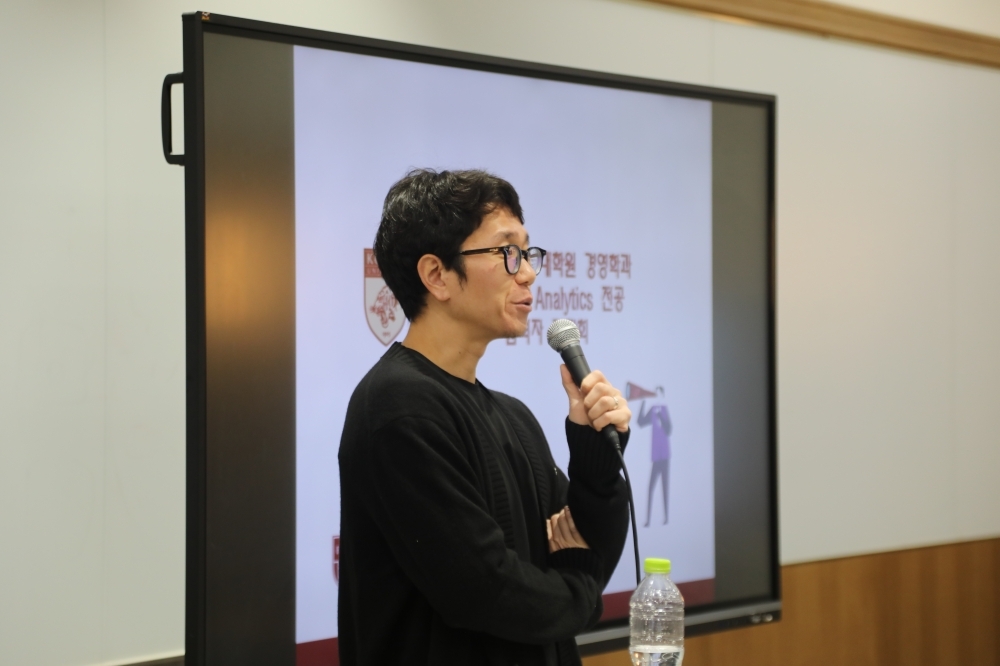
MSBA Capstone Final Presentation: Solving Real-World Business Challenges Through Data     The final presentation of the MSBA capstone projects, which focus on solving real-world business challenges through data-driven approaches, was held on Friday, January 16. The event was organized to explore the DTB (Data to Business) model through industry–academia collaboration and to share project outcomes that addressed practical challenges faced by companies using data and analytical techniques. Kyung Sam Park, Center Director, and Jeonghyun Kim, Academic Director of the MSBA program, along with representatives from multiple partner organizations, attended the event both online and offline to review the students’ project results.    During the presentation, a total of seven teams showcased the outcomes of their capstone projects conducted across various industries and corporate partners. All projects were grounded in a shared guiding question—“How can data be effectively translated into real-world decision-making and execution?”—and focused on designing structures and tools that enable analytical insights to be directly applied in business practice.        One team, collaborating with LG CNS, proposed a solution to address the “bottleneck between insight and execution” that arises during business process analysis within the rapidly growing BPM (Business Process Management) market. While process intelligence offers significant potential, the team highlighted its limitations in translating insights into execution. To address this challenge, they aimed to develop a system that systematically stores extensive business process assets and integrates AI agents to generate evidence-based Q&A responses and actionable improvement recommendations. In particular, their process modeling based on BPMN (Business Process Model and Notation) and agent design drew considerable attention.    Another project, conducted in collaboration with LG Household & Health Care, proposed a marketing insight tool leveraging unstructured data. The project focused on enabling faster and more accurate identification of market trends through AI technologies, thereby enhancing decision-making and productivity for marketing practitioners. The team designed an AI agent–based chatbot that allows users to efficiently search for and utilize relevant information within large-scale datasets.    A team collaborating with PwC proposed an automated corporate performance analysis system utilizing an ontology-based Graph-RAG architecture. Recognizing that time delays in corporate performance analysis directly translate into opportunity costs, the team pointed out the limitations of general-purpose large language models (LLMs) in fully understanding company-specific contexts. To address this challenge, they proposed a multi-agent–based system that structurally pre-learns corporate information, enabling more reliable analysis and faster decision-making.        Another project, conducted in collaboration with Hyundai Department Store, focused on advancing data-driven ordering decisions in the fresh food category, particularly fruits. Using sales data by date, store, and product from top-performing locations—including the Hyundai Department Store Apgujeong Main Store, Trade Center Store, and Pangyo Store—the team built time-series demand forecasting models and presented a proof-of-concept (PoC) decision support model designed to simultaneously minimize waste rates and stockout rates. A key feature of the project was the application of methodologies tailored to data characteristics, ranging from SQL and statistical techniques to machine learning and deep learning.    In the Hyundai Motor Blue Members project, the team presented a customized decision-making toolkit designed to strengthen customer retention through promotion- and partner-based strategies. Leveraging integrated Blue Members membership data, the toolkit structures customer status and partner information to identify customers with a high likelihood of behavioral change in the near term, enabling proactive engagement.    The system also allows for comparisons of partner commission fees and benefit changes from both performance and risk perspectives. By applying different models based on the depth of available customer information, the toolkit recommends optimal partner offerings in advance, supporting more effective and data-driven decision-making.    Another team, collaborating with Hyundai Motor Securities, presented a project focused on enhancing retirement pension product recommendation services to acquire new IRP (Individual Retirement Pension) customers. In an environment of intensifying competition among banks and securities firms, the team designed a recommendation solution that precisely matches retirement pension products with customers’ investment profiles, with a particular emphasis on downside risk. Targeting second-generation baby boomers as the primary segment, the project placed strong emphasis on reliability and explainability.    In the project conducted in collaboration with Hyundai Home Shopping, the team proposed a plan to develop recommendation algorithms optimized for Hmall’s business characteristics. By implementing personalized recommendation logic based on customer clustering, the project aimed to increase purchase conversion rates while also designing a structure that considers future expansion into AI-powered shopping agents.       During the feedback session that followed the presentations, partner organization representatives offered a series of positive evaluations. A representative from Hyundai Motor Securities commented, “The portfolio design centered on loss thresholds and the personalized reports demonstrate a level of sophistication rarely seen in existing financial services,” adding that “with appropriate legal review, the solution could be applied directly to real-world operations without difficulty.”    A representative from Hyundai Home Shopping also noted, “We plan to apply the algorithms developed through this project to Hmall starting in February,” and added that “the project provided practical support in internalizing recommendation systems and expanding AI-based services in the future.”    The event concluded with closing remarks from Jeonghyun Kim, Academic Director of the MSBA program. He noted that the students’ sustained efforts over the approximately one-year project period, which began last February, were fully reflected in the final outcomes. He also shared that it was particularly impressive to see how students have become increasingly adept at leveraging more advanced technologies with each successive cohort.    He added, “While the final presentation marks the end of this stage, I encourage you to carry the projects through with a strong sense of responsibility so that the deliverables can be meaningfully applied in real business settings,” and expressed his appreciation to the representatives of the partner organizations for their collaboration.      The MSBA program is designed around industry–academia collaboration, with a curriculum structured to ensure that data analysis results can be effectively applied in real-world business contexts. The capstone project is a representative example of this approach, in which students define problems based on actual data from partner companies and carry out the full process—from analysis to the design of decision-support tools. The outcomes presented at this final presentation demonstrate that the DTB (Data to Business) education model pursued by the MSBA program is being implemented at a level suitable for practical, real-world application. 

2026.01.27 Views 795

Korea University–ESADE Expand Exchange in Tech-Based Marketing Education

Korea University–ESADE Expand Exchange in Tech-Based Marketing Education     The 2026 ESADE International Study Tour: Technology-Driven Marketing, hosted by the Executive Education Center (EEC) of Korea University Business School, began on January 5 at the Hyundai Motor Hall. On the first day, Associate Dean Gangseog Ryu welcomed the participants with opening remarks delivered in Spanish, saying, “I hope the five-day journey we will share together will be both valuable and enjoyable.” He then introduced the faculty members leading the program, as well as the EEC staff supporting its operation, and proceeded with the orientation.        Following the orientation, participants attended the first lecture and officially began the program. Students actively followed the lecture, promptly organizing the material as it was presented. During the Q&A session, questions focused on the applicability of the cases discussed. Some students drew comparisons with examples from their home markets, while others raised detailed questions about how Korean companies utilize data and navigate digital transformation processes. Even after the lecture concluded, participants continued their discussions—asking questions at the front of the lecture hall and comparing notes with one another during breaks.      On the evening of the same day, a welcome dinner was held at Ahn Young-Il Hall on the sixth floor of the LG–POSCO Hall. Associate Dean Gangseog Ryu, Professor Weon Sang Yoo, and Associate Dean Byung Cho Kim attended the dinner. Participants gathered around tables to enjoy their meal and conversation, and many exchanged questions about the different types and names of makgeolli and soju prepared at each table. Associate Dean Ryu and the faculty members moved from table to table, continuing conversations with participants while explaining the brewing process of makgeolli and how to pronounce its name.    After the dinner, Associate Dean Ryu gave a brief introduction to Korea University Business School. He remarked, “Once you complete this program, you will also become members of the Korea University alumni community,” and went on to introduce the school’s scale, major degree programs, and global alumni network. He concluded the first day’s schedule by adding, “I hope today has helped you gain a better understanding of the school and the program.”    The program consisted of 76 lectures on Technology-Driven Marketing, two visits to Korean companies, and one cultural experience, with approximately 4,450 master’s students from ESADE Business School participating. The five-day program ran from January 5 to January 9 and was held in Room 303301 of the Hyundai Motor Hall. Participants who successfully completed the full program were awarded a certificate of completion issued under the name of the Dean of Korea University Business School.      Lecture topics included: △ Platform Growth and Market Strategy △ Digital Transformation and Data Literacy △ Korea’s Economic Development Strategy △ The Impact of Generative AI on the Marketing Industry and Practices △ Digital Customer Engagement △ AI and Creativity: At the Frontier of Everything △ Customer Satisfaction: Creating Firm Value Through Customer Value △ Digital Customer Engagement: Framework and Cases △ AI Business Solutions: Trends and Insights △ Data-Driven Decision Making in Marketing △ Algorithm Literacy for Marketing Success △ Digital Transformation: Theory and Practice △ Data-Driven Customer Satisfaction: Creating Firm Value Through Customer Value.   For each lecture, students applied the presented frameworks to real-world cases and organized their analyses accordingly. During discussion sessions, they examined key issues in teams and built upon one another’s perspectives. Throughout the classes, participants frequently asked detailed questions—such as clarifications on terminology and data interpretation methods—and after lectures, many continued the discussion by approaching faculty members to further explore the topics covered.    At the graduation ceremony on the final day, each student’s name was called, and certificates of completion were presented. Applause and cheers filled the venue as participants wrapped up the program by taking group photos and exchanging farewells. In his closing remarks, Associate Dean Gangseog Ryu expressed his hope that the time spent at Korea University would remain a pleasant and meaningful learning experience, once again highlighting the university’s alumni network. He also emphasized that, through this program, ESADE students had become part of the Korea University community and expressed his hope that they would continue to serve as ambassadors for the university after returning home.      On the evening of the graduation ceremony, an off-campus farewell dinner was held. The lead professors commended the participants for their commitment over the five-day program and extended their gratitude to the EEC staff who supported the event. Participants gathered to share a final meal and exchange parting words. Conducted over five days, this ESADE International Study Tour successfully combined academic instruction with meaningful exchange and concluded by reaffirming the potential for future collaboration between Korea University and ESADE.    Meanwhile, the EEC plans to further expand academic exchanges and will host another International Study Tour from January 26 to January 30 through an additional visit by ESADE Business School master’s students. This upcoming program will feature a different group of participants and will focus on the theme of “Digital Transformation,” with lectures and exchange activities scheduled accordingly. 

2026.01.26 Views 507

KUBS Regains No. 1 Position in Korea in THE Rankings… Climbs to 57th Globally

Korea University Business School Regains No. 1 Position in Korea in THE Rankings… Climbs to 57th Globally  A “quantum jump” of over 50 spots in just one year… Achieving an Industry score of 99.9.     Korea University Business School (Dean: Eonsoo Kim) ranked No. 1 in Korea in the Business and Economics category of the 2026 World University Rankings released by Times Higher Education (THE) in the United Kingdom, reaffirming its leading position in business education nationwide.    In this year’s evaluation, Korea University Business School placed 57th globally, demonstrating a remarkable rise of more than 50 places from last year’s ranking band of 101–125. It was the sole No. 1 institution among Korean universities. This sharp rebound is not seen as a temporary fluctuation, but rather as the outcome of sustained efforts to strengthen the School’s core competitiveness in education and research to a global standard.    Among the results, the most notable highlight was Korea University’s performance in the Industry category—an indicator that reflects practical and applied scholarship. With an outstanding score of 99.9, nearly a perfect mark, the result underscores the strong real-world impact of Korea University Business School’s research achievements across industry.    Key indicators closely tied to academic reputation also recorded significant gains. The score for the teaching environment rose to 59.0, up 13.3 points from the previous year, while the research environment score increased to 56.2, marking a 12.4-point improvement. Such substantial gains in surveys of domestic and international faculty members demonstrate that Korea University Business School has become firmly established within the global business academic community.    Beyond THE, Korea University Business School has also demonstrated strong performance in other major global rankings. In the 2025 QS Subject Rankings, it placed 28th worldwide in Marketing and 42nd in Business and Management Studies, earning broad recognition for its overall academic excellence. In the 2025 Financial Times (FT) EMBA Rankings, it ranked 61st globally, remaining the only Korean university within the world’s top 100.    Korea University Business School was the first in Korea to earn AACSB accreditation for all of its degree programs and has since successfully achieved four consecutive re-accreditations. In 2025, the School received a six-year extension of its AACSB accreditation, once again demonstrating that it has firmly established an education system aligned with international standards.    Dean Eonsoo Kim remarked, “This achievement is the result of the sustained efforts and support of our leadership team, faculty, staff, and above all, our alumni across all areas, including education, research, and international collaboration, over the past several years.” He added, “While there is still room for improvement as we compete with leading global institutions, we remain committed to pursuing innovation without pause.”    He further emphasized, “We will continue to strengthen the Business School’s strategic pillars—the 3Cs (Curiosity, Collaboration, and Contribution to Society) and the 4Tech areas (AI, Semiconductors, Energy, and Robotics). Through initiatives such as the ‘KUBS 120 MARCH’ fundraising campaign commemorating the University’s 120th anniversary, we will provide comprehensive support to ensure that our students develop a distinctive competitive edge on the global stage.”

2026.01.26 Views 1702

CHOO CHOO Cohort 20 Signals the Start of a New Startup Journey

CHOO CHOO Cohort 20 Signals the Start of a New Startup Journey     The orientation for new resident companies of CHOO CHOO Cohort 20 was held on Tuesday, January 6, at The STAGE (Room 201) in the KUBS Main Building. The orientation brought together nine teams newly joining Startup Station, who received an overview of the residency program and guidance on startup life at the station.    The nine teams selected through the 2025 Startup Express Winter Season include:  △Pearing, an AI- and SaaS-based platform that improves special education administration;  △ SnapScale, a vertical LLM–based chemical process design automation solution;  △ Jo & An, an AI-powered end-to-end (E2E) self-guided travel solution;  △ Playlab, an AI-based service that automates the entire seeding marketing process;  △ Daily Compound, an AI-powered self-guided tour service;  △ Hintefe (Humanproof), a mobile bespoke jewelry workshop powered by AI tutors;  △ Machinery Republic, an AX-based industrial machinery trading service;  △ Lococo, a global K-beauty retail platform operating both online and offline; and  △ Achiva, a social networking platform for sharing personal achievements.    These teams will move forward together with Startup Station as members of CHOO CHOO Cohort 20.     The event opened with a welcome address by Joon Ho Hwang, Director of the KUBS Startup Station. Director Hwang remarked, “Entrepreneurship is a journey that is difficult to undertake alone,” adding, “I hope that everyone gathered here will share their experiences and challenges, grow together, and create meaningful outcomes.”     This was followed by a session in which representatives of each resident company introduced their teams and shared their impressions of joining the station. The representatives expressed their expectations for the residency and their desire to build a community that fosters positive synergy through collaboration and networking.    A representative from Daily Compound shared their aspirations, stating, “As our service is an enterprise B2B tool, there is much we hope to learn by exchanging ideas with others. We look forward to growing together by supporting one another.” A representative from Machinery Republic also commented, “It is an honor to be alongside such outstanding teams. I hope to learn a great deal from the other teams.”    This was followed by Young Kyung Kim, Director of the Iljin Center for Startup Incubation, who outlined the mentoring framework for resident companies. Director Kim remarked, “Warren Buffett once described his relationship with Benjamin Graham as one of companions who grow together,” adding, “I hope our resident companies will also build relationships with their mentors in which they can grow together.” He continued, “We will provide practical support in establishing essential systems, including contract drafting and financial management.”    The mentoring program consists of Station Meetings, where resident companies present their business progress on a bimonthly basis, and On-Demand Mentoring, which can be requested whenever assistance is needed. Director Kim emphasized, “We aim to foster a mentoring environment where participants can communicate openly and engage in free discussion.”      Following the orientation, teams were assigned seating within the Iljin Center for Startup Incubation. The event concluded with a luncheon meeting, providing an opportunity for team members and Startup Station staff to connect and exchange ideas.    KUBS Startup Station supports young entrepreneurs from diverse backgrounds in realizing entrepreneurship and innovation through sharing and collaboration. Teams selected through the Startup Station residency program, Startup Express, are eligible for six months of rent-free residency at the Iljin Center for Startup Incubation.    Resident companies also receive practical, hands-on training that spans both theory and application through Startup Essential, an onboarding education program for newly admitted teams, delivered by startup and industry experts.    Through this orientation, the CHOO CHOO Cohort 20 teams officially began their journey at KUBS Startup Station, fully prepared to take on new challenges ahead.

2026.01.26 Views 523

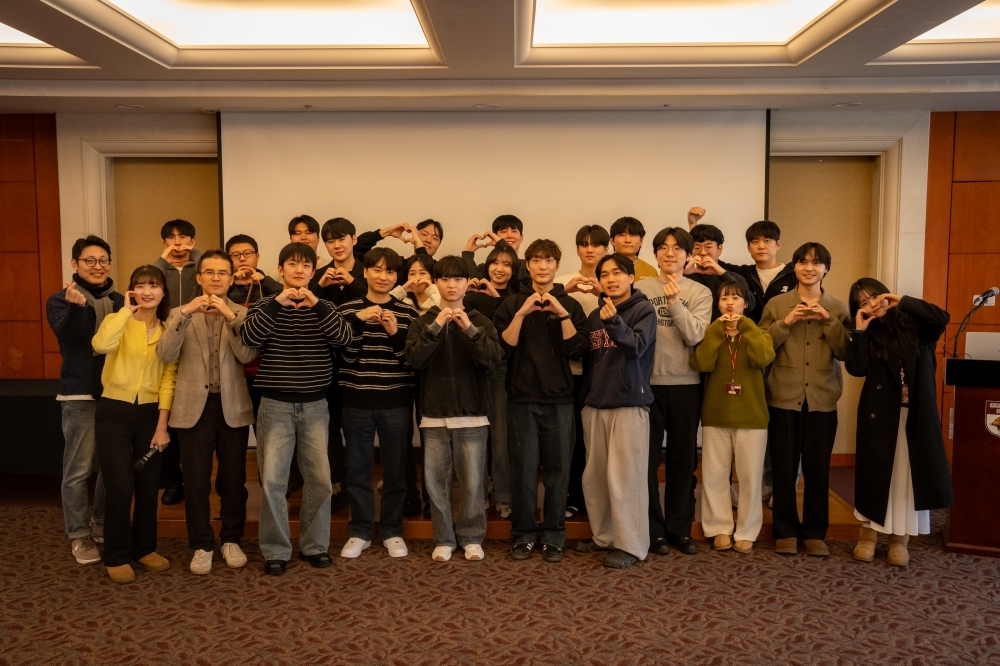
Korea University Business School MSBA Holds Information Session for 2026 Spring BA Admits

Korea University Business School MSBA Holds Information Session for 2026 Spring BA Admits     The Center for Digital Transformation and Business (CDTB) at Korea University Business School held an information session on January 6 for students admitted to the 2026 Spring BA intake. The event was organized to support admitted students in making informed enrollment decisions and featured an overview of the program, a discussion with current students, and a Q&A session.   The session opened with welcoming remarks from Professor Jeunghyun Kim, Academic Director of the MSBA program. Congratulating the admitted students, Professor Kim stated, “This session is designed to provide a realistic overview of the MSBA program and the academic environment students can expect to experience.”    This was followed by an introduction to the MSBA program. The MSBA is a master’s program offered by the Graduate School ,of Korea University Business School, featuring a practice-oriented curriculum focused on developing Business Analytics capabilities. A distinguishing feature of the program is that, in place of a traditional academic thesis, students fulfill graduation requirements through a company-collaborative capstone project.    The program follows an intensive structure in which two years’ worth of coursework is completed within one year. In the first semester, foundational and required courses in data analysis and business problem-solving are offered in a concentrated format. In subsequent semesters, students engage fully in the capstone project. Some courses may be taken during the summer term, allowing students to better balance their academic workload across semesters.      In the latter part of the session, a discussion was held with current students from the sixth cohort of the MSBA program. Drawing on their firsthand experiences, the students shared insights into the program’s academic rigor and learning environment. One student remarked, “With classes, assignments, and team projects running concurrently, the perceived level of difficulty is quite high,” adding that “it is important to secure an environment conducive to focusing on one’s studies.”    Further explanations were also provided regarding the capstone project. Another student noted, “By conducting analyses based on real corporate data, we gain experience with the entire process—from problem definition to deriving results,” explaining that “the project outcomes can be used as a portfolio for employment or career exploration after graduation.” The student also emphasized that “differences in outcomes depend largely on individual engagement and effort rather than on the program itself.”    During the Q&A session, participants raised questions regarding academic workload, English proficiency requirements, graduation criteria, and career pathways.    The session concluded with additional Q&A exchanges between admitted students and current students, followed by closing remarks from Center Director Kyung Sam Park. CDTB stated that it plans to continue providing information and opportunities for communication so that admitted students can fully understand the program before deciding whether to enroll.

2026.01.23 Views 549

See You in 2026 at Korea University: 2025 CEMS Annual Events, Rio

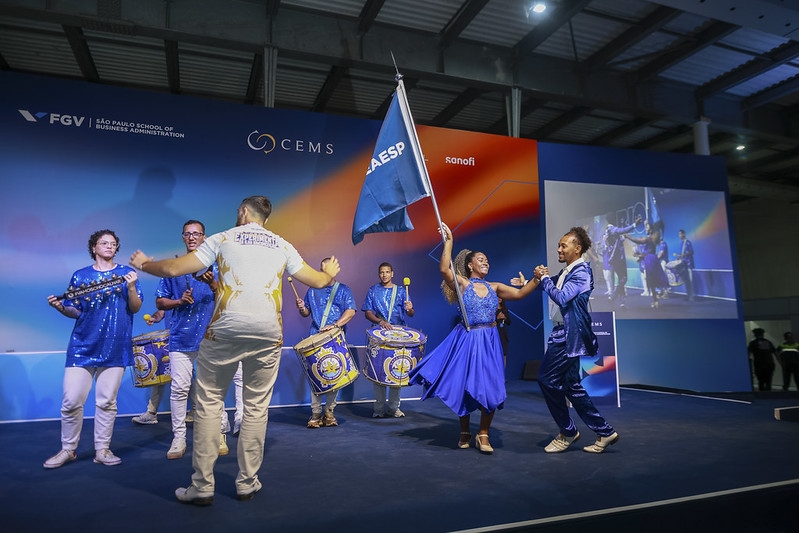
See You in 2026 at Korea University:  2025 CEMS Annual Events, Rio     In early December, Rio de Janeiro, Brazil—host city of the 2025 CEMS Annual Events organized by FGV-EAESP (FGV School of Business Administration)—became a venue where celebration and preparation unfolded simultaneously. While a graduation ceremony was taking place on stage, delegations from the next host institution were conducting site inspections and engaging in detailed discussions behind the scenes. The baton was officially passed, with the destination confirmed as Seoul in November 2026—Korea University Business School.    CEMS (Global Alliance in Management Education) is a global alliance of leading business schools operating under the principle of “one country, one school.” Because only one institution may represent each country, CEMS is clearly distinguished from conventional exchange agreements or other international accreditations. The term “national representative” is no exaggeration, as membership entails responsibilities commensurate with its prestige. In Korea, Korea University Business School is the sole member institution.      The CEMS MIM (Master in International Management) is the only degree program offered by CEMS. Students complete the common CEMS curriculum alongside distinctive courses and academic offerings provided by each member school. In the case of Korea University’s CEMS Global MIM program, students earn a master’s degree from Korea University in addition to the CEMS MIM certificate. In other words, the CEMS MIM is not a program operated independently by a single institution, but an educational framework jointly developed by member schools and implemented individually by each—an approach that closely aligns with the guiding principle of “Think Globally, Act Locally.”    The CEMS Annual Events serve both as a celebration of student achievement and as a forum where the CEMS headquarters and member schools come together to exchange ideas and engage in rigorous, productive discussions for the continuous development of the alliance. Over the course of two days, Program Directors from member schools collaborated to enhance academic systems and curriculum development, while program managers discussed strategies to strengthen student-centered administrative services. During representative meetings and the General Assembly, major policies were reviewed and key decisions were made, and a range of networking events took place in the evenings. On the final day, the highlight of the events—the graduation ceremony—was held. This year’s graduation in Rio welcomed more than 400 graduates from around the world, along with approximately 800 family members and guests. In addition to the conferral of diplomas, the ceremony featured inspiring congratulatory remarks and performances unique to Brazil, creating a rich and memorable celebration.      With Korea University confirmed as the host for 2026, this year’s Annual Events also served as an opportunity for the next host institution to conduct on-site inspections and carry out the operational handover. Accordingly, a five-member delegation from Korea University—Associate Dean Gangseog Ryu, Academic Director Tony C. Garrett, Professor Kayryung Koo, Team Head Bina Ok, and staff member Song Hee Chung—participated in the events and formally received the baton from FGV at the conclusion of the graduation ceremony. During the AE period, the delegation held handover meetings with FGV representatives to review plans and operational details, while also consulting with the CEMS headquarters on related matters. At the General Assembly, they unveiled a promotional video prepared for the 2026 events and shared updates on the preparation progress.     In nearly 40 years of CEMS history, Korea University’s hosting of the Annual Events in 2026 will mark the first time the events are held in Asia. Korea University, which has played a pioneering role in the history of management education in Korea, will use this occasion to establish a new milestone for the region. In particular, given that institutions such as the National University of Singapore and the Hong Kong University of Science and Technology joined CEMS earlier than Korea University, the decision to designate Korea University as the host reflects the institution’s demonstrated pride and spirit of challenge.    ▶ Watch the promotional video    From November 26 to 28, 2026, the CEMS community will gather at Korea University in Seoul, Republic of Korea. The upcoming Annual Events hosted by Korea University will be meticulously prepared to ensure they leave a lasting impression on CEMS members and serve as a model of best practice for future host institutions.    The event’s core visual element, the logo, was designed around eosahwa—a traditional flower symbolizing and celebrating graduates’ achievements—together with various motifs representing Korea’s past, present, and future. The traditional roof tile of Korean architecture symbolizes cultural heritage, craftsmanship, and an aesthetic refined over time, while the Taegeuk emblem represents harmony and balance, further strengthening the connection to Korean identity.    The promotional video was produced in line with the same visual concept, conveying the message that participants from around the world are brought together through K-culture and history, K-beauty, K-food, K-pop, and Korea University. The invitation extended by Korea University through this logo and video is simple: to meet in Seoul on November 26, 2026. Korea University Business School continues its steady preparations to welcome the CEMS community and to deliver, in Seoul, a week worthy of that invitation.

2026.01.23 Views 612

  • 1
  • 2
  • 3
  • 4
  • 5
  • 마지막페이지로